
Reviewed · CANADA
Intro Survival Course Rockies
The most useful part of this two-day Rockies survival course is its practical focus. You do not simply hear a talk about backcountry safety. You practice building a fire, making a shelter, tying knots, reading a compass, and finding your way through the forest near Abraham Lake. One night, you can sleep in the shelter you helped create.
I like the private format, since your group can shape the course around its interests and experience. I also like that the fee includes camping gear, tools, navigation equipment, meals, and instruction, so you can learn without buying a full kit first. The main drawback is that you must arrange your own way to Nordegg, and outdoor conditions can affect the plan.
Key points to know before booking
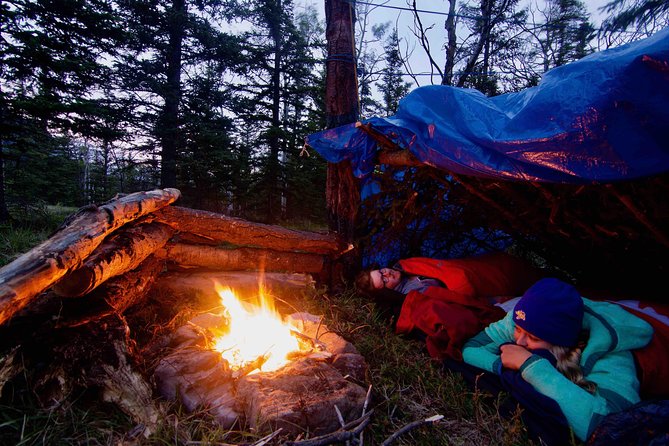
- A real overnight bushcraft lesson: You may sleep in your own survival shelter rather than a standard cabin or hotel room.
- Training near Abraham Lake: The course leaves Nordegg and travels about 40 kilometres into the Rocky Mountains to Kootnay Plains.
- Practical skills come first: Expect fire building, shelter construction, knots, navigation, plant identification, and emergency priorities.
- Equipment is supplied: Tents, hatchets, knives, compasses, GPS units, and other course equipment are included.
- Meals are part of the package: Dinner, breakfast, and two lunches are provided, with dietary needs handled if you advise the provider ahead of time.
- Best for beginners and small private groups: A minimum of four people is required, and only your group takes part.
What this Rockies survival course is really about
This is an introductory bushcraft course rather than a wilderness expedition. The goal is to give you useful habits for camping and backcountry travel, especially the decisions that matter when weather, injury, equipment failure, or getting lost changes your plans.
You begin with basic priorities: what to do first in an emergency, what hazards to avoid, and how to use the equipment you have. From there, the instruction becomes hands-on. You work with fire, shelter materials, knives, hatchets, rope-making techniques, and navigation tools.
That practical approach makes the course a good fit if you have camped before but still feel uncertain outside a developed campground. It also suits families and friends who want to build skills together. One father and his young son took part together, and the course is open to children when accompanied by an adult.
The experience is private, but it is not an individual lesson for one person. At least four people must book. That requirement works well for a family or friend group, though it may be inconvenient if you are traveling alone or as a couple.
Other trips people book in Alberta:
- Wild Water Adventures
★ 5.0 · 581 reviews - Moraine Lake, Lake Louise Johnston Canyon Banff National Park
★ 4.5 · 243 reviews - Icefields Parkway: a Smartphone Audio Driving Tour
★ 4.0 · 118 reviews
Meeting in Nordegg before heading into the Rockies
The course begins at HI Nordegg Shunda Creek Wilderness Hostel at 9:30 a.m. This is the point where you meet the instructor and receive an introduction before driving roughly 40 kilometres to the training area.
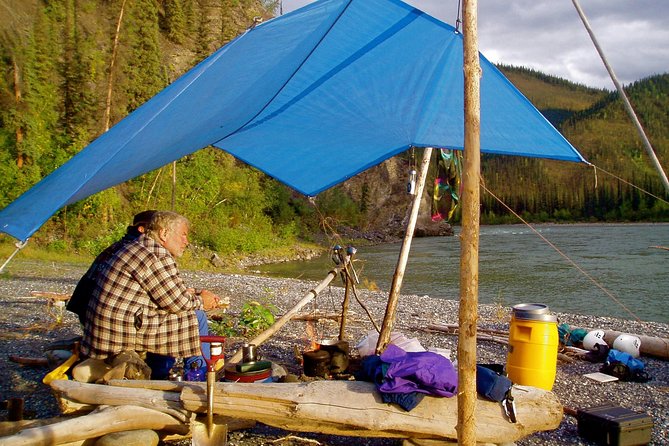
That drive matters. You are not spending both days around a hostel parking lot or in a classroom. The course moves into the Rocky Mountains near Abraham Lake, where the setting gives the skills a clear purpose. You can think about shelter, warmth, navigation, and emergency planning in the same kind of terrain where those skills may one day be needed.
You need to get yourself to the meeting point. Transportation to and from the program is not included, and the activity ends back at the same location. Plan your arrival carefully, since the first morning starts at 9:30 and the course does not provide a pickup service in the package described here.
Day one at Kootnay Plains: safety, fire, and shelter
The main training day runs from about 10:30 a.m. to 5 p.m. at Kootnay Plains near Abraham Lake. The first lessons cover precautions and dangers, then move into the equipment and priorities that matter during an emergency.
This order is sensible. Before you learn how to make a fire or build a shelter, you need to understand what can go wrong and how to make sound choices. Survival skills are not just tricks with a knife. They also involve staying calm, protecting your energy, finding warmth, and deciding what deserves attention first.
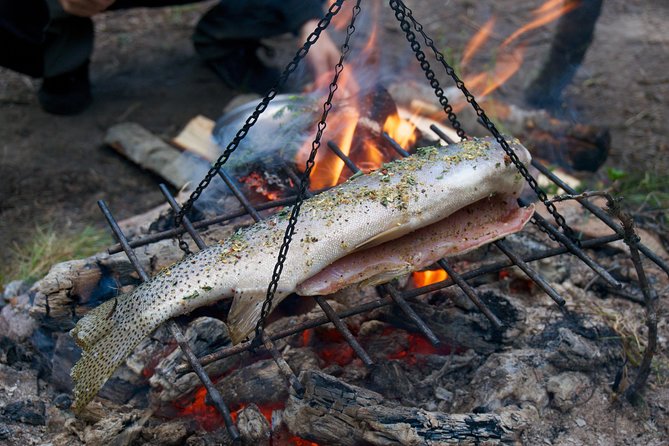
Fire building is one of the central activities. You learn how to make survival fires, including the challenge of working in difficult conditions. The exact method and difficulty will depend on the day, but the value is clear: fire can provide warmth and comfort, help with food and water tasks, and offer a way to manage an emergency night outdoors.
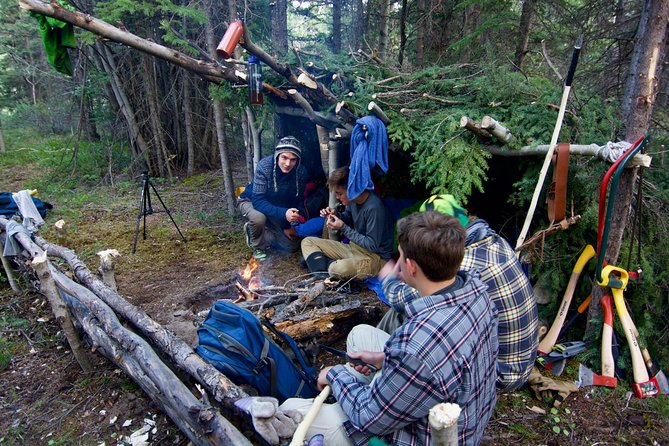
Shelter construction follows the same practical logic. You learn how to create protection from the elements, then have the option of sleeping in your own survival shelter that night. That overnight choice is one of the course’s most distinctive features. It turns a demonstration into a test of comfort, preparation, and judgment.
You should understand the wording here. One night of camping is included, but this is not a hotel-style stay. The experience is designed around outdoor learning, and the shelter may be part of the lesson. If you want a soft bed, private bathroom, or predictable indoor temperature, this is the wrong kind of weekend.
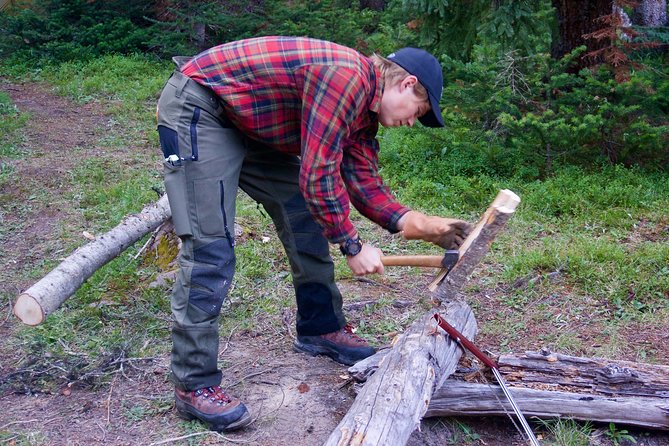
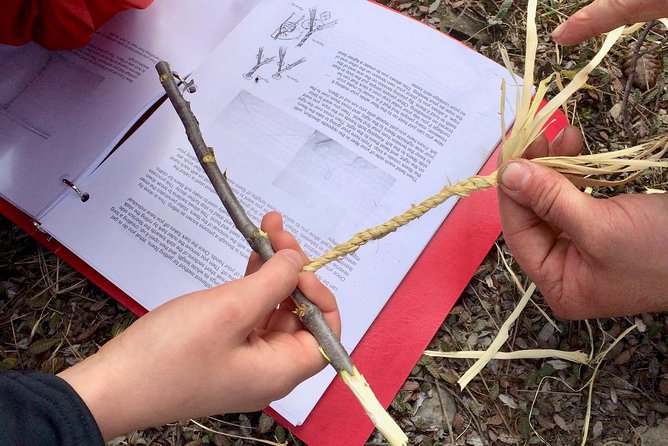
The day also includes useful knots. Knot work may sound simple, but it supports shelters, cordage, gear handling, and improvised repairs. The course later adds improvised rope or cordage when time allows, so the early knot lessons have a practical place in the wider program.
Meals, equipment, and the overnight camp
The price includes the equipment needed for the course. That includes tents, hatchets, knives, compasses, GPS equipment, and other course gear. You do not need to arrive with a complete bushcraft kit, which is a major benefit for beginners who want to try the subject before investing in tools.
The package also includes dinner on the first day, breakfast, and two lunches. Vegetarian food can be arranged, and you should advise the provider about dietary requirements when booking. Food preparation may be simple camp fare rather than restaurant dining. The useful question is not whether the meals are fancy, but whether they keep the group fed while the instruction continues.
The overnight camping arrangement is worth clarifying before you book. The package lists one night of accommodation as camping and also describes the opportunity to sleep in your own survival shelter. Ask the provider how the current session handles tents, shelters, and sleeping arrangements if that detail matters to you.
The equipment list adds real value to the $205.56 per-person price. You are paying for two days of instruction, meals, camping, and access to tools that can be costly to buy separately. The value is strongest if you are new to backcountry camping or want guided practice before purchasing your own equipment.
Same base, a different sort of day:
- Lake Louise Summer Gondola Experience
★ 4.0 · 65 reviews - Calgary Airport Shuttle to Banff & Lake Louise
★ 4.5 · 54 reviews - Adrenaline Canyoning Tour
★ 5.0 · 39 reviews - Self-Guided Audio Driving Tour in Icefields Parkway
★ 5.0 · 24 reviews
Day two: navigation, hiking, and plant identification
The second morning begins around 9 a.m. and continues until about 11 a.m. at Abraham Lake. This session returns to the topics from day one, giving you a chance to reinforce the basics after spending a night outdoors.
That review is important. Fire building and shelter work are easier to understand after you have seen how the night affects warmth, comfort, and energy. A second look at the same subjects can help turn a one-time activity into a repeatable skill.
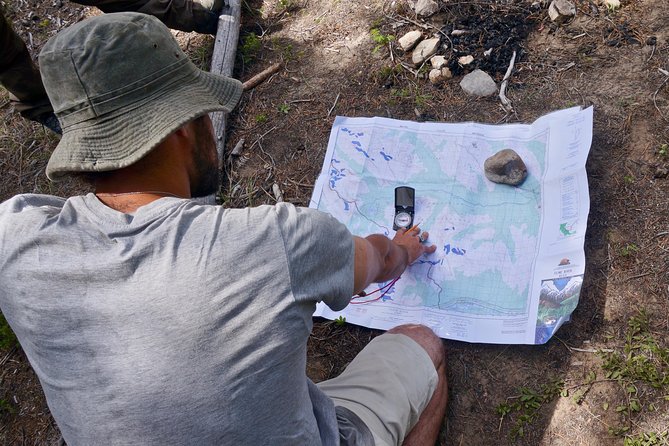
In the afternoon, the group moves toward Cline River for a hike focused on outdoor navigation. You work with tools such as compasses and GPS units while learning how to move through the area with more confidence. The course is aimed at practical backcountry travel, so this part connects directly to hiking, camping, and route planning.
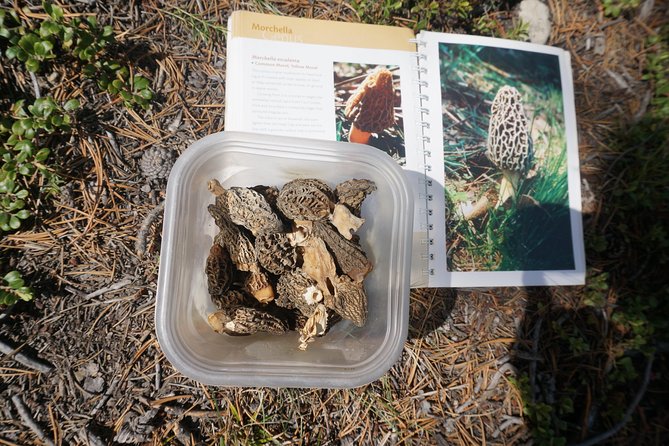
Plant identification is also included, with attention to useful and medicinal plants. This subject should be treated carefully. The course can introduce you to plant recognition, but you should not assume that a short lesson makes every wild plant safe to eat or use. Take notes, ask questions, and treat uncertain identification as a reason not to touch or consume anything.
If time allows, the instructors may add more advanced topics. These can include alternative food sources, basic traps and snares, improvised rope or cordage, and survival saws. The phrase if time permits matters. Do not book expecting every advanced subject to receive equal attention, since weather, group pace, and the length of earlier lessons can change the schedule.
The course wraps up in the late afternoon or early evening and returns to the Nordegg meeting point. The second day is long enough that you should expect a full outdoor day rather than a short guided walk.
The instructors and teaching style
The instructors named in the available feedback are Marc, also referred to as Mark, and Joel. They are described as friendly, approachable, and able to answer questions in a relaxed setting. The provider states that the lead instructor has more than 20 years of guiding and outdoor teaching experience.
That combination matters for a beginner course. You want someone who can explain a skill without making you feel foolish for asking a basic question. You also want room to ask why a technique matters, not just copy a movement and move on.
The private format should help here. With only your own group taking part, you can ask for more time on fire building, navigation, shelters, or knots. You can also tell the instructor if your group is made up of complete beginners or people with camping experience.
The feedback is not uniformly positive. One booking raised concerns about food, transportation expectations, site arrangements, and whether the instruction justified the price. Some of those complaints involved services that are not included, such as transportation and reserving a campsite on public land. Still, the criticism points to a useful lesson: read the inclusions carefully and ask questions before arriving.
Do not assume that the provider will arrange your drive from Nordegg, reserve a special long-weekend site for you, or deliver restaurant-style meals. Clear expectations will make a major difference to your experience.
Who gets the best value from the $205.56 price
At $205.56 per person, the course is not simply a two-day hike. The fee covers instruction, camping, meals, and equipment, which makes it easier to judge the price as a bundled learning experience.
I see the best value for:
- Beginners who want an introduction before buying outdoor gear
- Campers who want more confidence with emergencies and navigation
- Families looking for a shared outdoor project
- Friend groups planning future backcountry trips
- People curious about bushcraft but unsure where to start
The value is less clear if you already have strong fire, shelter, navigation, and camping skills. In that case, you may find the introductory material too basic, particularly if the group spends much of its time on first principles.
You should also budget for your own transportation to Nordegg. That is a separate cost and a practical responsibility. The course returns to the meeting point, so you need a plan for getting there and leaving after the late-afternoon or early-evening finish.
Weather, fitness, children, and practical expectations
The provider says most people can participate, but you are still signing up for two days outdoors, including a hike and one night of camping. You should be comfortable spending long periods outside and following instructions while carrying out hands-on tasks.
Children must be accompanied by an adult, and a child rate applies only when sharing with paying adults. The private format can make a family booking easier to manage, since your group does not need to match the pace or interests of strangers.
The course requires suitable weather. If poor conditions cause cancellation, you are offered another date or a full refund. For your own planning, keep some flexibility around the booking rather than scheduling a tightly timed onward journey.
Service animals are allowed. The course is offered in English, uses a mobile ticket, and confirmation is provided when you book. You can cancel for a full refund up to 24 hours before the start time. Changes or cancellations inside that 24-hour window are not accepted for a refund.
Should you book this two-day survival course?
Book it if you want a friendly, hands-on introduction to outdoor survival and can accept a basic camping experience. The strongest parts are the chance to build and use your own shelter, practice useful skills in the Rockies, and learn with equipment already supplied.
I would choose it for a group of four or more, especially a family or a circle of friends who want to become more capable in the backcountry. I would skip it if you want luxury camping, guaranteed advanced instruction, included transportation, or a tightly fixed schedule.
Read the food and camping details carefully, arrive with realistic expectations, and tell the provider about dietary needs in advance. If that sounds right, the course offers a practical way to spend two days near Abraham Lake while learning skills you can carry into future trips.
FAQ
Where does the course begin?
The course begins at HI Nordegg Shunda Creek Wilderness Hostel, 321 Shunda Creek Road, Nordegg, Alberta.
Where does the course end?
The activity ends back at the Nordegg meeting point.
How long does the experience last?
The course lasts approximately two days, beginning at 9:30 a.m. on day one and ending in the late afternoon or early evening on day two.
What is included in the price?
The price includes instruction, camping for one night, dinner, breakfast, two lunches, and course equipment such as tents, hatchets, knives, compasses, and GPS units.
Is transportation included?
No. Transportation to and from the program is not included. You must arrange your own transportation to the Nordegg meeting point.
How many people are required to book?
A minimum of four people per booking is required. The activity is private, so only your group takes part.
Can children join the course?
Yes. Children must be accompanied by an adult, and the child rate applies only when sharing with paying adults.
Can dietary requirements be accommodated?
A vegetarian option is available. You should advise the provider about vegetarian needs or other dietary requirements when booking.
What happens if bad weather cancels the course?
If poor weather causes cancellation, you will be offered a different date or a full refund. You can also cancel up to 24 hours before the start time for a full refund.
Just added in Alberta
- Smartphone Audio Driving Tour between Lake Louise and Calgary★ 4.0 · 15 reviews
- Official SkiByk Rentals in Banff & The Canadian Rockies★ 5.0 · 9 reviews
- Moraine Lake and Lake Louise Sightseeing Half Day Tour★ 5.0 · 23 reviews
- Icefields Parkway: a Smartphone Audio Driving Tour★ 4.0 · 118 reviews
- Discover the Lake Agnes Tea House Trail with an Audio Nature Tour★ 4.0 · 7 reviews
- Lake Louise to Jasper One-Way Tour★ 5.0 · 17 reviews
- Airport Shuttle: Lake Louise <---> Calgary★ 5.0 · 4 reviews
- Lake Louise Summer Gondola Experience★ 4.0 · 65 reviews