

Reviewed · HISTORICAL TOURS
Admission 1 person – Visit of the Acadian Historic Village
Acadian history comes alive here through real buildings and costumed interpreters, not just display cases and printed panels. You walk a 2.2 km route through homes and workplaces representing daily life from 1770 to 1949, stopping to talk with bilingual interpreters in French and English.
I like the freedom to set your own pace, and I like the way each building has its own character. The staff present their roles as if the period still belongs to them, which makes the visit feel more personal. The main caution is time: at four to six hours, this is a full outing, and the route may feel demanding if you have limited stamina.
Key details before you go
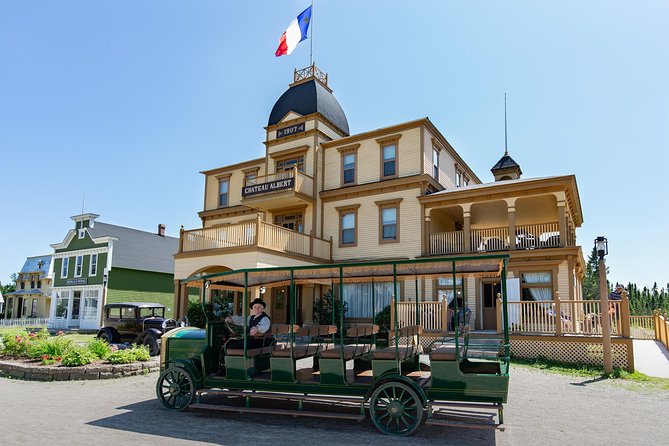
- A 2.2 km historic route: The village is explored on foot, with buildings arranged along a clearly defined circuit.
- Acadian life across 179 years: The visit covers daily life from 1770 through 1949, giving you a broad view rather than a single-period snapshot.
- Bilingual interpretation: Interpreters speak both French and English, so you can ask questions and follow the stories in the language you prefer.
- Self-guided timing: You are free to linger in one home, move quickly through another, or take most of the day.
- Good value for a long visit: At $18.63 per person, the admission works out well if you spend four to six hours exploring.
- Simple practical setup: The ticket is mobile, parking is free for cars and RVs, and cancellation is free up to 24 hours before the start time.
Walking into Acadian history
The first thing to understand is that this is not a short stop where you glance at one reconstructed house and leave. The Village Historique Acadien is built around a 2.2 km walking circuit, with historic buildings placed along the route and interpreters working inside them.
That format matters. Instead of receiving Acadian history as a quick lecture, you encounter it room by room and building by building. A person in each setting can explain what you are seeing, answer questions, and connect the objects and surroundings to everyday life.
The period covered is broad, running from 1770 to 1949. You are not looking at one frozen year. The route gives you a chance to consider how Acadian households and communities changed over almost two centuries.
I find that useful for families and for anyone who does not already know much about Acadian history. You do not need to arrive with a stack of background reading. The interpreters provide the human connection, while the buildings give the subject a physical shape.
The experience is self-guided, but that does not mean you are left alone with signs. The interpreters are bilingual in French and English and are there to explain the history of Acadia and the daily routines of Acadian ancestors. You can decide how much conversation you want at each stop.
A few more things to do in Canada worth a look
- Victoria Guided Food and History Tour
★ 5.0 · 2,015 reviews - Gastown Historic Walking Food Tour
★ 5.0 · 1,863 reviews - Vancouver: Gastown Historical Walking Food Tour
★ 4.8 · 539 reviews
A route built around homes, work, and daily routines

The village works best when you treat the route as a series of individual encounters rather than a race to the end. Each building has its own charm, and the people inside help you understand how it fits into Acadian life.
One house may appeal to you because of its domestic details. Another may offer a better setting for learning about work, family routines, or community life. The exact amount of time you spend will depend on your interests, but the range of buildings gives the day a natural rhythm.
The interpreters are the heart of the experience. Their role is more than pointing out dates. They explain the past through ordinary actions and household details, which is often the clearest way to understand how people lived.
You can ask about an object, a custom, or a family connection. That personal exchange is especially valuable if your own relatives have Acadian roots. One visitor discovered a family link to the Ouellet name, a reminder that this site can feel more personal than a standard museum for people tracing their ancestry.
The route also rewards curiosity from visitors who are not especially interested in history. You do not have to be an expert to enjoy a conversation with an interpreter. The setting gives each discussion a practical focus, and the human stories keep the visit from becoming a string of dates.
Why the bilingual interpreters matter
New Brunswick’s Acadian story is tied closely to language, so the bilingual format is more than a convenience. You can use English throughout the visit, while French is available at every interpreted setting.
That choice makes the site easier to enjoy with a mixed-language family or group. One person can ask a question in French while another follows in English. You also get a more direct connection to Acadian culture through the language that shaped it.
The interpreters are described as fully bilingual, and their presentation is designed to make the period feel present. They work in character within the buildings, speaking about the past from the point of view of the people who lived there.
This approach can be more engaging than reading a long panel. You can stop, listen, and ask a follow-up question. If one subject interests you, take advantage of the self-guided format and stay longer instead of feeling pressure to keep up with a group.
There are no named guides listed for this experience, so you should not expect to book a particular interpreter. The strength of the visit comes from the staff throughout the village rather than from one fixed guide.
Planning four to six hours without rushing
Allow four to six hours if you want to see the village properly. That is a substantial part of your day, but the length makes sense if you speak with interpreters and take time inside the buildings.
You can shorten the visit if necessary, though you may miss the point of paying for a site designed for slow exploration. The route itself is 2.2 km, and the walking distance is only part of the time involved. Conversations, pauses, and repeated stops add up.
I would plan this for a day when you do not have another tightly scheduled attraction immediately afterward. The self-guided arrangement gives you flexibility, but a long list of later appointments would encourage you to hurry.
A moderate level of physical fitness is recommended. You should be comfortable walking the circuit and remaining on your feet for a good part of the visit. The supplied information does not describe the surface, seating, or rest facilities, so anyone with mobility concerns should contact the provider before booking.
Families can use the flexible pace to their advantage. Children who lose interest in one building can move on, while adults can spend more time talking with an interpreter. Older children may find the role-playing approach easier to follow than a formal museum tour.
Same base, a different sort of day:
- Vancouver Half-Day Whale Watching Adventure with Free Photos
★ 5.0 · 5,000 reviews - Quebec City Walking Tour
★ 5.0 · 4,716 reviews - Niagara Falls: Premium Tour, Boat & Journey Behind the Falls
★ 4.8 · 4,207 reviews - Banff: Banff Gondola Admission Ticket
★ 4.7 · 3,698 reviews
What $18.63 really buys you

At $18.63 per person, admission is a reasonable buy if you use the full four to six hours. The value comes from the combination of access to the village, the number of buildings along the route, and the chance to speak directly with bilingual interpreters.
The price is less compelling if you plan to stay only briefly. A quick walk through the grounds will not give you the full benefit of the living-history format. To get your money’s worth, slow down and treat the interpreters as part of the admission rather than as background decoration.
Advance booking also lets you arrive with admission already arranged and use a mobile ticket. That can save time at the entrance, although the practical benefit depends on how busy the site is on the day you visit.
Free parking improves the overall value, especially if you are arriving by car or RV. You do not have to add a separate parking charge to the admission price. Since no transportation from another town is included, you will need to arrange your own way to the village.
The site is recommended by 90 percent of its published audience and holds a 4.6 rating from 40 reviews. Those figures suggest strong satisfaction, but I would still match the experience to your interests. The village rewards patience, conversation, and an appetite for historical detail more than a quick sightseeing style.
The buildings are the real storytellers
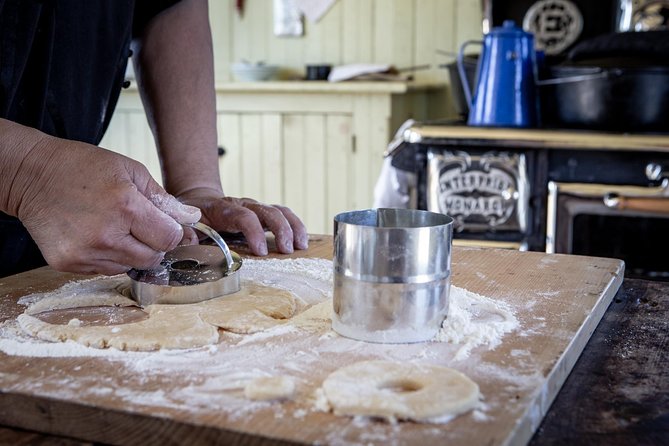
The strongest feature is the way the village connects history to place. A building gives you more to work with than a date on a wall. You can see the type of setting in which people lived and then ask the interpreter to explain what happened there.
The buildings are not presented as empty shells. They are inhabited by interpreters who speak with you about Acadian history and daily life. That choice gives the route a sense of movement and personality.
I especially like the possibility of making each stop different. You might spend several minutes in one building because the interpreter has an answer to a question that catches your interest. At another, you may understand the setting quickly and continue along the path.
This is also where the site feels most useful for people with family connections. If you know an Acadian surname or have heard family stories, the interpreters can help place those personal threads in a wider setting. The supplied information does not promise genealogy research, so think of those conversations as historical context rather than a formal family-history service.
The village’s appeal is not limited to people with Acadian ancestry. The reconstructions and live interpretation offer a practical look at how ordinary people organized daily life over time. That is often easier to remember than a lecture about political events alone.
What may slow you down
The same features that make the visit worthwhile can make it feel long. Four to six hours is a serious commitment, and the 2.2 km route requires steady walking. If your main goal is a short cultural stop, you may find the admission more time-consuming than expected.
The self-guided format also requires a little personal planning. There is no stated fixed group departure or single tour leader setting the pace. You need to choose when to stop, how long to talk, and how much of the route to complete.
That freedom is usually an advantage, but it means you should pay attention to the opening hours. During the 2026 season listed here, the village is open daily from 10:00 a.m. to 5:30 p.m., from June 4 through September 12. Arriving late in the day could leave too little time for the full circuit.
The information provided does not specify dining options, indoor facilities, weather arrangements, or the exact accessibility of the route. Plan around the site’s outdoor walking demands, and contact the provider directly if those details affect your decision.
Animals are not allowed, including dogs and cats. Service animals are allowed. Free parking is available for cars and RVs, which makes driving straightforward once you reach the village.
Who will enjoy this most
I would choose this experience if you want a clear introduction to Acadian culture, especially if you prefer people and places over a silent museum. The bilingual interpretation makes it a good fit for French-speaking, English-speaking, or mixed-language groups.
It also suits anyone with family ties to Acadia. A surname or family story can give you an extra reason to linger and ask questions, though you should not expect a dedicated genealogy program.
Families may appreciate the freedom to move at their own pace. Adults can spend more time with an interpreter, while younger children can keep walking when their attention fades. The long visit means you should set realistic expectations before arrival.
I would be more cautious if you dislike walking, prefer a tightly scheduled tour, or want a brief attraction that can be finished in an hour. The site asks for time, and its value increases when you give it that time.
The experience is also a good choice for visitors who want to support a cultural institution while receiving more than passive access. The interpreters make the admission interactive, and the broad date range gives you a fuller look at Acadian life than a single-period display would.
Booking, timing, and cancellation
The experience is offered in English, while interpretation at the historic buildings is bilingual in English and French. Your confirmation is received at booking, and the admission ticket is mobile.
The stated opening period is June 4 through September 12, 2026, with daily hours from 10:00 a.m. to 5:30 p.m. Since the recommended visit lasts four to six hours, morning arrival is the safer choice if you want to take your time.
Free cancellation is available when you cancel at least 24 hours before the experience start time. Cancellations made less than 24 hours in advance are not refunded, and changes within that window are not accepted. The cut-off follows local time.
Those terms are fairly flexible for a planned day out, but check your schedule before booking. A mobile ticket and advance admission are useful, yet they do not remove the need to allow enough time for the route.
Should you book the Acadian Historic Village?
Book it if you want a long, interactive look at Acadian daily life and are happy to walk, listen, and ask questions. The bilingual interpreters, historic buildings, free parking, and four to six hours of access make $18.63 a fair price for a full cultural outing.
Skip it if you want a fast stop, have difficulty with moderate walking, or prefer a formal tour with a fixed route and timetable. For everyone else, especially families, French and English speakers, and people with Acadian roots, this is a thoughtful way to put the region’s past into human terms.
FAQ
How much does admission cost?
Admission costs $18.63 per person.
How long should I allow for the visit?
You should allow approximately four to six hours.
How long is the walking route?
The historic village is explored along a 2.2 km route.
Are interpreters available in English?
Yes. The interpreters are bilingual in English and French.
Can I explore at my own pace?
Yes. The visit is self-guided, so you can decide how long to spend at each building.
When is the village open in 2026?
The listed 2026 opening period is June 4 through September 12, daily from 10:00 a.m. to 5:30 p.m.
Is parking available?
Yes. Parking is free for cars, RVs, and other vehicles.
Can I cancel for a refund?
Yes. You can receive a full refund if you cancel at least 24 hours before the experience start time. Cancellations made less than 24 hours in advance are not refunded.
Just added in Canada
- Tadoussac: Guided Sea Kayaking Adventure★ 4.6 · 61 reviews
- Afternoon Wine, Beer and Charcuterie Tour in Niagara-on-the-Lake★ 5.0 · 172 reviews
- Beer and Wine Tour in Niagara-on-the-Lake★ 5.0 · 22 reviews
- Niagara Falls Canada Walking Tour With Boat Cruise★ 5.0 · 195 reviews
- Half-Day Niagara Micro Brewery Tour★ 5.0 · 26 reviews
- Wine, Beer, Cider, Spirit – Something for Everyone Tour★ 5.0 · 59 reviews
- World Famous Boat Cruise with Historical Walking Tour and more★ 5.0 · 202 reviews
- Niagara Falls Boat Cruise with Historical Walking Tour★ 4.9 · 83 reviews
Historical Tours, compared.



Evening Gourmet Tour 5 Course Dinner – History and Food in Old Quebec City
Read our review →



Browse the lists this tour appears in