
Reviewed · CANOES & KAYAKS
Algonquin Park 4-Day Deluxe Camping & Canoeing Adventure
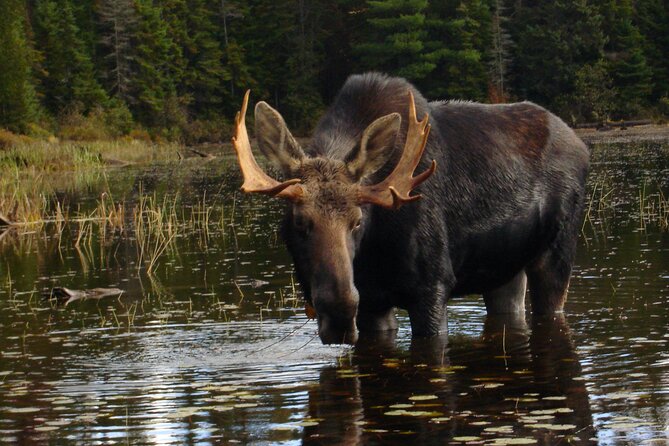
The best part of this four-day Algonquin trip is that you paddle away from the road and settle into an isolated riverside camp. Guide Baz leads the canoe and portage route, while the camp team sets up tents and airbeds before you arrive. You spend your time on the water, around the fire, and looking for moose, beavers, loons, turtles, and other wildlife.
I like the small-group feel, with a maximum of 18 people and plenty of time for questions and shared camp chores. I also like the food: salmon, tomahawk steaks, shrimp, deer or bison skewers, smoked-meat sandwiches, and breakfasts that are far more ambitious than standard camp fare. The main drawback is comfort. This is real backcountry camping, with a basic wooden-box toilet that has no walls, cots, and limited privacy.
Key points at a glance
- Three nights beside the river: Your camp is set in an isolated part of Algonquin Park, away from ordinary road access.
- Baz leads the adventure: Expect paddling instruction, safety guidance, wildlife talks, fire-making lessons, and camp cooking.
- Wildlife is possible, not promised: The route searches for moose, beavers, loons, herons, turtles, wolves, bears, and more.
- Food is a major part of the trip: Meals include grilled salmon, Montreal smoked meat, cheesecake, steak, shrimp, and campfire treats.
- Active days on the water: Canoeing, portaging, swimming, cliff jumping, hiking, and an optional sunrise paddle all feature in the schedule.
- Bring a backcountry mindset: You need moderate fitness, personal hygiene items, clothing, and a backpack.
Paddling into Algonquin’s backcountry
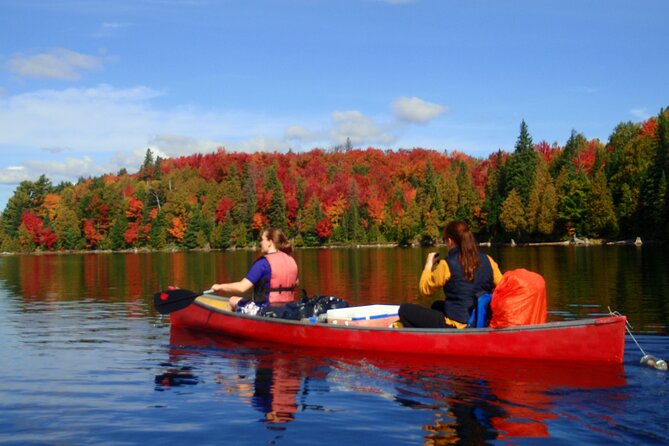
Your first day starts at the meeting point in Algonquin Provincial Park. An accredited guide gives you paddling and safety instructions before leading a roughly three-hour canoe and portage route into the wilderness.
This opening trip is more than transport. It gives you a quick lesson in how the park works: quiet water, narrow routes, short carries between waterways, and a slower pace than a regular sightseeing tour. If you have little canoeing experience, the safety briefing and close guidance from Baz are useful. If you already paddle often, you can settle into the rhythm quickly.
The camp is prepared before your arrival. Other guides set up the tents and fill the airbeds about two hours ahead, so you do not have to spend your first afternoon wrestling with tent poles. You still carry your own backpack and take part in camp tasks, but the setup removes much of the usual work.
That is a good middle ground for people who want an outdoor trip without having to plan every meal, pack every piece of equipment, or build a complete camp from nothing. It is not a luxury lodge experience, though. Once you arrive, you are in the backcountry, and the facilities are basic.
Other paddling trips in Canada:
- Banff National Park Big Canoe Tour
★ 5.0 · 303 reviews - From Toronto: Algonquin Park Canoeing & Hiking Adventure
★ 4.6 · 291 reviews - Banff National Park: Big Canoe River Explorer Tour
★ 4.7 · 286 reviews
An easy first afternoon with fire, food, and stars
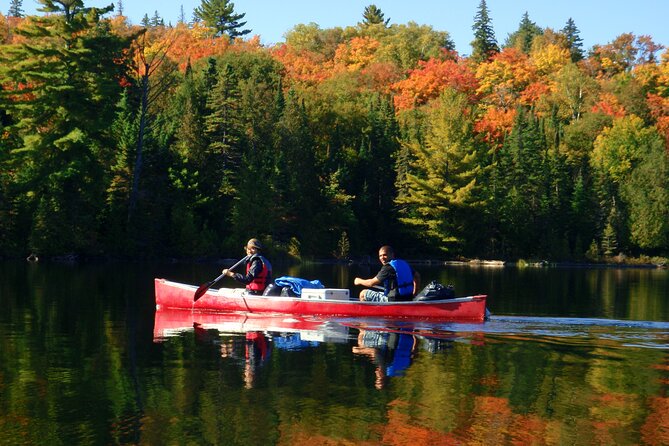
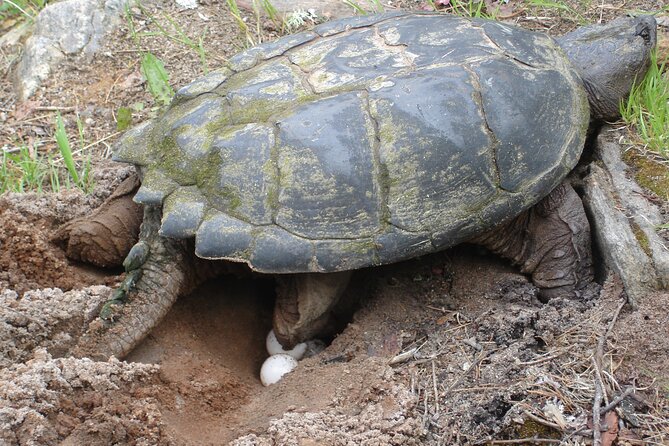
After reaching camp, you have time to swim, rest, or explore the nearby area. The first afternoon also includes lessons on fire-making without matches and talks about local wildlife. The subjects listed include moose, bears, beavers, wolves, snapping turtles, and loons.
These talks matter because the park is not just scenery. You learn what you are looking for before heading out on later canoe trips. That can make a quiet shoreline feel more interesting, even when no large animal appears.
Food is given unusual attention here. The first late lunch is described as gourmet, followed by a dinner of barbecue salmon with lemon and herbs and grilled naan. You also help gather wood and start the campfire, which keeps the experience from feeling like a restaurant meal delivered to a campsite.
As the sun goes down, Baz gives a basic astronomy lesson. Later, you take a guided canoe trip under the stars to a beaver habitat. This is one of the most memorable parts of the plan, since the park changes completely after dark. You need to be comfortable paddling at night and sitting quietly while the guide looks and listens for signs of wildlife.
Day two brings beaver lodges and a serious camp feast
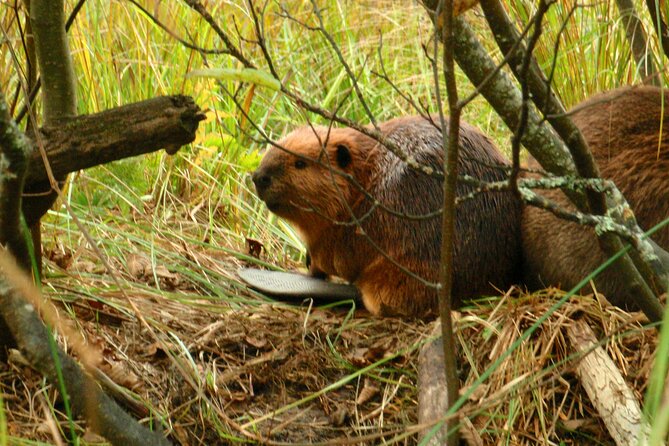
The second morning begins with breakfast at 8:00 a.m., followed by a 9:00 a.m. canoe tour. You explore small inlets and narrow, winding rivers while looking for wildlife. The route leads to a natural beaver lodge and dam.
Beaver habitats are especially rewarding by canoe because you can approach quietly and see how the waterways have been altered. There is no guarantee of an animal sighting, but the lodge and dam give you something specific to look for rather than simply paddling through open water.
Lunch back at camp is a Montreal smoked meat sandwich with cheesecake for dessert. This is a filling midday meal after a morning on the water, though anyone with dietary restrictions should confirm arrangements before booking. Vegetarian food has been provided on past departures, with Christina helping in the cooking, but the supplied details do not promise a particular menu for every diet.
Later, you take a short paddle to a swimming and cliff-jumping area. The listed jump heights range from 1 meter to 7 meters. This is optional in spirit, and you should choose only the height that suits you. The activity may not suit anyone who dislikes heights, cold water, or a physical day outdoors.
Dinner is the trip’s biggest meal: tomahawk rib steaks, barbecue jumbo shrimp, deer or bison skewers, grilled mushrooms, sweet peppers, corn on the cob, and mini potatoes. The menu is far removed from freeze-dried camping food. Afterward, you gather around the fire for marshmallows and games.
I see the meal plan as one of the tour’s strongest selling points, but it also sets a clear expectation. This is a food-focused camping trip, not a minimalist canoe expedition. If you prefer to travel light and cook a simple pot of pasta, the amount of food and preparation may feel excessive. If you like a generous dinner after a day of paddling, it adds real value.
Day three is the main wildlife search
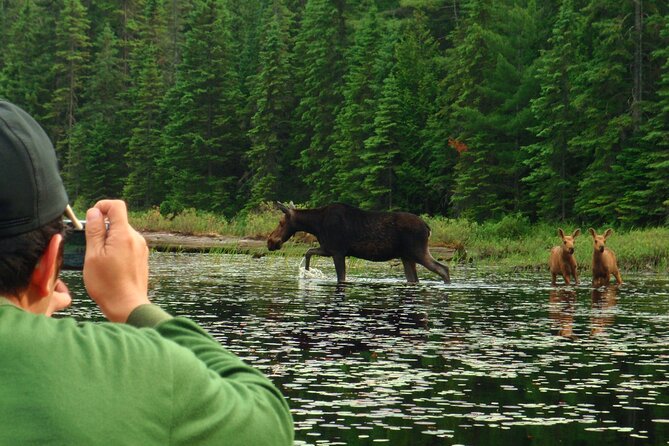
Day three is the fullest day on the water. After breakfast, you set out for canoeing and hiking across four small lakes linked by narrow rivers and inlets. The stated goal is to find moose, with beavers, loons, herons, and other animals also possible.
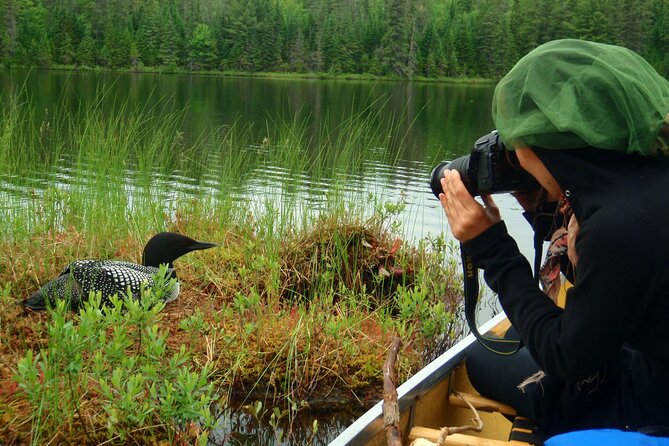
This is where patience matters. Wildlife searches are not controlled attractions. You may see a moose grazing, a loon nesting, turtles, chipmunks, snakes, or a beaver habitat, or you may return without the species you hoped to find. One of the practical strengths of the trip is that the day still has value when the largest animal stays hidden. The waterways, quiet paddling, and changing views carry the experience.
Lunch is eaten picnic-style in the canoes on a beaver pond. That detail captures the trip well: you are not rushing back to a dining room or a bus. You eat where the route takes you, surrounded by the sounds and stillness of the park.
Plan for a demanding day. The experience calls for moderate physical fitness, and the combination of paddling, portaging, and hiking can be tiring. The schedule also depends on weather and group pace. You should be ready to spend long periods outdoors and to help maintain a steady canoe rhythm.
A few more things to do in Canada worth a look
- Yukon Aurora Viewing Package | 4 days
★ 5.0 · 35 reviews - From Vancouver:4-Day Columbia Icefield & Banff National Park
★ 4.1 · 25 reviews - Southern Lakes Canoe Trip – 4 Day
★ 5.0 · 23 reviews - 4-Day Rockies Discovery Tour Package, Banff, Jasper, and Yoho
★ 4.5 · 19 reviews
The handmade sauna is an unusual camp reward
After returning to camp, the group builds a native-style sauna heated to about 85 C. The experience includes sea-salt scrubbing, eucalyptus oils, and Muskoka clay masks, followed by a swim in the lake.
This is an unusual feature for a canoe trip. It gives you a chance to wash off the day, relax sore muscles, and enjoy a bit of comfort without leaving the wilderness. It also becomes a shared group activity rather than a private spa treatment.
The sauna should not be confused with a permanent facility. It is built at camp, so you are still dealing with simple outdoor conditions. Anyone sensitive to high heat should take the 85 C temperature seriously and use good judgment. The lake swim afterward is refreshing, but water temperature and weather can affect how appealing it feels.
The schedule lists the sauna twice on day three, but it appears to describe the same afternoon activity rather than two separate sauna sessions. I would treat it as one extended camp experience.
A quiet final sunrise
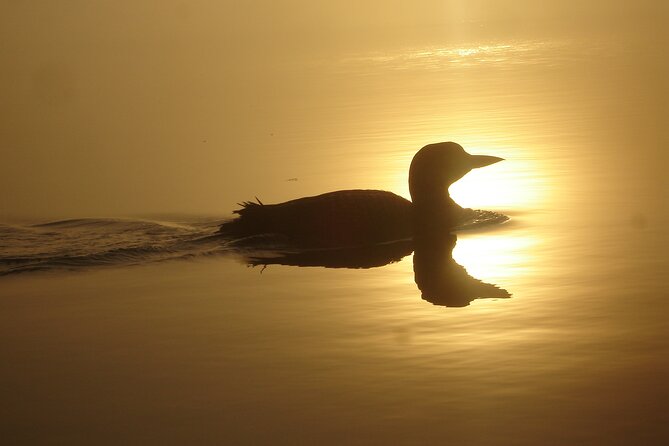
The last morning offers an optional sunrise canoe tour. You watch the sun come up over a calm lake with a cup of hot chocolate.
This is a small addition, but it may be the right ending for the trip. Early morning is often the quietest time in camp, and the hot chocolate makes the cold or early start easier. You do not have to join, so you can also use the time to rest.
The activity ends back at the original meeting point. The supplied details do not describe a separate final-day lunch, and lunch on the fourth day is specifically not included. Plan accordingly.
How comfortable is the camping?
The tents and airbeds are prepared before you arrive, which makes the camp more approachable for first-time backcountry campers. You place your backpack inside and begin the stay without spending the first hours on setup.
Still, this is not polished camping. Sleeping is on cots, and the toilet is a wooden box with no walls and little privacy. In wet weather, that arrangement can be unpleasant. Personal hygiene items are not included, and you need to bring your own clothing and backpack.
I would pack with function in mind: clothing suited to changing outdoor conditions, personal washing supplies, and anything you need to feel comfortable at a basic camp. The provided details do not give a full equipment list, so confirm what canoe and sleeping equipment the operator supplies before you go.
Service animals are allowed. The tour is offered in English, and confirmation is provided when you book.
Is the 397.82 price fair?
At $397.82 per person, the price is strong value if you would otherwise need to pay separately for a guide, park access, canoe equipment, tents, camp setup, meals, and backcountry planning.
You receive three breakfasts, three lunches during the main portion of the trip, and three dinners. The food alone is more substantial than what many people expect on a canoe camp. You also receive instruction, guided paddling, wildlife searches, fire lessons, camp activities, and the prepared sleeping setup.
The value drops if you want a private room, a proper bathroom, or complete freedom from group schedules. You are paying for organized access to the backcountry, not resort comfort. The maximum group size is 18, which can still feel fairly social on a canoe trip, though the guide’s presence and shared camp tasks help create a more personal experience.
The tour is commonly booked well ahead, with an average booking lead time of 72 days. That is useful planning information, especially if you want a specific date or are arranging transport around a longer Ontario trip.
Who will enjoy this four-day canoe trip?
I would recommend it to you if you want a guided introduction to Algonquin’s backcountry and like the idea of doing several different activities in one stay. Families with older children can enjoy it, as long as everyone is comfortable with paddling, portaging, swimming, and basic camping. The experience has hosted children aged 11, 14, and 16, according to the supplied details.
It also suits people who care about food and company as much as wildlife. You will help cut wood, build fires, prepare camp activities, share meals, and spend time talking with the guide and the rest of the group.
I would hesitate to recommend it if you need private sanitation, hotel-style sleep, or a predictable animal encounter. It is also not ideal for anyone who cannot manage moderate physical activity or who dislikes wet weather and simple facilities.
Booking, cancellations, and practical details
The meeting point is listed at G7PV+3F Algonquin Park, Ontario, and the experience returns to that same point. The ticket is mobile, and the tour is conducted in English.
Cancellation terms are worth noting before you commit. You receive a full refund if you cancel at least six full days before the start time. Cancellation two to six full days ahead receives a 50 percent refund, while cancellation less than two full days ahead is nonrefundable. Changes follow the same cutoffs, based on local time.
The tour has a 4.9 rating from 33 reviews, with 97 percent recommending it. The praise centers on Baz’s calm guiding, humor, camp cooking, safety help, and ability to make the group feel welcome. Christina is also connected with the food service, including vegetarian catering. Those details matter because the guide can shape a small wilderness trip more than any single activity.
Should you book the Algonquin Deluxe Camping and Canoeing Adventure?
Book it if you want four active days in the park with meals handled, tents prepared, and a guide leading the way. The strongest reasons are the isolated riverside camp, the varied canoe routes, the generous food, the night paddle, the wildlife focus, and the handmade sauna.
Skip it if basic sanitation and shared outdoor living will overshadow the scenery for you. The wooden-box toilet has no privacy, the days are active, and wildlife sightings remain a matter of luck.
For the right person, this is a practical way to experience Algonquin without organizing a full backcountry trip alone. Go for the quiet water, campfire evenings, and the chance to see the park at several speeds. Treat the steak dinner and sauna as welcome extras, not substitutes for comfort.
FAQ
How long is the Algonquin canoe and camping tour?
The experience lasts approximately four days and ends back at the original meeting point.
Where does the tour start and finish?
It starts at G7PV+3F Algonquin Park, Ontario, Canada, and finishes at the same meeting point.
What meals are included?
The tour includes three lunches, two breakfasts, and three dinners. Lunch on the final day is not included.
Is camping equipment provided?
Tents and airbeds are prepared before you arrive at camp. You need to bring your own clothing, backpack, and personal hygiene items.
How physically demanding is the experience?
A moderate level of physical fitness is required. Activities include canoeing, portaging, hiking, swimming, and optional cliff jumping.
Is wildlife guaranteed?
No. The route searches for moose, beavers, loons, herons, turtles, bears, wolves, and other wildlife, but sightings are not guaranteed.
Is the tour suitable for children?
The supplied information shows that children aged 11, 14, and 16 have taken the trip. Everyone should be comfortable with moderate physical activity and basic camping.
What is the cancellation policy?
You can receive a full refund by canceling at least six full days before the start time. A cancellation two to six full days ahead receives a 50 percent refund, and cancellations less than two full days before the start are nonrefundable.
Just added in Canada
- 2-Hour Two Castle 1000 Islands Cruise from Ivy Lea★ 4.5 · 24 reviews
- Medway Lakes Canoe Trip 3-Day★ 5.0 · 12 reviews
- Meet The Seals Boat Tour – Travel by boat to a Secret Seal Cove★ 5.0 · 21 reviews
- 20 Minute Scenic Helicopter Private Tour★ 5.0 · 14 reviews
- Wine, Cheese, Chocolate 6 Hour Tasting Tour with Lunch★ 5.0 · 45 reviews
- Wine Tour with Lunch in Niagara-on-the-Lake★ 5.0 · 25 reviews
- Guided Craft Cider Tour in Niagara★ 4.5 · 4 reviews
- Walking Food Tour in Niagara Falls★ 5.0 · 6 reviews
Canoes & Kayaks, compared.
Snorkel, Kayak, and Seal Adventure: Vancouver Boat Tour
Read our review →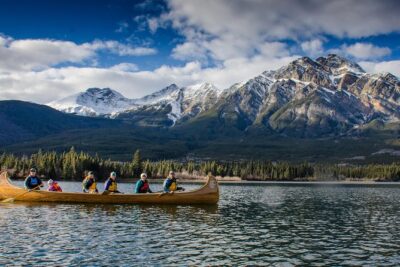
Wild Current Canoe Adventure Join a small group
Read our review →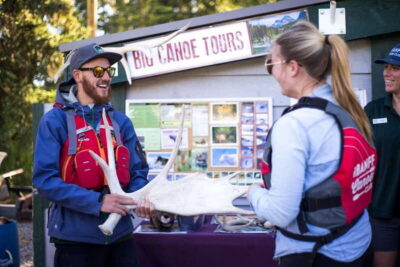
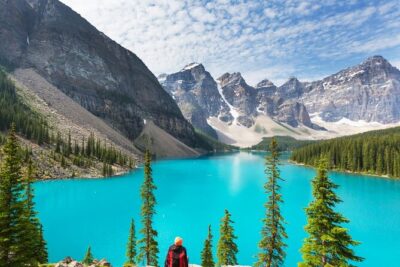
Banff/Canmore Moraine Lake & Lake Louise– Hike, Canoe or Sightsee
Read our review →
Browse the lists this tour appears in