
Reviewed · CYCLING TOURS
E-bike through Toronto’s Dynamic Neighbourhoods
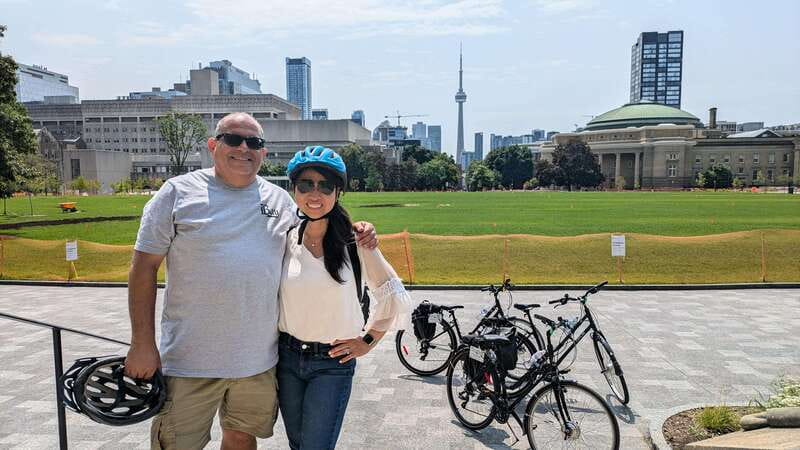
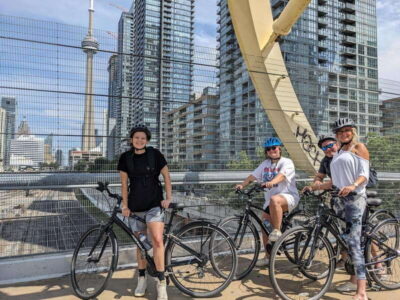
Toronto reveals itself best when you leave the postcard sights behind. This 210-minute e-bike tour links very different neighborhoods, from Lower Ossington and Graffiti Alley to St. James Town, Rosedale, and the waterfront. The electric assist lets you cover more ground without turning the ride into a workout.
I like the small eight-person limit, which leaves room for questions and conversation. I also like the mix of social issues, local culture, parks, street art, and urban change. The main consideration is that this is still a bike tour: you need to ride confidently, and children under 16 cannot join. A recent cancellation caused serious frustration for one customer, so it is wise not to place an unchangeable day’s plans around the tour.
Key points to know before you book
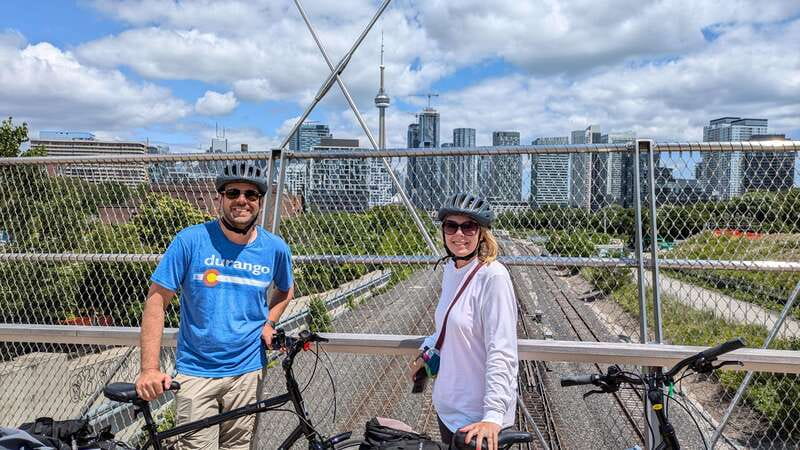
- More than the usual downtown sights: The route reaches neighborhoods where people live, work, eat, and gather.
- Mariana has earned special praise: She is described as friendly, clear with bike instructions, and well informed about each area.
- Electric assistance saves your legs: You can cover a broad section of Toronto with less effort than on a standard bicycle.
- The route has a social purpose: St. James Town and CAMH add context about food, healthcare, mental health, and public services.
- The group stays small: With no more than eight people, the ride should feel more personal than a large city tour.
- Coffee costs extra: Water and a granola bar are included, but you pay for drinks at the coffee stop.
Why an e-bike is a smart way to see Toronto
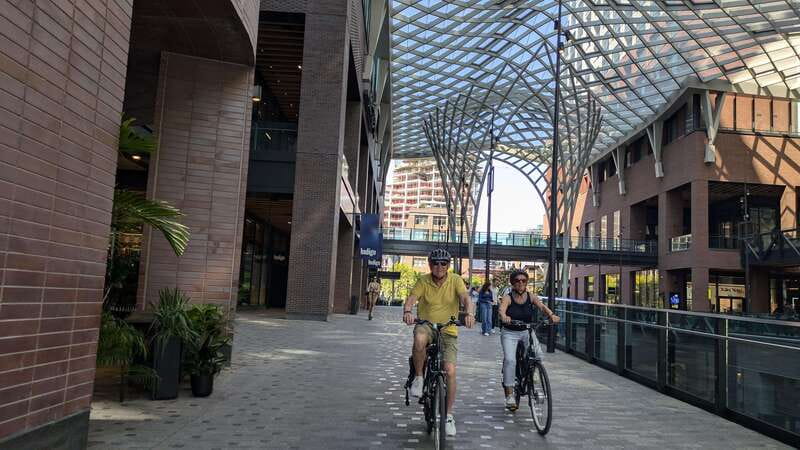
At $107 per person, this is not the cheapest way to spend a morning or afternoon in Toronto. The value comes from the range of the route. In three and a half hours, you can see several districts that would be awkward to connect on foot and easy to miss if you stayed near the main attractions.
The motor assistance matters. You still pedal, but the bike helps reduce the strain of distance and city riding. That makes it easier to focus on the neighborhoods instead of how far you have left to go. If you have never used an e-bike, the guide explains how to operate it, and Mariana has been singled out for making first-time riders feel comfortable.
You should still arrive ready to ride. Comfortable clothes are the only listed requirement, but practical clothing will make the experience easier. You need to be able to ride a bicycle, and the tour is not suitable for anyone who cannot do so. It is also restricted to people age 16 and older.
The route is best for curious visitors who want a broad introduction to Toronto. It is less suited to someone who wants a slow walk through one district, a museum-heavy outing, or a tightly scheduled list of major landmarks.
Other rides on two wheels around Toronto:
- Toronto: Heart of Downtown 3.5-Hour Bike Tour
★ 4.9 · 419 reviews - Downtown Toronto Bike Tour
★ 5.0 · 336 reviews - Toronto Islands: Morning or Twilight 3.5-Hour Bike Tour
★ 4.8 · 304 reviews
Starting underground on St. Patrick Street
The meeting point is inside the parking garage at 124 St Patrick Street, about 50 meters south of Dundas on the west side of the street. The garage is just north of a salon, and the tour begins on level P2 in section H.
This is not the sort of meeting point you should find at the last second. If the garage door is closed, step close to it and it should open automatically. Enter, follow the ramp down, and look for the yellow signs to P2. The operator provides a phone number, 416-477-2184, if you need directions.
Allow extra time to locate the garage. A clear meeting point makes a tour easier, and this one takes a little attention. Once you are there, the practical pieces are covered: electric bike, helmet, water, and a granola bar snack.
Lower Ossington and Toronto’s changing identity
Lower Ossington is one of the clearest examples of Toronto’s ability to change its character. It was once overlooked, but it has become known for food, nightlife, and independent businesses. The point of visiting is not simply to tick off a fashionable street. It is to see how a once-quiet area can become one of the city’s most talked-about places.
Your guide can help connect the physical street to the larger question of city change. What makes an area attractive? Who gets to shape its future? How does a neighborhood keep a local feel as more people discover it?
That kind of context is one reason this tour offers more than transportation. You are not simply being taken from one photo stop to another. You are given a way to read the city, with attention to how places evolve.
St. James Town and everyday city problem-solving
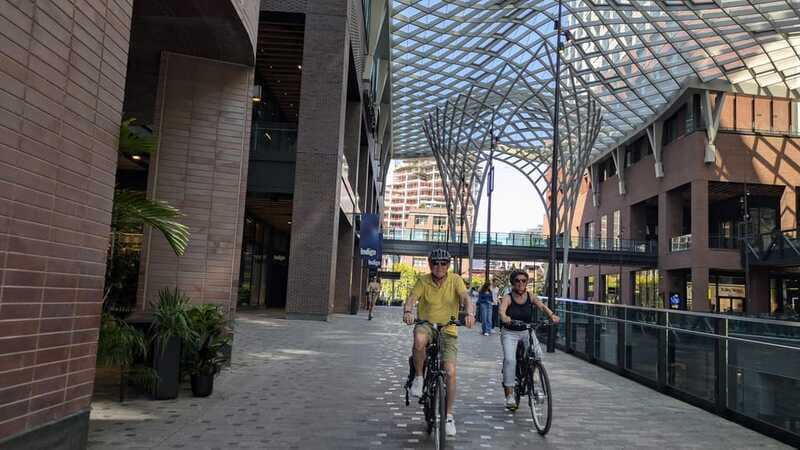
St. James Town brings a different side of Toronto into view. It is one of the city’s most culturally diverse communities, and the tour looks at local efforts involving food, healthcare, and social services.
This stop gives the ride some substance. Toronto can be easy to view as a collection of attractive districts, restaurants, and galleries. St. James Town points you toward the practical work of making a dense urban community more livable.
The subject matter may not suit someone looking only for light sightseeing. For me, that is part of the value. A good city tour should show how people actually live, not just where visitors take pictures. Expect the guide to explain challenges and responses rather than offer a polished city image.
Same base, a different sort of day:
- Toronto: Niagara Falls Day Tour with Optional Boat Cruise
★ 4.6 · 3,178 reviews - Niagara Falls Day Tour from Toronto
★ 5.0 · 2,889 reviews - Toronto: Casa Loma Entry Ticket
★ 4.7 · 2,705 reviews - Niagara Falls Canada Day Tour From Toronto + Boat Cruise Option
★ 5.0 · 2,576 reviews
Trinity Bellwoods, a pause in the city
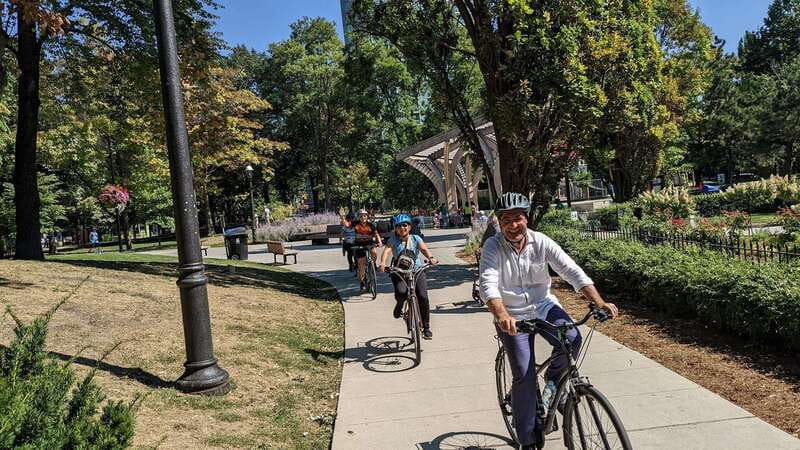
Trinity Bellwoods is a popular green space where the pace changes. It is a place to watch local life unfold and get a feel for how Toronto residents use public parks.
This is a useful contrast after the denser neighborhood stops. The park gives you a chance to notice the social rhythm of the city. People gather, pause, and spend time outdoors without needing a formal attraction to justify being there.
The tour is not presented as a long park visit, so do not expect an extended picnic or a leisurely afternoon on the grass. Think of Trinity Bellwoods as a window into local routine and a welcome change from continuous street riding.
The Bloor Street Cultural Corridor
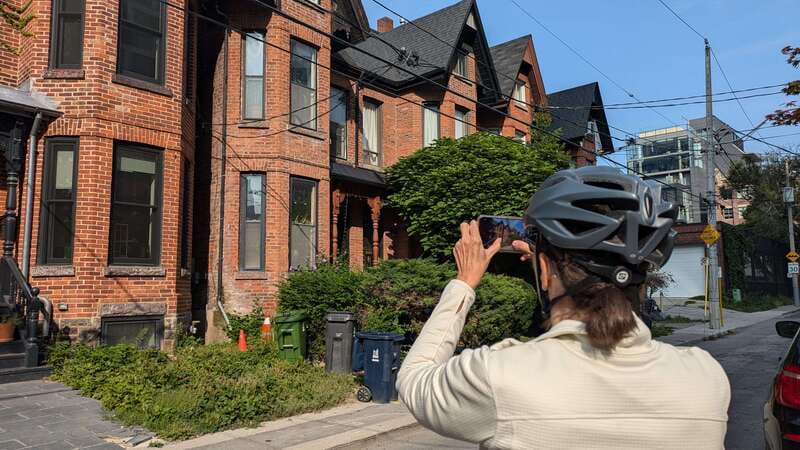
The Bloor Street Cultural Corridor brings together museums, performance venues, and food from many parts of the world. Even if you do not enter any museum or show during this tour, the corridor helps explain Toronto’s cultural range.
I like this section because it connects institutions with daily city life. Culture here is not limited to one historic quarter or a single grand building. It sits alongside shops, restaurants, and busy streets.
The tour’s purpose is to give you orientation and context, not admission to attractions. If you want to visit a particular museum, set aside another block of time and plan that separately. This ride helps you decide what deserves a return visit.
Graffiti Alley and Toronto’s changing street art
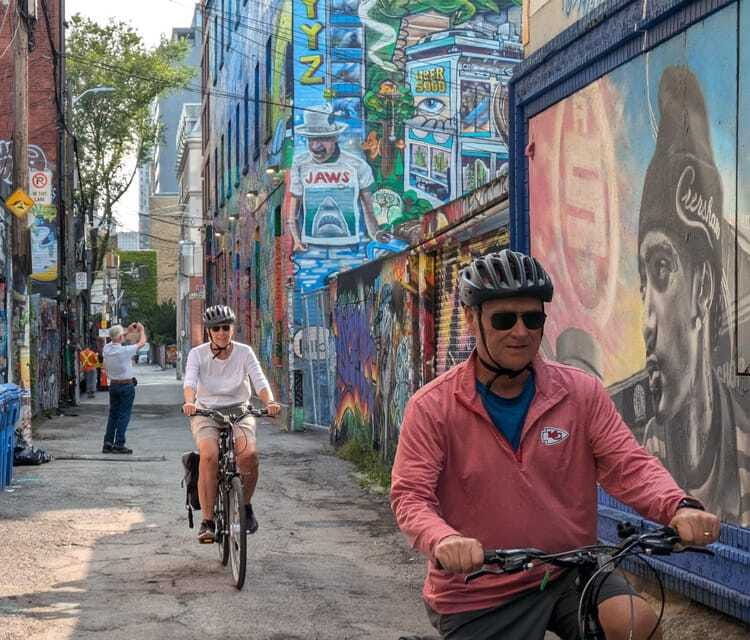
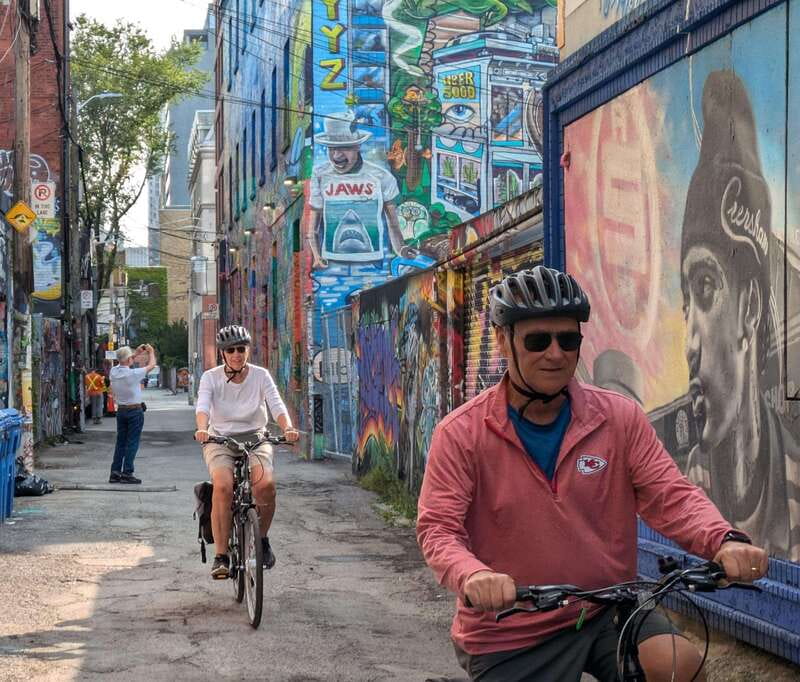
Graffiti Alley offers a more visual stop. Its art changes over time, so the exact walls you see depend on when you visit. That changing quality is the point. The alley gives you a look at a city expressing itself outside formal galleries and performance halls.
For photographers, this should be one of the most appealing sections. For everyone else, it shows another layer of Toronto’s identity: informal, temporary, and open to change.
Do not expect a fixed exhibit with labels and a set route. The guide’s role is to help you understand the setting and the city’s street-art culture. The ride also lets you see how close this creative space is to the more polished cultural districts.
CAMH and a more open approach to mental health
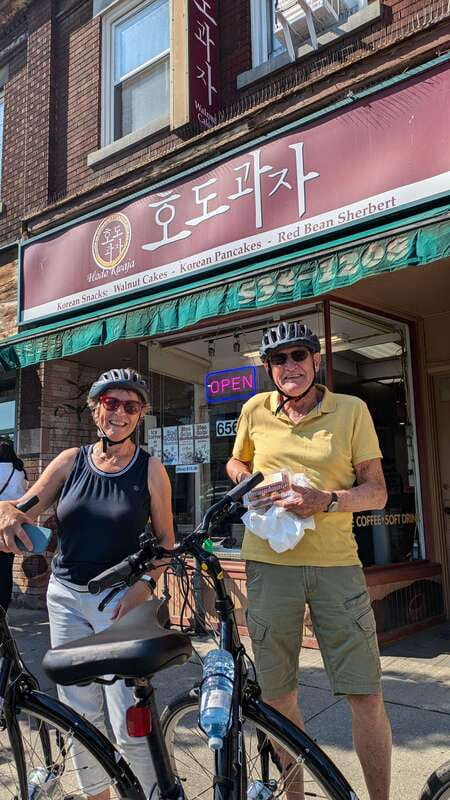
The stop at the Centre for Addiction and Mental Health, known as CAMH, adds a serious and useful subject to the route. The tour examines Toronto’s progressive approach to mental health and the changes taking place at the center.
This is not an attraction in the usual sightseeing sense. It is valuable because it asks you to look at public health and city planning together. The area reflects a move toward more open, community-based thinking about mental health rather than keeping the subject out of sight.
The tone may feel different from the fun of street art or the easy pleasure of a park. That contrast is intentional. It gives you a fuller picture of the city and shows how local institutions are part of Toronto’s changing story.
Ontario Place and Trillium Park by the water
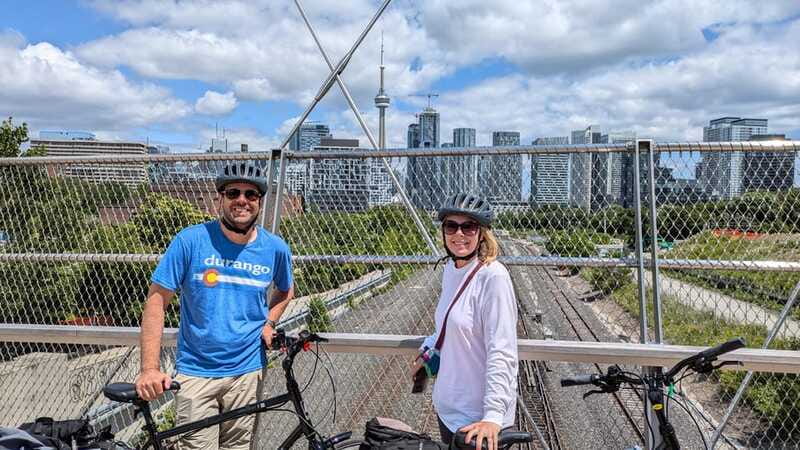
At Ontario Place and Trillium Park, the route reaches the waterfront. You will see a much more open setting and learn about a beloved venue that is in the middle of change.
This part of the ride is especially useful if you have limited time in Toronto. The waterfront can feel separate from the central neighborhoods, yet this tour connects the two by bicycle. You get a sense of the city’s relationship with public recreation, large venues, and future redevelopment.
Because Ontario Place is being transformed, the scene is not simply a finished attraction waiting to be photographed. It is a place in transition. That makes the guide’s explanation important, since the value lies in understanding what the area has been and what it may become.
Rosedale and the stories behind polished streets
Rosedale offers a sharp contrast to St. James Town and Lower Ossington. It is one of Toronto’s most affluent neighborhoods, known for picturesque streets and a more private atmosphere.
The interest here is not only the appearance of the area. The tour looks for the stories behind it, adding social and historical contrast to the route. After seeing districts shaped by density, culture, art, and public services, Rosedale shows a very different version of city life.
This is also a good reminder of why an e-bike works well. You can pass through a residential neighborhood without turning the experience into a long walk between unrelated points. The bike keeps the outing moving while still allowing the guide to explain what makes the district distinct.
A guide-led ride with room for questions
The English-speaking guide is a major part of the experience. Mariana is the guide named in the customer feedback, and she has been praised for her friendly manner, clear bike instruction, and strong grasp of neighborhood history and current development.
One particularly useful detail: she has helped people who had never ridden an e-bike before. That matters because the motor can feel unfamiliar at first. A guide who handles both the mechanical explanation and the city commentary makes the ride less intimidating.
The group limit is eight people. That is small enough for a more personal exchange and large enough to keep the tour social. One booking became a personal bike tour because only one person attended, though you should not count on receiving a private tour.
A guide-led route also gives you a chance to ask about places you may want to revisit later. If you are in Toronto for only one day, this can function as a useful orientation ride. One customer who had just a day in the city found it a good way to see many different areas.
What is included, and where the price makes sense
The $107 price includes the electric bicycle, helmet, water, and granola bar. A coffee stop is part of the outing, but the drink is not included. Bring a payment method if you want one.
The price makes the most sense if you value access to several districts and a guide who explains how they connect. It is less compelling if you mainly want a short ride, a single park, or a simple way to rent a bicycle. This is a guided city experience, not just bike hire.
The small group also affects the value. You are paying for an interactive format rather than being one person in a large crowd. If the guide is a key reason you book, Mariana’s strong feedback is encouraging, though guide assignments can vary.
There is one practical warning. Two last-minute cancellations within 48 hours caused major disruption for one customer, including a morning-of cancellation due to an employee illness. The operator was apologetic, but the problem is worth noting. The activity allows free cancellation up to 24 hours in advance and offers reserve-now, pay-later booking, but you should still keep a backup plan if your Toronto schedule is tight.
Who should book this Toronto ride
I would choose this tour if you want to understand Toronto through its neighborhoods rather than collect only its famous sights. It suits first-time visitors who want orientation, repeat visitors looking for a different angle, and anyone interested in city design, local communities, public spaces, and urban change.
It is also a strong choice for people who are comfortable trying an e-bike for the first time. The electric assistance makes a long route more manageable, and the guide provides operating help.
I would think twice if you cannot ride a bicycle, are traveling with children under 16, or want a fully relaxed outing with no physical demands. You should also consider another plan if a cancellation would ruin your only day in Toronto.
Should you book it?
Book this e-bike tour if you want breadth, local context, and a small group. The route covers an unusually wide mix of Toronto: fashionable streets, a culturally diverse community, a public park, an arts corridor, street art, mental-health services, the waterfront, and an affluent residential district.
At $107, the tour earns its price through the distance covered and the quality of the guide-led storytelling. It is not a substitute for spending time inside museums or relaxing at the waterfront, but it can show you where to return and help you understand the city before you explore on your own.
FAQ
Where does the e-bike tour meet?
It meets inside the parking garage at 124 St Patrick Street in Toronto, about 50 meters south of Dundas on the west side of the street. Follow the yellow signs to level P2, section H.
How long does the tour last?
The tour lasts 210 minutes, or three and a half hours.
What language is the tour in?
The live guided tour is in English.
How many people can join?
The tour is limited to eight participants.
Is an e-bike provided?
Yes. The electric bike is included in the price, along with a helmet.
What else is included?
Water and a granola bar snack are included.
Do I pay for the coffee stop?
Yes. Any drink at the coffee stop is paid for separately by you.
Can children join the tour?
Children under 16 are not permitted to join.
What happens if I need to cancel?
You can cancel up to 24 hours in advance for a full refund. The booking option also allows you to reserve your place and pay later.
Just added in Toronto
- Toronto Waterfront and Islands Guided Bicycle Tour★ 4.9 · 80 reviews
- Toronto: Winter Niagara Falls Tour with Attractions Package★ 4.7 · 43 reviews
- Toronto: Toronto Zoo Entry Ticket★ 4.1 · 68 reviews
- Toronto: Toronto Raptors NBA Game Ticket at Scotiabank Arena★ 4.6 · 88 reviews
- Toronto: Must Do NonTouristy Street Art Tour by local Artist★ 4.9 · 30 reviews
- Toronto: Craft Brewery Tour★ 5.0 · 8 reviews
- Toronto: St Lawrence Market Food Tour with 6 Tastings★ 4.7 · 168 reviews
- Toronto: Toronto Maple Leafs Game Ticket at Scotiabank Arena★ 4.6 · 43 reviews
Cycling Tours, compared.

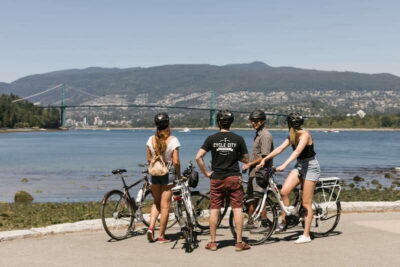
The Stanley Park Bicycle Tour by Cycle City Tours
Read our review →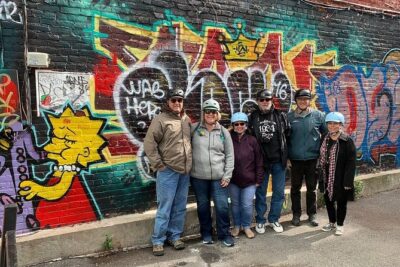


Browse the lists this tour appears in