
Reviewed · TOURS IN JASPER
Jasper: Planetarium Indoor Dome Experience
Jasper’s planetarium takes you from Indigenous constellations to the Aurora Borealis above Rocky Mountain peaks, all from a warm, darkened dome. It is an unusual indoor answer to Jasper’s cold nights, cloudy skies, and sometimes uncooperative northern lights.
I like the local astronomy guide and the chance to ask questions after the show. I also like the clear sense of scale, from glaciers seen from space to the far edge of the known universe. The main drawback is value: at $34 per person, the short 35-minute program may feel expensive if you expect a full evening attraction.
Parking can also take longer than expected. Arrive at least 15 minutes early, and aim for lot P2, the closest of the available lots, so you do not risk missing the start.
Key points to know before you book
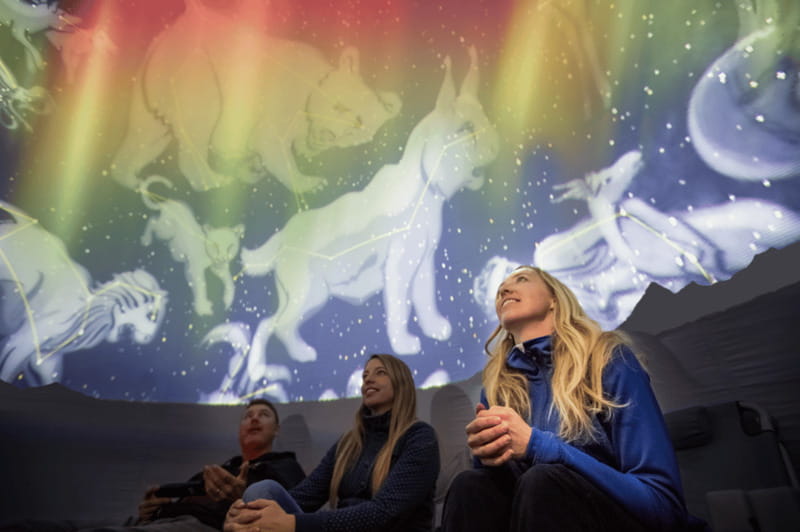
- A 42-seat indoor dome: You get a climate-controlled presentation rather than a cold outdoor stargazing session.
- Jasper’s night sky on screen: The program includes the northern lights, planets, nebulas, star clusters, glaciers, and the outer reaches of the universe.
- Local Indigenous astronomy: The show includes constellations and sky knowledge connected with Indigenous traditions.
- A short 35-minute visit: This works well as a compact evening activity, but may feel brief for the price.
- Questions are part of the experience: You can speak with your guide after the presentation.
- Early arrival matters: Check in 15 minutes before departure at the Planetarium Retail Desk inside the Main Lodge.
A short journey through Jasper’s night sky
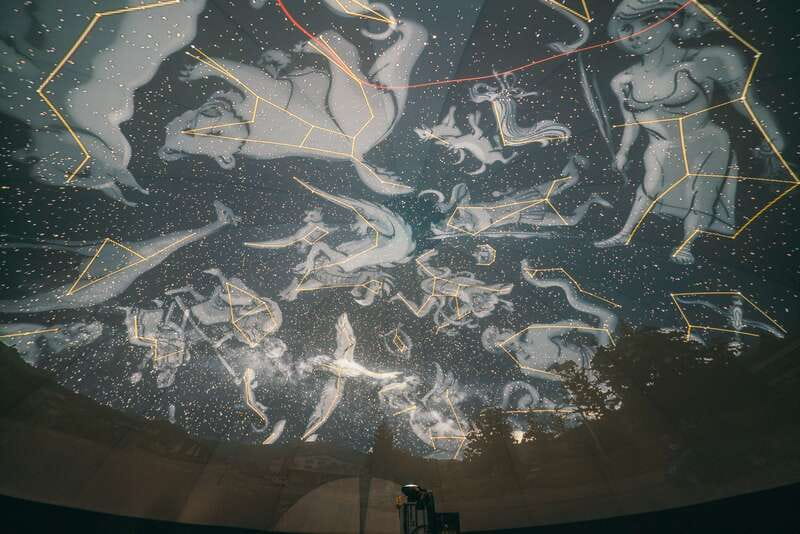
The Jasper Planetarium is not a traditional observatory visit. You are not standing outside with a telescope, waiting for the clouds to clear. Instead, you sit beneath a large dome while the program carries you through a carefully chosen sequence of sights and stories.
That difference matters in Jasper. The town is famous for its dark skies, but outdoor stargazing depends on weather, season, cloud cover, moonlight, and your tolerance for cold. The dome gives you a dependable indoor setting and lets the presentation show things no telescope in Jasper could reveal directly, including views of Rocky Mountain glaciers from space and scenes near the edge of the known universe.
The 42-seat theatre keeps the experience fairly small. It is large enough to feel like a proper presentation, but not so large that the guide becomes a distant voice. If your session has only a few people, you may get more time for questions and a more personal exchange after the show.
The full program lasts 35 minutes. I would think of it as one focused activity, not a major half-day outing. You can fit it before dinner, after a walk around Jasper, or between other plans at Fairmont Jasper Park Lodge.
Other trips people book in Jasper:
- Jasper: Columbia Icefield Skywalk and Ice Explorer Ticket
★ 4.6 · 2,444 reviews - Jasper: Columbia Icefield Skywalk
★ 4.3 · 916 reviews - Jasper National Park: Maligne Lake Cruise With Guide
★ 4.7 · 896 reviews
Starting inside Fairmont Jasper Park Lodge
Your visit begins at the Main Lodge of Fairmont Jasper Park Lodge, not at a separate outdoor site. Once inside, walk straight past the front desk. The Planetarium Retail Desk is in the southwest corner of the lobby, directly across from the Emerald Lounge.
This check-in point is easy enough to find once you know where to look, but the lodge is not the place to arrive at the last second. You must check in 15 minutes before departure. Late arrivals are not admitted because opening the doors during the presentation disrupts the program. If you miss your time, you may be moved to the next available departure, and that could be on another day.
If you drive to the lodge, use any available space in P2, P3, or P4. P2 is closest to the planetarium. Parking has been a practical headache for at least one visitor, who needed to park a long way from the building and nearly arrived late. Give yourself extra time if the lots look full or you are unfamiliar with the resort grounds.
The parking is included, which helps the overall price. Still, I would not count on pulling into a space right beside the entrance. Build the walk into your schedule.
What happens under the 42-seat dome
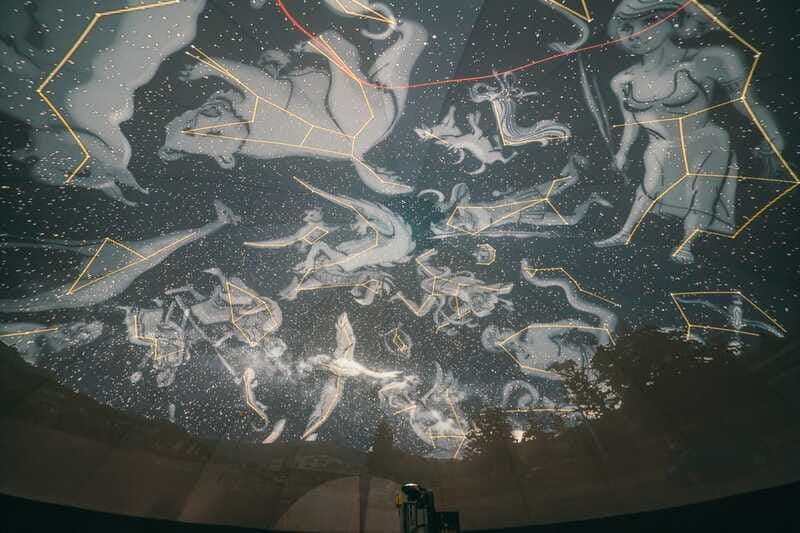
After check-in, you enter the dome theatre. The room is climate controlled, so you can enjoy the show without wearing every warm layer you brought for Jasper’s outdoor activities. Food, drinks, smoking, vaping, and alcohol are not allowed inside.
The presentation moves through several scales of the sky. You may begin with what you could see above Jasper on a clear night, then move outward to planets, nebulas, and distant star clusters. The dome format gives the images a strong sense of movement and scale, which is useful when the subject is something as hard to picture as the size of the universe.
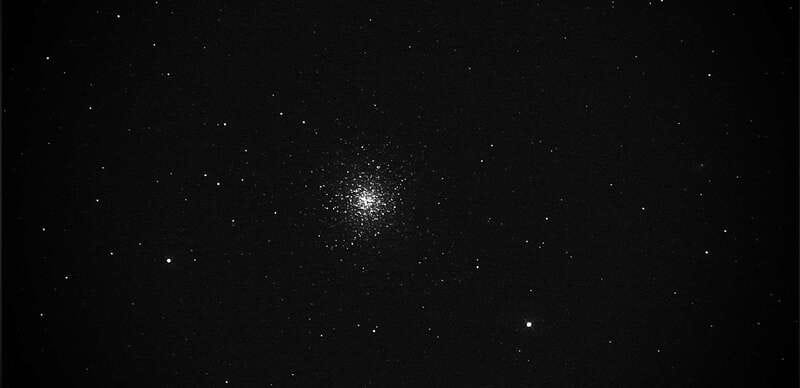
One of the key scenes is the Aurora Borealis over Jasper National Park and the mountain peaks. This is not a promise that you will see the real northern lights during your visit. It is a presented view of the aurora, which makes the activity useful even when clouds, daylight, or the season keep the actual sky quiet.
You also see the Rockies from above, including glaciers viewed from space. That part links the familiar local setting with astronomy. Instead of treating Jasper as just a backdrop, the program places the national park within a much larger view of Earth and the solar system.
The show then reaches farther out to nebulas and star clusters. For some people, these are the most memorable images because they show how much of the universe is beyond what you can see with the naked eye. For others, the basic planetarium format may feel familiar, especially if they have already attended similar shows in a large city.
The program is designed as an interactive journey rather than a silent film. Your guide narrates the presentation and helps explain what you are seeing. The available information does not provide the guide’s name, but the guide speaks in English and remains available for questions after the return to Earth.
Indigenous constellations give the show a local voice
The inclusion of Indigenous constellations is one of the strongest reasons to choose this program over a generic space film. The sky is not interpreted the same way by every culture. Constellations that seem familiar in European astronomy may have different meanings, stories, or uses in Indigenous traditions.
That local material gives the show a connection to Jasper and the people who have understood these skies for generations. It also keeps the program from being only a procession of planets and special effects. You get a reminder that astronomy is both a science and a way people make sense of time, travel, seasons, and place.
The supplied details do not identify which Indigenous nations or specific constellations are covered. If that matters to you, ask your guide during the question period. The Q&A is your chance to clarify what you have just seen and ask about the local sky traditions in greater detail.
I particularly like that the program includes this material without requiring you to be an astronomy expert. You can arrive knowing very little and still follow the presentation. The guide’s job is to connect the large ideas to sights you recognize, such as Jasper’s mountains and glaciers.
Same base, a different sort of day:
- Jasper Evening Wildlife Tour
★ 4.5 · 710 reviews - Jasper National Park: Evening or Morning Wildlife Watch Tour
★ 4.6 · 691 reviews - Jasper Wildlife & Sightseeing Tour with Maligne Lake Cruise
★ 5.0 · 603 reviews - Jasper SkyTram Roundtrip Flight Ticket
★ 4.7 · 567 reviews
Why the guide matters more than the screen
A planetarium can succeed or fail on the quality of its narration. Impressive images are not enough if the explanation is flat or rushed. The strongest available feedback describes a skilled narrator with a good sense of humor and strong public speaking, along with a stunning visual presentation.
That praise is worth taking seriously because the show is short. In 35 minutes, the guide has to move from local constellations to the aurora, then out toward galaxies and the edge of the universe. A clear narrator keeps that journey from becoming a jumble of unrelated images.
The Q&A also helps. You can ask about the aurora, the Indigenous sky stories, the planets, or how the images relate to what you might see outside in Jasper. When only a few people attend, this part can feel especially relaxed and personal.
At the same time, expectations matter. This is not a private astronomy lesson, and the program may not satisfy someone looking for advanced scientific detail. One disappointed visitor felt the presentation was aimed at children and did not justify the cost. If you want technical depth, ask a question during the Q&A and use that moment to steer the conversation toward the topics that interest you.
Is $34 fair for 35 minutes?
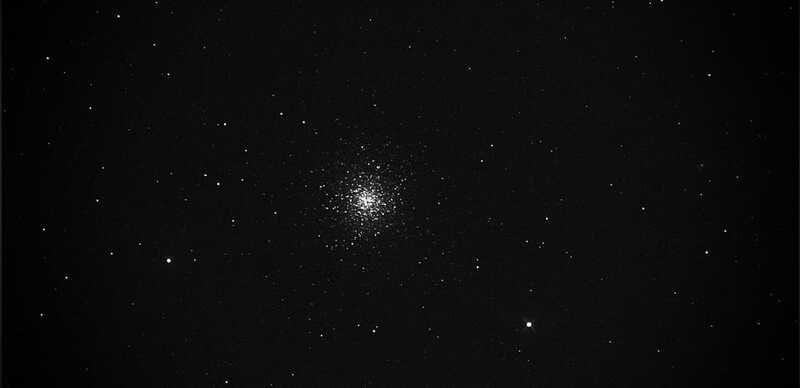
At $34 per person, the price is reasonable for a specialized indoor attraction, but it is not a bargain in the usual sightseeing sense. You are paying for a dedicated dome theatre, a live guide, a locally focused program, and an activity that works in poor weather. You are not paying for a long tour or a full evening of entertainment.
I would judge the value by your plans in Jasper. If you want a short, comfortable activity that adds context to the dark skies and northern lights, the price can make sense. It is also a useful choice when the weather rules out outdoor viewing or when you want something that does not involve another cold walk.
If you are comparing it with a free night under Jasper’s sky, the decision is harder. The outdoor view can be extraordinary, but it depends on conditions and does not provide the same guided explanation. The planetarium gives you a reliable presentation, while outdoor stargazing gives you the real sky and the possibility of seeing something the dome cannot reproduce.
The mixed value is clear. One person considered it easily worthwhile, while another felt it was not worth the money and time. Those opposing reactions likely come down to expectations. Book it for the guided presentation and indoor access to a wide range of cosmic subjects, not because it is a long attraction.
Who will enjoy this most?
I would recommend the Jasper Planetarium to adults and older children who enjoy science, space, photography-free visual shows, or local culture. It suits people who want to understand Jasper’s dark-sky reputation before heading outside at night.
It is also a sensible option for a mixed group. Someone interested in Indigenous constellations can focus on the cultural material, while someone else can enjoy the aurora, planets, and distant star clusters. The English-speaking guide keeps the program straightforward for those comfortable with English.
Children under four are not allowed. The rules also prohibit unaccompanied minors, so children must attend with an adult. Because the presentation is short, it may work well for families who do not want to commit to a long indoor program, though the content can feel too young or too simple for adults seeking advanced astronomy.
The theatre is wheelchair accessible. Cellphones, photography, flash photography, and audio recording are not allowed, so plan to watch rather than document the show. Assistance dogs are allowed, but other pets are not.
Timing your visit with the rest of Jasper
The best way to use this activity is as a planned 35-minute pause in a larger Jasper day. You might schedule it after time in the national park and before dinner, or use it as an indoor option when outdoor conditions turn unpleasant.
Do not treat the start time casually. Check-in begins inside the lodge, and the walk from a distant parking lot can cost several minutes. Arriving early also gives you time to find the Retail Desk without crossing the lobby in a hurry.
The program is available at scheduled starting times, so check the calendar before building your day around it. The available information does not provide a fixed daily timetable. Cancellation is free up to 24 hours before departure, while changes inside that window may be possible without a refund.
Because the show is indoors, it is less tied to daylight than an outdoor activity. Still, the presentation is not the same as seeing the actual night sky. If the real stars are important to you, treat the planetarium as preparation and context, not a replacement.
Should you book the Jasper Planetarium?
Book this experience if you want a short, weatherproof introduction to Jasper’s sky, especially if you value a live guide, Indigenous astronomy, and a visual tour that reaches far beyond what you can see outdoors. The local connection and the post-show questions give it more purpose than a standard space video.
Skip it if $34 feels high for 35 minutes, or if you already know you prefer unstructured outdoor stargazing. Also skip it if you expect an advanced astronomy lecture or a long attraction.
For most people, I would make the decision based on the guide and the setting. A strong narrator can make the fast trip from Jasper’s mountains to the edge of the universe feel memorable. Arrive early, park in P2 if possible, and go in expecting a compact presentation rather than a major evening event.
FAQ
Where does the Jasper Planetarium experience begin?
Check in at the Planetarium Retail Desk inside the Main Lodge at Fairmont Jasper Park Lodge. Walk straight past the front desk, and look for the Retail Desk in the southwest corner of the lobby, across from the Emerald Lounge.
How long does the planetarium experience last?
The presentation lasts 35 minutes.
How much does admission cost?
The listed price is $34 per person.
What does the presentation cover?
It covers the northern lights over Jasper National Park, planets, nebulas, distant star clusters, Rocky Mountain glaciers viewed from space, Indigenous constellations, and the wider universe.
Is there a question-and-answer period?
Yes. You can ask questions of the tour guide after the presentation.
Is the planetarium wheelchair accessible?
Yes, the experience is wheelchair accessible.
Is parking included?
Yes. Free parking is included. You may park in available spaces in lots P2, P3, or P4, with P2 closest to the planetarium.
How early should I arrive?
You must check in 15 minutes before the scheduled departure. Late arrivals are not admitted and may need to be rebooked for the next available time, which could be on another day.
Just added in Jasper
- Wildfire Peak Nic★ 5.0 · 5 reviews
- Ultimate Jasper Nature Walk★ 4.5 · 9 reviews
- Planetarium and Telescope Combo Tour★ 4.0 · 144 reviews
- Whitewater Rafting on Jasper’s Fraser River★ 5.0 · 59 reviews
- Sunwapta Challenge Whitewater Rafting: Class III Rapids★ 5.0 · 139 reviews
- Wild Current Canoe Adventure Join a small group★ 5.0 · 177 reviews
- Winter Wildlife Discovery Tour★ 4.5 · 68 reviews
- Jasper to Lake Louise One-Way Tour★ 5.0 · 19 reviews
Tours in Jasper, compared.
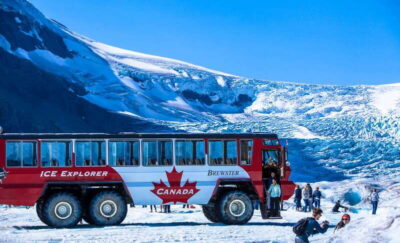
Columbia Icefield Skywalk and Ice Explorer Ticket
Read our review →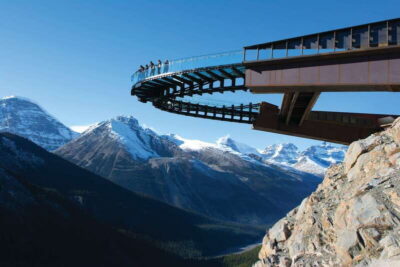
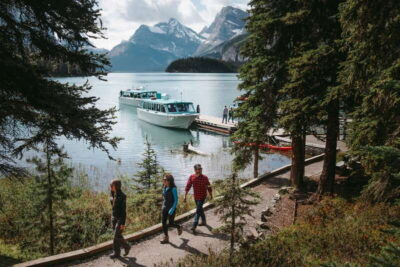
Jasper National Park: Maligne Lake Cruise With Guide
Read our review →
Jasper National Park: Evening or Morning Wildlife Watch Tour
Read our review →
Jasper Wildlife & Sightseeing Tour with Maligne Lake Cruise
Read our review →
Browse the lists this tour appears in