
Reviewed · TOURS IN BANFF
Rock Climbing Adventure in Banff: Beginner
Banff’s beginner rock-climbing day gets you off the town streets and onto real outdoor routes, with a guide handling the ropes while you learn the basics. You start with safety and technique, then work through several climbs suited to your ability. Even first-timers have a fair shot at reaching the top.
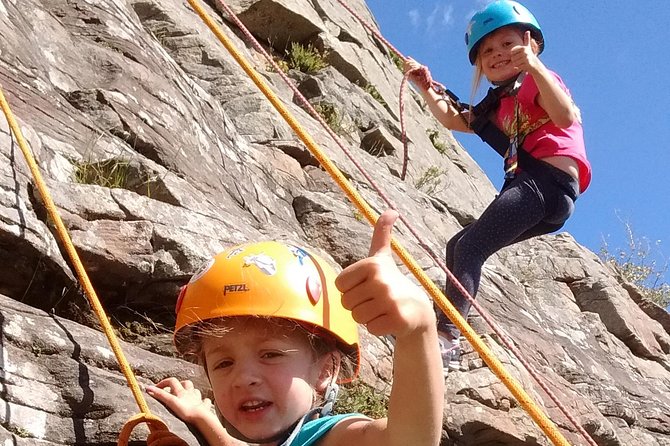
I like the small group of up to eight, which gives guides room to help each climber rather than simply run a quick introductory lesson. I also like the family-friendly approach: guides such as Dustin and Janet have adjusted climbs for children as young as nine while still giving stronger climbers harder routes.
The main thing to consider is the footwear. Climbing shoes are included, but sizes may be limited on a given day. If your shoes fit poorly, climbing becomes less comfortable and precise, so ask about sizing before you set out.
Key points to know before booking
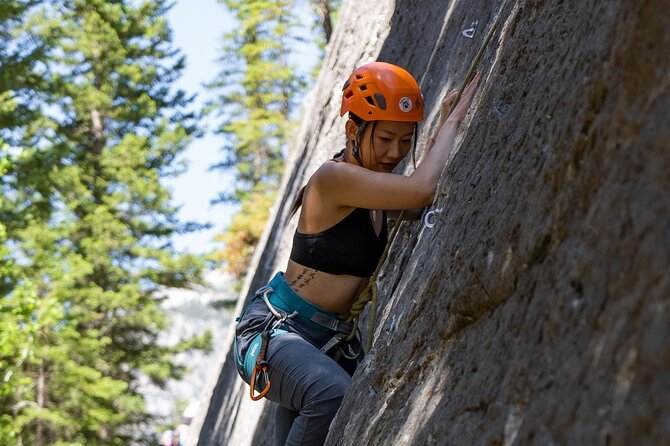
- A full seven-hour outdoor day: You get time for several climbs, not just a short tryout on one wall.
- Small groups matter: No more than eight people allows for personal coaching and route choices at different skill levels.
- Beginners start with real safety skills: Expect instruction in site awareness, overhead hazards, top-rope belaying, and climbing technique.
- Families can take part: Children around nine have successfully handled the program, while families with younger children can ask about a half-day option.
- All core climbing gear is supplied: Your package includes a helmet, harness, climbing shoes, ropes, and belay devices.
- Plan your own lunch and transport: Private transportation and lunch are not included, and the day begins at 7:45 am at 229 Bear Street.
What this Banff climbing day is really like
This is not an indoor climbing lesson moved outdoors for an hour. It is a full-day introduction to outdoor rock climbing in Banff National Park, with time to try several routes and build confidence as you go.
You meet at 229 Bear Street in Banff at 7:45 am. From there, the group heads to a local climbing area. The exact climbing site is not specified in advance, so your day is shaped by conditions, route suitability, and the group’s ability.
That flexibility is useful. A beginner may need a lower, simpler route and plenty of coaching, while a climber with indoor experience may be ready for steeper rock or a more technical challenge. The guide can adjust the day rather than force everyone through the same climb.
The group size is capped at eight people. That is a practical limit for a climbing lesson, since each person needs time on the wall and the guide needs to watch safety systems closely. A large group could mean long waits between climbs. Here, the smaller format gives you a better chance to ask questions and try more than one route.
The program lasts about seven hours and ends back at the meeting point. You should treat it as most of a day outdoors, not an activity to squeeze between a morning gondola ride and an afternoon reservation.
Other trips people book in Banff:
- Banff: Banff Gondola Admission Ticket
★ 4.7 · 3,698 reviews - Banff Gondola Ride Admission
★ 4.5 · 2,688 reviews - Columbia Icefield Tour with Glacier Skywalk
★ 4.5 · 1,860 reviews
Starting with safety before the first climb
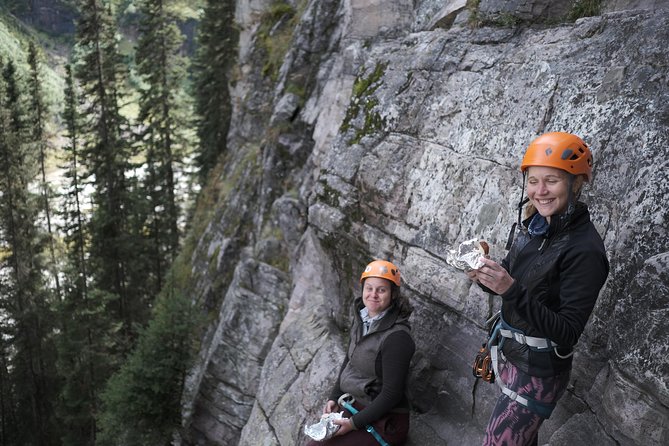
A good beginner climbing day should make safety feel clear rather than frightening. This program begins with the basic systems and habits you need at an outdoor climbing site.
Your guide covers site safety and awareness, including how to pay attention to the area around you. Overhead hazards are part of the lesson too. That is important outdoors, where loose rock, equipment, and people above you all need attention.
You also learn about top-rope belaying, and the course may introduce lead-climbing systems as your ability and interest allow. The guide controls how far the group goes, so you do not need previous experience to participate.
The instruction is designed to serve two kinds of beginners. You might be completely new to climbing, or you might have climbed indoors but never dealt with outdoor rock, ropes, anchors, and route choices. The second group often knows how to move on a wall but still needs to learn how outdoor climbing works.
The distinction matters. Outdoor climbing is not simply about pulling yourself upward. You need to understand where the rope runs, how the belay system works, how to move safely around the base of a route, and how to recognize hazards. The day gives those subjects room alongside the physical climbing.
Climbing several routes instead of stopping after one
The best feature of a seven-hour format is the chance to try more than one route. You are not judged by a single climb that may happen to be too hard, too easy, or poorly suited to your first attempt.
One family worked through six different climbing spots during the day. That kind of variety gives you a clearer sense of your own ability. A route that feels awkward at first may teach you something useful for the next climb, while an easier section can help you settle into the harness and trust your feet.
Your guide will begin with simple instruction, then adjust the climbs as the group develops. A first-time climber may focus on balance, foot placement, and using the rope correctly. Someone with indoor experience may work on outdoor route reading or move onto steeper rock.
The program can also include techniques such as using quick draws on bolted routes, building top-rope anchors, mock leading, and rappelling. These are not promises that every participant will cover every advanced subject. They are possible additions, depending on the group and the guide’s plan.
That is a sensible approach for a mixed group. You get a structured introduction without being boxed into a rigid lesson plan. If you are ready for more, ask. Guides including Dustin have been praised for teaching technical skills while still keeping the experience approachable.
Why families can make this work

This program is a good choice for families with children who are old enough to listen carefully, follow instructions, and take part in a full outdoor day. Children aged nine and older have been supported on the full experience, with guides adjusting climbs to their height, confidence, and skill.
Dustin and Janet have worked patiently with nine-year-olds while helping an older child attempt a 5.10a route. That is a useful picture of how the day can work for different ability levels in one family. The youngest climber may need encouragement on an easy route, while a teenager can take on a more demanding challenge.
A family with children under 10 should ask about the half-day program. The full seven-hour day may be too long for a younger child, especially if the child is unsure about heights or loses interest between climbs.
The group format also means you should not expect a private family lesson unless you book one separately. Other participants may have different goals and abilities. The small size helps, but the guide still has to share time across the group.
For families, I would make the shoe question part of your planning. Children often need a precise fit to feel secure on small footholds. Adults may also find an incorrect size uncomfortable after repeated climbs.
Same base, a different sort of day:
- Lakes Moraine, Louise, Emerald, Johnston Canyon & Yoho Tour
★ 4.8 · 1,023 reviews - Lake Louise, Moraine Lake and the Icefields Parkway Full-Day Tour
★ 5.0 · 836 reviews - Banff: Lake Louise, Moraine, Emerald Lake & Johnston Canyon
★ 4.9 · 808 reviews - Banff: Lake Minnewanka Cruise
★ 4.7 · 791 reviews
What beginners and indoor climbers will learn
The course starts at a beginner level, but you do not have to remain there. The guides can discuss more advanced topics when the group is ready.
At the beginner end, expect help with:
- Basic climbing movement
- Foot and hand placement
- Site awareness
- Recognizing overhead hazards
- Wearing and using a harness and helmet
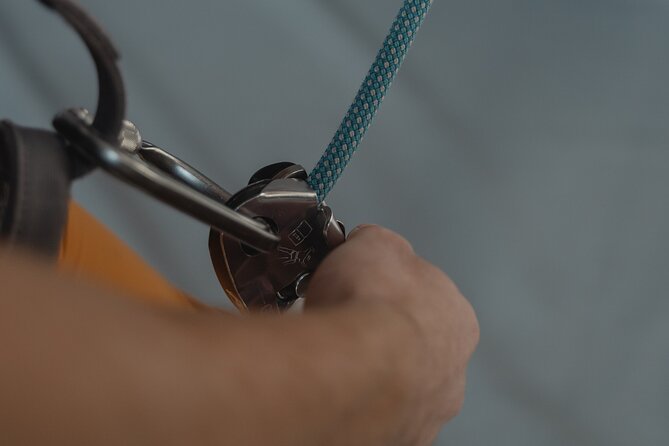
- Top-rope belaying
- General rope and belay-device use
At a more advanced level, the day may cover:
- Techniques for steeper rock
- Placing and using quick draws on bolts
- Building top-rope anchors
- Mock leads
- Rappelling
- Belaying lead climbers
This range makes the program useful for someone who has climbed only in a gym. Indoor climbing can teach movement and strength, but outdoor climbing adds route finding, rock awareness, equipment systems, and changing conditions.
You should be honest about your experience at the start. Tell the guide if you are completely new, if you climb indoors, or if you have used outdoor systems before. That information helps the guide choose routes and explain the right details without wasting your time.
Jacob, Dustin, Austin, and Sebastien have each been singled out for clear instruction, encouragement, and calm coaching. Guides may change, so you should not book based on a promise of one particular person. Still, the consistent pattern is useful: the guide’s role is not just to manage the rope, but to help you solve the climb.
The scenery adds value, but the climbing is the main event
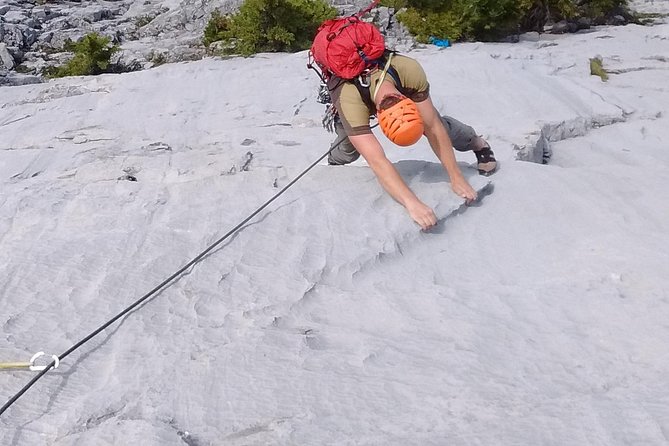
The setting in Banff National Park is a major reason to choose outdoor climbing here. You are not spending the day under gym lights. You are climbing in a mountain setting, with natural rock and the feeling of being outside in the park.
The scenery also gives the day a strong sense of place. You are learning a skill in Banff rather than taking a generic introductory class that could happen anywhere.
Still, this is not a sightseeing tour with climbing added on. Your attention will often be on footholds, handholds, rope systems, and the person climbing above or below you. If you want a relaxed day focused mainly on views, this may feel more active and demanding than expected.
The physical effort varies. The program is suitable for people with no previous experience, but climbing still requires movement, balance, and repeated attempts. You can tell the guide how much you can handle, and the stated goal is to get you as much climbing as you are comfortable managing.
That balance is one of the strongest parts of the format. You are encouraged to try, but the day is safety-oriented rather than competitive.
Gear, clothing, lunch, and the shoe issue
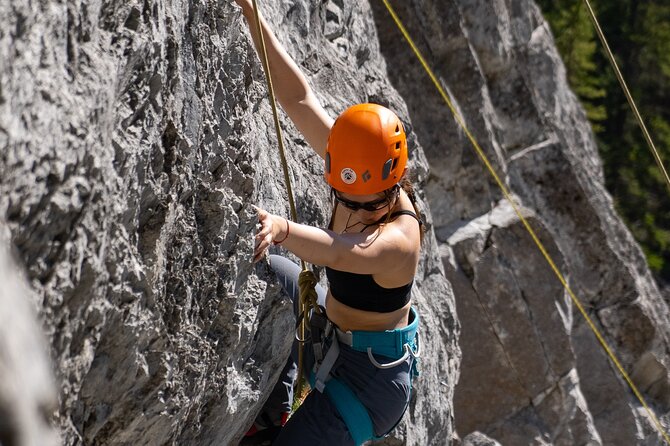
The price includes the main climbing equipment: helmet, harness, climbing shoes, ropes, and belay devices. That saves you from renting a full kit or buying equipment for a single day.
The climbing shoes deserve special attention. One family found that some sizes available at the climbing area were too tight or too loose. Poorly fitting shoes can make the day less pleasant, and oversized shoes can make it harder to use your toes on small footholds.
The provider has indicated that shoe orders were being made and that fitting shoes at the climbing area helps avoid extra traffic and parking problems in Banff. Even so, I would ask about your size before the day, particularly if you wear an uncommon size or are booking for several family members.
Lunch is not included. Bring or arrange your own food, and plan around a long day outside. Private transportation is also not included. The activity begins and ends at 229 Bear Street, so you are responsible for getting to the meeting point and returning from it.
The information provided does not list a specific clothing checklist. You should ask the operator what to wear for the season and weather, since this is an outdoor activity and the program can be canceled for poor conditions.
Is $112.39 a fair price?
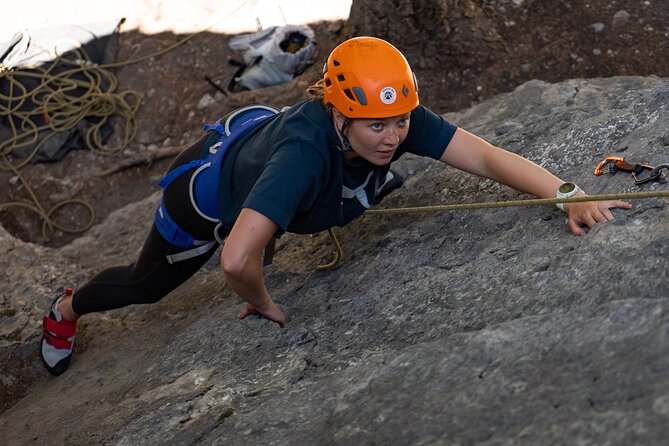
At $112.39 per person, the value depends on how much use you make of the full day. You receive several hours of guided instruction, a small group capped at eight, and all the main climbing equipment.
That compares well with a short introductory session if you want more than a single climb. You are paying for guide time, safety supervision, gear, route selection, and the chance to try different climbing areas and techniques.
The price is less attractive if you only want to touch a rock wall once or are unsure about spending most of a day climbing. You may not reach the advanced subjects, since those depend on the group’s ability, weather, and available routes.
I think the cost makes the most sense for families, friends, and active visitors who want a real outdoor activity and enough time to improve during the day. It is also a practical first step if you are considering climbing again after the trip.
The activity is booked, on average, about 50 days ahead. That suggests you should not leave it until the last minute, especially if your Banff dates are fixed.
Weather, cancellations, and the right expectations
This experience depends on good weather. If poor conditions force a cancellation, you will be offered another date or a full refund.
You can cancel for a full refund if you do so at least 24 hours before the start time. Changes or cancellations inside that window are not accepted, and the amount paid is not refunded.
The activity also requires a minimum number of participants. If that minimum is not reached, you will be offered another date or experience, or a full refund.
You should leave some flexibility in your itinerary if climbing is a major part of your Banff plans. A weather cancellation can be handled fairly, but a replacement date may not fit neatly into a tightly packed schedule.
Who should book this experience?
I would choose this for:
- First-time climbers who want to learn outdoors
- Families with children around nine or older
- Friends looking for a full-day challenge
- Indoor climbers who want to understand outdoor systems
- Visitors who prefer active time in Banff National Park
- Climbers who want coaching rather than a self-guided introduction
I would think twice if you want a short, low-effort activity, need a private schedule, or dislike the idea of sharing guide time with other participants. You should also ask about shoe availability before booking if fit is a serious concern.
Service animals are allowed, and most people can participate. The experience is offered in English.
Should you book the Banff beginner climbing day?
Yes, if you want a proper introduction to outdoor climbing rather than a quick photo opportunity. The seven-hour schedule, small group, range of routes, and patient coaching make it useful for complete beginners and people moving from indoor walls to real rock.
The strongest reason to book is the personal instruction. Guides such as Jacob, Dustin, Janet, Austin, and Sebastien have helped nervous beginners, children, and stronger climbers find an appropriate challenge. You can start with the basics and possibly finish the day trying more technical routes.
Ask about climbing shoe sizes before you go, bring your own lunch, and leave room in your schedule for weather changes. With those details sorted, this is one of Banff’s better choices for an active day that teaches you something you can use again.
FAQ
Where does the rock-climbing experience start?
You meet at 229 Bear Street, Banff, Alberta, at 7:45 am. The activity ends back at the meeting point.
How long does the experience last?
The program lasts approximately seven hours, making it a full-day outdoor activity.
Is the climbing suitable for complete beginners?
Yes. The program is designed as an introduction and begins with basic safety, belaying, and climbing technique. No previous experience is required.
How many people can join the group?
The maximum group size is eight participants.
What climbing equipment is included?
The experience includes a helmet, harness, climbing shoes, ropes, and belay devices.
Is lunch included?
No. Lunch is not included, so you need to arrange your own food for the day.
What happens if the weather is poor?
The experience may be canceled because it requires good weather. You will then be offered a different date or a full refund.
Just added in Banff
- Moraine Lake, Louise Emerald Lake, and Peyto Lake all in day tour★ 5.0 · 12 reviews
- Discover Lake Louise and Yoho In Winter★ 5.0 · 72 reviews
- Wildlife on the Bow | Big Canoe Tour★ 4.5 · 13 reviews
- Wildlife on the Bow | Big Canoe Tour in Banff National Park★ 5.0 · 77 reviews
- Grassi Lake and Grotto Canyon Hiking Calgary/Canmore/Banff★ 5.0 · 5 reviews
- Banff Sunshine Village Gondola and Sightseeing★ 5.0 · 192 reviews
- Banff Town Walking Tour Includes Refreshment and Sweet Treat★ 5.0 · 29 reviews
- Exclusive Skoki Backcountry Guided Hiking in Lake Louise with Van Shuttle★ 5.0 · 26 reviews
Tours in Banff, compared.
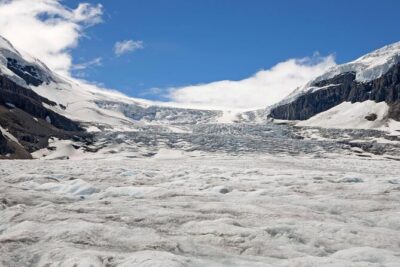
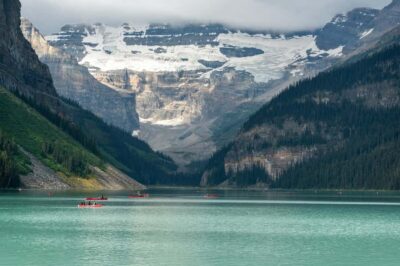
Lakes Moraine, Louise, Emerald, Johnston Canyon & Yoho Tour
Read our review →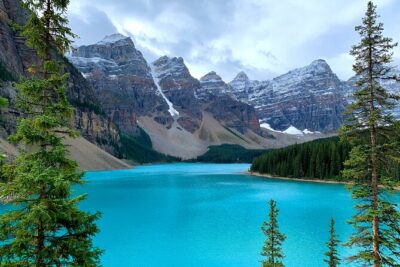
Lake Louise, Moraine Lake and the Icefields Parkway Full-Day Tour
Read our review →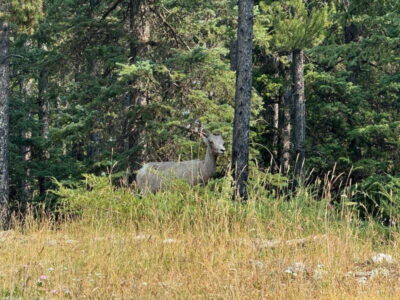
Lake Louise, Moraine, Emerald Lake & Johnston Canyon
Read our review →
Banff Highlights & Wildlife | Award-Winning Small Group Adventure
Read our review →Browse the lists this tour appears in