
Reviewed · CANADA
Smartphone Audio Driving Tour between Huntsville & Toronto
The most useful part of this Huntsville to Toronto audio tour is that it turns a routine drive into a moving story. Instead of staring at highway signs and wondering what matters, you hear about Muskoka’s lakes, logging past, early explorers, Indigenous history, and small towns as you pass them.
I like the freedom to stop anywhere and the very low group price. You can pause for lunch, an ice cream, a short walk, or a longer visit, then return to the audio when you are ready. The main drawback is simple: this is an app-based tour, not a live guide, so you need your own car, phone, and a good connection for the initial download.
- Muskoka stories on the move: Hear about lakes, logging, towns, geography, and early exploration while driving.
- Stops at your own pace: Pause the tour for Bracebridge Falls, lunch, ice cream, or other places along the road.
- Algonquin context without entering the park: The route stops just short of Algonquin Park but still explains why it matters.
- Unusual roadside history: Look for the Mnjikaning Fish Weirs, Oro African Church, an old drive-in theater, and other less obvious sights.
- One booking covers the vehicle: Up to 15 people can share the tour for $6.72.
- Useful in either direction: Start in Huntsville or near Highway 400, with the same experience running both ways.
A road trip with a story attached

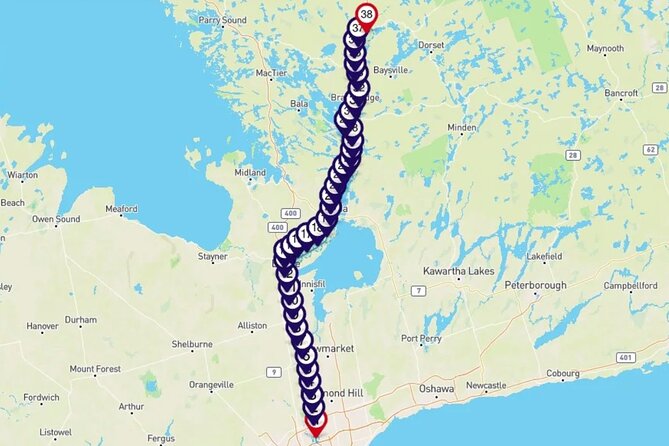
This is not a hop-on, hop-off sightseeing bus and it is not a guided walk. You drive your own route between Huntsville and Highway 400 while the Tripvia Tours mobile app provides location-based commentary in English.
The audio lasts roughly one hour and 30 minutes to two hours, though that is best treated as the listening time rather than the total time for your outing. You can stop at suggested places, take a break, or spend extra time in a town. The app is designed to pick up where you left off.
That matters in Muskoka, where a good roadside stop can easily turn into lunch, a short stroll, or a longer pause beside the water. You are not forced to keep moving because a guide or bus schedule says it is time to go.
The route can begin in Huntsville or at the Highway 400 end. That makes it practical for a northbound or southbound drive, though your sightseeing order will change. The Huntsville start is at P0B, while the southern end is on Highway 400 in Ontario.
Why the $6.72 group price works
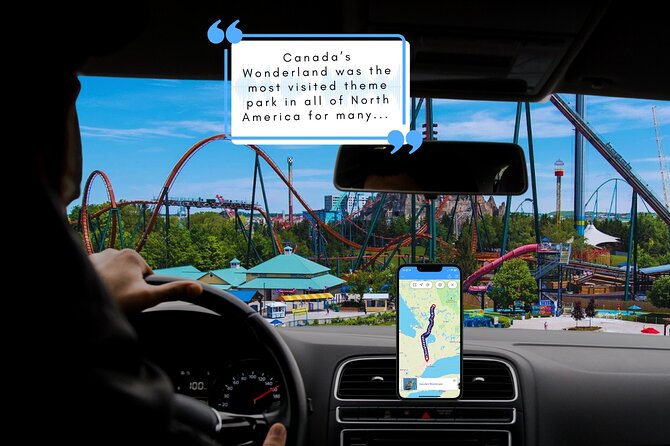
At $6.72 per group of up to 15 people, this is priced for a carload, not for each passenger. A couple gets good value, and a larger family or group gets exceptional value if everyone is happy listening together.
The price does not include a car, fuel, food, attraction admission, or parking. You supply the transportation and decide which suggested stops are worth your time. That keeps the cost low, but it also means you should not mistake the audio tour for a full sightseeing package.
The strongest practical advantage is that one purchase covers the vehicle. You do not need a separate ticket for every person sitting in the car. If your group is sharing one vehicle, the cost is small enough to make sense even if you use only part of the commentary.
The tour also remains yours to keep and use at flexible times through the Tripvia Tours app. That is useful if your drive changes or you want to spread the route across more than one outing. The published operating period runs from July 28, 2020, through February 22, 2027, with access listed every day from midnight to 11:30 p.m.
Other trips people book in Canada:
- Vancouver Half-Day Whale Watching Adventure with Free Photos
★ 5.0 · 5,000 reviews - Quebec City Walking Tour
★ 5.0 · 4,716 reviews - Niagara Falls: Premium Tour, Boat & Journey Behind the Falls
★ 4.8 · 4,207 reviews
Huntsville sets the northern end
Huntsville is the starting point for the route when you drive south. The tour gives you an introduction to the area before leading you toward Muskoka’s towns, lakes, and roadside sights.
The audio is meant to add context rather than direct every move. You will hear about points of interest as you travel, then decide if you want to pull over. That makes the experience better for independent drivers who prefer a loose plan.
I would download the tour before leaving Huntsville. A good mobile or WiFi connection is required for the initial download, but the tour does not require a signal or use data once it has been downloaded. This is an important distinction, especially on a route where mobile coverage may not always be dependable.
Bracebridge and its downtown falls
The route passes through or by Bracebridge, a small city known here for its downtown falls. The audio explains the town and points out the falls, giving you a reason to consider a stop instead of treating Bracebridge as a place to pass through.
Bracebridge works well as a break early or late in the drive, depending on your direction. You can stop for as little or as long as you like. The tour will continue from the point where you paused.
The supplied information does not promise admission, a guided visit, or a fixed viewing area, so plan this as an optional town stop rather than a timed attraction. If you want a relaxed drive, this is the sort of place where you might pause, stretch your legs, and then return to the road.
Algonquin Park from just outside the boundary

The tour stops just short of Algonquin Park, but the audio still tells you about it. That limitation is worth understanding before you book. This is not an Algonquin Park tour, and it does not replace entering the park or spending time on its trails.
It can still be useful if your route takes you near the park and you want a sense of its importance without making a separate park visit. The commentary connects the drive with the area’s nature and geography, giving the road more meaning.
For an Algonquin-focused trip, I would treat this tour as background material rather than the main event. For a transfer between Huntsville and Highway 400, the park commentary adds interest without requiring a major detour.
Same base, a different sort of day:
- Banff: Banff Gondola Admission Ticket
★ 4.7 · 3,698 reviews - Toronto: Niagara Falls Day Tour with Optional Boat Cruise
★ 4.6 · 3,178 reviews - Best of Niagara Falls Canada Premium Tour: Behind Falls and Boat
★ 5.0 · 3,139 reviews - Montreal: Guided Bus Tour
★ 4.4 · 3,064 reviews
Lakes, logging, and the people behind the route
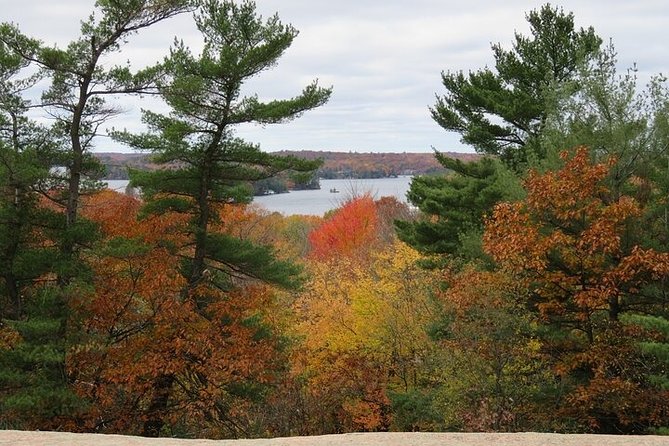
Muskoka is known for its lakes, and the audio uses that setting to explain the area’s geography. You will not hear a list of every lake, but you will learn about major waterways and how one of the region’s biggest lakes got its name.
The route also covers logging, an industry that shaped the area and the communities along the road. This is a useful subject for a driving tour because the evidence is spread across towns, rivers, roads, and names rather than concentrated in one museum.
Early exploration is another theme, including Samuel de Champlain. The tour places his story alongside local geography and the broader development of the region. You get a blend of people, industry, nature, and place names instead of one narrow subject.
This mix is one of the tour’s better qualities. A drive can feel repetitive when every stop is presented as a photo opportunity. Here, the audio gives you different ways to understand what you are seeing.
Indigenous history at the Mnjikaning Fish Weirs

The Mnjikaning Fish Weirs are among the more distinctive subjects connected with the route. They offer a look at Indigenous engineering, foodways, and long-standing connections to the waterways of the region.
The supplied details do not state an admission arrangement or guarantee that you will stop directly at the site. Listen for the point where the audio identifies it, then decide if it fits your schedule.
This is a good example of why an audio route can add value. A highway drive often gives you no clue that a place has cultural importance. The commentary asks you to pay attention to something beyond the most obvious town center or scenic view.
The Oro African Church and overlooked stories

The Oro African Church is another unusual point of interest. It brings African Canadian history into a route that could otherwise be described only through lakes, cottages, forests, and logging.
The church is not presented as a fully guided visit with admission included. You should treat it as a place the tour explains and points out, then confirm access and opening conditions before making it a planned stop.
Its inclusion gives the route more range. You hear about communities and people who might not appear in a standard drive between Huntsville and Toronto. That is valuable for anyone who wants local history to include more than famous explorers and natural scenery.
Riverfront towns and easy food breaks

One river-front village lies directly along the route and is described as a good place for ice cream or lunch. The name is not provided in the tour details, so I would listen carefully for the location rather than trying to plan around a specific town in advance.
This kind of stop is practical. You do not need to turn the drive into a full day of formal sightseeing. A short meal or dessert break can make the journey more comfortable, especially if you are traveling with children or a larger group.
The app gives you the freedom to pause for the entire break. You are not racing to catch up with a moving guide, and you do not lose the tour if you step away from the car for a while.
The big event grounds and Gravenhurst Wharf
The route points out a large highway sign for major concert and event grounds. The grounds have hosted musical acts including the Rolling Stones, adding a pop-culture note to the drive.
This is the kind of detail you might miss if you simply pass a sign at highway speed. You may not want to stop, but hearing the background makes the roadside feature more memorable.
Another unusual attraction is located only a few minutes off the route at the Gravenhurst Wharf. The available details do not name it, so the audio itself is especially important here. It identifies the attraction and explains why it is worth considering.
Because the stop is slightly off the main route, check your available time before turning off. The tour lets you choose, but it cannot predict traffic, parking, seasonal access, or how long you will want to stay.
The old drive-in and Muskoka’s water
The audio points out an old drive-in theater as you pass. It is a small detail, but these are often the moments that make a road tour feel local rather than generic.
You also hear more about Muskoka’s many lakes and the name of one of the region’s largest. The route uses water as a guide to the area, linking geography with settlement and travel.
Several additional places are passed without being formal points of interest. You are free to stop at them, but the tour does not promise a full explanation or a developed attraction at each one. Keep your expectations reasonable: some are simply places along the road that may suit a quick pause.
What the app does well, and where it falls short
The audio earns a 4.3 rating from four published assessments, and the clearest praise focuses on its useful information and the pleasure of having something worthwhile to listen to during the drive. That matches the product’s strongest feature: it gives structure and meaning to a self-guided road trip.
The app is also easy to fit around real travel. You can start at either end, pause whenever you like, and complete the route without a fixed appointment. You are not tied to a group departure or a guide’s pace.
The tradeoff is the lack of a person in the car. If you have a question, want a custom route, or need help adapting the day, the app cannot respond like a live guide. The quality of your experience also depends on downloading correctly and paying attention while driving.
The driver should remain focused on the road. Let a passenger handle the phone, or set up the app before moving. The audio is designed to accompany driving, not replace safe navigation.
Who should book this Huntsville route
I recommend this for people using their own vehicle who want more than directions but less structure than a scheduled tour. It suits couples, families, and groups sharing a car, especially because the price covers up to 15 people.
It is a good match if you like choosing your own stops, listening to local stories, and taking a flexible route between Huntsville and Highway 400. It also works well as a supplement to a longer Muskoka trip.
I would be more cautious if you expect a live guide, admission to attractions, detailed walking tours, or a dedicated Algonquin Park visit. None of those are part of the package. You are buying the audio framework, not a complete sightseeing day.
Book only if you can download the content before setting off. Once downloaded, no signal or mobile data is required during the tour. Free cancellation is available if you cancel at least 24 hours before the scheduled start time. Cancellations or changes made inside that window are not refunded or accepted.
Should you book it?
Book this tour if you are already driving between Huntsville and Toronto and want the road to explain itself. The low group price, flexible timing, and mix of Muskoka geography, logging, Samuel de Champlain, Indigenous history, local communities, and odd roadside sights make it an easy add-on.
Skip it if you want a personal guide or if you plan to spend most of the day inside Algonquin Park. For the right driver, though, it turns a simple transfer into a more thoughtful and entertaining piece of the trip.
FAQ
How long does the audio driving tour take?
The audio tour takes approximately one hour and 30 minutes to two hours. Stops for food, walks, or attractions will make the total outing longer.
Where does the tour start and end?
The listed start is Huntsville, Ontario, and the listed end is Highway 400. You can start or stop anywhere along the route, and the experience works in either direction.
Do I need to use my own vehicle?
Yes. Transportation is not included, so you need your own vehicle to complete the driving tour.
How many people does one booking cover?
One booking covers one vehicle and up to 15 people in your group.
Is a mobile signal required during the tour?
You need a good mobile or WiFi connection for the initial download. After downloading, the tour does not require a signal and does not use mobile data during the drive.
Is the tour available in more than one language?
The tour is offered in English.
Are attraction tickets included?
No. Attraction tickets are not included, and recommended places may be closed or inaccessible because of the season or other conditions.
Can I cancel for a full refund?
Yes, if you cancel at least 24 hours before the experience start time. Cancellations or changes made less than 24 hours in advance are not refunded or accepted.
Just added in Canada
- 2-Hour Two Castle 1000 Islands Cruise from Ivy Lea★ 4.5 · 24 reviews
- Medway Lakes Canoe Trip 3-Day★ 5.0 · 12 reviews
- Meet The Seals Boat Tour – Travel by boat to a Secret Seal Cove★ 5.0 · 21 reviews
- 20 Minute Scenic Helicopter Private Tour★ 5.0 · 14 reviews
- Wine, Cheese, Chocolate 6 Hour Tasting Tour with Lunch★ 5.0 · 45 reviews
- Wine Tour with Lunch in Niagara-on-the-Lake★ 5.0 · 25 reviews
- Guided Craft Cider Tour in Niagara★ 4.5 · 4 reviews
- Walking Food Tour in Niagara Falls★ 5.0 · 6 reviews