
Reviewed · CANADA
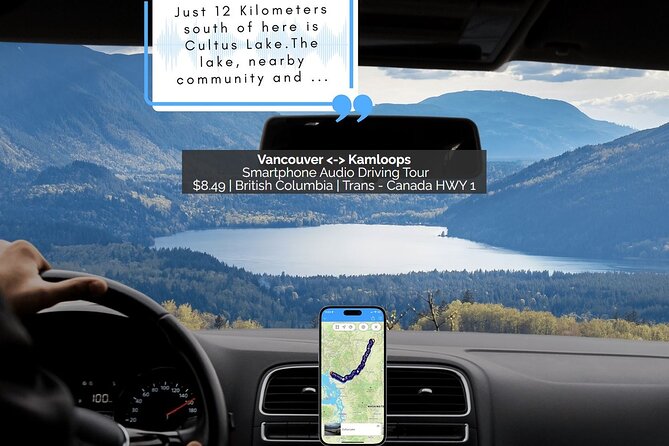
Smartphone Audio Driving Tour between Kamloops and Vancouver
The best thing about this self-guided road tour is that it gives a long drive some shape. Instead of simply passing Coquitlam, Hope, Merritt, and the Coquihalla, you get short stories, local trivia, wildlife facts, and prompts for possible stops along the way.
I like two things right away: the audio works from either Vancouver or Kamloops, and you can pause whenever you want. The offline function is especially useful on mountain roads, where phone service may disappear. At $8.22 per group of up to 15 people, it is also a very inexpensive way to add context to a drive.
The main caution is the sound design. One rider found the sudden sound effects startling, including a semi horn effect while driving curving mountain roads. There is also no music between points. Keep the volume moderate, let the driver focus on the road, and treat the audio as a companion rather than the main event.
Key points to know before you book
- One booking covers the vehicle: The price applies to a group of up to 15 people, so the value is strongest when several people share one car.
- Works in either direction: Start in Vancouver and finish near Kamloops, or reverse the route without changing the tour.
- Offline access matters: Download or prepare the tour before setting out, since no signal or mobile data is needed during the experience.
- Stories range from serious to playful: Expect information about Indigenous roots, railway history, salmon, gold, natural disasters, cougars, and local celebrities.
- The route encourages detours: Harrison Hot Springs, Bridal Falls, Fort Langley, Coquihalla Canyon, and other places may deserve extra time.
- Sound effects may surprise you: The audio includes special guest characters and effects, but the occasional loud cue can be distracting in difficult driving conditions.
What this audio tour adds to the Vancouver to Kamloops drive
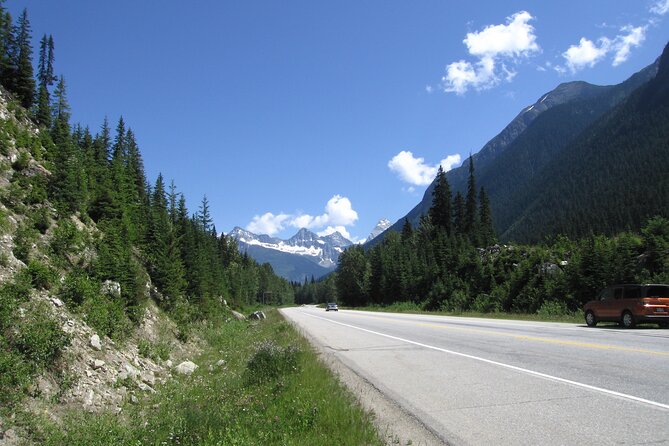
The road between Vancouver and Kamloops already supplies the scenery. You get rivers, forests, steep mountain slopes, lakes, bridges, and long stretches of highway. The audio gives you reasons to pay attention to names and places that might otherwise pass in a blur.
This is not a guided coach trip. Nobody is sitting beside you to point out a view or adjust the schedule. You use your own vehicle, your own phone or tablet, and your own judgment about when to stop. That freedom is the whole point.
The experience is advertised as lasting about one to two hours, but that refers to the audio content rather than the total road journey. The drive itself covers a substantial route, and the many suggested attractions can turn it into a full day or longer if you stop often.
The detailed route includes a long series of audio points, while the main description refers to 28 points of interest. Either way, expect coverage well beyond a handful of roadside facts. Some points are brief, some are place-based, and some are thematic prompts that add variety during long highway stretches.
Other trips people book in Canada:
- Vancouver Half-Day Whale Watching Adventure with Free Photos
★ 5.0 · 5,000 reviews - Quebec City Walking Tour
★ 5.0 · 4,716 reviews - Niagara Falls: Premium Tour, Boat & Journey Behind the Falls
★ 4.8 · 4,207 reviews
From Coquitlam to Fort Langley, the suburban opening

Near Coquitlam, the tour begins with the Coast Salish people and the area’s earlier cultural roots. That is a useful opening because it puts the modern suburbs into a much older setting.
The Port Mann Bridge provides a change of scale. You will hear about the bridge and Surrey as you cross, then continue beside the Serpentine River. The river segment is a good example of how this tour works: it may not be a formal stop, but the audio gives you something to notice while the road continues.
Langley brings local origins into the story. Then the tour separates Fort Langley from the Town of Fort Langley, an easy distinction to miss if you are simply following highway signs. You pass near Fort Langley National Historic Site, which may persuade you to return or make a stop if your schedule allows.
The tour does not include admission to the historic site or any other attraction. That is worth keeping clear in your budget. The audio points out possibilities, but you pay separately if you visit.
Abbotsford, Burnaby Village, and the changing Fraser Valley
As you pass Abbotsford, you hear why the city matters to British Columbia. The route also points toward Mount Baker in Washington. You do not need to cross the border to appreciate the mountain, since it can dominate the view from the Canadian side.
Burnaby Village Museum, also called Heritage Village, gets a mention as a place where you can see an earlier period of local life, from roughly 1890 to 1920. The audio explains why the museum has remained a useful place to learn about that era.
One of the more intriguing subjects is Sumas Lake. The tour explains that this was once a lake and what happened to it. That kind of story gives the flat Fraser Valley more meaning. You are not just passing fields and towns. You are seeing a region shaped by water, settlement, engineering, and change.
Chilliwack brings another local name into focus. The route also includes a guessing game about well-known people from British Columbia. These quiz segments are a welcome break from straight narration, though the fun depends on how much the people in your car enjoy being tested.
Harrison Hot Springs, Bridal Falls, and the Fraser River
The road toward Harrison Hot Springs is one of the better sections for a possible detour. The audio points out the turnoff and explains why the hot springs are popular. It does not include entry, so check conditions and opening information before building your day around the stop.
Bridal Falls receives similar treatment. You pass through the community of Bridal Falls, which is near the actual waterfall but not directly at it. That distinction matters. If you want to see the falls, you need to plan a separate stop rather than assume the roadside community is the viewpoint.
The Fraser River then becomes a major feature for a while. The tour explains the river’s importance and connects it with historic sockeye salmon runs. Near Mountain View Summer Camp, the focus remains on salmon and the river’s past.
Sasquatch Provincial Park adds a lighter note, with a playful reference to the famous furry creature. The park itself is also a possible stop, but no admission or guided visit is included. These sections work best if you enjoy mixing practical sightseeing ideas with odd bits of local character.
Same base, a different sort of day:
- Banff: Banff Gondola Admission Ticket
★ 4.7 · 3,698 reviews - Toronto: Niagara Falls Day Tour with Optional Boat Cruise
★ 4.6 · 3,178 reviews - Best of Niagara Falls Canada Premium Tour: Behind Falls and Boat
★ 5.0 · 3,139 reviews - Montreal: Guided Bus Tour
★ 4.4 · 3,064 reviews
Hope and the serious story of the Hope Slide
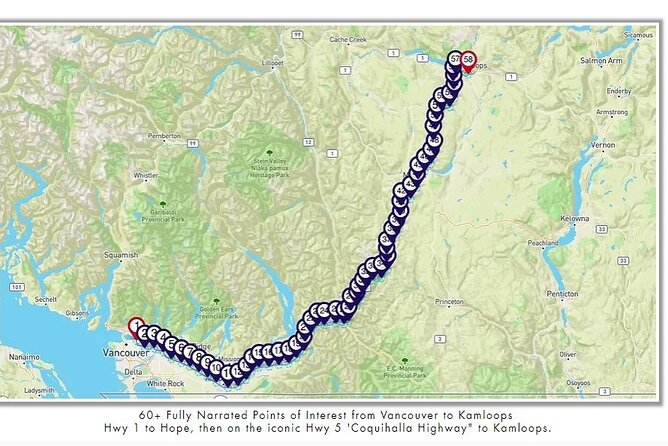
Hope has one of the more varied portions of the route. You hear about the town’s name, the surrounding area, Cultus Lake, and the Hope Slide.
The Hope Slide is not presented as a cheerful roadside curiosity. It was one of the area’s worst natural disasters, and the story gives the mountains a more serious presence. I appreciate that the audio does not treat every point as a joke or a photo stop. Some places deserve a pause and a little respect.
Cultus Lake is presented as a recreational area worth visiting. If you have time, it can serve as a separate lake stop rather than a quick glance from the road. The route also includes another popular-person quiz around Hope, keeping the tone from becoming too heavy.
This is a good section for families and mixed-age groups because the topics change often. One moment you are hearing about geology or disaster, and the next you are answering a local trivia question.
The Coquihalla Highway and its mountain history

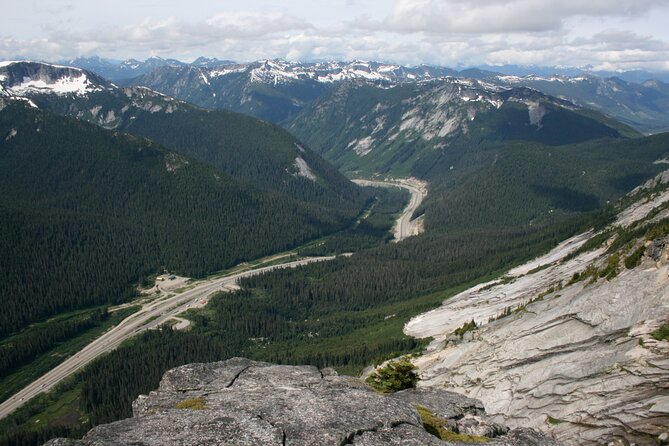
The Coquihalla section is the heart of the trip. You spend hours on or near the highway, so learning how it was created gives the long climb more purpose.
The Coquihalla River Provincial Park and Coquihalla Summit Recreation Area provide context for the high mountain section. The route discusses why the summit area matters and points out recreational possibilities. The Cascade Range is another major subject, and the mountain views become part of the audio experience rather than a silent backdrop.
Ladner Creek Bridge is mentioned as a quick detour. An old trestle bridge can be an appealing side trip, but road and access conditions can change. Do not pull over casually on a fast highway. Use signed parking areas and confirm that a detour is open before leaving the main route.
Britton Creek adds a gold story to the drive. Coldwater River Provincial Park brings in steelhead fish. Murray Lake is described as a popular fishing spot, and the route passes near it rather than taking you directly to a lakeside facility.
These points show the tour’s main strength: it keeps asking you to look at the route as more than a road. Waterways, old rail lines, gold, fish, and highway construction all become part of the same trip.
Railway stories from Brookmere to Coquihalla Canyon
Near Brookmere, the audio covers the small town’s railway background. The Kettle Valley Railway Trail then shifts the story from working rail line to recreation trail.
Hikers may want to make time for the trail, while railway fans will appreciate the connection to the Kettle Valley Steam Railway. The audio explains that the trail follows the path of an older railway route, giving you a clearer sense of how transportation once worked through these mountains.
Coquihalla Canyon Provincial Park is another strong potential stop. The tour points out the park and describes activities available there. It is one of the places where you may want to pause the audio, explore, and resume later.
That pause-and-resume ability is important. You do not have to listen continuously or rush through a point because the next one is approaching. The tour is designed for a flexible road day, not a strict schedule.
Merritt, Nicola Lake, and the Thompson Plateau
Near Merritt, the audio turns to the town’s musical reputation. It also covers a cougar, including the animal’s alarming call. That sound may be entertaining at a quiet stop, but it reinforces the earlier warning about effects and sudden audio cues. Keep the driver’s attention on traffic first.
Nicola Lake is another place the tour encourages you to visit. You pass a few kilometres west of it, so the audio can help you decide if the lake deserves a separate outing. Monck Provincial Park receives a mention as another nearby option.
The Thompson Plateau provides geographic context, while Timber Lake offers a smaller scenic point and another local-person guessing game. Inks Lake Road introduces yellow-bellied marmots, an animal with a memorable name and a simple appeal for children.
Near the western approach to Kamloops, the tour discusses the Thompson River. You pass a few kilometres south of the river, so do not expect every point to be a direct roadside stop. This is a listening route that explains nearby places, not a series of parking lots.
What the price and format really mean
At $8.22 per group, the cost is hard to criticize if you already plan to make the drive. One booking covers up to 15 people in the vehicle, making it far cheaper than paying per person for a conventional excursion.
The value drops if you expect transportation, attraction admission, or a personal guide. None of those are included. You supply the vehicle and the phone or tablet, and you handle all detours and entrance fees.
Lifetime access is another practical benefit. You can use the tour at a later date rather than tying it to one tightly scheduled departure. The activity is available daily from midnight to 11:30 p.m., which fits the self-guided format, though the road itself should be driven in safe conditions.
Confirmation arrives at booking, and free cancellation is available up to 24 hours before the start time. Within 24 hours, the payment is not refunded. Service animals are allowed, and most people can take part.
How to use the audio safely
Set up the tour before leaving. Offline access means you do not need a signal or data while driving, but it is still sensible to make sure the audio is ready before you reach the highway.
The driver should not handle the phone while moving. If you need to change volume, pause, or check a point, let a passenger do it or pull over safely.
Because the route includes mountain roads, curves, semis, and changing weather, sudden effects deserve special care. One sound effect resembling a semi horn was startling enough to make a rider turn the tour off. A moderate volume and a passenger in charge of the phone can help, but anyone sensitive to loud cues may prefer to skip the effects or use the tour only when parked.
The lack of music is not a serious flaw for everyone. Some people prefer quiet between points, while others may find the gaps too plain. Bring your own music only if it can be used without competing with the narration or distracting the driver.
Who should book this road tour
I would choose this for an independent road trip, a family sharing one car, or anyone who wants local context without joining a scheduled group. It is also useful for repeat visitors who know the main road but want new reasons to stop.
It suits people who like trivia, short stories, geography, railway history, wildlife, and flexible detours. The special guest characters add a bit of playfulness, especially for children and groups.
I would be less eager to recommend it to someone seeking a polished guided excursion with a human guide, live questions, music, or a fixed sightseeing plan. The audio is inexpensive and broad, but it cannot adjust its commentary to your interests or road conditions.
Should you book the Vancouver to Kamloops audio tour?
Book it if you are already driving between Vancouver and Kamloops and want a low-cost layer of stories along the way. The offline access, two-way flexibility, lifetime use, and one-price-per-vehicle format make it a sensible add-on.
Skip it if you dislike sound effects, need constant music, or want every attraction included in the price. My practical advice is to download it before departure, give the phone to a passenger, and plan only one or two detours that genuinely interest you. Used that way, this is a small purchase that can make a long mountain drive feel more connected to the places outside your window.
FAQ
Can I start the tour in Vancouver or Kamloops?
Yes. The audio works in either direction, so you can travel east toward Kamloops or west toward Vancouver.
How much does the tour cost?
The listed price is $8.22 per group, with up to 15 people covered by one booking.
How long does the audio tour take?
The approximate duration is one to two hours. The full drive between Vancouver and Kamloops and any sightseeing stops will take longer.
Do I need mobile data or a signal?
No. The tour includes offline functionality, so you do not need a phone signal or mobile data while using it.
Do I need to provide my own vehicle?
Yes. Transportation is not included, and you use your own vehicle for the route.
Are attraction tickets included?
No. Admission to places such as historic sites, parks, hot springs, museums, or other recommended stops is not included.
What happens if I need to cancel?
You can receive a full refund if you cancel at least 24 hours before the experience start time. Cancellations or changes made within 24 hours are not accepted for a refund.
Just added in Canada
- 2-Hour Two Castle 1000 Islands Cruise from Ivy Lea★ 4.5 · 24 reviews
- Medway Lakes Canoe Trip 3-Day★ 5.0 · 12 reviews
- Meet The Seals Boat Tour – Travel by boat to a Secret Seal Cove★ 5.0 · 21 reviews
- 20 Minute Scenic Helicopter Private Tour★ 5.0 · 14 reviews
- Wine, Cheese, Chocolate 6 Hour Tasting Tour with Lunch★ 5.0 · 45 reviews
- Wine Tour with Lunch in Niagara-on-the-Lake★ 5.0 · 25 reviews
- Guided Craft Cider Tour in Niagara★ 4.5 · 4 reviews
- Walking Food Tour in Niagara Falls★ 5.0 · 6 reviews