
Reviewed · CANADA
Smartphone Audio Driving Tour between Kamloops & Revelstoke
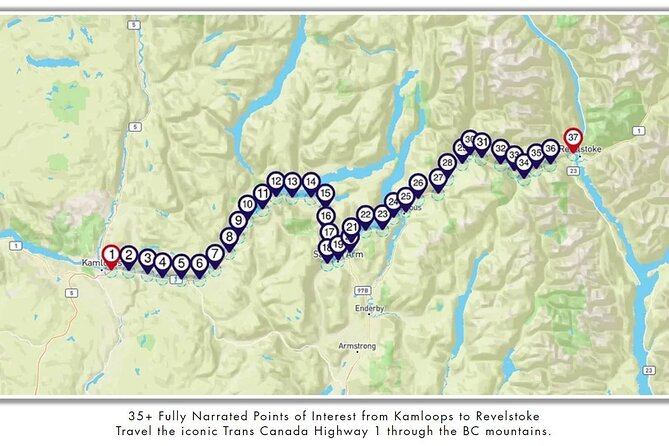
The best thing about this Kamloops to Revelstoke experience is that it turns a long highway journey into a guided outing. Your phone supplies more than 32 audio points about lakes, towns, wildlife, mountain roads, and railway history, including the famous Last Spike. You can start in either direction and stop whenever something catches your eye.
I like the one-booking-per-vehicle price and the freedom to keep the tour for later use. I also like the range of subjects, from American dippers and Chinook Jargon to Olympic skiing and volcanic mountains. The main caution is the app setup. Some people have found the route difficult to keep connected, and the playful, child-friendly commentary will not suit every adult.
Key points to know before you go
- More than 32 audio stops: Hear stories about Shuswap Lake, Chase, Three Valley Gap, Mount Revelstoke, the Last Spike, and much more.
- Built for a road trip: Start in Kamloops or Revelstoke, pause often, and take as long as you need.
- Strong value for groups: The $8.22 price covers up to 15 people in one vehicle.
- No mobile data needed during the tour: Download or prepare the experience before setting out.
- English only: The commentary is not offered in another language.
- Bring patience for the technology: Setup instructions and route tracking may take a little effort, especially in a rental car.
What this Kamloops to Revelstoke tour really adds
The drive between Kamloops and Revelstoke already gives you plenty to look at. The trouble is that highway scenery can pass in a blur. This audio tour gives names, stories, and bits of local context to places you might otherwise treat as scenery outside the window.
I like that it is not a fixed bus excursion. You are not tied to a departure time, a guide’s pace, or a group schedule. If you want to stop at a park, stretch your legs, take photographs, or spend longer at the Last Spike, you can do so. The audio also works in either direction, which helps if your road trip begins in Revelstoke.
The tour takes about two and a half hours as an audio experience, but the drive itself can take longer once you add stops. That is important. Treat the stated duration as the approximate listening time, not a full timetable for the entire road journey.
This is a private activity for your own group. One purchase covers up to 15 people, so the value is especially good for a family or a full carload. At $8.22 per group, it costs less than many small road-trip extras, yet it can keep everyone involved for several hours.
Other trips people book in Canada:
- Vancouver Half-Day Whale Watching Adventure with Free Photos
★ 5.0 · 5,000 reviews - Quebec City Walking Tour
★ 5.0 · 4,716 reviews - Niagara Falls: Premium Tour, Boat & Journey Behind the Falls
★ 4.8 · 4,207 reviews
How the phone-based format works
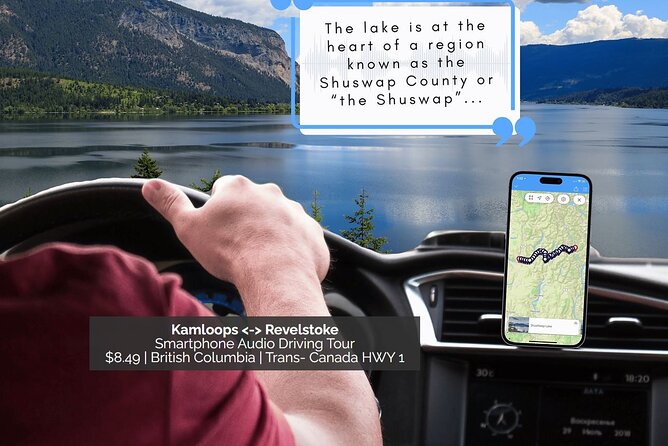
You use your own smartphone or tablet and your own vehicle. Transportation and attraction admission are not included, so this is best viewed as an audio companion for a drive you already plan to make.
The strongest practical feature is that the tour does not require a signal or use mobile data while you are on the route. That matters on a long mountain drive, where coverage may not be steady. Still, I would prepare the phone before leaving. Make sure the app is installed, the booking is easy to access, and the device is connected to the vehicle in a safe way.
The experience is designed to play as you approach points along the route. You can also stop and restart as needed. In practice, route-based phone tours are more enjoyable when one person handles the device and another person drives. Do not try to read instructions or operate the phone while moving.
The technology is the weakest part of the package. Setup directions could be clearer, particularly if you have picked up a rental car and are not familiar with its audio system. There have also been problems with the route returning to the beginning or losing its place. Because of that, I would allow a few minutes before departure to get oriented.
Leaving Kamloops and meeting the Shuswap
The early section introduces the region through smaller communities, water, wildlife, and local stories rather than giving you a plain list of highway exits.
One stop explains a very small 10.4-hectare island and why it has no camping or recreational facilities. That is the kind of detail this tour does well. You may pass a place that looks ordinary, yet its rules or history reveal why it has been protected.
In Chase, the commentary covers how the community got its name and points to its main industries. It also introduces Squilax, a smaller community with a general store and an unusual past. These stops help you see the area as a collection of lived-in communities, not just a route between two larger cities.
Shuswap Lake is one of the major scenic subjects. The tour adds context to the water and the recreation around it, including why the area is popular with swimmers and boaters. You also hear about a large celebration coordinated for spirited swimmers. That gives the lake a sense of local character, rather than treating it as just another pretty view.
The audio also discusses one of the region’s most fertile farming areas and its many water sports. This part should appeal to families because the information is easy to follow while you watch the scenery change outside.
Wildlife stories and BC Wildlife Park

BC Wildlife Park is one of the clearest family-friendly highlights along the route. The audio explains who donated the 106-acre zoo and why its motto is Conservation through Education.
You do not automatically stop at the park. The commentary can play as you drive past, and you decide if you want to turn the outing into a separate visit. Attraction tickets are not included, so check admission and opening details before building a longer stop into your day.
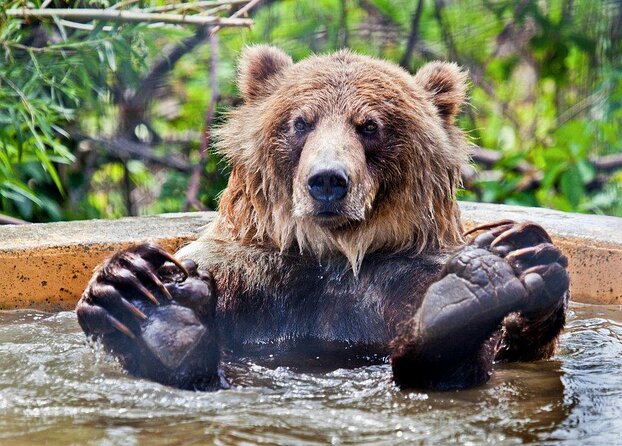
The tour also talks about animals beyond the zoo. Along the park boundary, you hear about American dippers, a bird with an unusual way of catching dinner. That is a nice example of the tour’s strength: it connects the natural world to what you are passing instead of focusing only on towns and human history.
You may also hear about a special feature that held a North American record as of 2020. The supplied details do not identify the feature directly, so I would treat this as a pleasant surprise rather than a reason to book the trip on its own.
Same base, a different sort of day:
- Banff: Banff Gondola Admission Ticket
★ 4.7 · 3,698 reviews - Toronto: Niagara Falls Day Tour with Optional Boat Cruise
★ 4.6 · 3,178 reviews - Best of Niagara Falls Canada Premium Tour: Behind Falls and Boat
★ 5.0 · 3,139 reviews - Montreal: Guided Bus Tour
★ 4.4 · 3,064 reviews
Communities, language, and winter sport
The route continues through places with stories that are easy to miss from a car. One section explains Malakwa’s name and introduces Chinook Jargon and pidgin language. This adds a human layer to the drive and shows how names and communication developed in western Canada.
As you pass through Larch Hills, the audio identifies an Olympic event held there since 1960. That is useful context for anyone interested in winter sport, and it gives the hills a connection beyond their appearance.
Another section explains what a nearby city’s name means and the other reason that city is known. The tour does not simply point out large destinations. It uses names, industries, language, and sport to make the route easier to remember.
A trade school along the way also receives attention. You hear why it is the second-largest trade school in the province and what it is known for. This may not be a major sightseeing stop, but it is the sort of local fact that makes a long drive more engaging.
Parks and protected places near the highway
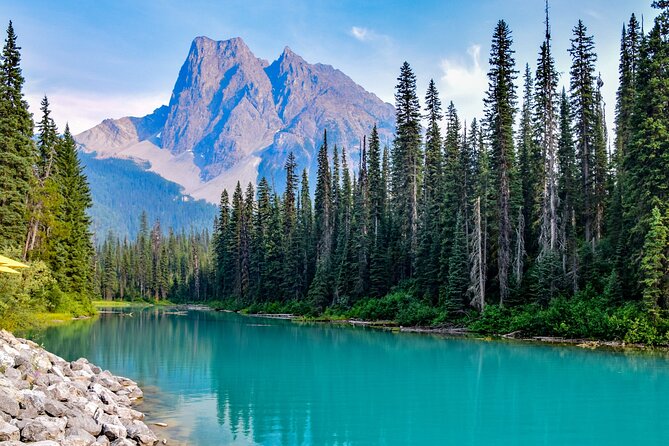
The audio points out the Mount Griffin Ecological Reserve, located about 10 kilometres southeast of the route point. You learn why it was established, which gives meaning to a place you may only glimpse from the road.
Eagle River Provincial Park is another stop with a naming story. The commentary explains why it was called Eagle River and who gave it that name. These small historical explanations are useful because they help you connect a place name with an event or person instead of forgetting it as soon as you pass.
The tour also identifies a park opened in 2001 and explains what it protects. The details provided do not name the protected feature, so you should see this as part of the broader run of regional information rather than a standalone excursion.
Several parks and attractions are passed without being formal audio points. You can stop at them and spend as much time as you like, but you will need to decide on the stop yourself. This is both a strength and a limitation. You get freedom, but you should not expect a full guide to every roadside attraction.
Three Valley Gap and the approach to Revelstoke
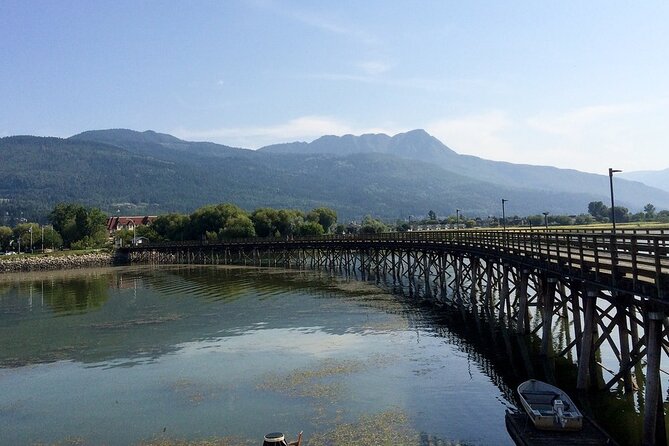
Three Valley Gap gives the tour one of its more unusual turns. The audio explains why ghost hunters may want to visit the area, right beside the highway. That lighter subject breaks up the more conventional stories about parks, towns, and railway history.
The tour also discusses the eastern boundary of the valley and estimates how many people lived there roughly 40,000 years ago. That adds a long human timeline to the drive. You are not just hearing about modern settlements and highways. You are also being asked to think about people who lived in the area long before the current towns existed.
As you approach Revelstoke, the tour points out a mountain road leading to the top of Mount Revelstoke in Mount Revelstoke National Park. This is valuable route planning information if you are considering a separate visit. The audio does not include admission, transportation, or a guaranteed stop, so treat the road as an option to investigate rather than a promised part of the tour.
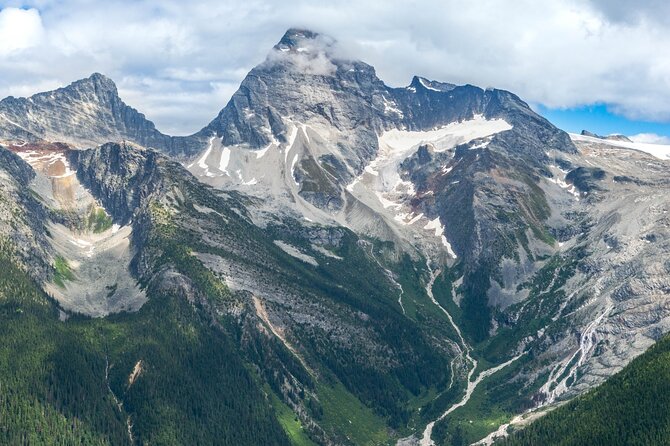
Mount Begbie receives its own explanation, including a look at the mountains’ volcanic past. This is a good example of the tour’s range. In a short span, you move from railways and local communities to geology, ecology, and national park access.
The Last Spike is the main historical payoff

The famous Last Spike is the clearest history stop on the route. You can stop there for as long as you like, which is exactly what a self-guided tour should offer at a meaningful site.
The audio introduces the event and helps explain why the location matters. If you are interested in Canadian railway history, this is likely the stop that gives the journey its strongest historical focus. Even if you only pause briefly, the story makes the roadside marker feel more significant.
Plan this stop according to your own schedule. The experience does not force you to linger, and it does not include attraction tickets or a separate on-site guide. You get the freedom to combine the audio with your own visit, photographs, and reading.
The commentary style: playful, useful, and not for everyone
The tone is light and includes quiz questions, jokes, and wordplay. For families, that can help children stay interested during a long drive. One useful touch is the chance to answer trivia questions as you go, which turns passive listening into a small game.
I would not book this expecting a formal historical lecture. Some subjects are presented in a cheerful, child-friendly way, and the tone can feel cheesy if you prefer serious narration. Some information may also feel only loosely tied to the exact view outside your window.
That unevenness matters. The strongest parts connect a clear place with a memorable fact, such as the Last Spike, Shuswap Lake, American dippers, or Mount Begbie. Other segments may feel random, and you may wish the audio covered more old bridges and roadside structures.
The English-only format is another firm limitation. If you are not comfortable listening to English while driving, this is not a good match. The audio requires attention, and it is not something you can easily follow if you are struggling with the language or trying to focus on complex road conditions.
Value at $8.22 per vehicle
The price is the easiest part of the decision. At $8.22 per group of up to 15, this is inexpensive if you already have a vehicle and plan to drive the route. A family of four, a group of friends, or a full carload pays the same amount.
The value comes from the amount of time it can fill. The audio covers about two and a half hours and adds stories to a drive that many people would make anyway. You also keep flexible dates and can use the tour anytime through Tripvia Tours, rather than being tied to one narrow departure slot.
The value is less clear if you want a polished, fully narrated production with perfect route tracking. Technical issues can reduce the benefit, and the commentary style will not please everyone. Still, the low price makes this a fairly safe experiment, especially for a private group.
You can cancel for a full refund up to 24 hours before the experience start time. Cancellations or changes within 24 hours are not accepted for a refund.
Who should book this audio drive?
I would choose this for a family road trip, a group sharing one car, or anyone who likes learning small facts while driving. It is also useful if you are making the Kamloops to Revelstoke journey for the first time and want a little context without joining a scheduled group tour.
It suits people who like to stop on impulse. You can pause for photographs, visit a recommended attraction, spend more time at the Last Spike, or continue driving if the weather changes.
I would be cautious if you dislike phone apps, need narration in another language, or want a serious adult-focused presentation. I would also avoid treating the audio as your only trip planning tool. It identifies many points, but not every attraction passed along the highway receives a full commentary stop.
Should you book the Kamloops to Revelstoke audio tour?
Book it if you want a low-cost way to give structure and personality to a long drive. The best reasons are the flexible start point, the large number of audio subjects, the Last Spike, and the fact that one booking covers your entire vehicle.
Skip it if you expect flawless technology, detailed coverage of every roadside feature, or formal narration. Prepare the app before departure, use a passenger to manage the phone, and accept the playful tone. With those expectations, this can turn an ordinary transfer between Kamloops and Revelstoke into a more informed and entertaining road day.
FAQ
How long does the Kamloops to Revelstoke audio tour take?
The audio tour lasts approximately two hours and 30 minutes. Your total outing can take longer because you can stop anywhere along the route and spend as much time as you like at places such as the Last Spike.
Can I take the tour from Revelstoke to Kamloops?
Yes. The tour can be taken in either direction, so you can start in Kamloops or Revelstoke.
How many people does one booking cover?
One tour booking covers one vehicle and up to 15 people. You need to supply your own vehicle and smartphone or tablet.
Does the tour require mobile data or a signal?
No mobile signal is required and the tour does not use data during the drive. You should still prepare the phone and access the tour before setting out.
Is the audio tour available in languages other than English?
No. The experience is offered in English only.
Are attraction tickets included?
No. Admission to attractions is not included. You can choose to stop at places along the route, but any required attraction tickets must be purchased separately.
Just added in Canada
- 2-Hour Two Castle 1000 Islands Cruise from Ivy Lea★ 4.5 · 24 reviews
- Medway Lakes Canoe Trip 3-Day★ 5.0 · 12 reviews
- Meet The Seals Boat Tour – Travel by boat to a Secret Seal Cove★ 5.0 · 21 reviews
- 20 Minute Scenic Helicopter Private Tour★ 5.0 · 14 reviews
- Wine, Cheese, Chocolate 6 Hour Tasting Tour with Lunch★ 5.0 · 45 reviews
- Wine Tour with Lunch in Niagara-on-the-Lake★ 5.0 · 25 reviews
- Guided Craft Cider Tour in Niagara★ 4.5 · 4 reviews
- Walking Food Tour in Niagara Falls★ 5.0 · 6 reviews