
Reviewed · ZIPLINES & ADVENTURE PARKS
Tyroparc: Via Ferrata and Hiking in the Laurentians
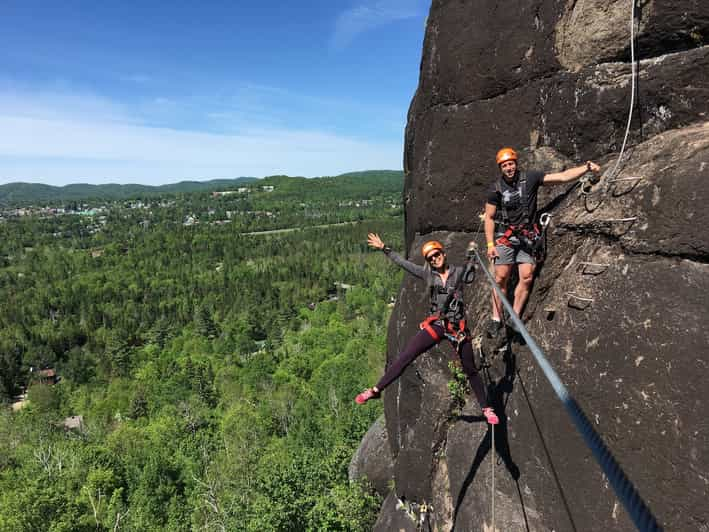
The best part of Tyroparc’s Via Ferrata is the mix of real cliff climbing and big Laurentian views. You hike to Cap Beauséjour, clip into a steel safety cable, and work your way up a 60-meter rock face, roughly the height of a 20-floor building.
I like the small groups, limited to four, and the calm, careful instruction. I also like that the route includes several bridges and obstacles instead of being a simple uphill walk. The main consideration is physical: you need to climb, hike, and manage exposed heights for about three hours.
- A 60-meter cliff ascent: Climb Cap Beauséjour with fixed footholds, handles, and a continuous safety cable.
- A short approach hike: Walk 450 meters from the chalet to the base of the cliff before the technical climbing starts.
- Several bridge crossings: Reach the top by handling different bridge and cliff obstacles along the route.
- Panoramic Sainte-Agathe views: Look across the region from the top of the Via Ferrata.
- Small, closely guided groups: With no more than four participants, you get direct help when you need it.
- A 700-meter return hike: Finish by walking down the mountain to the base camp.
What the Cap Beauséjour Via Ferrata Is Really Like
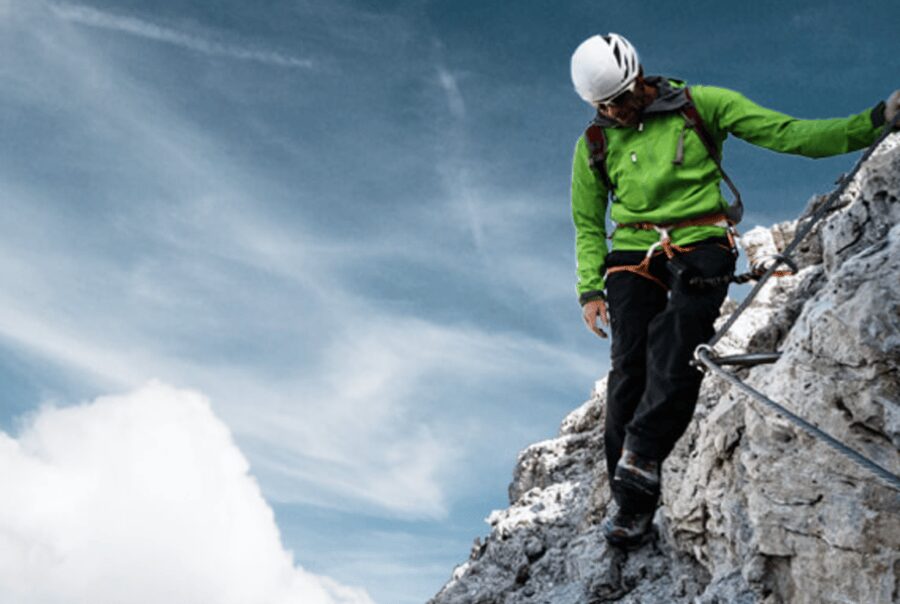
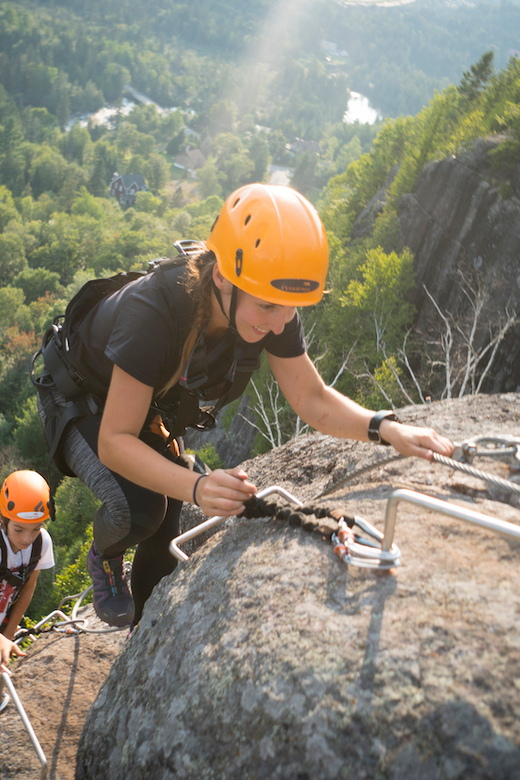
A Via Ferrata gives you a middle ground between hiking and traditional rock climbing. You are not relying on ropes and a belay system in the usual climbing sense. Instead, you wear safety equipment and stay attached to a fixed steel cable while using metal steps, handles, and natural rock to move upward.
That setup makes the activity more approachable than finding your own route up a bare cliff. Still, it is not a passive sightseeing ride. You will pull, step, balance, and make steady progress under your own power.
At Tyroparc, the technical route climbs more than 60 meters up Cap Beauséjour. That is about the height of a 20-floor building, so the height feels meaningful even though the route is carefully equipped. The activity information also describes an ascent of up to 450 meters, while the approach itself is a 450-meter hike from the chalet. Either way, plan for a genuine outdoor workout, not a gentle nature stroll.
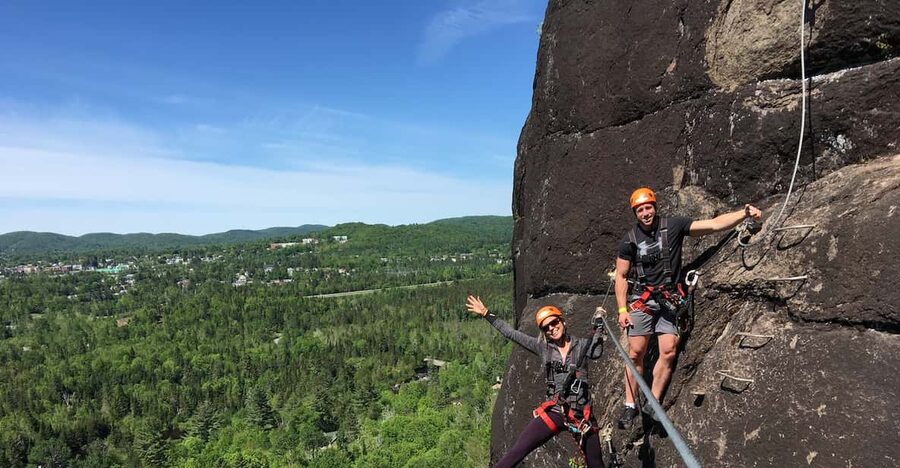
The reward is the view from above. From the top, you can look across the Sainte-Agathe-des-Monts region, with the height giving you a broad view rather than a narrow trail-side glimpse.
The 450-Meter Walk to the Cliff
Your activity starts at the Tyroparc chalet, where you should check in 30 minutes before the scheduled start. That extra time matters because you need to complete the participation agreement, receive your equipment, and listen to the safety briefing before heading out.
The first section is a 450-meter hike to the foot of Cap Beauséjour. This walk helps separate the base-camp routine from the main event. You have time to settle into your hiking shoes, adjust your clothing, and get used to moving outdoors before you reach the rock face.
I would use this approach as a final check of your gear. Your shoes should be secure and suitable for uneven ground. Loose sandals and open-toed shoes are not allowed, and sports shoes or hiking shoes are specifically recommended.
The approach is short on paper, but it is still part of the three-hour activity. Do not arrive thinking the entire time will be spent attached to the cliff. You will hike before and after the Via Ferrata, and both sections count when judging the physical demand.
More walking routes in Canada:
- Guided Glacier Hike on The Athabasca with IceWalks
★ 5.0 · 334 reviews - From Toronto: Algonquin Park Canoeing & Hiking Adventure
★ 4.6 · 291 reviews - Medicine Trail Snowshoe Tour
★ 5.0 · 279 reviews
Getting Clipped to the Steel Cable
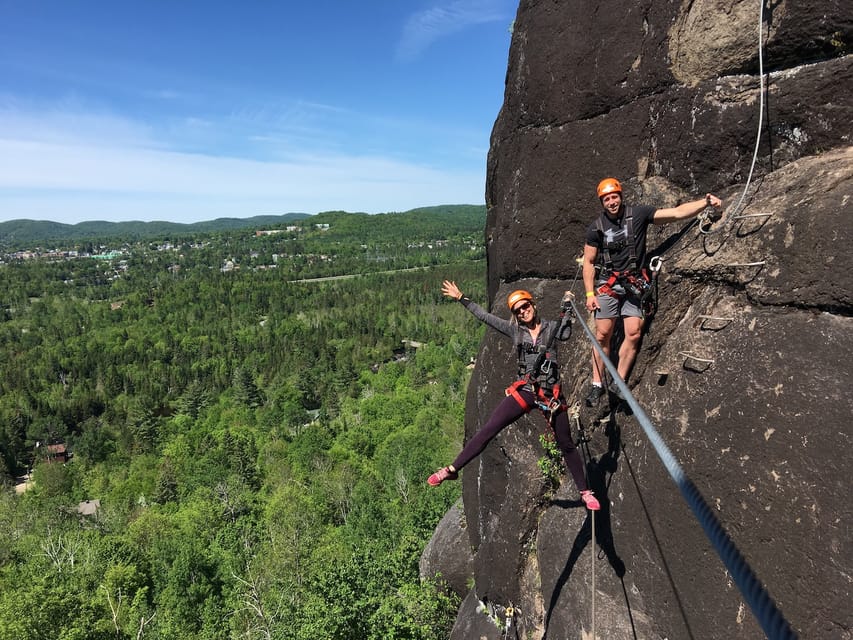
At the base of the cliff, the guide explains how to use the safety equipment and move through the route. The key idea is simple: you remain connected to the steel cable as you climb, using the fixed metal steps and handholds to gain height.
This is where a small group makes a practical difference. With a maximum of four participants, the guide can watch your movement closely and give direct instructions. You are less likely to feel lost in a line of people, and you have more room to ask questions before tackling a new obstacle.
Guide MJ received especially strong praise for keeping the experience calm and explaining each step clearly. That detail matters because the challenge is not only physical. Heights can make even a straightforward movement feel awkward, and a guide who breaks the route into small tasks can help you keep moving.
You should still expect to manage your own body and equipment. The guide provides instruction and supervision, but you will be the one placing your feet, holding the handles, and moving along the cliff. If you dislike heights or become tense when looking down, think carefully before booking.
Bridges, Handles, and Cliff Obstacles
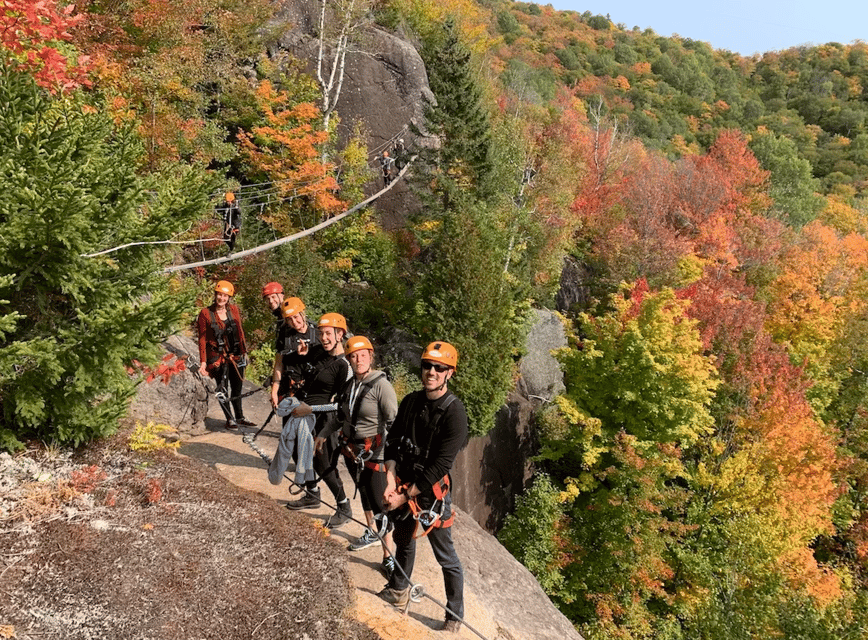
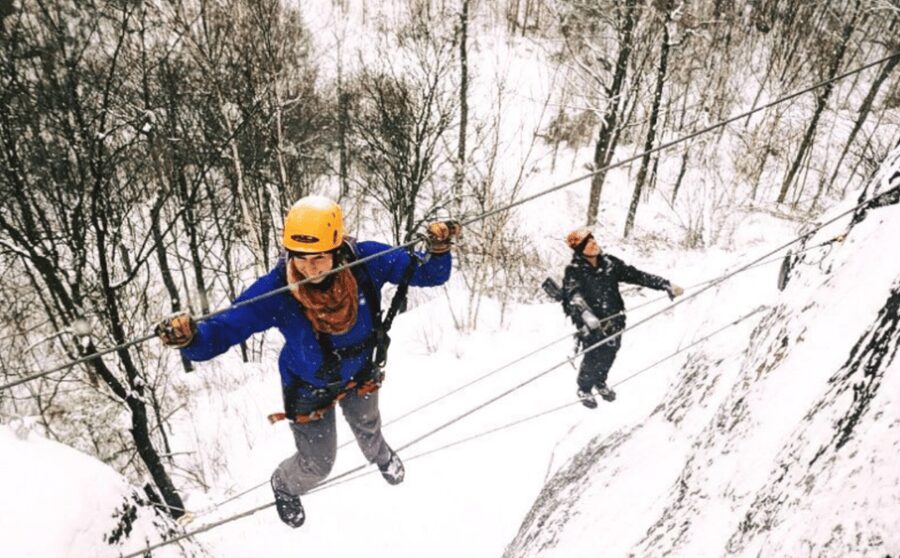
The route is not just a ladder bolted to rock. You will cross different types of bridges and handle several obstacles built into the cliff section. These features give the climb variety and require you to adjust your balance and pace.
Some sections may feel easy once you understand the safety system. Others can demand more concentration, especially when the cliff narrows or a bridge moves under your weight. The available information does not specify the exact design of each bridge, so you should not assume that every crossing will feel the same.
That changing rhythm is one of the activity’s best features. A standard hike gives you a steady trail surface. A Via Ferrata asks you to respond to each section as it comes. You may use a metal step in one spot, a handle in the next, and a bridge after that.
The safest approach is to follow the guide’s instructions rather than rush toward the top. Keep your movements measured, use the provided equipment as directed, and pause when you need to regain your balance. The safety cable is there to protect you, but it does not remove the need for care.
The 60-Meter Climb and the View Above
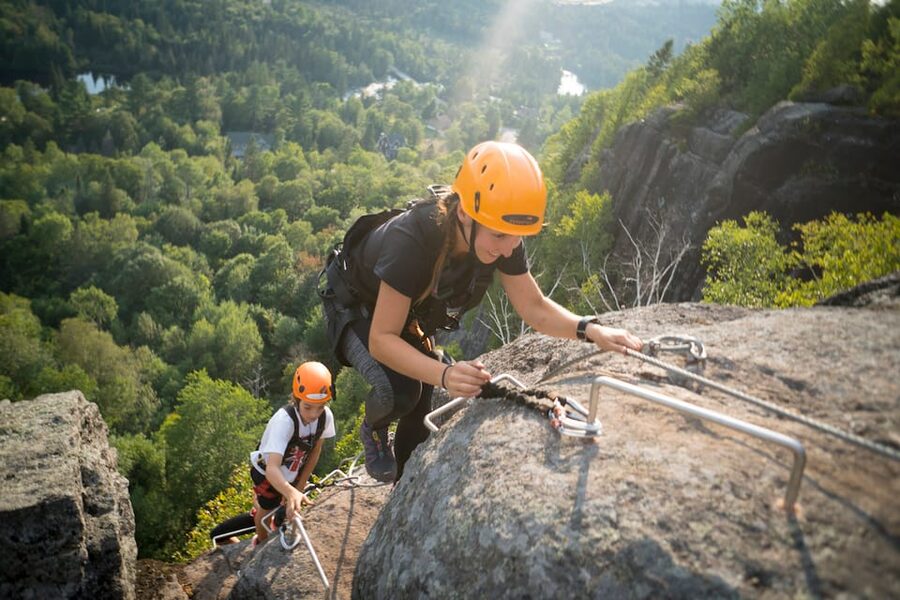
As you gain height, the climb changes from an activity beside the rock to an activity on the rock. That shift is what gives the Via Ferrata its appeal. You are not simply walking to a viewpoint. You are earning the viewpoint through a series of physical steps.
The cliff is over 60 meters high, comparable to a 20-floor building. You may notice the height most when you look back toward the starting point or out across the open space beside the route. The equipment and guide support the experience, but the exposure remains part of the thrill.
At the top, take time to enjoy the panorama of Sainte-Agathe-des-Monts. The view is the natural pause after the effort, and it gives you a chance to appreciate how far you have climbed.
I would not book this solely for sightseeing. If your main goal is a lookout with no exertion, a normal viewpoint would be a better match. The scenery works best here because it is tied to the climb, the bridges, and the feeling of reaching the top under your own power.
Other adventure parks near Canada:
- Niagara Falls, Canada: Zipline to The Falls
★ 4.5 · 2,236 reviews - Zipline Adventure in Whistler
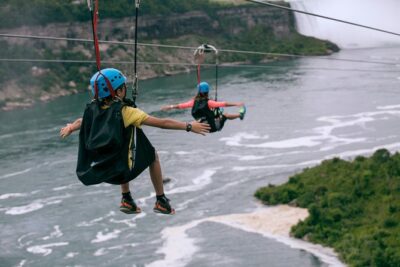
★ 5.0 · 1,367 reviews - Zipline To The Falls in Niagara Falls, Canada
★ 4.5 · 1,197 reviews - Mont Tremblant Guided Zipline Tour
★ 5.0 · 918 reviews
The 700-Meter Hike Back to Base Camp
After the cliff section, you return to base camp on a hike of about 700 meters down the mountain. This is a useful cooldown after the climbing, but it is not an instant exit from the activity.
Your legs and forearms may feel tired after the ascent, so downhill walking deserves attention. Wear shoes with a secure fit, keep your pace controlled, and save some water for the return. The activity recommends bringing a reusable water bottle, sunscreen, insect repellent, and weather-appropriate outdoor clothing.
The return route also gives you a chance to come down gradually rather than stepping straight from the cliff into a parking area. You finish with a short mountain walk, which keeps the outing connected to its natural setting.
The full activity lasts about three hours and is usually available in the afternoon. Check the start time carefully, especially if you are driving from Montreal. Tyroparc is roughly one to one and a half hours from Montreal, depending on traffic, so you should allow plenty of time for the drive and the required early check-in.
Is $66 a Good Price?
At $66 per person, this is a fair price for an activity that includes the equipment, safety briefing, guide, hiking, and Via Ferrata access. You are paying for more than entry to a cliff. The price also covers the structure and supervision that make the route possible for people who do not own climbing equipment or know how to set up a protected route.
The small group improves the value. A four-person limit means the guide can give individual help, and that is especially useful on bridges or sections where you need a clear explanation before continuing.
I would compare this with the cost of a guided climbing activity in other destinations, but the better question is what you want from your day. If you are looking for a short, active mountain experience with instruction and a defined route, $66 is reasonable. If you would rather hike at your own pace or avoid equipment and time limits, the price will not feel worthwhile.
The reserve-now-and-pay-later option also helps if your plans are still moving around. You can cancel up to 24 hours before the activity for a full refund, according to the stated booking conditions. The outing runs rain or shine, although a minimum number of participants may be required.
What to Wear and Bring
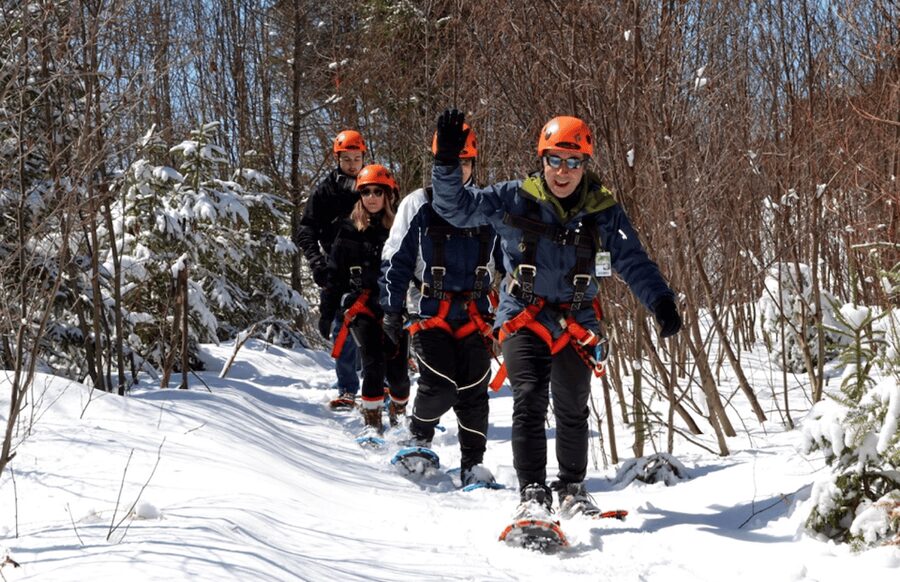
Good clothing will make the activity easier. Choose comfortable outdoor clothes that allow your legs and arms to move freely. Bring sunscreen, insect repellent, a reusable water bottle, and clothing suited to the forecast.
Gloves are listed among the recommended items. They can be useful when your hands spend time on metal handles and cables, though the exact equipment supplied by Tyroparc is not specified beyond the inclusion of activity equipment.
Goggles are also listed. Pack them if you have them, especially if bright conditions or outdoor dust bothers your eyes.
Do not bring a backpack, sandals, flip-flops, skirts, open-toed shoes, or alcohol and drugs. Bare feet are also prohibited. Since backpacks are not allowed, keep your personal items limited and confirm where you can leave anything you do not need on the route.
The safest clothing choice is practical rather than stylish: fitted enough not to catch on equipment, flexible enough for climbing, and suitable for changing weather.
Who Should Book This Activity?
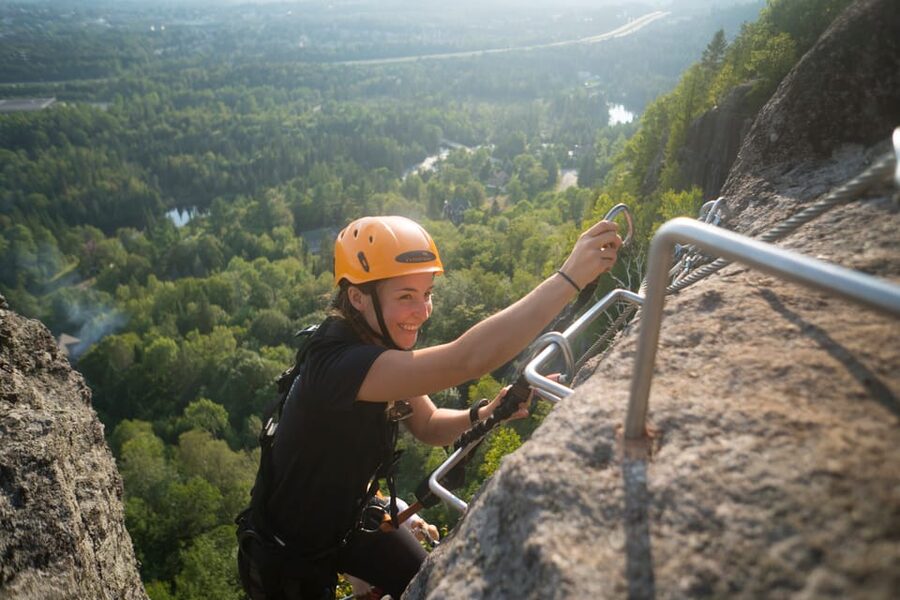
This outing suits you if you enjoy active sightseeing, can handle a climb, and want more than a marked walking trail. It is a good choice for families with children aged 10 and older who meet the height and weight requirements, as well as adults looking for a controlled introduction to cliff-based adventure.
The minimum height is 1.70 meters from the feet to the top of the fingers with arms raised. The minimum weight is 45 kilograms, or 100 pounds, and the maximum is 100 kilograms, or 220 pounds. These are firm requirements, not minor booking details, so check them before reserving.
The activity is not suitable for children under 10, pregnant people, people with mobility impairments, wheelchair users, anyone below 45 kilograms, or anyone above 100 kilograms.
You should also be comfortable with a small amount of uncertainty. The route operates rain or shine, and the guide may require the minimum number of participants before the activity runs. If you need a guaranteed dry-weather outing or dislike exposed heights, choose a lower-key hike instead.
English and French Guidance
The activity is offered in English and French. That is useful for visitors who want instruction in either language, particularly when learning how to move through a safety system.
The guide’s role is important here. You need to understand how to remain connected to the cable, how to approach obstacles, and how to continue safely from one section to the next. In one especially positive experience, guide MJ was praised for keeping the climber calm and giving step-by-step direction throughout the route.
That kind of coaching is more valuable than a long speech at the start. You need clear reminders at the actual bridge, handhold, or climbing section in front of you. The four-person group limit gives the guide a better chance to provide that direct support.
My Verdict: Book It If You Want Active Views
I would book Tyroparc’s Via Ferrata if I wanted a compact, guided adventure near Montreal with real height, hands-on climbing, and a wide view over Sainte-Agathe-des-Monts. The 60-meter cliff, varied bridges, and small group make it more memorable than a normal hike, while the fixed cable and guide provide a clear safety structure.
I would skip it if you want a relaxed viewpoint, have mobility limits, fall outside the weight or height rules, or feel uneasy about climbing a cliff face. For the right participant, $66 buys three hours of focused outdoor activity and a view reached by effort, not simply by walking to a lookout.
FAQ
How long does the Tyroparc Via Ferrata activity last?
The activity lasts about three hours. This includes the 450-meter hike to the cliff, the Via Ferrata ascent, and the roughly 700-meter hike back to base camp.
How high is the cliff climb?
The cliff face is over 60 meters high, roughly equivalent to a 20-floor building. The activity information also describes an ascent of up to 450 meters.
How many people are in each group?
The group is limited to four participants. This allows the guide to provide direct instruction during the climb and bridge crossings.
What languages does the guide speak?
Guides provide the activity in English and French.
What is the minimum age and size requirement?
Participants must be at least 10 years old and at least 1.70 meters tall from their feet to the top of their fingers with their arms raised. The minimum weight is 45 kilograms, or 100 pounds, and the maximum is 100 kilograms, or 220 pounds.
What should I bring to the Via Ferrata?
Bring hiking or sports shoes, comfortable outdoor clothing, sunscreen, gloves, insect repellent, weather-appropriate clothing, a reusable water bottle, and goggles. Sandals, flip-flops, open-toed shoes, skirts, backpacks, alcohol, and drugs are not allowed.
Just added in Canada
- 2-Hour Two Castle 1000 Islands Cruise from Ivy Lea★ 4.5 · 24 reviews
- 20 Minute Scenic Helicopter Private Tour★ 5.0 · 14 reviews
- Medway Lakes Canoe Trip 3-Day★ 5.0 · 12 reviews
- Meet The Seals Boat Tour – Travel by boat to a Secret Seal Cove★ 5.0 · 21 reviews
- Wine, Cheese, Chocolate 6 Hour Tasting Tour with Lunch★ 5.0 · 45 reviews
- Wine Tour with Lunch in Niagara-on-the-Lake★ 5.0 · 25 reviews
- Guided Craft Cider Tour in Niagara★ 4.5 · 4 reviews
- Walking Food Tour in Niagara Falls★ 5.0 · 6 reviews
Ziplines & Adventure Parks, compared.
Zipline To The Falls in Niagara Falls, Canada
Read our review →
Superfly Ziplines on Cougar Mountain – includes 4 ziplines!
Read our review →
Browse the lists this tour appears in