
Reviewed · CYCLING TOURS
Vancouver: Half-Day City Highlights E-Bike Tour Age 16+
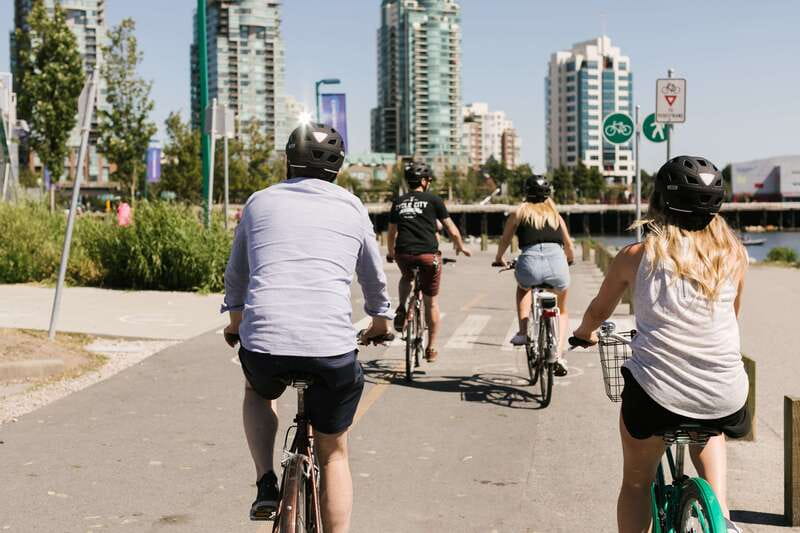
Vancouver’s best introduction may come on two wheels, with Stanley Park’s giant trees on one side and the downtown skyline on the other. This four-hour ride covers a surprising amount of ground, from the Seawall and Prospect Point to False Creek, Chinatown, and Gastown.
I like the mostly car-free cycling and the way the e-bike takes the sting out of Vancouver’s hills. I also like the small groups, capped at 10 riders, which give guides such as Greg, JT, Frank, and Zack room to stop and explain the city instead of simply leading a moving parade.
The main consideration is distance. You may cover 12 miles, or more than 20 km, and the electric motor helps, but you still need to ride a bicycle comfortably and handle light exercise. This is not a slow sightseeing bus with occasional pedaling.
Key points to know before you book
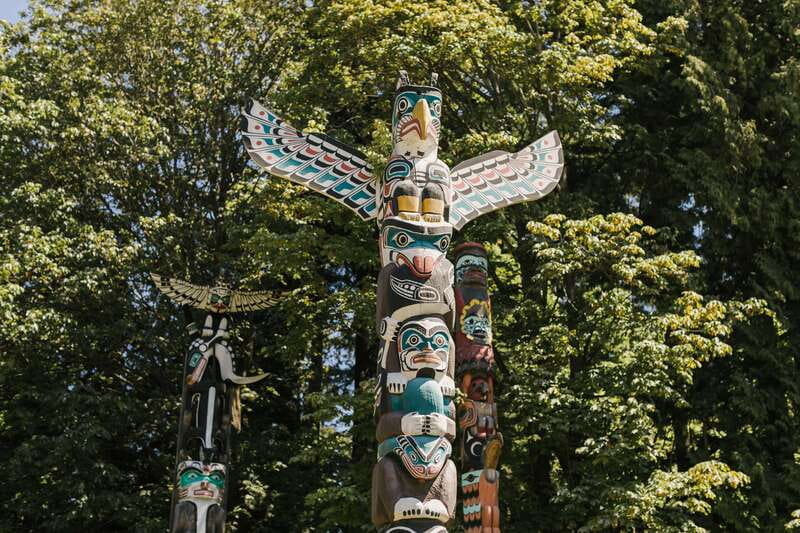
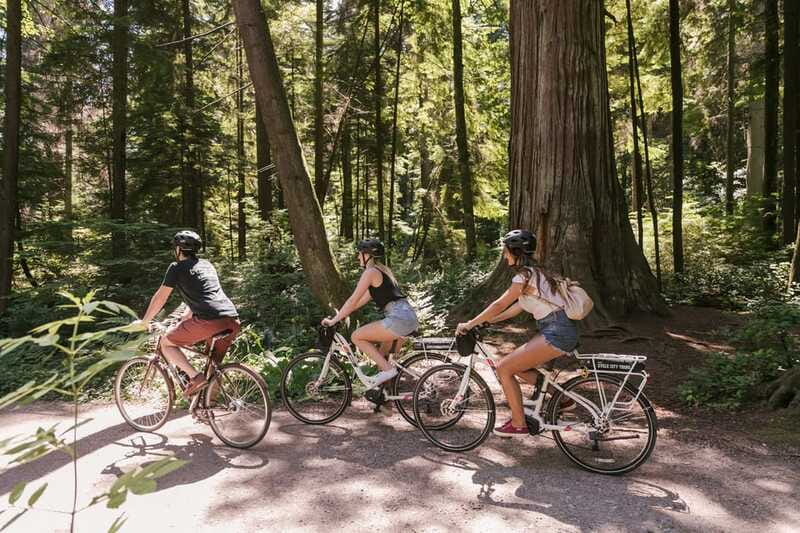
- Stanley Park is the heart of the ride: Expect towering trees, the Totem Poles, Beaver Lake, the Seawall, and Prospect Point.
- The e-bike helps with the hills: You control the electric boost, so the ride can feel gentle or more active.
- About 95 percent of riding avoids cars: Vancouver’s separated cycle routes make the tour less stressful for many riders.
- The route links nature and city districts: You move from rainforest and mountain views to Yaletown, Olympic Village, Chinatown, and Gastown.
- The group is limited to 10 people: That gives you a better chance to hear the guide and ask questions.
- Granville Island Market is not a tour stop: Visit it separately, ideally earlier in the day.
Why an e-bike is a smart way to see Vancouver
Vancouver spreads out along water, parks, and several distinct neighborhoods. Walking between the main sights takes too long, while a car can leave you staring at traffic instead of the city. An e-bike gives you range without demanding the legs of a serious cyclist.
You still pedal, but the electric motor supplies extra power when you need it. That matters on the climb to Prospect Point and on any uphill sections between the park and downtown. Several riders have covered more than 20 km with ease, while others point out that 12 miles is still a proper ride even with assistance.
You can usually choose how much help you want from the motor. Use less power on flat paths if you want exercise, then ask for more assistance on hills. The bikes are described as high-end and powerful, and the package includes a helmet and a handlebar bag for small essentials.
The tour is guided in English, and the guide does more than point out photo stops. You get stories about Vancouver’s past, Indigenous culture, neighborhood design, city growth, and the relationship between urban life and the surrounding forests and water. Guides including JT, Greg, Frank, Zack, Sophie, Chris, and Katie have received especially warm praise for mixing facts with humor and keeping the group together.
Other city tours in Vancouver:
- Big Bus Vancouver Hop-On Hop-Off Sightseeing Tour
★ 3.5 · 3,028 reviews - The Grand Bicycle Tour by Cycle City Tours
★ 5.0 · 1,827 reviews - Vancouver: Hop-on Hop-off Sightseeing Tour with 10 Stops
★ 3.9 · 1,807 reviews
Stanley Park, from Totem Poles to 600-year-old trees
The ride begins with Stanley Park, Vancouver’s great urban escape. At about 1,000 acres, the park is large enough to feel separate from downtown, yet close enough to reach by bicycle within minutes.
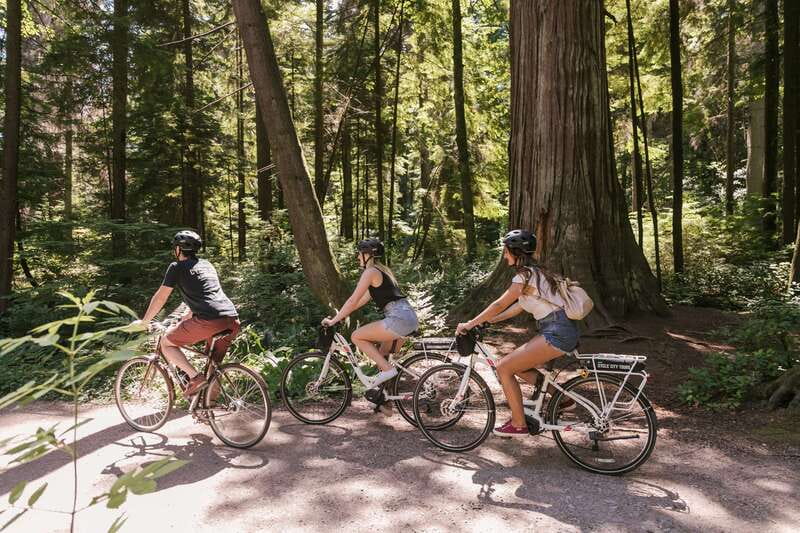
The park’s coastal temperate rainforest is the first major change of scene. You may ride beneath enormous trees, some described as roughly 600 years old, with thick greenery and quiet paths around you. This is not a formal forest walk. You experience it from the saddle, with short pauses at key points.
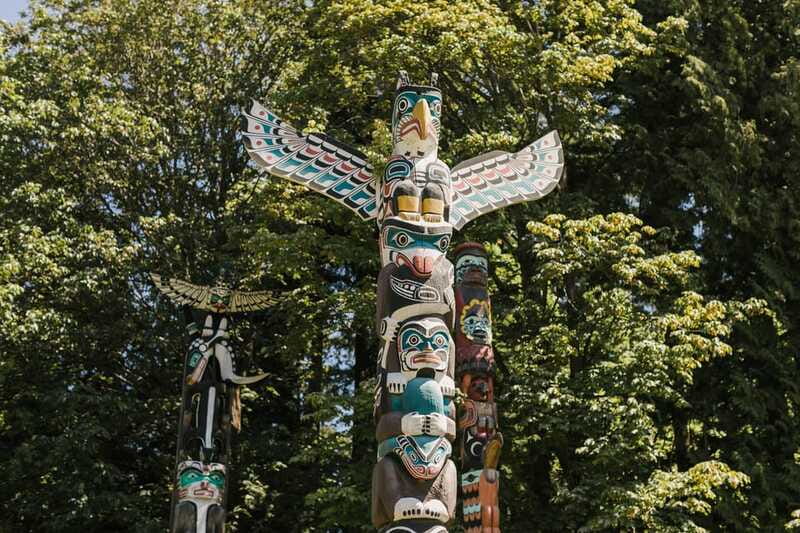
The Totem Poles are one of the main cultural stops. Your guide provides context and helps you understand why the display matters, rather than treating it as a quick photo backdrop. This is one reason the tour works better with a local guide than with a rental bike and a map.
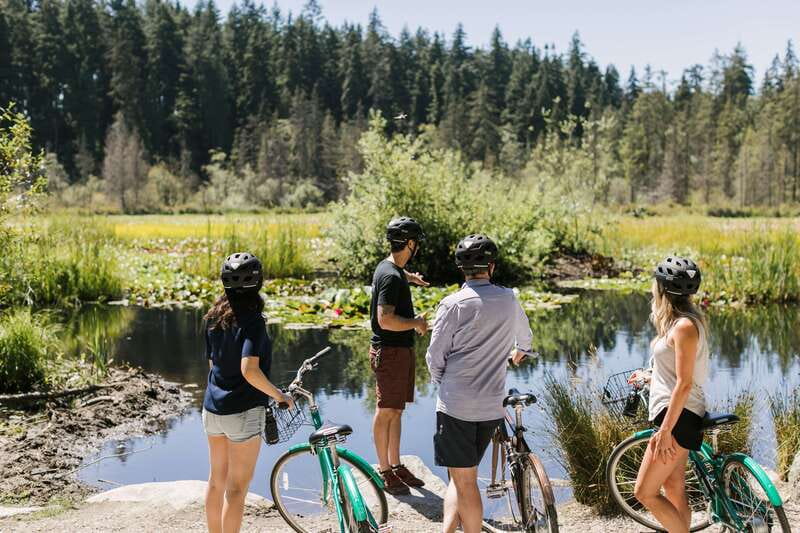
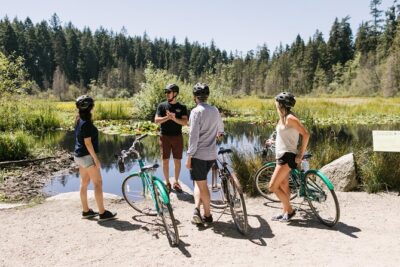
Beaver Lake offers a different side of the park. The setting is quiet and wildlife can be present, though sightings are never guaranteed. Keep your eyes open and listen while the guide explains the park’s natural setting.
The Seawall brings the classic Vancouver views. You ride beside the water with downtown towers behind you and the North Shore Mountains across the inlet. On a clear day, the views do much of the talking. On a gray day, the ride still works, but the mountains may fade into cloud.
Prospect Point and the reward of the climb
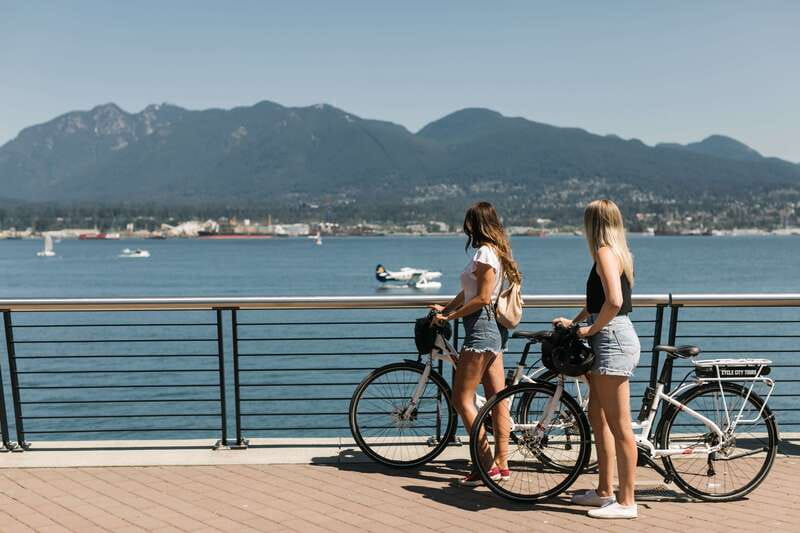
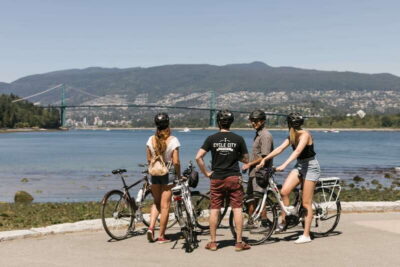
Prospect Point is the highest point in Stanley Park and one of the most useful stops for understanding Vancouver’s geography. From here, you look toward the Lion’s Gate Bridge, the waterway, and the mountains beyond.
The climb gives the e-bike a real job. You do not need to attack the hill, and the motor can make the ascent feel far less daunting. Still, you must pedal, steer, and stay alert. If you rarely cycle, practice with the controls before the group sets off.
On clear days, the view may stretch as far as Vancouver Island. That depends on weather and visibility, so do not treat it as a promise. The more reliable reward is the broad view over the bridge and the park’s forested interior.
This is also where the tour’s pace becomes clear. You are not stopping for a long guided visit at every sight. Instead, you ride in short stretches, pause for explanation and photographs, then continue. One rider described the rhythm as relaxed because the cycling came in manageable sections, while another noted the total distance and advised being in decent shape.
Along the Seawall and into False Creek
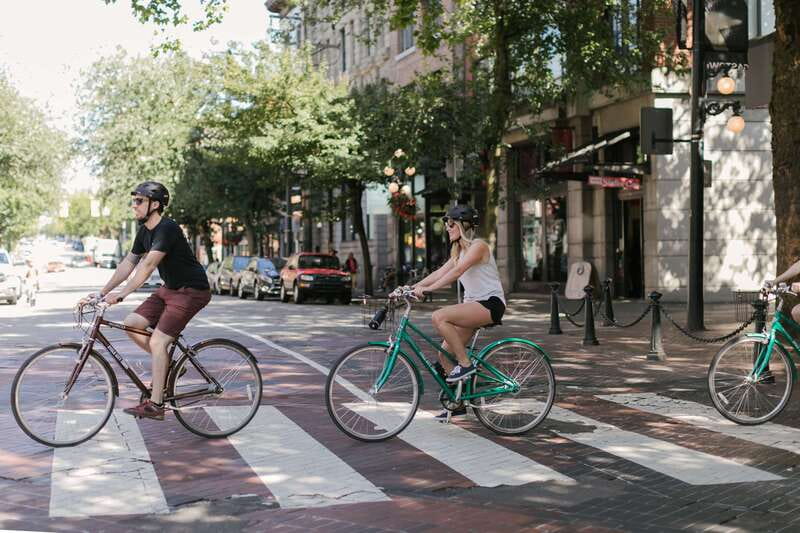
After Stanley Park, the route shifts from forest to waterfront city. The separated bike paths make this part much easier than riding in ordinary traffic. According to the tour details, about 95 percent of the route uses paths without cars, a major advantage for anyone who wants to look around without worrying about every passing vehicle.
You continue along the water and pass two of Vancouver’s most recognizable modern districts: Yaletown and Olympic Village. Both grew through major redevelopment and are known for modern buildings and environmentally minded design.
Yaletown offers a sharp contrast with Stanley Park. Former industrial spaces have become a polished downtown neighborhood, with newer buildings and a strong connection to the False Creek waterfront. Your guide can help you read the area as a piece of city planning, not just a collection of attractive streets.
Olympic Village has its own story tied to Vancouver’s modern identity and waterfront development. The route lets you see how the city has reused former industrial areas for housing, public space, and sustainable design.
The ride through False Creek is valuable because it shows Vancouver as a working, changing city. Stanley Park gives you trees and open water. Yaletown and Olympic Village show what happened when the city turned attention toward housing, public access, and the waterfront.
Other cycling tours in Vancouver:
- Epic Electric Bike Tour by Cycle City Tours
★ 5.0 · 848 reviews - The Stanley Park Bicycle Tour by Cycle City Tours
★ 5.0 · 785 reviews - Vancouver: Guided Bike Tour
★ 4.9 · 435 reviews - Vancouver Bike or Ebike Rental – Self Guided Map provided
★ 5.0 · 149 reviews
Chinatown and Gastown bring the older city into view
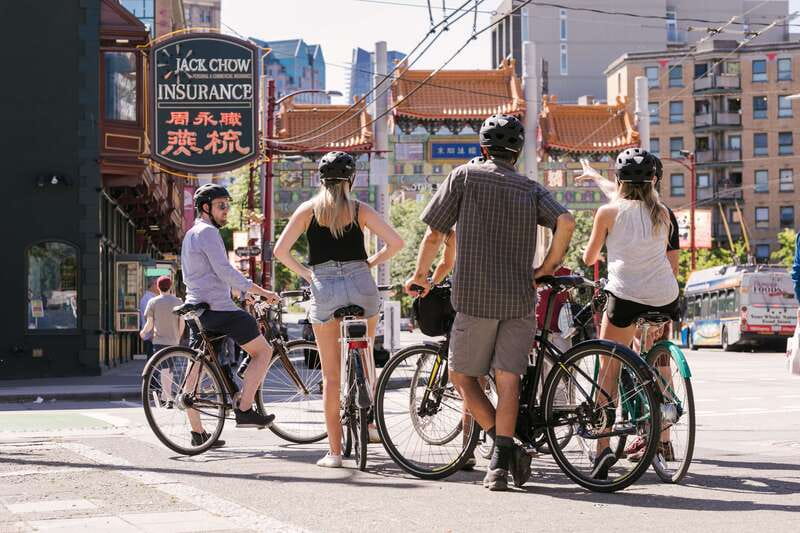
The final urban stretch heads toward Chinatown and Gastown, two of Vancouver’s oldest neighborhoods. Here the scenery changes again, from planned waterfront districts to older streets and historic buildings.
Chinatown gives the guide a chance to explain the people and communities that helped shape Vancouver. The tour information promises stories about the city’s roots, and the best guides make this part feel connected to the rest of the ride. Vancouver is not only mountains, towers, and seawalls. Its identity also comes from migration, trade, community life, and hard chapters in the city’s past.
Gastown supplies another change of pace, with older buildings and streets that recall an earlier Vancouver. You will not have time for a full museum-style visit, but the guide can give you useful orientation for a later return on foot.
The route may pass near East Hastings Street in Chinatown. One rider disliked that stretch and wished the return route had avoided it. This is worth knowing if you are sensitive to visible poverty, addiction, or urban disorder. It is part of the real city, but not the polished postcard version of Vancouver.
What the guides add to the experience
The guide is a major part of the value. A bike route can show you the city, but a good guide explains why the neighborhoods look as they do and helps you connect the natural and human sides of Vancouver.
Greg has been praised for cheerful, wide-ranging explanations. JT is known for an energetic, humorous approach and for keeping the group together. Frank has been described as considerate and full of useful city information. Zack received special praise for his cultural background stories and enthusiasm.
Other guides named by riders include Sophie, Mark, Chris, Katie, Blair, Harley, Avery, Paulo, Mika, Alec, and Malo. You cannot count on a particular guide unless the operator confirms it, but the repeated pattern is clear: the guide’s personality can shape the day as much as the scenery.
Small groups help here. With no more than 10 riders, you have a better chance to hear the commentary, ask a question, and stay connected to the group at crossings and stops. Solo participants can still fit in comfortably. One person enjoyed the outing even when riding alone with the guide.
How much riding is involved?
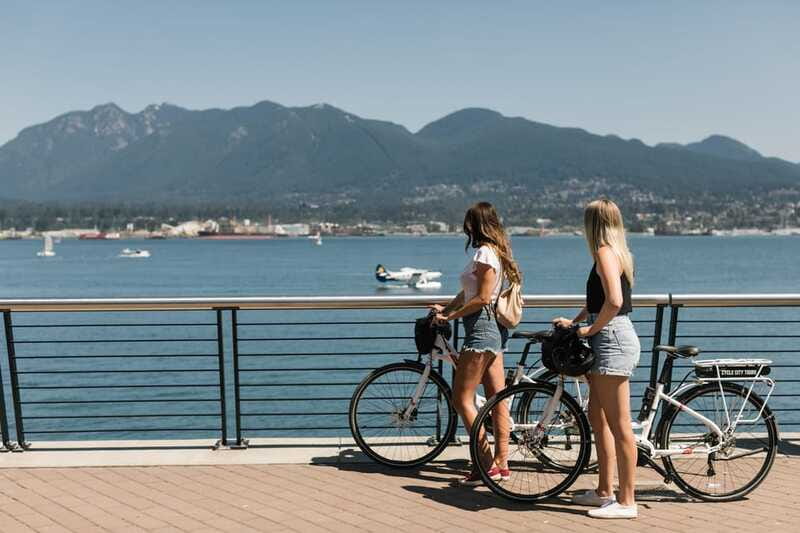
Do not book this as a purely effortless activity. The e-bike makes the ride easier, not weightless. You must be able to ride a bicycle safely, manage light exercise, and remain comfortable for several hours.
The exact distance can vary, but the experience may cover more than 20 km. Some riders call it easy because of the electric assistance, while others point out that the distance still requires reasonable fitness. Both points are fair.
The route’s separated paths reduce traffic stress, but you still need to steer, brake, follow instructions, and watch other cyclists and pedestrians. If you have not used an e-bike before, allow time to get used to the controls before leaving.
The tour runs rain or shine, and rain ponchos are provided if needed. Vancouver weather can change quickly, so dress for conditions and bring the required passport or ID card. The bikes are rated for a maximum combined rider and gear weight of 300 pounds, or 136 kg.
The minimum age is 16. Children under 16 cannot join, and people who cannot ride a bicycle are not suitable for this activity.
Is the $105 price fair?
At $105 per person, this is not the cheapest way to see Vancouver. You could rent a regular bicycle for less, ride the Seawall, and choose your own stops. That option makes sense if you already know the city, enjoy navigation, and want a flexible schedule.
The guided e-bike tour earns its price through four things: the electric bike, the local guide, the route planning, and the amount of ground covered. In four hours, you see nature, waterfront redevelopment, older neighborhoods, and major viewpoints without arranging separate transportation.
The small group also matters. A 10-person maximum is more personal than a large sightseeing group, and the guide can keep the pace together. The included snack bar, helmet, and handlebar bag are useful, though they are not the main reason to book.
I consider the tour good value for a first visit, especially if you have only a short stay or want to understand the city’s layout early in your trip. It is less compelling if you prefer long stops, museums, shopping, or a very gentle ride.
How to fit it into your Vancouver day
Do not expect a stop at Granville Island Market. The official route does not include it, even though riders may see parts of the wider waterfront area. Visit Granville Island separately, ideally in the morning, then take this tour later.
The ride works particularly well near the start of a Vancouver visit. You learn where Stanley Park, False Creek, Yaletown, Olympic Village, Chinatown, and Gastown sit in relation to one another. Afterward, you can return to the neighborhoods that caught your interest.
Arrive 15 minutes before the start time. Hotel pickup and drop-off are not included, so plan your own way to the meeting point. Starting times vary, and the full activity lasts four hours.
The booking terms are traveler-friendly: you can cancel up to 24 hours before the start for a full refund, and the reserve-now, pay-later option lets you hold a place without paying immediately.
Who should book this ride?
I would choose this tour for first-time visitors who want a broad introduction rather than a single focused attraction. It suits adults and older teens who can cycle comfortably and appreciate a mix of scenery, city design, local stories, and light exercise.
It is also a good match for people who dislike riding beside heavy traffic. The large share of separated paths makes the outing feel more approachable than a standard road cycling tour.
You may want another activity if you have mobility limits, cannot ride a bicycle, dislike riding in rain, or want a slow day with long visits inside buildings. The tour is also a poor fit if you want to spend serious time at Granville Island Market, since that requires a separate visit.
Should you book the Vancouver e-bike tour?
Book it if you want to cover a lot of Vancouver in one active morning or afternoon, and if you like having a local guide explain what you are seeing. The combination of Stanley Park, the Seawall, Prospect Point, False Creek, Chinatown, and Gastown gives you a useful first map of the city.
I especially like the blend of ancient trees, mountain views, modern waterfront districts, and older urban streets. Just respect the distance, arrive ready to pedal, and plan Granville Island separately. For most visitors aged 16 and up who are comfortable on a bike, this is a practical and enjoyable way to get your bearings fast.
FAQ
How long is the Vancouver e-bike tour?
The tour lasts four hours.
What age do you need to be?
Participants must be at least 16 years old. Children under 16 cannot join.
How much of the route avoids cars?
About 95 percent of the riding takes place on separated bike trails or routes without cars.
Does the tour stop at Granville Island Market?
No. Granville Island Market is not included as a stop, so you should visit it separately.
What happens if it rains?
The tour runs rain or shine. Rain ponchos are provided if needed.
What does the price include?
The $105 price includes a professional English-speaking local guide, electric bike, helmet, handlebar bag, and snack bar. Hotel pickup and drop-off are not included.
More city tours elsewhere in Canada
- Vancouver City Sightseeing Tour: Granville Island & Stanley Park
★ 4.5 · 1,782 reviews - Vancouver City Sightseeing Tour: Capilano Suspension Bridge & Vancouver Lookout
★ 5.0 · 1,556 reviews - Vancouver City and Harbour Waterfront Sightseeing Boat Tour
★ 5.0 · 839 reviews - Vancouver Highlights: Capilano Bridge & Granville Island
★ 4.7 · 700 reviews
More cycling tours in Vancouver
- Montreal eBike Sightseeing Tour
★ 5.0 · 573 reviews - Toronto: Heart of Downtown 3.5-Hour Bike Tour
★ 4.9 · 419 reviews - eBike Adventure in Whistler
★ 5.0 · 365 reviews - Montreal: E-Bike Sightseeing Tour
★ 4.8 · 365 reviews
Just added in Vancouver
- Vancouver to Victoria – Coach Bus Transfer★ 4.5 · 175 reviews
- Vancouver Bike or Ebike Rental – Self Guided Map provided★ 5.0 · 149 reviews
- Private Transfer from Vancouver Airport (YVR)★ 4.5 · 89 reviews
- Vancouver to Victoria Scenic Seaplane Transfer: One Way★ 4.5 · 184 reviews
- Private Arrival Transfer from Vancouver Airport (YVR)★ 3.5 · 81 reviews
- Vancouver Airport to-or-from Whistler by Express (One-Way)★ 4.5 · 181 reviews
- Vancouver City Tour with Admission to Lookout Tower★ 4.5 · 228 reviews
- Vancouver City & Lookout Tour and Option to Add Airport Drop Off★ 4.5 · 226 reviews
Cycling Tours, compared.
The Stanley Park Bicycle Tour by Cycle City Tours
Read our review →

Browse the lists this tour appears in