
Reviewed · TOURS IN QUEBEC CITY
Quebec City: Observatoire de la Capitale Entry Ticket
Quebec City makes more sense from above. At the Observatoire de la Capitale, you look over the fortified old city, the St. Lawrence River, and two mountain ranges, then match what you see with interactive screens and historical displays. I like the 360-degree views and the way the Horizons discovery trail ties those views to Quebec’s past and identity.
I also like the low $10 price and the freedom to take your time during the one-day admission. A late-afternoon visit can be especially rewarding, since you may see the city in daylight and its holiday lights after dark. The main drawback is that the experience is self-guided, and the available host language is French, so visitors wanting a long, live English explanation may find it limited.
Key points to know before you go
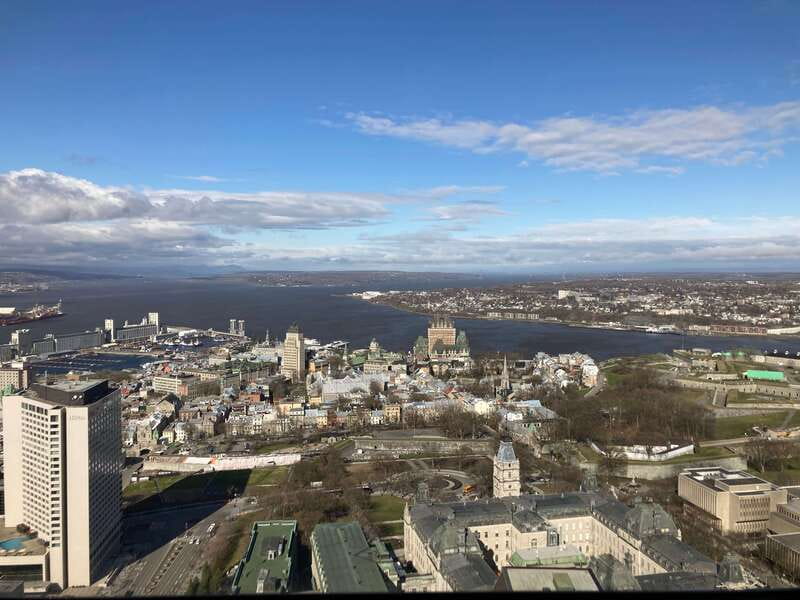
- 31st-floor views: Look across Quebec City, the St. Lawrence River, and the Laurentian mountain range from the city’s highest viewpoint.
- Interactive landmark screens: Point your attention toward a building or site, then use the screens to identify it and read about its history.
- Horizons discovery trail: Move through historical vignettes that explain how Quebec developed and what shaped its identity.
- Best timing: A late-afternoon visit can give you daytime views followed by evening lights.
- Self-guided format: You explore at your own pace, with screens, signage, and a headset available for the visit.
- Simple, flexible booking: Admission costs $10 per person, reservations are required, and cancellation is free up to 24 hours before the visit.
Starting high above Quebec City
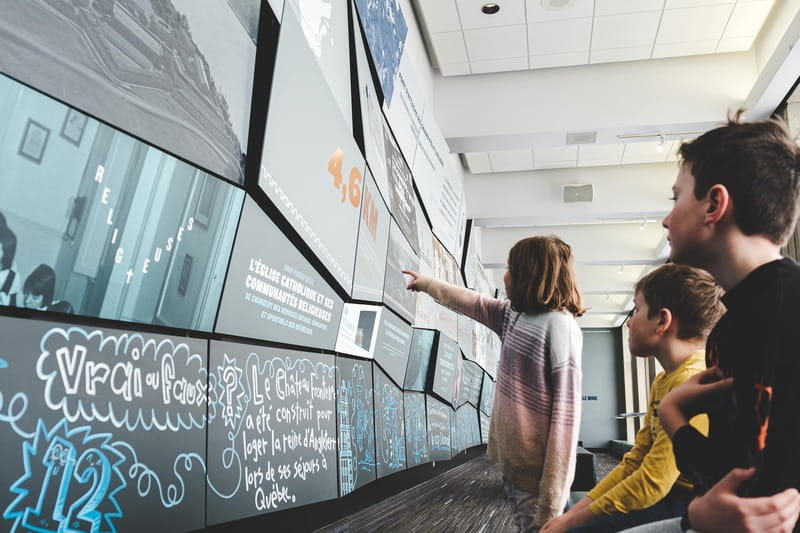
The visit begins on the 31st floor of the building. That detail matters: you are not climbing a narrow tower or waiting for a long guided walk. You reach a high observation level and then spend your time looking outward, moving around the viewing area, and using the displays to make sense of what you see.
The view gives you a quick grasp of Quebec City’s shape. The fortified core is easier to understand from above, with its maze of streets and compact historic center. The St. Lawrence River gives the city a broad natural edge, while the two mountain ranges help you place Quebec within the wider region.
I find this kind of first-day stop useful because it turns a map into something practical. After visiting the observatory, streets and landmarks below are easier to connect. You can recognize where the old city sits, see how the river relates to it, and get a clearer sense of the city’s size.
The viewing area is also useful if your schedule is tight. You do not need to give up half a day to get a broad introduction to Quebec City. The admission is valid for one day, and the visit can fit into a larger day of sightseeing.
Other trips people book in Quebec City:
- Quebec City Walking Tour
★ 5.0 · 4,716 reviews - Quebec City: Guided Tour of Fairmont Le Château Frontenac
★ 4.7 · 3,027 reviews - Québec City: Guided Sightseeing River Cruise
★ 4.4 · 3,000 reviews
The four views and what they reveal
The observatory offers four main viewing areas, giving you different angles across the city. Each direction changes the story a little. One view helps you study the old city, another opens toward the river, and others show the wider surroundings and mountains.
You will want to pause before reaching for the screens. First, look at the real view and pick out obvious landmarks. Then use the interactive displays to identify what is farther away or harder to recognize. This simple order makes the visit feel less like reading a wall of facts and more like learning to read the city itself.
Clear weather matters. On a bright day, you can see toward the Laurentian Mountains, and the St. Lawrence River becomes a major part of the scene. In poor weather, the outside view loses some impact. Even then, the indoor displays and historical material give you something useful to do, so the visit is not entirely dependent on perfect skies.
Bring realistic expectations about the setting. This is an observation experience in a city building, not an outdoor lookout in the countryside. Its strength is the combination of height, city detail, and interpretation. You get a clean overview of Quebec City rather than a remote natural viewpoint.
Using the interactive screens
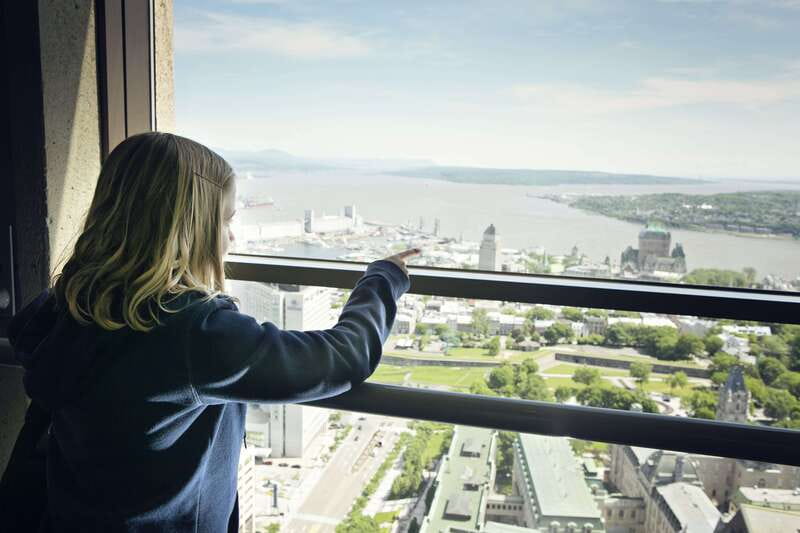
The interactive screens are one of the best parts of the visit. They mimic the view in front of you and let you select landmarks for more information. That solves a common problem at city lookouts: you can see a roofline or tower, but you do not know what you are looking at.
The system lets you connect a real building to a name and a piece of history. You can work through the screens at your own pace, returning to a landmark if you want more detail. This suits families and independent visitors who prefer short bursts of information instead of one long talk.
The displays include French and English information, and one visitor also noted Spanish options on the interactive screens. The host or greeter is listed as French-speaking, so do not assume that a live explanation will be offered in your preferred language. Still, the written and digital material gives English-speaking visitors a practical way to follow the visit.
A headset is also available as part of the self-guided format. The exact use of the headset can depend on how you choose to explore, but the key point is that you are not tied to a guide’s pace. You can spend more time on Quebec’s history, or focus on the views and landmark identification.
Following the Horizons discovery trail

The Horizons trail gives the visit its larger purpose. It is designed as a journey through time and space, using historical scenes and short vignettes to explain Quebec’s capital and the identity of its people.
The word identity is important here. The displays are not only about naming buildings. They connect the city’s appearance with the forces that shaped Quebec and Canada. You get a sense of why the capital looks and feels different from many other Canadian cities.
The presentation has a rhythmic flow, with information arranged in short sections rather than one large lecture. That format works well for a mixed group. Younger visitors can use the screens and visual material, while adults can spend more time with the historical context.
I would not treat the trail as a replacement for a full museum visit. The material is meant to be clear and accessible, not exhaustive. One visitor wanted longer films and more developed videos, and that is a fair concern if you prefer detailed historical presentations. The observatory works best as an introduction and orientation point.
The trail also helps on a rainy or cloudy day. Even if the outdoor view is muted, you can still follow the displays and learn how Quebec developed. That makes the $10 admission easier to justify in changeable weather.
Same base, a different sort of day:
- Half-Day Trip to Montmorency Falls and Ste-Anne-de-Beaupré from Quebec city
★ 4.0 · 2,718 reviews - Old Quebec City: Grand Walking Tour with Private Option
★ 4.8 · 2,609 reviews - Quebec City: Montmorency Falls with Cable Car Ride
★ 4.6 · 2,392 reviews - Quebec City: Montmorency Falls & Ile d’Orleans Half-Day Tour
★ 4.3 · 2,144 reviews
Why the $10 admission offers good value
At $10 per person, this is one of the easier sightseeing choices to fit into a Quebec City budget. You are paying for height, several viewing directions, interactive landmark tools, and a self-guided historical presentation.
The value is strongest if you are visiting Quebec City for the first time. The observation level helps you get your bearings, while the screens fill in details that you would probably miss from street level. A single admission can also serve several purposes: orientation, skyline viewing, history, and a weather-friendly indoor stop.
The price is less compelling if you only want a quick photograph from a window. The observatory asks you to spend time with the trail and displays. If you skip the interpretation, you may feel that you paid mainly for a view that could be appreciated in a shorter stop.
Families may find the format practical because everyone can move at a different speed. One person can read about a landmark while another looks through the window. There is no need to keep up with a fixed walking group.
The listed group size is limited to 10 participants. Since the visit is self-guided, that small-group limit should help keep the experience manageable, though you still need to reserve in advance.
When to visit for the best city scene

Late afternoon is a smart choice. You can begin with clear daylight, identify the major sites, and then watch the city change as lights appear. During the holiday season, this can add a second layer to the visit, with illuminated streets and decorations below.
Morning may be better if you want the clearest possible view and have a busy evening schedule. The supplied details do not promise a specific weather condition at any time, so choose the time that gives you the best chance of a clear sky and fits your day.
The one-day validity gives you some flexibility, but this is not described as an all-day hop-on, hop-off attraction. Check the available starting times when you reserve. Since a reservation is required, do not simply assume you can arrive without a booking.
Allow enough time to look in each direction, use the screens, and follow the historical displays. No fixed visit length is given, so your pace will determine the stop. A rushed visit would miss much of what makes this more than a simple lookout.
Practical details that affect your visit

The meeting point is on the 31st floor of the building. Make sure you have the correct level before arriving, especially if you are meeting others.
The experience is wheelchair accessible, which makes the high viewpoint and interpretation available to a wider range of visitors. Pets are not allowed, so plan accordingly.
French is the listed language for the host or greeter. The historical information is bilingual in French and English, and the interactive screens have also been noted as offering Spanish. If language support is important to you, rely on the displays rather than expecting a full live tour in English.
You can reserve now and pay later, which helps if your Quebec City plans are still shifting. Free cancellation is available up to 24 hours before the visit for a full refund. These terms are useful for a weather-dependent viewpoint, since clear skies can make a real difference.
The entry ticket includes admission to the Observatoire de la Capitale. It does not list transportation, food, or a separate guided city tour, so plan this as an independent stop within your day.
Who will enjoy this observatory most
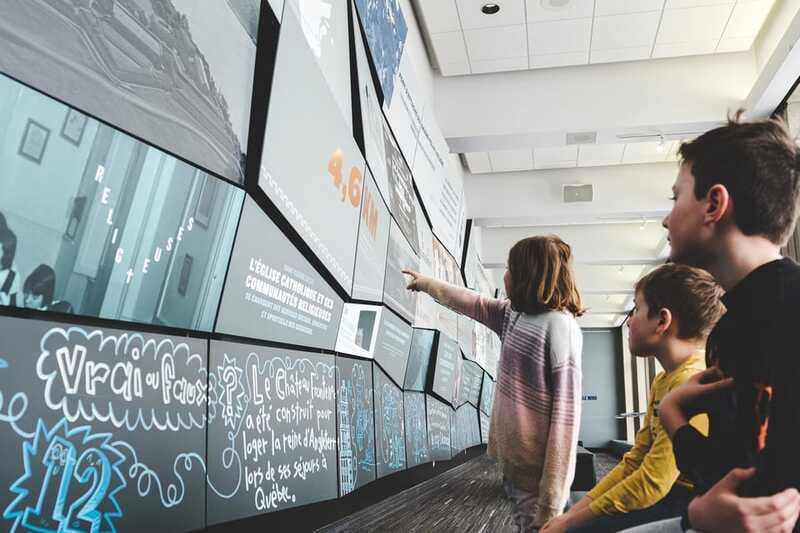
I would recommend it to first-time visitors who want a quick understanding of Quebec City before exploring on foot. It is also a good fit for families, since the screens give children something active to do while adults read the historical material.
It suits independent sightseers who prefer to control the pace. You can stay with a landmark until it makes sense, skip material that does not interest you, and return to the best view without waiting for a group.
History-minded visitors will appreciate the connection between the city’s buildings, its development, and Quebec identity. The presentation is approachable rather than academic, so it works best for people wanting a clear introduction rather than a long specialist lecture.
You should think twice if you want a live, English-language guide or a full-length film program. The host is French-speaking, the visit is self-guided, and one visitor found the video material could be longer and more detailed. The observatory gives you tools for discovery, but you do the exploring yourself.
Should you book the Observatoire de la Capitale?
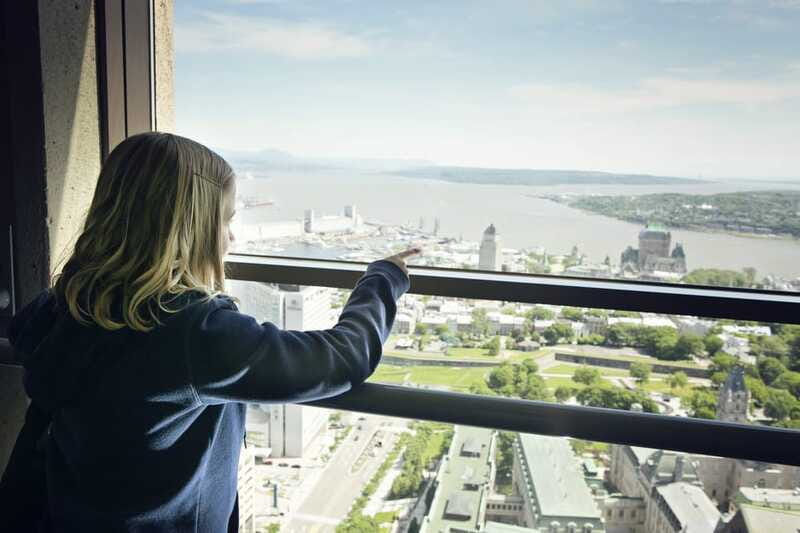
Book it if you want the best broad view of Quebec City for a modest price, especially on your first visit. The combination of four viewing directions, St. Lawrence River scenery, interactive landmark screens, and the Horizons trail gives you more than a quick photo stop.
Choose a late-afternoon time if you want daylight and evening lights in one visit. Pick another attraction instead if your main priority is a detailed guided lecture in English or a long film presentation.
For $10, the observatory is an easy addition to a Quebec City itinerary. Reserve ahead, check the weather, and give yourself enough time to use the screens rather than simply looking out the window.
FAQ
Where is the Observatoire de la Capitale located?
It is located in Quebec City, Canada, on the 31st floor of the building.
How much does admission cost?
The entry ticket costs $10 per person.
How long is the ticket valid?
The ticket is valid for one day.
Do I need a reservation?
Yes. A reservation is required.
Can I cancel my booking?
Yes. You can cancel up to 24 hours in advance for a full refund.
Can I reserve now and pay later?
Yes. The reserve-now, pay-later option lets you book without paying at the time of reservation.
Is the experience guided?
It is primarily self-guided, with historical displays, interactive screens, and a headset available. The host or greeter speaks French.
Is the observatory wheelchair accessible?
Yes, the experience is wheelchair accessible.
Are pets allowed?
No. Pets are not allowed.
What does the entry ticket include?
It includes entry to the Observatoire de la Capitale.
Just added in Quebec City
- Quebec City: Jacques-Cartier National Park Snowshoeing Tour★ 4.7 · 127 reviews
- Quebec City: Winter Walking Tour in Old Quebec★ 4.9 · 30 reviews
- Snowshoeing Tour in Jacques-Cartier National Park★ 5.0 · 55 reviews
- Quebec City: Electric Bike Tour★ 4.5 · 124 reviews
- Historical Lower Town & Neighborhoods Bike Tour★ 5.0 · 70 reviews
- Quebec City: Ile d’Orléans Guided E-Bike Tour with Tastings★ 4.9 · 147 reviews
- Quebec City: Guided Snowmobile Tour★ 4.9 · 214 reviews
- Quebec: La Citadelle de Québec Ticket and Guided Tour★ 4.7 · 227 reviews
Tours in Quebec City, compared.


Half-Day Trip to Montmorency Falls and Ste-Anne-de-Beaupré from Quebec city
Read our review →
Old Quebec City: Grand Walking Tour with Private Option
Read our review →
Montmorency Falls & Ile d’Orleans Half-Day Tour
Read our review →
Hop-on Hop-off Open-Top Double Decker Bus Tour
Read our review →Browse the lists this tour appears in