
Reviewed · MUSEUMS
Toronto: Museum of Illusions Entry Ticket
The Museum of Illusions turns a simple museum visit into a hands-on test of your senses. The best part is that you do not just look at displays. You step into a vortex tunnel, puzzle over distorted rooms, and take photos that make ordinary perspective look impossible.
I like the mix of clever visual science and easy fun. The holograms and infinity room are strong choices for photos, while the game room gives you something to solve instead of simply posing. The English-speaking host or greeter keeps the visit simple, and a small group of no more than eight can make the experience easier to manage.
The main concern is value. At $25 per person, an hour is reasonable if you enjoy playing with every exhibit, but one disappointed customer felt finished in about 20 minutes. Busy periods can also make it harder to reach the displays or take clear photos, and the vortex tunnel is not suitable for people with vertigo.
Key points at a glance
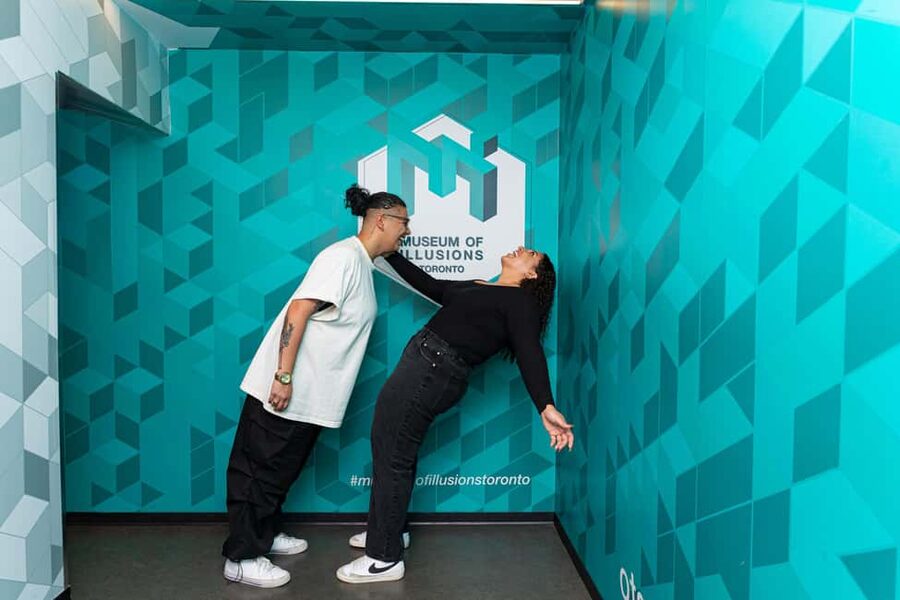
- More than 100 interactive exhibits: Expect holograms, optical illusions, distorted reflections, puzzles, and visual tricks based on light and perspective.
- The vortex tunnel is the signature stop: The floor appears to shift beneath you while you remain standing still, so people prone to vertigo should skip it.
- The game room adds hands-on variety: 3D puzzles and brain teasers give you a reason to slow down and think.
- Plan for about one hour: You can explore at your own pace, though a quick visit may take much less time.
- Small groups help with the visit: Bookings are limited to eight participants, but busy periods may still affect access to popular photo spots.
- Good for many age groups: The exhibits suit families, couples, and curious adults, though some may feel more like playful children’s activities than a serious museum.
What the Museum of Illusions actually offers

This is a compact, interactive attraction rather than a traditional museum filled with long text panels. The focus is on seeing, touching where appropriate, posing, solving, and trying to work out why your eyes and brain disagree.
You will find more than 100 exhibits spread across several types of visual trick. Some use reflections. Others play with scale, light, depth, movement, or perspective. The result is a visit that feels active from the start, especially if you enjoy taking pictures that need no special camera effects.
The museum works well for a mixed-age group because most displays are easy to understand without a long explanation. Children can treat the rooms as a playground of puzzles, while adults can pay closer attention to the visual science behind each effect.
Still, you should set your expectations correctly. This is not a large science museum with lengthy demonstrations or detailed historical displays. It is a short, playful attraction built around optical effects and participation.
Other museums and galleries in Toronto:
- Toronto: Royal Ontario Museum Admission Ticket
★ 4.6 · 1,237 reviews - Royal Ontario Museum Admission
★ 4.5 · 411 reviews - Toronto: Art Gallery of Ontario General Admission Ticket
★ 4.6 · 251 reviews
Starting with holograms and optical illusions
The opening exhibits introduce the basic idea: your eyes can receive accurate information and still lead your brain to the wrong conclusion. Holograms and visual illusions use light and perspective to create images that seem to change or appear in unexpected ways.
I like this first section because it gives you quick results. You do not need special background knowledge. Walk up, look closely, change your position, and watch the image shift. It is also a good place to begin taking photos before the more physical rooms.
The photo appeal is a major part of the attraction. Many displays are designed so that your position matters, allowing you to create images that appear impossible at first glance. If you are visiting with friends or family, take turns being the subject and the photographer.
There is one practical catch. A photo-friendly exhibit works best when you can stand in the right spot for a moment. During busy periods, people may be waiting behind you, and you may not get as much time as you want. If photography matters to you, allow extra patience and avoid rushing through the displays.
Walking through the vortex tunnel
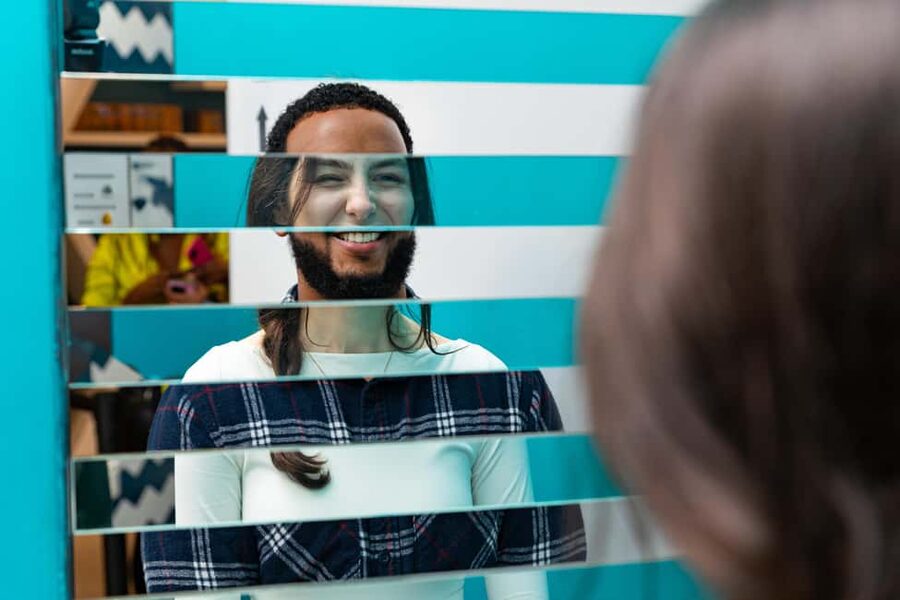
The vortex tunnel is likely to be the most memorable physical exhibit. As you move through it, the surroundings give the impression that the floor is shifting or rotating. Your body knows that you are standing on a fixed surface, but your eyes send a different message.
That mismatch is the whole point. The tunnel shows how strongly visual surroundings can affect your sense of balance. You may feel as if you need to steady yourself, even though nothing beneath you is actually moving.
I would treat this exhibit as optional, not essential. If you have vertigo, motion sensitivity, or discomfort with spinning visual patterns, skip it. The attraction specifically identifies the experience as unsuitable for people with vertigo, and there is no reason to force yourself through a display designed to unsettle your balance.
For everyone else, take it slowly. The effect may be amusing rather than frightening, but the shifting visuals can feel intense. Keep your attention on your footing and give yourself a moment afterward before moving to the next room.
Finding infinity inside the infinity room
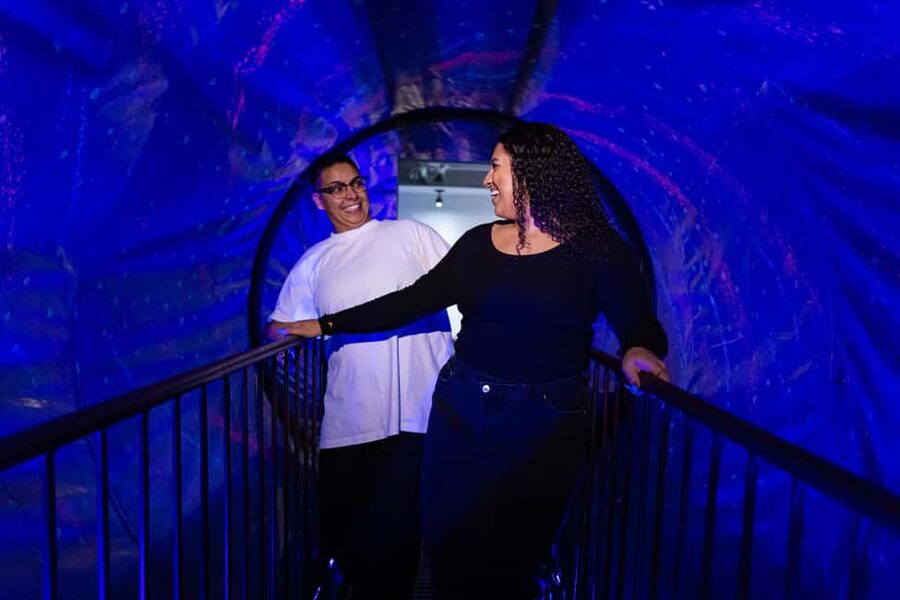
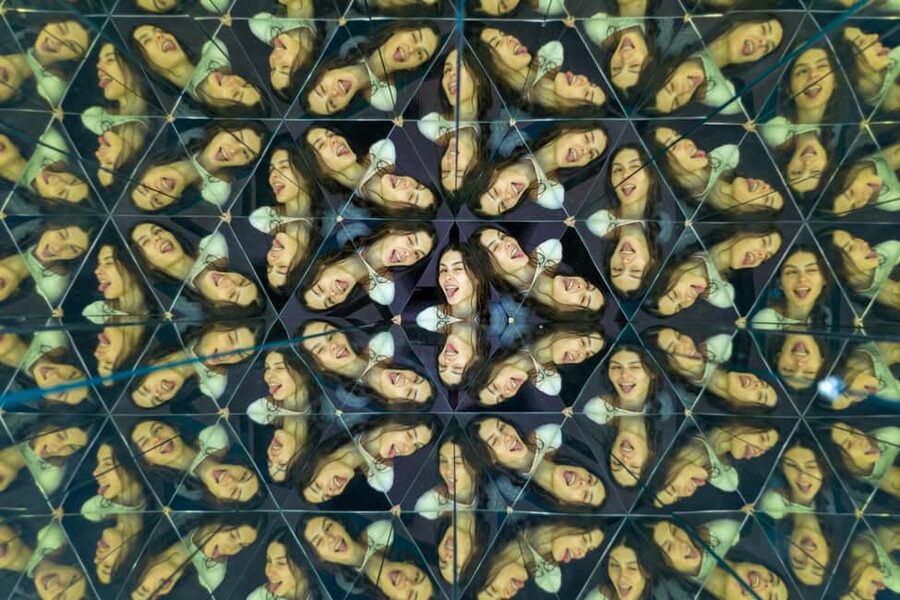
The infinity room uses repeated reflections to make the space appear much larger than it really is. Mirrors and lighting create the impression that the room continues far beyond its actual walls.
This is one of the strongest places for a carefully framed photograph. A single person can appear surrounded by repeated versions of the room, while a group photo can become a pattern of faces, lights, and reflections.
The room also makes a simple point about perspective. You are not looking into an endless space, but the repeated visual cues persuade your brain that you are. It is a good example of how the museum turns a basic optical principle into something you can physically enter.
The experience may be brief, especially if other people are waiting. I recommend deciding in advance who will take the first photo and where the subject should stand. That saves time and gives you a better chance of leaving with a clear image instead of a hurried snapshot.
Same base, a different sort of day:
- Toronto: Niagara Falls Day Tour with Optional Boat Cruise
★ 4.6 · 3,178 reviews - Niagara Falls Day Tour from Toronto
★ 5.0 · 2,889 reviews - Toronto: Casa Loma Entry Ticket
★ 4.7 · 2,705 reviews - Niagara Falls Canada Day Tour From Toronto + Boat Cruise Option
★ 5.0 · 2,576 reviews
Slowing down in the game room
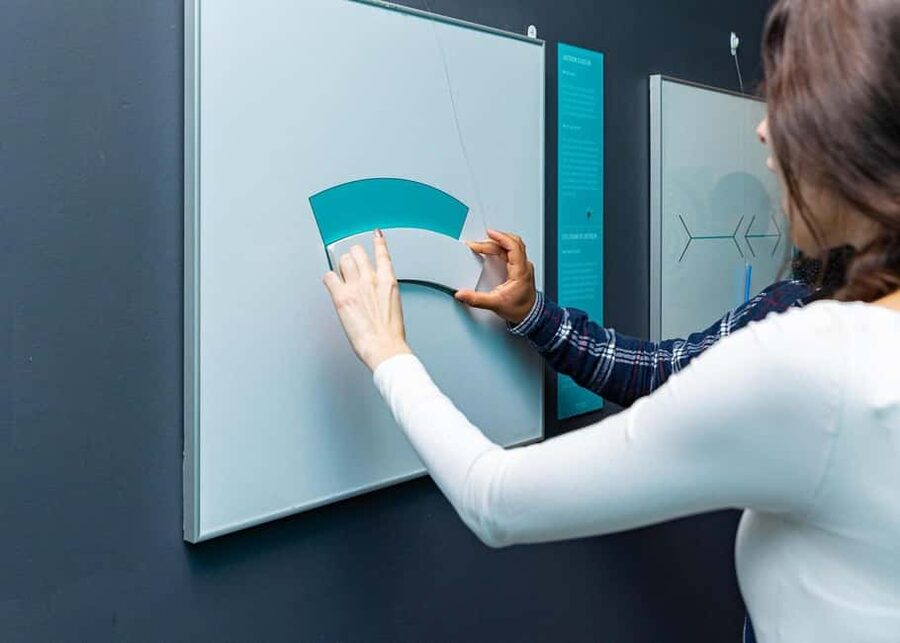
The game room changes the pace. Instead of mainly posing or watching an illusion develop, you can work through 3D puzzles and brain teasers.
This section is valuable for people who want more than photo opportunities. You can compare solutions, try different angles, and see how quickly a problem that looks simple can become frustrating. For children, it can add a problem-solving element to the visit. For adults, it offers a welcome pause from the visual effects.
The puzzles also help explain why the museum can appeal to different ages. One person may enjoy the holograms, another may prefer the vortex tunnel, and someone else may spend most of the time with the brain teasers.
Expect a playful level of difficulty rather than an advanced academic challenge. One low-rated assessment described the attraction as feeling like children’s games, so adults looking for a serious science lesson may find the content light. If you approach it as an interactive outing, the game room makes more sense.
How long should you allow?
The stated duration is one hour, and that is a sensible planning figure for a relaxed visit. You can move at your own pace, stop for photos, and spend longer on puzzles that catch your attention.
Your actual time may be shorter. One customer felt that everything was finished after about 20 minutes, especially if you move quickly and do not spend much time taking photos or solving the games. That does not mean every visit will be that brief, but it is an important warning when judging the price.
I would plan for the full hour without assuming you will need much longer. The museum is best used as one stop within a downtown Toronto day, not as the main activity for an entire afternoon.
The small-group limit of eight is useful because fewer people can make it easier to interact with the displays. It does not guarantee an empty museum, however. High attendance can still create queues around the most popular exhibits and make photo-taking awkward.
Is $25 good value?
At $25 per person, the price sits in the range where your expectations matter. I think it is fair if you enjoy interactive attractions, want a short indoor activity, and plan to use the displays fully.
The value is strongest for:
- Families who can share the puzzles and take turns with the photo setups
- Couples or friends who enjoy playful photos
- People curious about perception, light, reflections, and perspective
- Anyone looking for a one-hour activity in downtown Toronto
- Visitors who prefer hands-on exhibits to quiet galleries
The value is weaker if you expect a large museum, a long guided presentation, or detailed scientific instruction. It is also less appealing if you tend to walk through attractions quickly. At that pace, the cost can feel high for a visit that ends in 20 to 30 minutes.
I would not book this as a major all-day attraction. I would pair it with other downtown plans and use it as a lively indoor stop. The flexible cancellation policy helps if your schedule changes: you can cancel up to 24 hours in advance for a full refund. You can also reserve now and pay later, which is useful when your Toronto plans are still shifting.
Best ways to get more from the visit
Give yourself permission to repeat an exhibit. The first attempt may be spent working out where to stand or how to frame the photo. A second try is often better, especially in the hologram and infinity sections.
Take turns with the camera. If one person photographs the whole time, that person may miss the fun. Rotate roles so everyone gets a chance to appear in the illusion and try the puzzles.
Move slowly through the vortex tunnel. If the shifting effect bothers you, stop and leave rather than treating it as a challenge. The museum has plenty of other displays, so missing one room will not ruin the visit.
Visit with the right mindset. The attraction offers fun and visual surprise, not a formal lesson. You may learn something about perception along the way, but the main reward is the chance to interact with unusual rooms and images.
If you are hoping for uninterrupted photographs, avoid the busiest period when possible. The displays are designed for pictures, but crowded conditions can make it difficult to reach the best positions or wait for a clean frame.
Accessibility and practical limits
The museum is wheelchair accessible, making it a possible choice for visitors who need step-free access. The supplied information does not give further details about individual exhibits, turning space, or access within every installation, so you may want to confirm specific needs before booking.
The host or greeter speaks English. This is not presented as a multilingual guided tour, and the visit is mainly self-directed rather than built around a long talk.
Smoking, alcohol, and drugs are not allowed. The attraction is intended for all ages, but the sensory effect of the vortex tunnel means that people with vertigo should choose another activity.
There is no transport component included. Your ticket covers museum entry, and the visit ends when you are ready to leave. That makes it easy to fit into a day of exploring Toronto’s downtown area.
Who will enjoy it most?
I would recommend the Museum of Illusions to families with children, couples who want amusing photos, and adults who enjoy puzzles and visual oddities. It is especially useful on a day when you want a short indoor activity with plenty of participation.
It also works for a small group of friends. With a booking limit of eight, you can share the experience without being part of a large organized crowd, although popular times may still feel crowded inside.
I would be more cautious about recommending it to someone seeking a full museum visit. The exhibits are playful and accessible, but some adults may find the activity too simple. The one-star assessment describing the venue as very small and child-focused reflects a genuine possibility, especially if you move quickly.
The same attraction can feel excellent to one person and overpriced to another. Your enjoyment depends less on the number of displays than on how much you like posing, experimenting, and solving.
Should you book the Museum of Illusions Toronto?
Book it if you want a compact, hands-on attraction with more than 100 optical tricks, a memorable vortex tunnel, an infinity room, and plenty of photo opportunities. The strongest parts are the easy participation, the funny visual results, and the chance to enjoy the exhibits at your own pace.
Skip it if you dislike crowded photo stops, have vertigo, or expect serious scientific displays. At $25, the ticket makes the most sense when you plan to spend close to an hour playing with the exhibits rather than walking through in 20 minutes.
For the right audience, this is a cheerful break from standard sightseeing. Just treat it as a short interactive outing, not a full-day museum, and the price is easier to justify.
FAQ
Where is the Museum of Illusions experience located?
It is located in Toronto, Ontario, Canada.
How much does admission cost?
The listed price is $25 per person.
How long does the visit last?
The stated duration is one hour. You explore at your own pace, so your actual visit can be shorter.
What is included in the ticket?
The ticket includes entry to the Museum of Illusions.
How many exhibits are there?
The museum has more than 100 exhibits featuring holograms, optical illusions, puzzles, and other visual effects.
Is the Museum of Illusions suitable for children?
Yes. The experience is described as suitable for all ages, and the game room includes 3D puzzles and brain teasers.
Is the museum wheelchair accessible?
Yes, the experience is listed as wheelchair accessible.
Is the experience guided?
An English-speaking host or greeter is provided, but you explore the museum at your own pace.
Is the vortex tunnel suitable for people with vertigo?
No. The experience is specifically not suitable for people with vertigo because the tunnel can create the feeling that the ground is shifting.
Can I cancel my booking?
Yes. You can cancel up to 24 hours in advance for a full refund. You can also reserve now and pay later.
Just added in Toronto
- Toronto Waterfront and Islands Guided Bicycle Tour★ 4.9 · 80 reviews
- Toronto: Winter Niagara Falls Tour with Attractions Package★ 4.7 · 43 reviews
- Toronto: Toronto Zoo Entry Ticket★ 4.1 · 68 reviews
- Toronto: Must Do NonTouristy Street Art Tour by local Artist★ 4.9 · 30 reviews
- Toronto: Craft Brewery Tour★ 5.0 · 8 reviews
- Toronto: Toronto Raptors NBA Game Ticket at Scotiabank Arena★ 4.6 · 88 reviews
- Toronto: St Lawrence Market Food Tour with 6 Tastings★ 4.7 · 168 reviews
- Toronto: Toronto Maple Leafs Game Ticket at Scotiabank Arena★ 4.6 · 43 reviews
Museums, compared.
Art Gallery of Ontario General Admission Ticket
Read our review →

3.5-Hour Bus City Tour with Gasoline Alley Museum
Read our review →Browse the lists this tour appears in