

Reviewed · WALKING TOURS
The Sights of Canmore: a Smartphone Audio Walking Tour
Canmore’s story is easier to grasp when you walk it, and this tour gives that walk a useful thread: coal mining, railway development, and mountain-town life. Over roughly 5 km, your phone guides you from Railway Avenue through old civic buildings, sculptures, parks, and scenic viewpoints. The commentary has a light, funny touch, so this is history without the schoolroom feel.
I like the freedom to stop for a coffee, browse Main Street, or pause at Policeman’s Creek without losing a group. I also like the mix of local history and mountain scenery, especially the coal mining cars, Miners’ Union Hall, Mount Rundle view, and Big Head Sculpture. The trade-off is simple: this is an app, not a live guide, so you need a charged phone, downloaded audio, and enough attention to follow the map.
Key points
- A 5 km return route links Canmore’s historic center with views, parks, and the Policeman’s Creek Boardwalk.
- GPS-triggered commentary plays as you reach each point, so you do not need to keep checking a written guide.
- Coal mining history is the main thread, with stops at the mining cars monument and Canmore Miners’ Union Hall.
- Optional trivia questions add a playful reason to look closely at the places around you.
- Flexible timing lets you stop and restart anywhere, and you can keep the tour for later use.
- The $8.22 price is good value if you want structure without paying for a private guide or joining a scheduled group.
A self-guided walk through Canmore’s working past
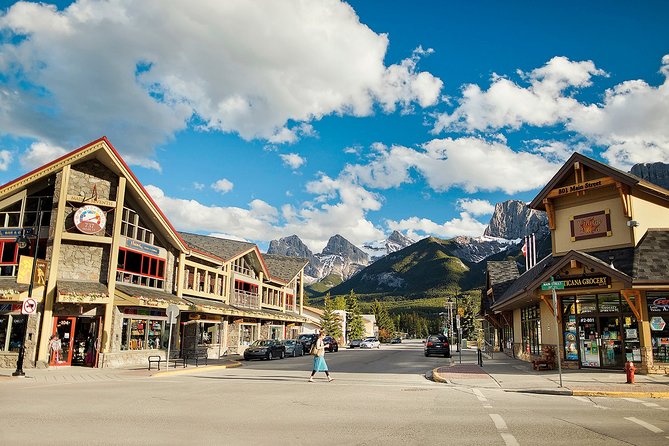
This is not simply a stroll from one photo stop to another. The route explains how Canmore grew from a coal-mining and railway settlement into the popular mountain town you see today.
You begin at Three Sisters Gallery, at 909A Railway Avenue. From there, the audio follows a live GPS map and tells you when to turn or pause. Commentary automatically plays near each point of interest, followed by an optional trivia question on your phone.
The tour is designed to take about 90 minutes to two hours. That estimate covers the walking and listening, but the flexible format lets you take longer. I would allow extra time if you want to visit the museum, walk more of the boardwalk, stop in shops, or enjoy the parks instead of treating the route like a timed march.
The tour is private in the practical sense that only your group uses the experience. You are not tied to a departure time, and you do not have a guide setting the pace. That makes it a useful choice for couples, families, and independent visitors who want background information but dislike large walking groups.
Other guided walks in Canmore:
- Canmore: Stargazing and Nature by Nightfall Walking Tour – 2hr
★ 5.0 · 31 reviews - Canmore Town Walking Tour with Refreshment and Sweet Treat
★ 5.0 · 27 reviews - Bites and Sites of Canmore Walking Food Tour
★ 5.0 · 26 reviews
Railway tracks, red phone boxes, and bear sculptures
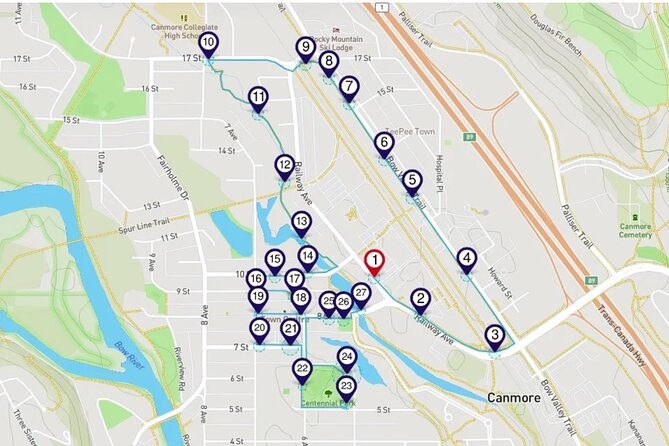
The first few stops ease you into Canmore with small details that are easy to miss.
At Bow Valley Trail and Railway Avenue, the audio explains the Canadian Pacific Railway and its effect on the town’s development. The railway is not just a backdrop here. It helps explain why a mountain settlement became connected to wider trade and transportation networks.
At Sidney Street and Bow Valley Trail, you get a lesson tied to the British red telephone box. This is a short stop, but that is part of the route’s charm. The tour does not treat every point as a grand monument. Some stops use an ordinary object to open up a bit of cultural history.
Next comes a black bear sculpture near Hospital Place. The commentary connects the sculpture with black bears in Canmore and the Rocky Mountains. A few minutes later, at Bow Valley Trail and 13 Street, a grizzly bear sculpture gives you a chance to compare the two animals.
These sculpture stops work well for families because they break up the historical material. The drawback is that each commentary segment is brief, about three minutes. You get a clear introduction, not a long natural-history talk.
At 15 Street, the route turns your attention north toward several mountain peaks. You hear about the names of Princess Margaret Mountain, Squaw’s Tit, Mount Charles Stewart, Mount Lady MacDonald, and Mount Grotto.
This is one place where I would pause rather than listen while walking quickly. Mountain names often carry stories of people, language, and changing attitudes. The audio gives you the starting point, while the view gives you a reason to stop and look carefully.
Inukshuks and coal cars near Railway Avenue
At 17 Street, the route points out a large inukshuk and explains what these stone figures mean. It is another short stop, but it adds cultural context to the town’s collection of public art.
The coal mining cars monument near Railway Avenue is one of the more important stops on the route. Here, the tour explains how mining shaped Canmore in its early years. This is where the walk’s different pieces begin to connect. The railway brought movement and development, while coal mining supplied the economic purpose that helped the town grow.
I like this section because it keeps Canmore from feeling like a place built only for mountain recreation. The historic center has a working past, and the mining cars make that past visible.
If you are mainly interested in grand scenery, this stop may feel less exciting than the mountain viewpoints. Give it time anyway. The town’s identity makes more sense once you understand the work that supported it.
Policeman’s Creek and the wider mountain setting
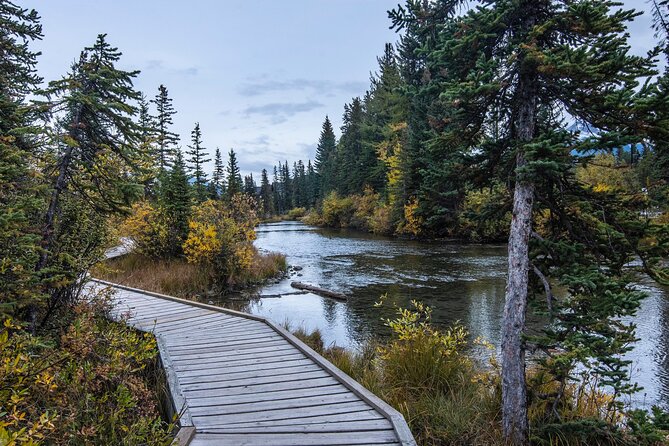
The Policeman’s Creek Boardwalk is one of the longer sections of the tour, with about 10 minutes of commentary and points of interest. The route discusses the Bow River, the Canmore Nordic Centre, festivals, and local events.
This is a good place to slow down. The boardwalk gives you a change from streets and buildings, and the audio links the natural setting with the activities that shape Canmore today. The Canmore Nordic Centre is part of that story, as are the festivals and public events held around town.
The route only covers a portion of the boardwalk, so do not expect the audio tour to replace a longer creek walk. Think of it as an introduction. You can stop the tour and continue exploring at your own pace, then resume when you are ready.
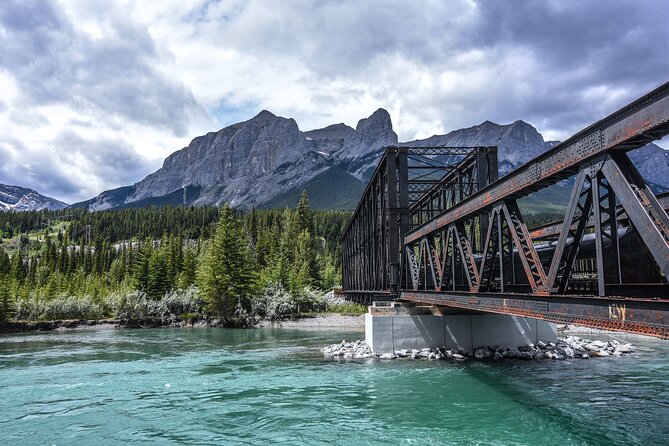
At 10 Street and 6 Avenue, you get a strong view of Mount Rundle. This is one of the most scenic points on the route, and it gives the walk a welcome visual payoff after the compact urban stops.
The audio focuses on Mount Rundle, but the practical value is simply having a reason to stop and identify the mountain in front of you. Keep your phone available, but look up often. The view is the main event.
Same base, a different sort of day:
- Canmore Caving Adventure Tour
★ 5.0 · 356 reviews - Canmore Caving Explorer Tour
★ 5.0 · 277 reviews - Canmore: Bow River Scenic Float Tour
★ 4.9 · 257 reviews - Moraine Lake & Louise – Morning or Sunset Tour from Banff/Canmore
★ 5.0 · 194 reviews
Stories painted on walls and preserved in museums

At 719 10 Street, the audio introduces a mural of Isabelle Dube and explains the tragic story connected with it. This is a reminder that public art can preserve personal stories as well as civic history.
The next major stop is the Canmore Museum and Geoscience Centre. The museum has more than 10,000 artifacts and has welcomed visitors since 1984. Admission is not included, so you can decide if you want to enter separately.
That flexibility is useful. Some people will be satisfied with the exterior and the audio introduction. If you want more detail about Canmore’s geology and past, the museum is the natural place to add time. The tour does not bundle the ticket, so budget separately for admission if you choose to go inside.
Friendship Park follows, with a story about what Canmore shares with the Japanese city of Higashikawa. It is a small park, but short stops like this keep the route varied. You are not hearing the same kind of history at every corner.
The walk then reaches Main Street near 8 Avenue and 6 Street. Here you pass shops, restaurants, and galleries. This is the most practical place to pause the audio. You can eat, browse, or simply take a break without worrying about missing a scheduled departure.
Main Street, an old hotel, and the Miners’ Union Hall
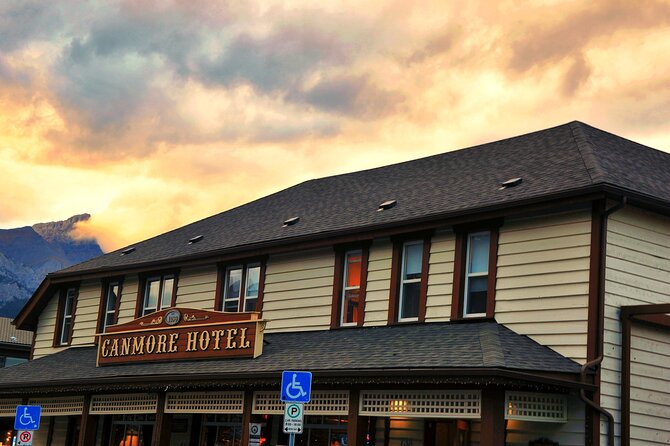
Near Canmore Inn & Suites, the commentary points out a building said to have been built in 1890 by Count Eugene de Rambouville. The stop adds a touch of unusual local character to the route.
The Canmore Miners’ Union Hall is one of the most meaningful buildings on the walk. You learn about its importance and the often difficult relationship between the town and its miners.
This stop gives the mining story a human and political edge. The coal cars show the industry. The union hall helps explain the people who worked within it and the disagreements that came with mining life.
I would not rush this part. The short audio segment gives you the outline, but the building itself deserves a look. Historic structures are easy to pass when you are focused on mountain views. The GPS format helps by drawing attention to places you might otherwise overlook.
Centennial Park provides another longer pause, with about 10 minutes focused on the Three Sisters Mountains, the Stan Rogers stage, and annual events and festivals. The park is useful for understanding how Canmore uses public space today.
The Three Sisters view ties the present town back to the mountains that attract visitors. The stage and festival information show that Canmore is also a place for community gatherings, not just a stopover on the way to outdoor activities.
Churches, police, and the Big Head Sculpture
The Ralph Connor Memorial United Church is presented as one of the earliest Presbyterian churches built in Alberta. The audio also explains the mystery behind its name.
This is a good example of the tour’s broad range. In a few minutes, you move from industrial history to religious architecture and local naming traditions. The commentary is short, so anyone hoping for a full architectural study should plan to do additional reading elsewhere.
The NWMP Barracks is one of the route’s key historic attractions. The audio explains how the barracks helped maintain law and order during Canmore’s rougher early days.
This stop adds another piece to the town’s development. Mining settlements could be lively and difficult places, and the presence of the barracks reflects the effort to impose order. The building also gives the route a strong final historical note before the last sculpture.
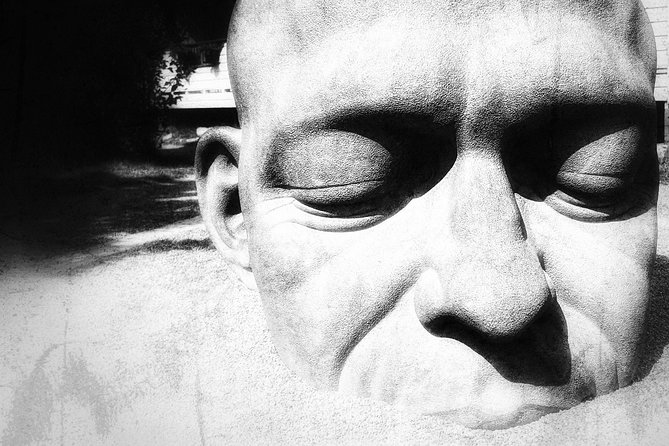
The Big Head Sculpture closes the main sequence. Its unusual form makes it an easy landmark, but the real point is the connection between the sculpture and the name Canmore itself.
I like ending here because it sends you away with a local detail that is odd enough to remember. After mining, railways, churches, police, and mountains, the sculpture gives the tour a lighter finish.
How the app works in real use
You download the tour over Wi-Fi before starting. Once it is on your device, the tour does not require a signal or use mobile data during the walk.
The GPS map shows your position and the route ahead. As you approach a point of interest, the commentary plays automatically. Afterward, you can answer a trivia question by tapping your guess on the screen.
The trivia is optional. I would use it with children or with a group that likes a little competition. If you want a quiet walk, skip the questions and simply listen.
There are a few practical limits. A smartphone or tablet is not included, and the number of devices available depends on the number of people selected at booking. You should also download everything before leaving Wi-Fi and start with a charged device.
The operating hours are listed as 12:00 AM to 11:30 PM daily, with availability shown through February 16, 2027. The activity can be started and stopped anywhere along the route and kept for use beyond the original booking date.
Is $8.22 good value?
At $8.22 per person, this is inexpensive for a structured walk through Canmore. You are paying for the audio content, GPS route, trivia, and the freedom to use it without a fixed schedule.
The value is strongest if you want an introduction to town history and plan to explore independently. A conventional guided walk may give you live conversation and the chance to ask questions, but this app costs far less and avoids group timing.
The price is less compelling if you only want scenery. You can see many of the views and public spaces without the tour, and the museum ticket is separate. The app earns its cost through context: it tells you why the mining cars matter, what the railway changed, and how local buildings fit into Canmore’s story.
The tour has a 3.8 rating from four recorded ratings, so the sample is small. The strongest praise centers on the history, walking trails, attractive sights, good length, and funny commentary. Those are exactly the areas where this experience makes the most sense.
Who should book this Canmore walk?
I would recommend it to first-time visitors who want a basic orientation before choosing where to spend more time. It is also a good fit for families because the bear sculptures, inukshuk, public art, and trivia add variety.
Independent walkers will appreciate the flexible dates and lack of a group schedule. So will anyone arriving at an uncertain time, since the tour can begin whenever the route is open and accessible.
You may want another option if you need a live guide, detailed answers to personal questions, or a fully narrated museum experience. Seasonal closures or access problems can also affect recommended stops, and the tour provider does not control those conditions.
Cancellation is allowed up to 24 hours before the experience for a full refund. Service animals are allowed, public transportation is nearby, and most people can participate.
Should you book it?
Book this tour if you want a low-cost, flexible introduction to Canmore with enough history to make the streets, parks, and monuments more meaningful. The best parts are the mining cars, Miners’ Union Hall, Policeman’s Creek, Mount Rundle view, and Big Head Sculpture.
Skip it if you want a live local guide or if your main goal is a long nature walk. For everyone else, download it before you go, bring headphones if you prefer, and allow closer to two hours so you can pause along the way. The app gives you the outline. Your extra time lets Canmore fill in the rest.
FAQ
How long does the Canmore audio walking tour take?
The tour takes approximately 90 minutes to two hours. You can also take longer because there are no time constraints and you may stop or restart along the route.
How far is the walking route?
The route covers about 5 km round trip.
Where does the tour start?
The starting point is 909A Railway Avenue, Canmore, Alberta, T1W 1P3.
Where does the tour end?
The activity ends back at the meeting point.
Is the tour guided by a live person?
No. It is a smartphone audio tour with commentary that plays automatically as you approach each location.
Does the tour require mobile data?
No. You should download the tour over Wi-Fi before starting. No signal or mobile data is required during the walk.
Does the tour include a map?
Yes. A live GPS map shows your location and the route.
Are trivia questions included?
Yes. Optional location-based trivia questions are available at each stop after the commentary plays.
Are museum or attraction tickets included?
No. Attraction tickets are not included. Admission to the Canmore Museum and Geoscience Centre is separate.
Can I use the tour on a different date?
Yes. The tour has flexible dates and can be enjoyed anytime through Tripvia Tours. You can also stop and start anywhere along the route.
Just added in Canmore
- 2 Day Banff Lake Louise Johnston Canyon Gondola Cave Basin tour★ 4.5 · 8 reviews
- Sunset at Moraine Lake & Stargazing Tour from Canmore/Banff★ 5.0 · 95 reviews
- Yoho National Park: Emerald Lake and Takakkaw Falls★ 5.0 · 4 reviews
- Private Tour: Majestic Mountains PHOTO SAFARI Drive – 4H★ 5.0 · 4 reviews
- Experience Golden Hour at Moraine and Lake Louise★ 5.0 · 18 reviews
- Rocky mountain – VIP Experience – Private Boat★ 5.0 · 6 reviews
- Sunrise Adventure: Alpenglow at Moraine Lake & Lake Louise★ 5.0 · 20 reviews
- Private Guided Tour to Banff Lake Louise|Moraine|Icefields &More!★ 5.0 · 5 reviews
Walking Tours, compared.
Old Quebec City: Grand Walking Tour with Private Option
Read our review →
The Original Old Montréal Walking Tour by Guidatour
Read our review →
Old Montreal Small-Group Walking Tour | Max 10 | by MTL Detours
Read our review →
Old Quebec Classique Walking Tour with Funicular
Read our review →

Quebec: Crimes of New France Animated Walking Tour
Read our review →Browse the lists this tour appears in