
Reviewed · OLD MONTREAL & OLD QUEBEC TOURS
Old Montreal Small-Group Walking Tour | Max 10 | by MTL Detours
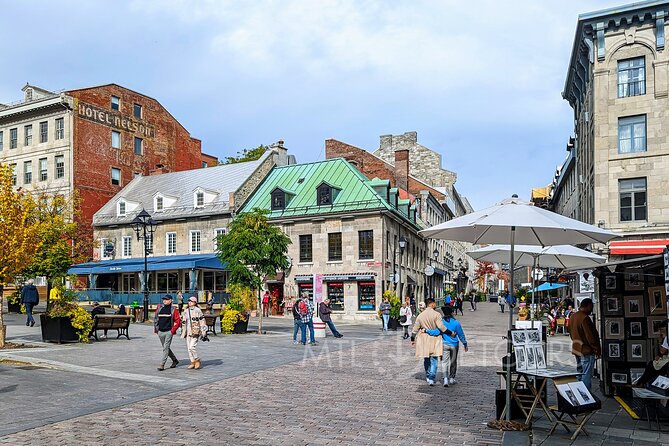
Old Montreal makes more sense when someone explains why its streets bend, why its grand buildings face certain squares, and how the Old Port shaped the city. This two-hour walk capped at 10 people gives you that framework, with stops at major landmarks and less obvious corners of the old financial district.
I like the personal pace and the useful local advice. Guides such as Louise, Amelie, Darren, and Elise bring history to life with stories, jokes, and answers to questions. I also like the practical finish: a handout with places to eat, shop, and explore, plus a maple candy or other small local treat.
The main drawback is simple: you spend most of the tour outside, walking or standing on cobblestones and stairs. Winter can be very cold, and one person found the pace brisk, so dress well and tell your guide if you need a slower walk.
Key points to know before booking
- A small group of no more than 10: You can hear the guide clearly and ask questions without fighting for attention.
- A strong first-day introduction: The route connects Old Montreal’s churches, squares, banks, residences, and streets into one readable story.
- Licensed local guides: MTL Detours uses guides with the required City of Montreal permit.
- Useful recommendations afterward: You receive a paper list of restaurants, shops, museums, and other places to visit.
- Winter is possible, but preparation matters: The tour runs in rain, snow, or cold, with some indoor warm-up stops when conditions call for them.
- Exterior viewing of Notre-Dame Basilica: The famous church is included from outside, but interior admission is not part of the tour.
Why a two-hour walk works well in Old Montreal
Old Montreal is compact, but it is not always easy to read. Its streets do not follow a tidy modern grid, and the old stone buildings can blur together when you are exploring alone. A guide gives you a route, a sense of direction, and a reason to stop at buildings you might otherwise pass.
The timing is also well judged. Two hours is long enough to cover the district’s main themes without turning into an all-day march. You get an introduction to Montreal’s colonial past, religious life, financial power, architecture, and connection to the river. Then you still have time to return to the places that catch your eye.
I would book this early in your Montreal stay. The final stop is near Place Jacques-Cartier and Bonsecours Market, so you can continue exploring, find lunch, or use the guide’s recommendations right away.
Other walking tours in Montreal:
- The Original Old Montréal Walking Tour by Guidatour
★ 4.5 · 2,217 reviews - Montréal: The Original Old Montréal Walking Tour
★ 4.8 · 911 reviews - Old Montreal Ghost Walking Tour
★ 4.5 · 726 reviews
Starting near Place d’Armes
The tour begins at the supplied meeting point of Marché Saint Laurent, listed at 503 Place d’Armes. Since the name and address may not seem to match at first glance, check the exact meeting instructions and map pin before setting out. You do not want to begin your visit by searching for the group.
From there, the route moves through the heart of Old Montreal. Expect an outdoor walk with frequent stops for explanations. Seating is limited, so this is not a sightseeing tour where you ride from one landmark to another.
The group limit is one of the best practical features. Ten people is small enough for the guide to notice if someone is falling behind, answer questions, and point out details without raising their voice. It also makes the walk easier through narrow streets and busy public spaces.
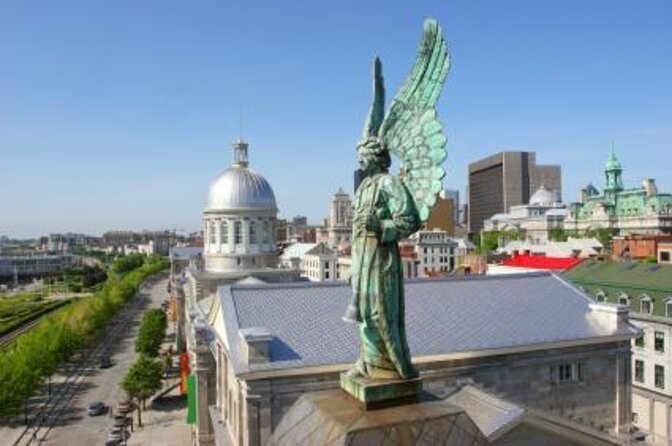
The silver dome and Montreal’s civic story
One early stop takes in the iconic silver-domed landmark associated with Montreal’s civic life. The point is not only to admire the roof. You hear how the building shaped public life in Old Montreal and why it became such a recognizable part of the city.
This sort of explanation is where the tour earns its keep. A photograph shows you a dome. A guide gives you the political and civic setting that makes it worth remembering. The stop also helps you see Old Montreal as a working center of city government, not simply a pretty collection of old façades.
Rue Saint-Paul and the pleasure of looking up
You walk along Montreal’s oldest street, with its cobblestones and historic façades. Rue Saint-Paul is one of the places where Old Montreal’s visual appeal is obvious, but the uneven surface is also a reminder that this is a real historic district rather than a polished theme park.
Keep your eyes up. The guide draws attention to the buildings, their materials, and the way the street has changed over time. You may also get small details about people, businesses, and the city’s changing identity.
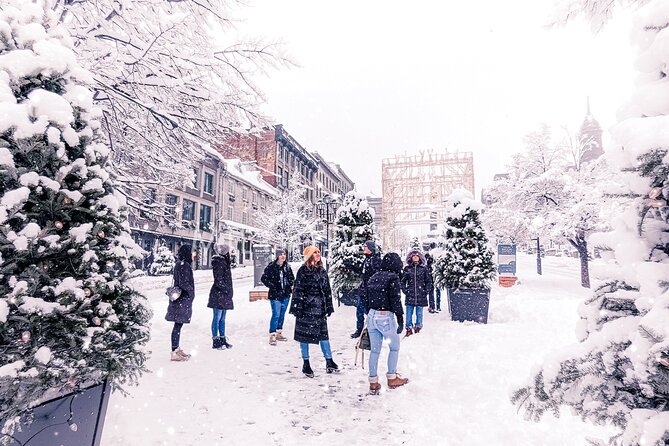
The street is attractive in every season, but weather affects how much you enjoy it. Snow can make the scene feel special, while ice or heavy rain makes careful footwear essential. Wear shoes with good grip and leave room in your schedule to walk steadily rather than rush.
Other old-quarter walks in Montreal:
- Old Montreal: Traditional Ghost Walk of the Haunted City
★ 4.7 · 746 reviews - Montreal: Top Rated Small Group Old Montreal Walking Tour
★ 4.9 · 611 reviews - Walking tour of Old Montreal – 16/42 Tours
★ 5.0 · 592 reviews - Montreal Old Port: Urban Zipline Ticket
★ 4.5 · 489 reviews
Place Jacques-Cartier and the Old Port connection
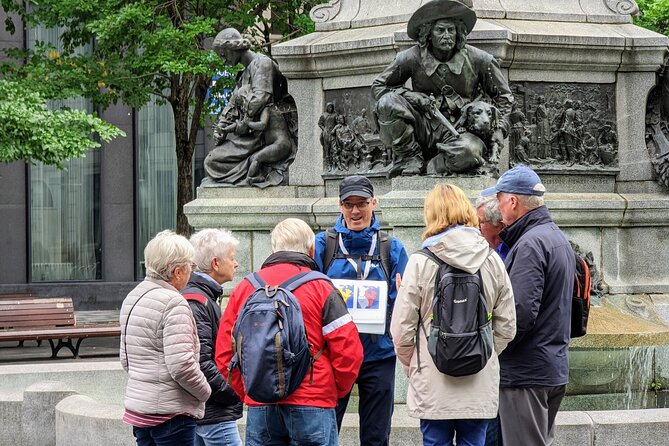
The route includes one of Old Montreal’s most animated historic squares, overlooking the Old Port. This is a useful place to understand how the district connects to the St. Lawrence River and to Montreal’s public life.
Your guide explains why the square mattered and how it functioned as a gathering point. It is also a good moment to pause and take in the wider setting. The tour is not built around long photo stops, but the guide leaves room for you to see where you are.
This area can feel lively, especially compared with quieter side streets. The small group helps here because you are less likely to lose the guide in a crowded public space.
A Second Empire building and the city’s turning points
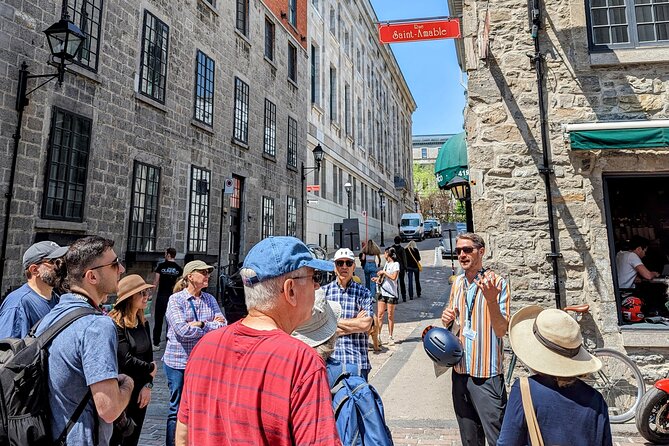
Another stop focuses on a grand Second Empire building. Its style gives you a quick lesson in how Montreal’s wealth and ambitions changed during the nineteenth century.
The guide uses the building to explain important moments in the city’s past. That approach is more useful than a list of dates. You learn to connect architecture with power, money, and public events.
I appreciate stops like this because they turn façades into evidence. The building is not just old. Its size and style tell you something about the period in which Montreal was growing in influence.
Notre-Dame Basilica from the outside
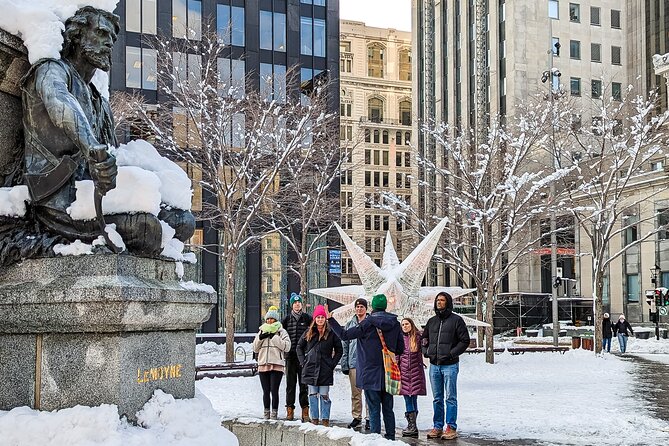
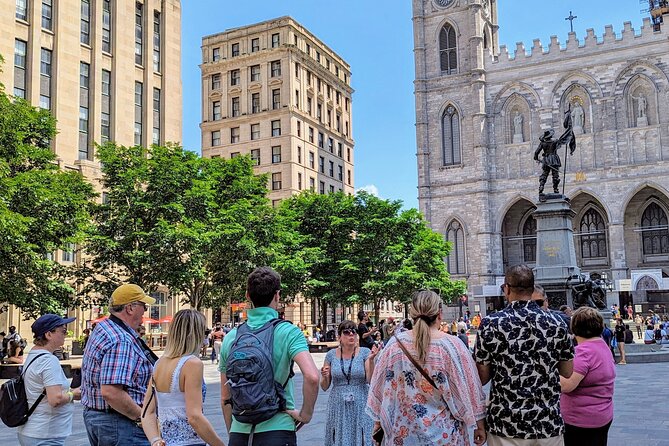
The tour also takes you to the exterior of Notre-Dame Basilica, Montreal’s best-known landmark. You hear the story behind its creation and see the building in its proper Old Montreal setting.
Be clear about what is included. This is an exterior visit only. Interior entry is not part of the tour, so if you want to see the famous interior, you will need to arrange that separately.
Even without going inside, the stop has value. The guide provides context, points out the building’s place in the district, and helps you understand why it became such a powerful symbol of Montreal. If the basilica is high on your list, treat this stop as an orientation rather than a full visit.
Canada’s oldest bank and Montreal’s Wall Street
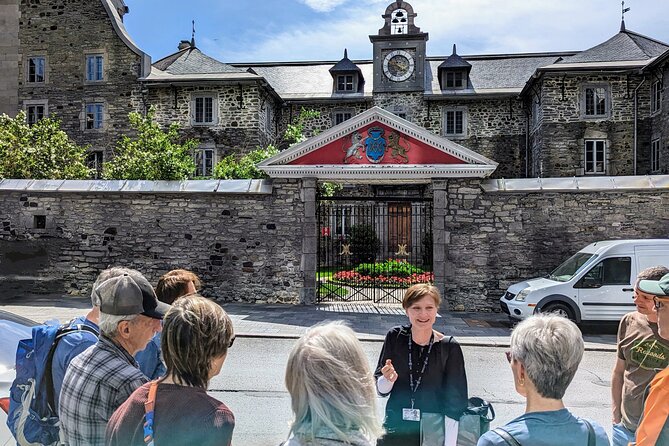
The route then shifts from religion and civic life to money. You see Canada’s oldest bank and learn how Montreal became the country’s financial center.
This section is especially helpful because financial history is easy to miss. Old Montreal’s grand stone buildings can look similar, but their former roles were very different. The guide connects the bank to the wider business district and explains how trade and finance shaped the city.
You also walk through the former financial district, once known as Canada’s Wall Street. That nickname gives you a quick sense of the area’s past importance. Today, you are looking at historic streets and buildings. The tour helps you picture the banks, merchants, and business activity that once made this the center of Canadian finance.
Château Ramezay and Montreal’s colonial past
A former governor’s residence from the eighteenth century adds another layer to the route. Here, the conversation turns to Montreal’s colonial period and the people who held authority in the city.
The building gives the guide a concrete place to discuss governance, settlement, and the changing shape of Montreal. You are not simply told that the city has a colonial past. You see one of the residences tied to that era.
This stop should appeal to anyone who wants more than architecture photos. It also helps balance the tour’s attention to later banks and grand civic buildings. Old Montreal’s story stretches across several periods, and the route makes that span manageable in two hours.
Notre-Dame-de-Bon-Secours and the Sailors’ Church
You also see the chapel known as the Sailors’ Church. Its connection to the Old Port explains why it mattered to people who worked on or traveled by water.
The nickname is memorable because it links faith with daily life. The chapel was not isolated from the port. Its story belongs to the river, sailors, commerce, and the risks of travel in earlier times.
This is one of the smaller, more human stops on the route. Large churches and banks show public power. A sailors’ chapel shows how ordinary people looked for support and protection.
Pointe-à-Callière and the birthplace of Montreal
Near the birthplace of Montreal, the guide explains how the city was founded. This is a key moment for getting your bearings, both geographically and historically.
The stop connects Old Montreal to the site where the settlement began. Instead of seeing the district as a collection of attractive buildings, you start to understand why the city formed here and how the river influenced its growth.
The nearby Pointe-à-Callière area is also important for anyone planning a longer Old Montreal visit. The walking tour does not replace a museum visit, but it can help you decide which places deserve more of your time later.
The guides and the style of storytelling
The guides are the heart of this experience. Louise receives especially strong praise for her enthusiasm, storytelling, and ability to answer questions. She trained for 10 months to become a guide, and that preparation shows in the amount of background she can bring to a short walk.
Amelie, Darren, Elise, Silvia, and Louis are also named as guides who bring different strengths. The common thread is a personal, conversational approach. You get stories about buildings, people, architecture, local culture, and even a little movie history, rather than a speech filled only with dates.
The style is interactive. You can ask questions, and the small group makes it easier to speak up. Families with teenagers, couples, solo visitors, and groups of friends can all fit comfortably, as long as everyone meets the minimum age of 12.
Cold-weather planning and indoor breaks
This tour runs rain, shine, or snow, and much of it takes place outdoors. That is not a minor note. In Montreal, winter conditions can change the feel of a walking tour quickly.
You should wear a warm coat, gloves, a hat, and shoes suited to cobblestones. In severe cold, guides may add short indoor warm-up stops, and hand warmers have been provided on especially bitter days. Those touches help, but they do not replace proper clothing.
One useful detail is that the walk is adjusted to the conditions. On cold days, the group may move a little faster between stops. That can be helpful for staying warm, but it may feel brisk if you prefer a slow stroll. Tell the guide early if your pace is limited.
What the $44.40 price gets you
At $44.40 per person, this is not the cheapest way to see Old Montreal, because you can walk the streets without paying anything. The value comes from the structure and the human explanation.
You are paying for a licensed local guide, a group limited to 10, a planned route, practical recommendations, a local treat, and a small parting gift. The handout can save you time later, especially if you want suggestions for food, shopping, museums, and nearby sights.
I consider the price fair if you are visiting Montreal for the first time or if you want context before exploring on your own. It is less useful if you already know Old Montreal well and mainly want to wander without a schedule.
Gratuity is not included. It is optional, but appreciated if your guide gives you a strong experience.
Who should book this walk
I would recommend it to first-time visitors, history fans, architecture lovers, and anyone who wants a clear introduction before spending more time in Old Montreal. It also suits solo visitors who prefer a small social setting without committing to a full-day group tour.
Families with children can join, but the minimum age is 12 and all participants need paid tickets. The tour involves steady walking and standing, uneven cobblestones, and stairs. It is not a good fit if you have significant mobility restrictions or difficulty maintaining a steady pace.
The end point near Bonsecours Market and Place Jacques-Cartier makes the tour easy to build into a wider day. You can continue through the Old Port, return to a favorite building, or follow the food and shopping suggestions from the guide.
Should you book the MTL Detours Old Montreal tour?
Book it if you want Old Montreal to feel like a city with a story, not just a photogenic old quarter. The small group, strong local guides, and mix of civic, religious, financial, and colonial history give you a useful first look in two hours.
Skip it if you dislike walking tours, need guaranteed indoor shelter, or already know the district’s history well. Also think carefully about the weather, especially in winter.
For most first-time visitors, I would make this an early Montreal activity. It gives you a map in your head, a list of places to return to, and enough local context to make the rest of your stay more rewarding.
FAQ
How long is the Old Montreal walking tour?
The tour lasts approximately two hours.
How many people can join the tour?
The group has a maximum of 10 people.
What language is the tour conducted in?
The tour is conducted in English.
What is the minimum age?
The minimum age is 12. Every participant needs a paid ticket, and minors must be accompanied by an adult.
Does the tour enter Notre-Dame Basilica?
No. The basilica is viewed from the outside only. Interior admission is not included.
Where does the tour end?
The tour ends near Place Jacques-Cartier square and Bonsecours Market.
What happens if the tour is canceled?
If the minimum number of participants is not reached or the tour is canceled due to poor weather, you will be offered another date or experience, or a full refund. You can also cancel at least 24 hours before the start time for a full refund. Cancellations within 24 hours are not refunded.
More walking tours elsewhere in Canada
- The Essential 101 Non-Touristy Walking Tour by Spade & Palacio
★ 5.0 · 716 reviews - Montreal: Private Walking Tour with a Local
★ 4.4 · 420 reviews - Old Montreal Private Walking Tour
★ 5.0 · 314 reviews - Montreal: Old Montreal Guided Walking Tour
★ 4.9 · 268 reviews
Just added in Montreal
- Montréal: Maple Syrup Tasting Conference!★ 5.0 · 59 reviews
- Haunted Old Montreal★ 4.5 · 71 reviews
- Haunted Montreal Pub Crawl★ 4.5 · 108 reviews
- Montreal Zipline Adventure★ 4.5 · 215 reviews
- Highlights & Hidden Gems of Old Montreal walking tour By FITZ MTL★ 5.0 · 230 reviews
- From Montréal: Québec City, River Cruise & Montmorency Falls★ 4.5 · 262 reviews
- Montreal Private Food Tour – Taste 6+ Dishes in Trendy Mile End★ 5.0 · 240 reviews
- Montreal: RESO Underground City and Downtown Walking Tour★ 4.8 · 236 reviews
Old Montreal & Old Quebec Tours, compared.
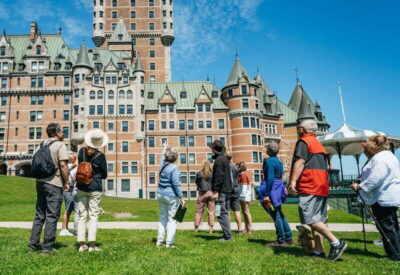
Old Quebec City: Grand Walking Tour with Private Option
Read our review →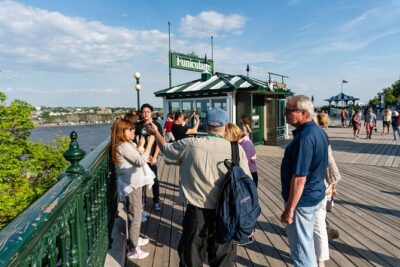
Old Quebec Classique Walking Tour with Funicular
Read our review →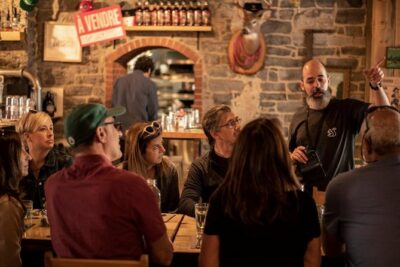
Old Quebec City Food Tour with 10+ Autentic Local Tastings
Read our review →
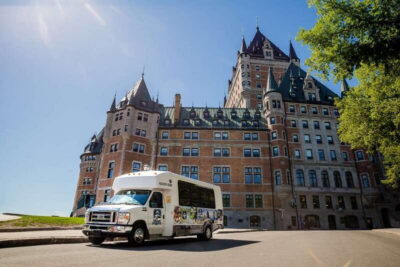

Old Montreal: Traditional Ghost Walk of the Haunted City
Read our review →
Browse the lists this tour appears in