
Reviewed · HOP-ON HOP-OFF BUS TOURS
Best of Quebec City: Panoramic Bus Tour with Local Guide
Quebec City packs centuries of French and British history into a small area, but its steep streets and scattered districts can take time to sort out. This two-hour panoramic bus tour gives you the lay of the land without asking you to climb every hill or find parking.
I like the way the route joins the famous sights to less obvious neighborhoods, and I like the steady stream of local stories from guides such as Daniel, François, Martin, and Valerie. The main tradeoff is simple: many sights are viewed from the bus, with limited time outside, so this works best as an introduction rather than a substitute for walking Old Quebec.
Key points at a glance
- The route links old and new Quebec: See Haute-Ville, the Latin Quarter, Parliament Hill, modern neighborhoods, and the St. Lawrence River in one outing.
- The Plains of Abraham gets a 15-minute photo stop: This is the clearest chance to leave the bus and take pictures.
- The regular bus handles narrow streets: It is not a double-decker and not a hop-on hop-off service, but the smaller vehicle can reach areas larger coaches may avoid.
- Guiding is a major part of the experience: English and French commentary combines dates, local stories, humor, and suggestions for places to visit later.
- The $38 price buys orientation more than entry tickets: Transportation and a guide are included, but museums and interior visits are not.
- Weather protection matters: A covered bus is useful in rain and snow, though winter ice can affect window views.
Why this bus tour is useful on your first day
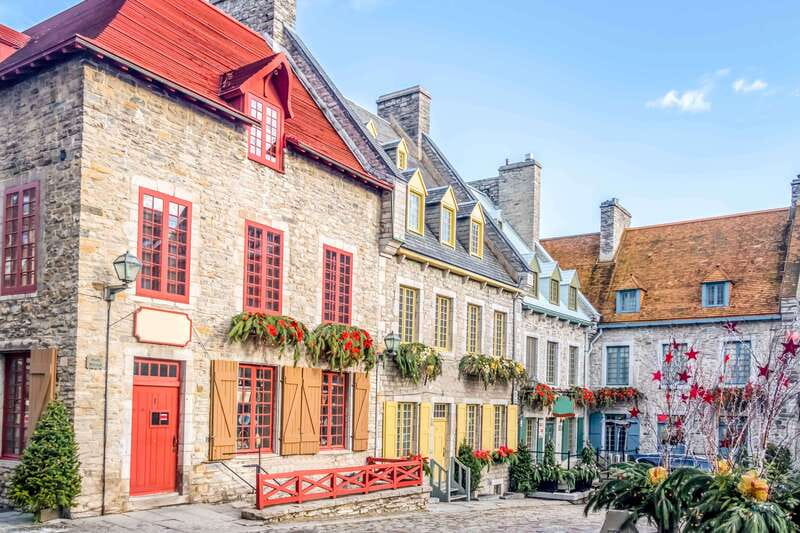
Quebec City is easy to admire and slightly harder to understand at first. The walled Old City gets most of the attention, but the city also spreads toward Parliament Hill, the Plains of Abraham, the Latin Quarter, Cap-Blanc, and newer residential districts.
This tour gives you a working map. You see where the old boroughs end, where the newer neighborhoods begin, and how the major landmarks fit together. I would take it near the start of a stay, then use the rest of the trip to return on foot to the places that caught your eye.
The route also removes two common problems: parking and steep walking. Your driver handles narrow turns while the guide explains what you are passing. Guides have included Daniel, François, Martin, Jean, Yves, Valerie, and others, and the strongest pattern is a lively style with jokes, stories, and plenty of local background.
At $38 per person, the tour is fairly priced if you want a broad view in a short time. It is less of a bargain if you already know Quebec City well or want long stops at each landmark. The price covers transportation and the live guide, not museum admission, meals, or a series of guided walks.
Other bus routes around Quebec City:
- Quebec City: Hop-on Hop-off Open-Top Double Decker Bus Tour
★ 4.4 · 1,484 reviews - Quebec City Hop-On Hop-Off
★ 4.0 · 1,226 reviews - Best of Quebec City: Panoramic Bus Tour with Local Guide
★ 4.0 · 897 reviews
Starting near Château Frontenac
You can begin at either 10 Rue Sainte-Anne or 85 Rue Dalhousie. Arrive 15 minutes early and look for a bus marked Unitours or Quebec Tours.
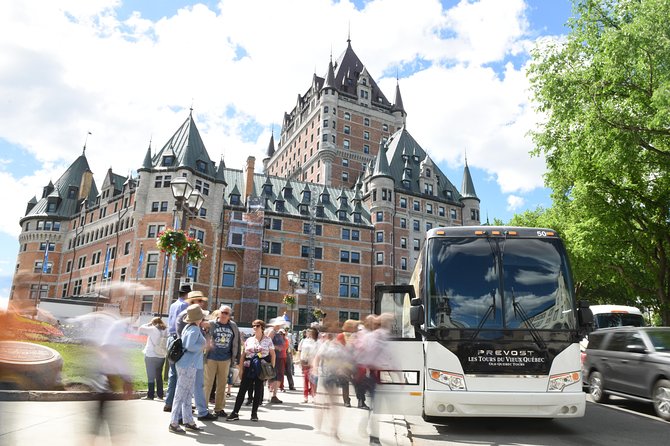
The route includes a pass by the Fairmont Le Château Frontenac, the city’s best-known building. From the bus, you can take in its dramatic roofline and central position in Old Quebec, but do not expect an interior visit. If you want time for photographs around the hotel, return later on foot.
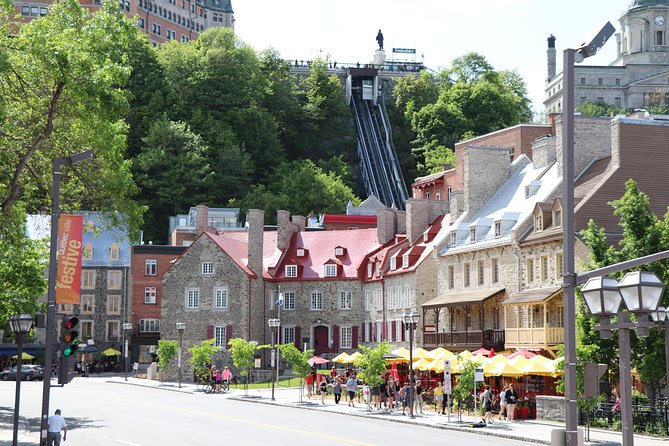
The bus then moves through Haute-Ville, or Upper Town. This is the historic heart of Quebec City, with old streets, civic buildings, churches, and defensive walls. The tour gives you orientation without requiring you to tackle the area’s slopes right away.
A small practical point matters here: several tour buses may gather around the same pickup area. Make sure you find the vehicle marked Unitours or Quebec Tours, and do not assume every coach in the area follows this route.
The ramparts, Place Royale, and Old Quebec
The city ramparts are one of Quebec City’s defining features. They are the only original city defense walls still standing in North America, and they help explain why Old Quebec feels so distinct from the rest of the city.
You will pass the walls rather than take a long walk along them. That is enough to show you the shape of the old defensive city, but you should save time later to explore the ramparts at street level.
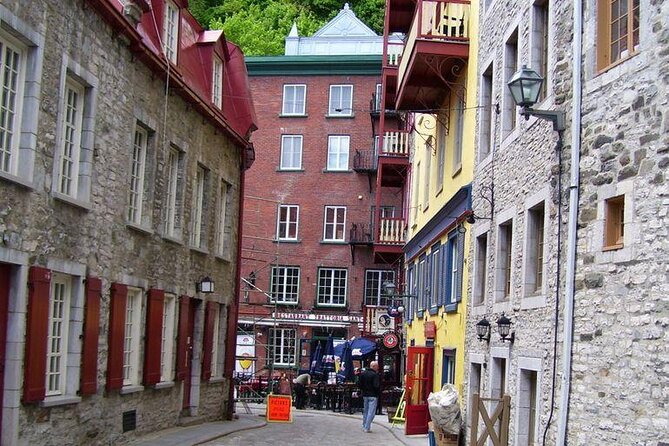
Place Royale brings a different view of Old Quebec. It is tied to the city’s early French settlement and has a more intimate feel than the broad squares near the major hotels. The bus gives you a quick look, while a later walking visit lets you slow down and inspect the buildings.
The Notre-Dame de Québec Basilica-Cathedral and City Hall are also part of the route. Both are important markers of the old city, but the experience is primarily visual. You pass them and hear the guide explain their place in Quebec’s political and religious life. Entry inside is not part of the tour.
The route also includes the Museum of Civilization. This helps show that Quebec City is more than a preserved old quarter. The museum sits near the waterfront and adds a modern cultural note to a route otherwise heavy on stone walls, churches, and colonial buildings.
Plains of Abraham and Grande Allée
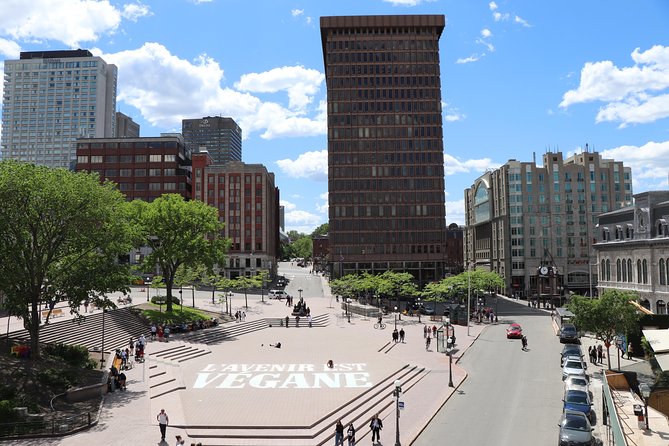
The Plains of Abraham provide the main planned photo stop, lasting about 15 minutes. This broad historic park is associated with the Battle of the Plains of Abraham, a key event in the struggle between Britain and France for control of New France.
You will have a chance to get off the bus, stretch your legs, and take photographs. Fifteen minutes is useful but brief, so keep your camera ready and do not expect a full walk through the park.
The stop also gives you a break from viewing everything through glass. That matters on a sunny day, and it matters even more in winter when frost or ice may form on the windows. In cold or snowy weather, the guide may keep outdoor time short, as happened on a snowy tour.
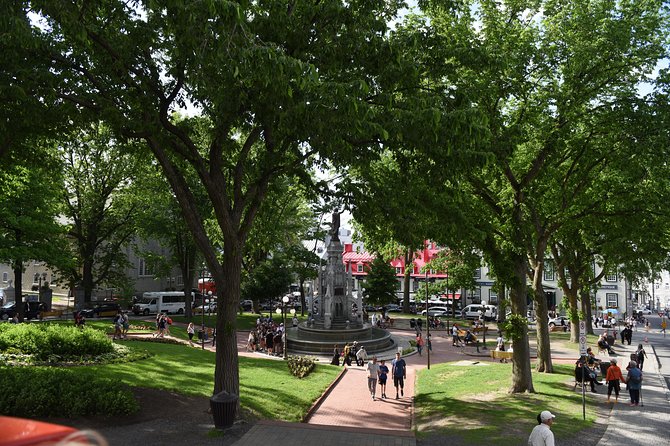
From there, the bus passes along Grande Allée, one of the city’s prominent avenues. The street helps connect the historic center with Parliament Hill and newer parts of town. It also gives you a sense of how Quebec City shifts from old stone architecture to a more modern urban setting.
The National Museum of Fine Arts of Quebec is another pass-by point. If art interests you, note its location for a separate visit. The bus tour does not include time inside the museum.
Same base, a different sort of day:
- Quebec City Walking Tour
★ 5.0 · 4,716 reviews - Quebec City: Guided Tour of Fairmont Le Château Frontenac
★ 4.7 · 3,027 reviews - Québec City: Guided Sightseeing River Cruise
★ 4.4 · 3,000 reviews - Half-Day Trip to Montmorency Falls and Ste-Anne-de-Beaupré from Quebec city
★ 4.0 · 2,718 reviews
Parliament Hill, the Latin Quarter, and newer districts
The route continues through Vieux-Québec-Cap-Blanc-colline Parlementaire, a long district name that reflects how several parts of the city meet in this area. You see the political center around the National Assembly, along with streets that lead toward the older neighborhoods and the river.
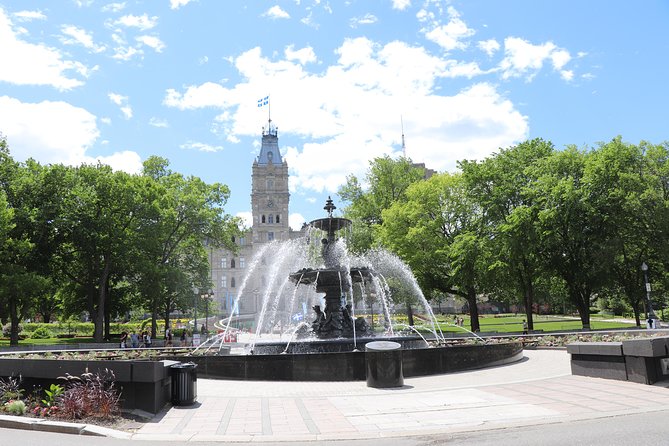
The National Assembly is worth seeing from the outside because it gives the city a clear political anchor. The tour helps you place it in relation to the Old City, the Plains of Abraham, and Grande Allée.
The Latin Quarter and other modern neighborhoods add needed balance. A tour that only circles Old Quebec can leave you with a postcard view and little sense of daily city life. Here, you see a broader mix of districts and learn where you might find shops, restaurants, and streets worth exploring later.
Several guides have offered personal recommendations during the drive. After the tour, use those suggestions as a starting point, but confirm current opening hours and locations yourself. The value is not simply hearing a list of places. It is learning which parts of the city deserve more of your limited time.
The bus also passes the St. Lawrence River. You may not get a long waterfront stop, but the river helps explain Quebec City’s location and its long role as a port and defensive stronghold. It is one of those details that makes the route easier to understand once you begin exploring on foot.
What the guide adds to the ride
The strongest reason to choose this tour over simply riding around alone is the live commentary. Guides have been praised for explaining Quebec’s past and present, switching between English and French, and adding humor to the drive.
Daniel has been described as especially funny and engaging, while François has been praised for clear information and a warm sense of humor. Martin has handled both the guiding and driving on some departures, a demanding job on tight streets. Valerie has been noted for answering questions and adjusting the experience to what the group wanted to know.
The exact guide varies, so do not book expecting one specific person. Still, the repeated pattern is clear: you are signing up for storytelling, not a silent sightseeing loop.
The bilingual format can require concentration. One visitor found a guide’s heavy French accent difficult to follow while the commentary moved between French and English. If you have hearing trouble, sit near the front and ask questions when the bus is stopped. A past issue with the bus speaker also made one guide hard to hear, so your seat can affect the experience.
Bus comfort, weather, and sightseeing from the window
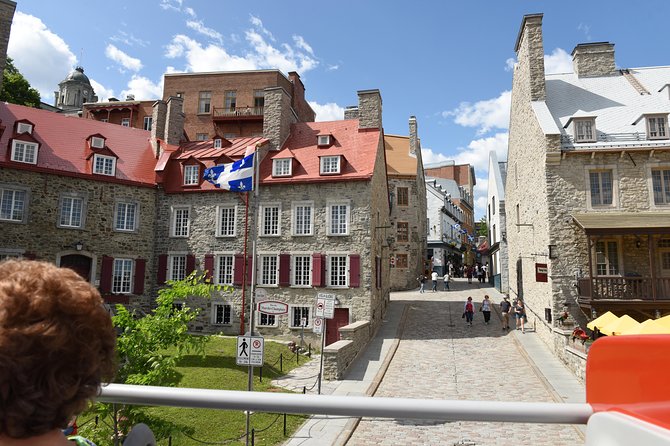
This is a regular bus, not a double-decker and not a hop-on hop-off service. You remain with the group for the route and return to one of the two starting points at the end.
The bus has generally been described as comfortable, and a smaller vehicle can make narrow turns easier. That matters in Old Quebec, where streets are tight and larger coaches may have less room to maneuver.
Your view depends on the weather and your seat. In good conditions, sit where you can see clearly out the side windows and keep your camera ready. In rain or snow, the covered bus is a major advantage. One winter outing involved ice building up on the windows, which reduced visibility. A warm coat is still useful, especially if you plan to spend the 15-minute stop outside.
A few practical rules are easy to overlook. Wear comfortable shoes because you will walk during the photo stop and around the pickup area. Pets and large bags are not allowed, so this is not a convenient choice if you are carrying luggage between hotels or transport connections.
How much can you actually see in two hours?
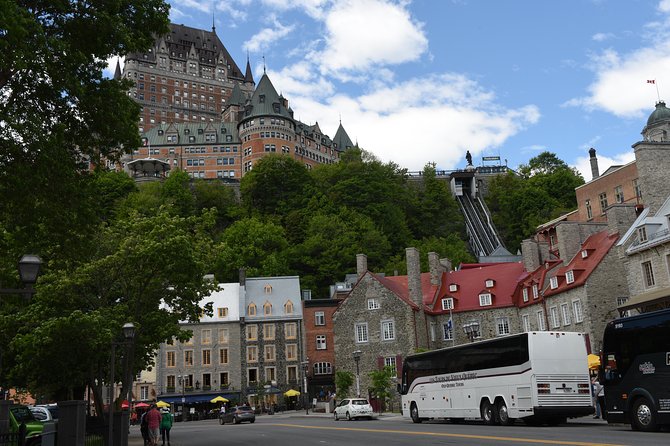
You cover a lot of ground, but you do not receive a long visit at every location. Château Frontenac, Place Royale, the basilica, City Hall, the National Assembly, the Museum of Civilization, the National Museum of Fine Arts, Grande Allée, the Latin Quarter, and the river are mainly viewed from the bus.
The Plains of Abraham is the notable outdoor stop, with about 15 minutes for photographs. Some departures may include additional brief moments outside, but you should book this expecting a moving city overview, not a stop-by-stop walking excursion.
That format is useful when your time is tight. You can see the major districts, avoid parking stress, and decide where to spend more time later. It is also helpful in poor weather, when two hours in a covered bus may be more pleasant than trying to walk across the city.
It is less suitable if your goal is detailed architecture photography, museum visits, or long quiet periods at historic sites. For those interests, pair this tour with your own walking time in Old Quebec.
Who should book this Quebec City tour?
I would recommend it to first-time visitors, cruise passengers with limited time, families who want to reduce walking, and anyone arriving in rain or snow. It also suits people who enjoy history presented through stories rather than a formal lecture.
The tour can be especially useful for solo visitors. You get a broad view quickly, hear local suggestions, and do not need to work out the city’s hills and districts alone.
You may want a different format if you prefer to set your own pace. A private tour, walking tour, or hop-on hop-off service would offer more control, but this experience is not hop-on hop-off. You cannot leave the bus whenever a church, shop, or street catches your attention.
I also would not make it your only Old Quebec experience. Use the bus to get oriented, then return to the ramparts, Place Royale, the basilica, and the streets around Château Frontenac on foot. That combination gives you both the big picture and the close-up details.
Should you book the two-hour panoramic tour?
Book it if you want a quick, guided overview of Quebec City for $38, especially early in your visit. The route covers the old city, political center, Plains of Abraham, river, Latin Quarter, and newer districts, while the guide supplies the stories that connect them.
Skip it if you need long photo stops, museum entry, or a fully walking-based experience. The bus passes many important sights, and only the Plains of Abraham is listed as a substantial photo stop.
For most first visits, I see this as a useful orientation ride, not the whole Quebec City experience. Take notes on the places you want to revisit, keep your expectations clear about drive-by viewing, and you will get good value from the two hours.
FAQ
How long is the Quebec City bus tour?
The tour lasts two hours.
How much does the tour cost?
The listed price is $38 per person.
Where can I start the tour?
You can start at either 10 Rue Sainte-Anne or 85 Rue Dalhousie.
Where does the tour finish?
The bus returns to one of the same two locations, 10 Rue Sainte-Anne or 85 Rue Dalhousie.
Which languages are available?
The live guide provides commentary in English and French.
Is the tour conducted on a double-decker bus?
No. It uses a regular bus.
Is this a hop-on hop-off tour?
No. You stay with the bus for the two-hour route, and it is not a hop-on hop-off service.
Is there time to get off the bus?
The itinerary includes a 15-minute photo stop at the Plains of Abraham. Most other sights are passed by from the bus.
What landmarks are included?
The route includes views of Château Frontenac, Haute-Ville, the city ramparts, Place Royale, the Citadelle, the Plains of Abraham, Grande Allée, Parliament, the National Assembly, the National Museum of Fine Arts, the Museum of Civilization, the St. Lawrence River, and the Notre-Dame de Québec Basilica-Cathedral.
What should I bring to the tour?
Bring comfortable shoes. Pets and large bags are not allowed. Arrive 15 minutes before departure and look for a bus marked Unitours or Quebec Tours.
Just added in Quebec City
- Snowshoeing Tour in Jacques-Cartier National Park★ 5.0 · 55 reviews
- Quebec City: Jacques-Cartier National Park Snowshoeing Tour★ 4.7 · 127 reviews
- Quebec City: Winter Walking Tour in Old Quebec★ 4.9 · 30 reviews
- Quebec City: Electric Bike Tour★ 4.5 · 124 reviews
- Historical Lower Town & Neighborhoods Bike Tour★ 5.0 · 70 reviews
- Quebec City: Ile d’Orléans Guided E-Bike Tour with Tastings★ 4.9 · 147 reviews
- Quebec City: Guided Snowmobile Tour★ 4.9 · 214 reviews
- Quebec: La Citadelle de Québec Ticket and Guided Tour★ 4.7 · 227 reviews
Hop-On Hop-Off Bus Tours, compared.
Hop-on Hop-off Sightseeing Tour with 10 Stops
Read our review →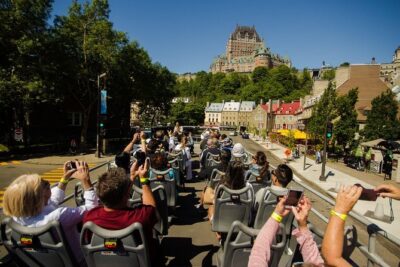
Best of Quebec City: Panoramic Bus Tour with Local Guide
Read our review →Browse the lists this tour appears in