
Reviewed · MUSEUMS
Canadian Museum of Immigration at Pier 21 Admission & Tour
The most moving part of this Halifax museum is its setting: Pier 21 was a real arrival point for immigrants, not a recreated set. You walk through a place tied to Canada’s continuing immigration story, then connect broad national events with first-hand accounts and personal journeys.
I like the access to two major exhibitions and the chance to ask researchers about your family history. I also like the flexible visit length, since you can spend an hour on the main displays or stay up to three hours for films, a guided tour, and genealogy research. The main consideration is the family-record service: it may offer only limited help, especially for arrivals before the Second World War.
Key points to know before you go

- Pier 21 is a genuine historic arrival site: The museum occupies Halifax’s waterfront national historic site, giving the subject a strong sense of place.
- Two exhibitions are included: See the Pier 21 Story Exhibition and the Canadian Immigration Story Exhibition with the same admission.
- Guided tours are offered in English or French: The advertised ticket is offered in English, while the museum also provides guided tours in French.
- Family research is available on site: The Scotiabank Family History Centre has expert researchers who may help trace an ancestor’s journey.
- Plan for one to three hours: A quick visit covers the main exhibits, while a longer stay allows time for films, the café, gift shop, and research centre.
- March Break changes the value: From March 14 through March 22, admission and special programming, including food workshops and activities, are free.
Why Pier 21 makes the museum more than a standard exhibit
Many immigration museums rely on objects moved into a gallery. Pier 21 gives you the building and arrival point itself. That matters because the subject is not only a series of dates, policies, and population figures. It is also about stepping into a place where people entered Canada and began an uncertain new chapter.
The museum presents immigration as an ongoing part of Canadian life. You are not limited to one wave of arrivals or one period of national development. The Canadian Immigration Story Exhibition places immigration within a wider Canadian setting, while the Pier 21 Story Exhibition focuses on the site and the people who passed through it.
That combination gives your visit a useful rhythm. One part keeps you close to the building and its role in Halifax. The other broadens the view to Canada’s changing immigration story. If you are visiting with family, this makes the museum easier to discuss because you can move between personal stories and national events.
The first-hand accounts are especially important. Dates and government policies can explain how immigration worked, but personal stories show what those choices meant to the people involved. I would give yourself time to read rather than rushing from display to display. The museum is modest in size, and its value comes from the stories and context, not from trying to fill an entire day.
Other museums and galleries in Halifax:
- Canadian Museum of Immigration at Pier 21 Admission & Tour
★ 4.7 · 95 reviews - Halifax: Small Group Walking Tour with Citadel & Museum
★ 4.8 · 16 reviews - Halifax Small Group Walking Tour with Citadel + Maritime Museum
★ 4.0 · 13 reviews
What you see during a one to three hour visit
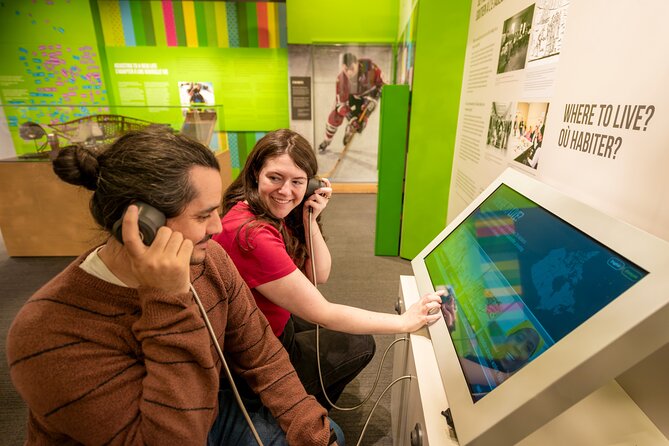
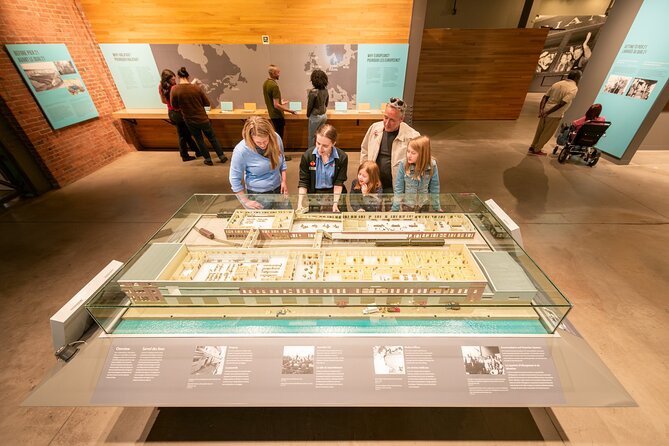
Your admission covers the museum’s exhibitions, films, café, gift shop, and guided tour access. The actual time you need depends on how much you read and whether you add family research to the visit.
For a quick stop, allow about an hour. That gives you time to see the main exhibitions and get a clear sense of Pier 21’s role. This works well if you are fitting the museum between other Halifax waterfront plans.
A longer visit of two or three hours makes more sense if immigration history is central to your trip. You can move through both exhibitions at a slower pace, watch the films, join a guided tour, and spend time at the Scotiabank Family History Centre. The café and gift shop also give you a natural pause without needing to leave the museum.
The guided tour is available in English or French. Since the ticket information is offered in English, check the day’s tour details if a French tour is important to you. A guided visit can help place the Pier 21 Story Exhibition in context, while an independent visit lets you linger over the material that matters most to your family.
I would not treat the one to three hour estimate as a strict schedule. It is better understood as a useful range. You can make this a focused museum stop, or give it a larger part of your Halifax day.
Pier 21 Story Exhibition: begin with the place itself
The Pier 21 Story Exhibition is the natural starting point because it connects the museum to its location. You are learning about immigration in the same historic site associated with arrivals, rather than viewing the subject from a detached gallery.
That physical connection can make the material feel more immediate. When you read a first-hand account or consider the experience of arriving in a new country, the setting gives those stories a real point of reference. You are not simply studying migration as an abstract topic. You are considering what it meant to arrive at this waterfront site.
This part of the museum is also useful for first-time visitors who may not know much about Pier 21. It gives you the basic framework before you move into Canada’s broader immigration story. If you are visiting with children or teenagers, a guided tour may help them connect the displays with the building around them.
The exhibition is small enough to fit into a busy sightseeing day. That is an advantage, but it also means you should not expect a huge museum complex with endless galleries. The experience works best when you pay attention to the personal material and allow the site itself to do some of the explaining.
Canadian Immigration Story Exhibition: widen the focus
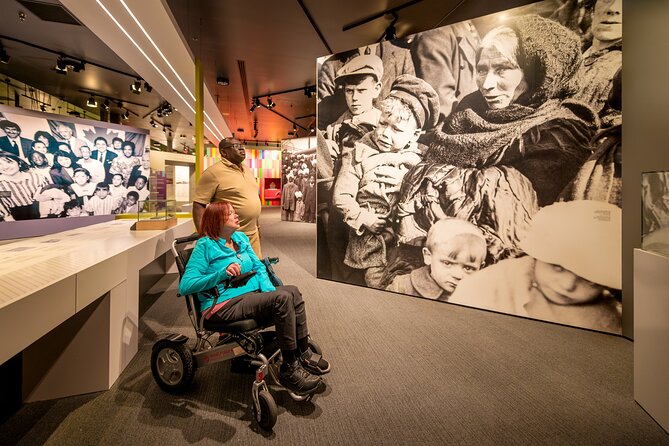
After learning about Pier 21, the Canadian Immigration Story Exhibition expands the subject beyond Halifax. It follows the evolution of immigration to Canada and helps you see how individual arrivals fit into a longer national story.
This broader view is one of the strongest reasons to visit. Pier 21 could easily be presented only as a local Halifax attraction, but the second exhibition gives the museum a wider purpose. You can think about immigration as an ongoing process rather than an event that ended when a person reached the pier.
I like this two-part approach because it avoids making the visit purely personal or purely institutional. The first exhibition gives you a specific place and human setting. The second asks you to consider Canada’s changing approach to immigration over time.
Take note of which parts connect with your own interests. You may care most about a family arrival, the history of a particular community, or the way immigration shaped Canada. Since all exhibitions are included with admission, you can follow those interests without paying for another section.
Same base, a different sort of day:
- Halifax Harbour Hopper Tour
★ 4.5 · 1,296 reviews - Halifax Peggy’s Cove Express
★ 4.0 · 801 reviews - Wine and Lunch Escape
★ 5.0 · 562 reviews - Halifax Small-Group Express Peggy’s Cove Tour
★ 4.5 · 544 reviews
Family research at the Scotiabank Family History Centre

The Scotiabank Family History Centre adds a personal angle that many museum visits do not offer. Expert researchers can help you investigate your family’s history and migration journey. If you know an ancestor’s name or have old family information, bring those details in mind.
Keep your expectations realistic. The centre is not presented as a guaranteed full genealogy service, and the available help can depend on the records and time periods involved. One visitor seeking information about ancestors found the pre-Second World War coverage disappointing. A staff member explained that their ship research focused on immigration after the Second World War.
That limitation is important if your family arrived earlier. The centre may still provide a useful lead, but you should not assume that every arrival record can be found on site. I would approach the research as a chance to uncover a few helpful details, not as a promise of a complete family tree.
The quality of assistance may also depend on the individual staff member. Sarah was specifically helpful to one visitor and found a couple of interesting details about that person’s ancestors. That example suggests a practical tip: if the first answer feels too narrow, politely ask whether another researcher can take a second look.
The centre is likely most valuable when you already have some family information. Even a surname, approximate arrival period, or known ship can give the research a direction. If you arrive with no details at all, the general exhibitions may offer more value than the research desk.
Films, café, and gift shop add flexibility
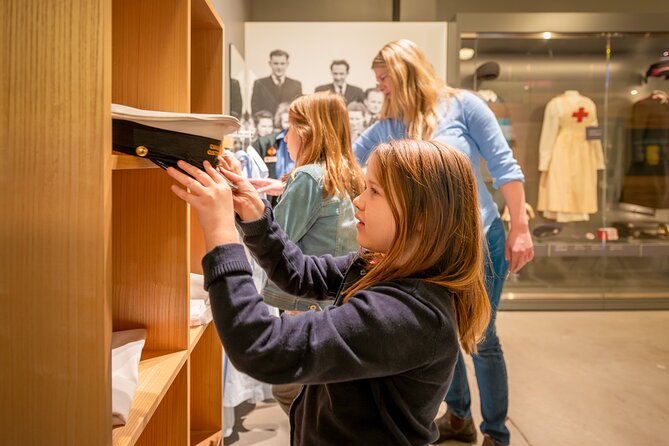
The admission includes films, a café, and a gift shop. These may sound like small extras, but they help you shape the visit around your own pace.
Films can give you another way to connect with first-hand stories and immigration themes. If you prefer listening and viewing to reading long panels, make room for them. If you have limited time, you can focus on the exhibitions and skip the additional material.
The café gives you a convenient break during a longer visit. That matters if you are spending two or three hours at the museum or combining a guided tour with family research. You do not need to leave the site simply because you need a pause.
The gift shop is worth a quick look if you want a book or small item connected to immigration and Canadian history. It is included in the visit route, but it does not change the main value of the experience, which comes from the historic site, exhibitions, and personal stories.
Is the $14.19 admission good value?
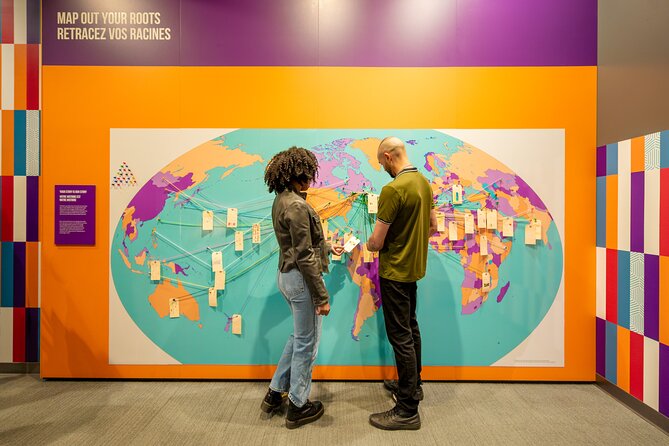
At $14.19 per person, this is a reasonably priced museum visit, particularly if you use the full admission. You receive access to both exhibitions, films, the café and gift shop areas, guided tour access, and the family research centre.
The value is strongest for visitors who care about immigration, Halifax history, or family research. If you spend only 45 minutes looking at the main displays, the price may feel less compelling. If you stay for two or three hours and use the films, tour, and research centre, the admission makes more sense.
March Break offers an unusual saving. From March 14 through March 22, admission is free, along with programming such as food workshops and activities. If your Halifax visit falls within those dates, this is an easy addition to your plans. Free admission may also mean more interest in the special programming, so allow enough time if you want to take part.
Booking ahead is sensible because the experience is booked about 27 days in advance on average. That does not guarantee that you must reserve far ahead, but it signals steady demand. The mobile ticket is convenient for a day of sightseeing, and confirmation arrives at booking.
Who will get the most from this visit?
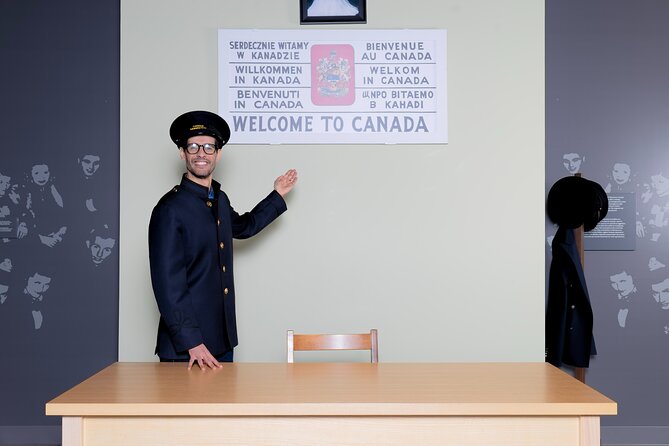
I would recommend the museum most strongly to people with a personal connection to immigration or a clear interest in how Canada developed. It is also a good choice for families who want a thoughtful indoor stop in Halifax, especially if different ages can connect with the films, stories, and historic setting in different ways.
Genealogy-minded visitors should plan extra time and bring any family details they already have. The research centre can add a memorable personal layer, but you should treat it as a helpful possibility rather than the main reason to book.
The museum also suits visitors who want something more reflective than a quick waterfront photo stop. You will not find a huge attraction with a long list of rides or showpieces. Instead, you get a focused look at people, movement, arrival, and the continuing role of immigration in Canada.
It may be less satisfying if you want a large museum with extensive pre-Second World War family records. The limited research information described above is a real consideration. You can still enjoy the exhibitions, but genealogy should not be your only plan.
The site is near public transportation, and service animals are allowed. Most people can participate, making it a practical choice for a broad range of visitors. These details are useful when you are building a day around the Halifax waterfront.
How to plan your time at Pier 21
For a short visit, start with the Pier 21 Story Exhibition, then move through the Canadian Immigration Story Exhibition. If time remains, choose a film or a few sections that connect most closely with your interests.
For a fuller visit, join the guided tour in English or French, see both exhibitions, watch the films, and set aside time at the family history centre. A café break can keep the pace comfortable, especially if you are visiting with children or combining the museum with other waterfront activities.
I would avoid arriving at the end of your day if family research matters to you. The museum visit can last up to three hours, and the research centre deserves time for questions and follow-up. The exhibitions are easier to enjoy when you are not watching the clock.
Admission is flexible, but the supplied details do not promise a particular tour schedule or exact entry time. Confirm the current details before you go if you have a tight Halifax itinerary or need a French guided tour.
Should you book the Canadian Museum of Immigration at Pier 21?
Book it if you want a meaningful Halifax museum with a real connection to the people it presents. The historic Pier 21 setting, first-hand stories, two exhibitions, and possible family research make the $14.19 admission good value for an interested visitor.
Go with modest expectations about size and genealogy. This is a small, focused museum rather than an all-day institution, and research before the Second World War may be limited. If that suits your interests, give yourself two hours and make time for the stories, not just a quick walk through.
FAQ
Where is the Canadian Museum of Immigration at Pier 21?
The museum is on Halifax’s waterfront at the national historic site of Pier 21 in Halifax, Canada.
How long does a visit take?
The visit takes approximately one to three hours, depending on how much time you spend with the exhibitions, films, guided tour, café, gift shop, and family research centre.
What does admission include?
Admission includes the Pier 21 Story Exhibition, the Canadian Immigration Story Exhibition, films, the café and gift shop areas, guided tour access, and access to the Scotiabank Family History Centre.
Are guided tours available in French?
Yes. Guided tours of the Pier 21 Story Exhibition are offered in English or French. The experience information itself is offered in English.
Can the museum help me research my family history?
The Scotiabank Family History Centre has expert researchers who can help with family history and immigration journeys. Research support may be limited for some periods, including certain arrivals before the Second World War.
Can I cancel for a full refund?
Yes. You can cancel at least 24 hours before the experience start time for a full refund. Cancellations or changes made less than 24 hours before the start time are not accepted for a refund.
Just added in Halifax
- Winter Wine Escape★ 5.0 · 8 reviews
- Private Tour in Halifax by a Luxury Vehicle with Informative Guide★ 5.0 · 92 reviews
- Wine Enthusiast Tour Lead by a Sommelier★ 4.5 · 6 reviews
- Wine Tour Wolfville Wine Tours in Nova Scotia- 6 Hours★ 5.0 · 14 reviews
- Zodiac Coastal Tour with Naturalist Guide: Lunenburg★ 5.0 · 105 reviews
- Peggy’s Cove Sunset tour★ 5.0 · 14 reviews
- Halifax waterfront SOLAR Party Bike food & drink experience!★ 4.0 · 71 reviews
- JFarwell Sunset Wine & Cheese Aboard the Reverie★ 5.0 · 22 reviews
Museums, compared.
Art Gallery of Ontario General Admission Ticket
Read our review →


3.5-Hour Bus City Tour with Gasoline Alley Museum
Read our review →Browse the lists this tour appears in