

Reviewed · HISTORICAL TOURS
Historic Halifax by Foot
Halifax reveals itself best at walking speed, and this tour links its key historic places in one uphill-to-waterfront route. You’ll move from Victorian gardens and an old cemetery to military viewpoints, churches, government buildings, and the harborfront.
I like the small-group format, capped at 20 people, and the way the route mixes major landmarks with useful local stories. I also like the guides’ range of styles: Victor is praised for history and architecture, while Glenn, Gregg, Chris, and Duncan have each brought humor or local detail to different departures.
The main caution is the pace and the hills. Most people finish satisfied, but one departure felt rushed and ended early, while several others mention tiring climbs. Wear sound walking shoes and tell the guide if you need a slower rhythm.
Key points to know before you book

- A full old-city route: You cover the Public Gardens, Old Burying Ground, Citadel Hill, Grand Parade, St. Paul’s Church, Province House, the Old Town Clock, and the waterfront.
- Citadel views without admission: The route reaches the top area for city and harbor views, but it does not include entry inside Halifax Citadel National Historic Site.
- History with a local voice: Guides such as Victor, Glenn, Chris, Gregg, and Duncan have been praised for clear explanations, stories, and questions.
- A real walking workout: The tour lasts about two and a half hours and includes hills, especially around Citadel Hill.
- Useful for cruise-port days: The 9:45 a.m. start near Pier 21 and finish at the ferry terminal make this a practical first look at Halifax.
- Good value at $36.80: You pay for a guided introduction rather than attraction admissions, food, or transport.
Starting at Pier 21 and finding your Halifax bearings

The tour begins at the Canadian Museum of Immigration at Pier 21, at 1055 Marginal Road. That location puts you close to Halifax’s waterfront and the cruise-port area, though you should check your walking route carefully before departure. The tour starts at 9:45 a.m. and finishes beside the Halifax Ferry Terminal.
This start and finish are useful if you have only one morning in town. You can get a quick sense of Halifax’s older center without arranging taxis or trying to connect several separate sights. The endpoint also leaves you near the waterfront for lunch, shopping, or further exploring.
The tour is offered in English, with a maximum group size of 20. That is small enough for a guide to answer questions and manage a street-side explanation without the experience feeling like a large bus excursion. One practical issue does come up: at a full departure, nearby traffic and city noise can make it harder to hear. If you are not close to the guide, move forward when the group stops.
A few more things to do in Halifax worth a look
- Peggy’s Cove & Halifax Historic Tour
★ 4.5 · 375 reviews - Half-Day Historical Tour of Halifax
★ 5.0 · 225 reviews - Peggy’s Cove/Mahone Bay & Lunenburg UNESCO HERITAGE SITE.
★ 4.5 · 139 reviews
Halifax Public Gardens: a calm opening to the walk
The first major stop is the Halifax Public Gardens, entered through the main gates with your guide. Founded in the Victorian period, these are Canada’s oldest Victorian gardens, and the half-hour visit gives the tour a gentle start before the climb toward the Citadel.
Your guide explains the gardens’ history and points out monuments inside. You also get free time to look around on your own, which is important here. This is not just a place to hear a quick explanation and leave. You can pause for photographs, inspect the plantings and memorials, and enjoy a quieter corner of central Halifax.
The gardens are one of the strongest parts of the route for anyone who likes a change of pace. The later stops focus on military power, politics, disasters, and burial grounds. Here, you get a more peaceful setting and a chance to orient yourself to the city.
The free admission keeps the $36.80 price easy to assess. You are not paying an extra entrance fee for this stop, and the guide adds context that you would miss by simply strolling through alone.
The Old Burying Ground and Halifax’s early years
The Old Burying Ground dates from 1749, the year Halifax was founded. The tour spends about 10 minutes here, following a route past restored headstones and the only Crimean War memorial in North America.
This is a short stop, but it carries a lot of historical weight. The cemetery helps turn Halifax from a collection of attractive buildings into a real early settlement with military, political, and family stories. Listen closely, because the guide’s tales about people buried here are likely to be the most memorable part of this section.
Ten minutes is enough for an introduction, not a full cemetery study. If you enjoy reading every inscription or photographing individual stones, you may want to return later on your own. The tour’s purpose is to connect this place to the larger story of Halifax, not to linger at each marker.
Citadel Hill: the tour’s best view and hardest climb
The route then heads toward Halifax Citadel National Historic Site. The guide explains why Halifax became an important military base and why the Citadel mattered to the city’s defense. From the high ground, you get a strong view over downtown Halifax and the harbor.
This is one of the most useful photo stops on the tour. The elevation gives you a clearer sense of how the city is arranged, and it helps explain why this hill mattered to military planners. It is also the point where the physical demands of the walk become most obvious.
Your ticket does not include entry inside the Citadel National Historic Site. The tour goes to the top area and explains the setting, but it is not a Citadel admission tour. If you want to explore the fort’s interior, exhibits, or demonstrations, plan a separate visit and allow extra time.
The climb is manageable for people with decent fitness, but do not mistake this for a flat city stroll. Several people describe the route as hilly, and one particularly critical account found the guide’s pace too fast, especially on the uphill section. Other departures had a slower, comfortable pace, including one guide who made the climb feel less noticeable. The difference may depend on the guide, group, and weather.
Same base, a different sort of day:
- Halifax Harbour Hopper Tour
★ 4.5 · 1,296 reviews - Halifax Peggy’s Cove Express
★ 4.0 · 801 reviews - Wine and Lunch Escape
★ 5.0 · 562 reviews - Halifax Small-Group Express Peggy’s Cove Tour
★ 4.5 · 544 reviews
St. Paul’s Church and the Halifax Explosion
From the Grand Parade, your guide explains St. Paul’s Church, founded in 1749. It is the oldest Anglican church in Canada and the oldest building in Halifax. The church is also connected to the Halifax Explosion, one of the city’s defining disasters.
This is a good example of why a walking guide adds value. A building can look like a historic church, but the surrounding story gives it meaning. The tour connects St. Paul’s to the explosion and places that event within the civic history of Halifax.
The route does not present this as a long interior visit. Instead, you learn about the church from the Grand Parade area. That keeps the tour moving, but it also means you should not book this experience expecting extended indoor sightseeing.
Grand Parade and the city’s public memory
Grand Parade is a military parade square dating to Halifax’s founding in 1749. At the north end is Halifax City Hall, while St. Paul’s Church marks the south end. In the center, the cenotaph honors those who served in the First World War, Second World War, and Korean War.
This stop gives you several layers of Halifax at once: military origins, municipal government, religion, and public remembrance. The guide also discusses the Halifax Explosion here. That subject can make the tour feel less like a simple list of buildings and more like a walk through the events that shaped the city.
The planned stop lasts about 15 minutes. That is enough time for a clear explanation and photographs, though a busy group may need to stay close to hear every word. I would pay attention to the guide’s placement and avoid drifting behind while taking pictures.
Province House and the story of Nova Scotia politics
Province House was built from 1817 to 1819 and is Canada’s longest-serving legislative building. Its Palladian design is considered one of the finest examples of that style in North America.
The building also connects architecture with civil rights. A famous 1835 court case held here helped lead to freedom of the press in Canada. Your guide explains the people who governed Nova Scotia and the unusual events tied to the building.
This is a worthwhile stop for anyone who wants more than military history. The tour moves through government, law, architecture, and the development of public life. You will not get a full political-history lecture, but you should leave with a clearer sense of why Province House matters beyond its handsome facade.
The Old Town Clock and the route back downhill
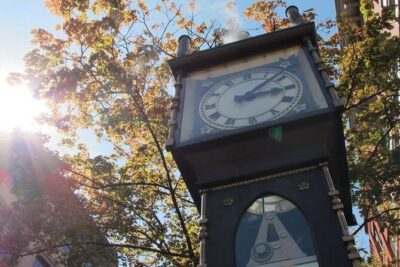
The Old Town Clock is one of Halifax’s best-known landmarks. Built in 1803 to provide the local garrison with the correct time, it has helped keep the city on schedule for more than two centuries.
The route from Citadel Hill takes you past the front steps of the clock. This is a quick landmark encounter rather than a long stop, but it gives you an easy photo and another link between the military settlement and the modern city.
The downhill direction after the Citadel can feel welcome after the climb. The tour continues toward the waterfront, with the guide pointing out buildings and streets along the way. Depending on the guide, this part may include restaurant suggestions and local orientation. Most of the feedback praises useful recommendations, but one person found that a guide talked too much about bars and restaurants and not enough about Nova Scotia history. If history is your main reason for booking, say so early.
Ending beside the ferry terminal
The walk ends on the Halifax waterfront beside the Halifax Ferry Terminal. This is a practical finish because you can continue exploring on foot, take the ferry, find food, or return toward the cruise area.
The route is especially useful for a short port call. One departure waited for a ship that docked late, but you should not rely on that happening. If your ship has a firm departure time, leave a buffer after the advertised two hours and 30 minutes. Reported finishing times have varied, with some tours lasting around two hours and 15 minutes and one ending at about two hours.
That variation is not necessarily a problem, but it matters if you are planning a tight schedule. The official duration is approximate, and the guide’s pace, group size, weather, and questions can all affect the finish.
What the guides add to the experience
The strongest part of this tour is the guide. Victor has been praised for clear history, architecture, hidden corners, and a warning about the Citadel’s noon gun. Glenn and Glen are described as easy to hear, funny, and strong at explaining Halifax’s past. Gregg has been praised for turning the walk into a pleasant lesson, while Chris has been noted for humor, local suggestions, and making room for questions. Duncan has also been described as well informed and engaging.
That range matters because the route itself is fixed, but the feel of the experience is not. A strong guide can turn a street, church, or monument into a story you remember. A rushed guide can make the same route feel like a race.
The overall rating is 4.7 from 191 ratings, with 91 percent recommending the experience. That is a strong signal, though the lower ratings point to two real concerns: pace and the amount of historical detail. You should book this expecting a capable local introduction, not a private lecture tailored entirely to your interests.
Price, pace, and who gets the best value
At $36.80 per person, the tour offers good value if you want a structured first look at Halifax. You receive about two and a half hours with a local guide and cover more ground than you might manage alone, especially if you are unsure how the Public Gardens, Citadel, Grand Parade, and waterfront fit together.
Food, drinks, and attraction admissions are not included. The Citadel is the main potential extra cost because the tour does not enter it. That is not a flaw, but you should factor it in if your goal is a full fort visit.
I would choose this tour if you:
- Have one morning in Halifax
- Want history, architecture, and city orientation together
- Prefer walking to a vehicle tour
- Enjoy asking questions of a local guide
- Can manage hills and two-plus hours on your feet
- Are visiting from a cruise ship and want an efficient introduction
I would choose something else if you need a flat route, frequent seating, a slow photography walk, or a detailed interior visit to the Citadel. People with walking difficulties are specifically advised not to participate, and service animals are allowed.
Wear comfortable shoes, bring water, and dress for changing weather. The tour requires good weather and can be canceled if conditions are poor or if the minimum number of participants is not reached. You can cancel for a full refund up to 24 hours before the start time, but changes made later are not accepted.
Should you book Historic Halifax by Foot?
Book it if you want to understand Halifax quickly and do not mind hills. The route covers the city’s major historic markers in a sensible order, and the best guides bring the past alive with stories about military life, politics, the Halifax Explosion, architecture, and people who shaped Nova Scotia.
The main decision is not the price. It is your preferred pace. If you walk comfortably and stay near the guide, this is a strong first-day choice, particularly for a short port visit. If you need time for long photo stops or want to explore each site inside, use the tour as an introduction and save the rest of the day for independent visits.
FAQ
Where does Historic Halifax by Foot begin?
The tour begins at the Canadian Museum of Immigration at Pier 21, 1055 Marginal Road, Halifax, Nova Scotia.
What time does the tour start?
The scheduled start time is 9:45 a.m.
Where does the tour end?
The walk ends on the Halifax waterfront beside the Halifax Ferry Terminal.
How long does the tour last?
The advertised duration is approximately two hours and 30 minutes. Actual departures may finish somewhat earlier or later.
Does the tour enter Halifax Citadel National Historic Site?
No. The route goes to the top area for views and an explanation of the Citadel’s importance, but admission inside the site is not included.
Is food included?
No. Snacks, food, and drinks are not included.
Is the tour suitable for people with walking difficulties?
No. The tour requires a moderate level of fitness, includes hills, and is not recommended for people with walking problems.
What happens if bad weather cancels the tour?
If poor weather causes a cancellation, you will be offered another date or a full refund.
Just added in Halifax
- Winter Wine Escape★ 5.0 · 8 reviews
- Private Tour in Halifax by a Luxury Vehicle with Informative Guide★ 5.0 · 92 reviews
- Wine Enthusiast Tour Lead by a Sommelier★ 4.5 · 6 reviews
- Wine Tour Wolfville Wine Tours in Nova Scotia- 6 Hours★ 5.0 · 14 reviews
- Zodiac Coastal Tour with Naturalist Guide: Lunenburg★ 5.0 · 105 reviews
- JFarwell Sunset Wine & Cheese Aboard the Reverie★ 5.0 · 22 reviews
- Peggy’s Cove Sunset tour★ 5.0 · 14 reviews
- Halifax waterfront SOLAR Party Bike food & drink experience!★ 4.0 · 71 reviews
Historical Tours, compared.



Evening Gourmet Tour 5 Course Dinner – History and Food in Old Quebec City
Read our review →



Browse the lists this tour appears in