
Reviewed · HISTORICAL TOURS
Making Their Mark: Montreal Jewish History Walking Tour
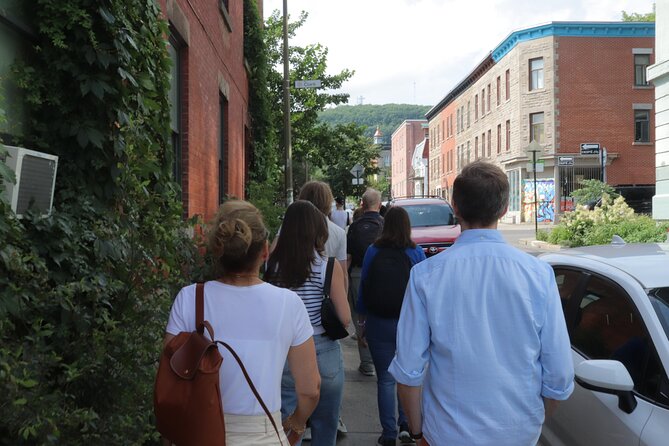
Montreal’s Jewish past is easiest to understand on foot, where an old tailor shop, a former community building, or an ordinary-looking street corner can carry more meaning than a museum label. This two-hour walk follows the Jewish story through the Plateau and Mile End, focusing on Eastern European immigration, Yiddish life, work, education, religion, and the people who helped shape Montreal.
I like the human scale of the tour and the way guides such as Shannon, Emily, Pauline, and Tani connect individual lives to the city around you. I also like the short break during the walk and the choice of morning or afternoon departures. The main drawback is that much of the original Jewish neighborhood has changed or disappeared, so you’ll often be looking at present-day streets while listening to stories about what once stood there.
Key points to know before you book
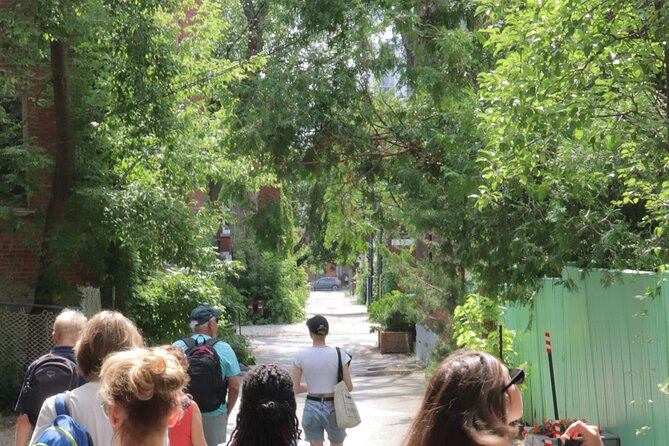
- The route brings Jewish Montreal to life through streets, buildings, and personal stories, rather than relying only on museum displays.
- Guides including Shannon, Emily, Pauline, and Tani receive especially strong praise for clear explanations, warmth, pacing, and thoughtful answers.
- The walk covers the Plateau and Mile End, with the start and finish at different locations.
- You should expect a steady amount of walking, though the two-hour pace includes a short rest break.
- The $24.03 price is good value if you want a focused introduction to Montreal’s Jewish past with a local guide.
- Check the exact meeting point carefully, since the supplied directions name both 3961 and 4129 Saint-Laurent Boulevard.
Why this walk matters in Montreal’s Plateau and Mile End
Montreal’s Jewish story is not confined to a single landmark. It is spread through streets that have changed hands, businesses that have closed, and neighborhoods where only fragments of the earlier community remain.
That makes this a useful kind of city tour. You are not simply taken to a preserved building and told what happened there. You walk through an area where the past and present overlap, often with little obvious signage to explain the connection. The guide supplies the missing context.
The focus is on Jewish immigrants from Eastern Europe and the community they built in Montreal. You hear about work, education, medical care, religious life, industry, and the people who made their mark in each field. The tour also places Jewish life within the wider story of Montreal, showing how one immigrant community helped shape the city.
I appreciate that approach because it avoids treating Jewish Montreal as an isolated subject. The walk presents it as part of the city’s social and economic development. You learn not only where people lived, but also how they worked, organized, worshipped, taught, and contributed to the neighborhoods around them.
The route is especially helpful if you are new to Montreal and want a historical introduction before exploring more on your own. It gives you names, themes, and visual reference points that can make the Plateau and Mile End easier to read afterward.
Other walking tours in Montreal:
- The Original Old Montréal Walking Tour by Guidatour
★ 4.5 · 2,217 reviews - Old Montreal Small-Group Walking Tour | Max 10 | by MTL Detours
★ 5.0 · 2,088 reviews - Montréal: The Original Old Montréal Walking Tour
★ 4.8 · 911 reviews
Starting outside Saint-Laurent Boulevard
The tour begins outdoors on Saint-Laurent Boulevard, in the area of the Plateau. The directions supplied for the experience contain two start references: the tour description says to meet outside 3961 Boulevard Saint-Laurent at the intersection with Napoleon, while the meeting-point information lists 4129 Boulevard Saint-Laurent.
That inconsistency deserves attention. One past booking problem involved a guest receiving an incorrect meeting location, and the provider later stated that its walking tours were running from 4129 Saint-Laurent Boulevard. For your own peace of mind, read the exact instructions on your ticket and confirm the location with the Museum of Jewish Montreal if anything conflicts. The provider lists the phone number 514-840-9300 and the email [email protected] for contact.
Once the group is assembled, expect to begin with orientation and background rather than a long indoor museum visit. The tour’s named museum stop is the Museum of Jewish Montreal, but the walk does not begin or end at the museum building. The route uses outdoor locations around the Plateau and Mile End.
That distinction matters. If you arrive expecting to enter the museum immediately, you may be confused. The museum’s exhibitions are at 5220 Saint-Laurent Boulevard, while this walking experience begins and ends elsewhere. The museum exhibitions are listed as open Thursday through Sunday, with Monday openings beginning in late May 2024, so you can plan a separate visit if you want more indoor material.
Reading the old Jewish neighborhood through ordinary streets
The most interesting part of the experience is the contrast between what you see and what you learn. Some original structures remain, but much of the former Jewish area no longer looks like a distinct Jewish district.
That can be disappointing if you want a long series of preserved synagogues, shops, and institutions. One guest felt that not enough of the original neighborhood remained. That reaction is fair. This is not a preserved historic quarter where every building looks as it did a century ago.
But the change is also part of the story. Montreal’s Jewish population moved and evolved, and the neighborhood changed with it. A street that now feels ordinary can still reveal how immigration, employment, housing, and urban change shaped Jewish life in the city.
Your guide does the important work here. Shannon is repeatedly praised for making early 20th-century Jewish Montreal understandable without burying the group in facts. Emily is noted for explaining how present buildings connect to the past. Pauline is described as clear and lively, while Tani is praised for answering questions and keeping the material accessible to families with teenagers.
Those details matter more than a polished route alone. When the physical remains are limited, the guide’s ability to explain what is absent becomes central to the experience.
Stories of work, faith, education, and community
The tour’s subject is broader than immigration. You learn how Jewish Montreal developed after Eastern European Jewish immigrants arrived, and how people built institutions and careers in their new city.
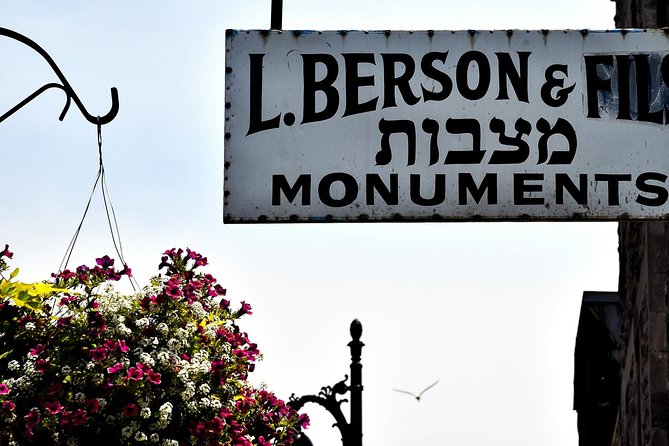
The walk touches on education, medical care, religious community, and industry. It also includes the working life of the neighborhood. One stop connected with H. Fischer & Fils and a tailor shop gives the story a practical, visible anchor. Instead of treating history as a list of dates, the tour uses work and local businesses to show how people made a living.
That is one of the strongest features of the route. Immigration history can become abstract when it stays at the level of statistics. A tailor shop, a business name, or a former community site gives you something concrete to hold onto.
The Yiddish side of Montreal also receives attention. You get a sense of how language and culture shaped local life, and how Jewish identity was expressed through neighborhood institutions and everyday work. Shannon, in particular, is praised for explaining Montreal’s Yiddish past in a way that is engaging without becoming too much for a two-hour walk.
The tour also allows room for questions. A group of up to 20 people is large enough to include different perspectives but small enough for discussion to remain practical. One guide was specifically praised for being willing to say when she did not have a definite answer. That kind of honesty is useful on a historical tour, where not every detail can be settled on the spot.
Other guided walks in Montreal:
- Old Montreal Ghost Walking Tour
★ 4.5 · 726 reviews - The Essential 101 Non-Touristy Walking Tour by Spade & Palacio
★ 5.0 · 716 reviews - Montreal: Top Rated Small Group Old Montreal Walking Tour
★ 4.9 · 611 reviews - Walking tour of Old Montreal – 16/42 Tours
★ 5.0 · 592 reviews
A two-hour route with a sensible pace
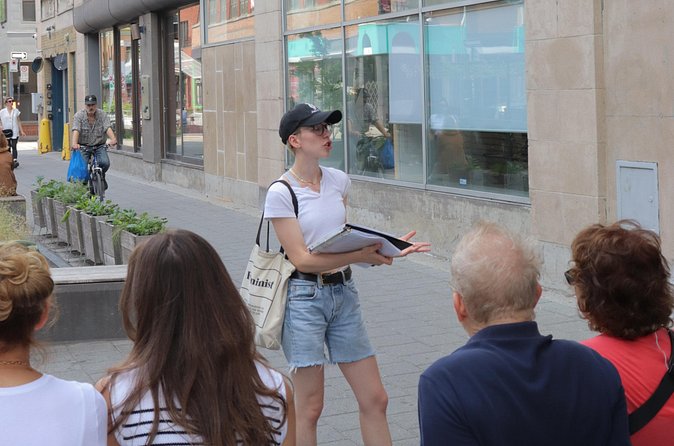
Two hours is enough time to build a clear picture without turning the walk into an all-day commitment. The tour includes a short break in the middle, which helps, particularly on a warm day or when you are walking with children.
You should still arrive ready to walk. The route moves through city streets, and a moderate level of physical fitness is recommended. Wear comfortable shoes and think of the experience as a proper walking tour, not a series of short transfers between attractions.
The pace seems designed for listening. Guides are praised for being organized, flexible, and good at keeping the two hours moving. That is important because historical walks can easily become either rushed or overloaded with information. The strongest descriptions of this tour point to a good balance between explanation and seeing the places being discussed.
Families can make this work, including families with teenagers. The subject is serious, particularly when discussing the hardships faced by Jewish immigrants, but the experience is presented through people, places, work, and community life rather than through a nonstop lecture.
Morning and afternoon departures give you some flexibility. If you take it early, you can use the rest of the day to explore the Plateau and Mile End with a better sense of what you are seeing. An afternoon walk can work well after a morning of museum visits or sightseeing.
What the guides add to the experience
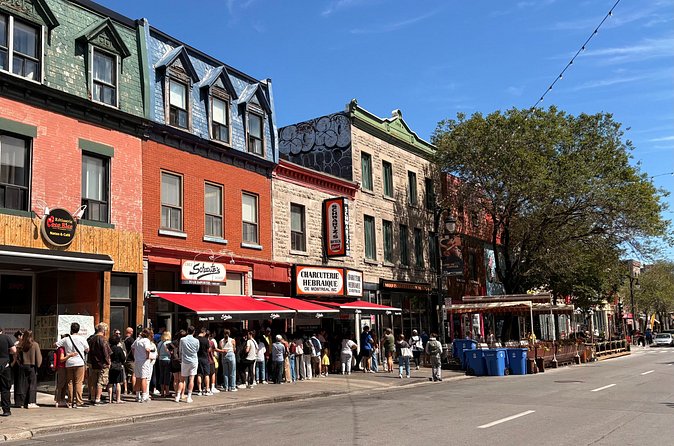
The strongest part of this tour is its guiding. Shannon receives especially warm praise for her preparation, emotional intelligence, humor, organization, and ability to make difficult parts of the past understandable. Several descriptions point to her as someone who cares about the subject while still keeping the walk approachable.
Emily is praised for clear communication and for relating current buildings to earlier Jewish life. Pauline is described as enthusiastic, lively, and full of information. Tani receives strong marks for preparation, answering questions, and working well with families.
The guide assigned to your departure may vary, so you should not book solely on the assumption that one particular person will lead your walk. Still, the range of praised guides suggests that the experience depends on a trained local presenter rather than on a fixed audio script.
I also like the human tone described across the strongest experiences. The guides do not simply point out locations. They explain the pressures faced by immigrants, the work required to build community institutions, and the contributions made in different fields.
The walk is also emotionally aware without appearing overly solemn. That balance matters. You want the difficult parts acknowledged, but you also want room for the energy, humor, ambition, and ordinary routines that made up community life.
What you will not see
Set your expectations before you go. The walk does not offer a complete survey of every era of Jewish Montreal, and one criticism was that it gave too little attention to postwar Jewish life.
The route is centered on the older Jewish presence in the Plateau and nearby areas. If your main interest is postwar institutions, later migration, or the present-day Jewish community on the other side of Montreal, you may want additional research or a separate visit to the museum.
You also will not spend the entire time inside preserved historic buildings. The museum itself is not the meeting or ending point, and the tour is mainly an outdoor neighborhood walk. The named stop at the Museum of Jewish Montreal is best understood as part of the tour’s subject and identity, not as a promise of a full museum visit during the two hours.
For some people, the lack of surviving buildings will make the experience feel less visually dramatic. For others, it will make the guide’s storytelling more valuable. I would choose this tour for interpretation and context, not for a long checklist of intact landmarks.
Is $24.03 a fair price?
At $24.03 per person, the tour is priced reasonably for a guided two-hour city walk. The fee includes a local guide, but not hotel pickup or drop-off. You are paying for a focused introduction to a part of Montreal that can be hard to understand independently.
The value is strongest if you are curious about immigration, Yiddish culture, urban change, or the Jewish people who helped shape Montreal. It is also good value for families who want a shared activity that combines sightseeing with a clear historical theme.
The price is less compelling if you want extensive indoor access or a broad survey of all Jewish life in Montreal. In that case, you may need to add a separate museum visit or other self-guided exploration.
Because the tour averages 17 days between booking and departure, planning ahead is sensible, particularly if your schedule is fixed. The group can reach 20 people, so booking early may also help you secure the time that suits you.
Practical details that can make the walk easier
The experience is offered in English and includes a mobile ticket. It is near public transportation, and service animals are allowed.
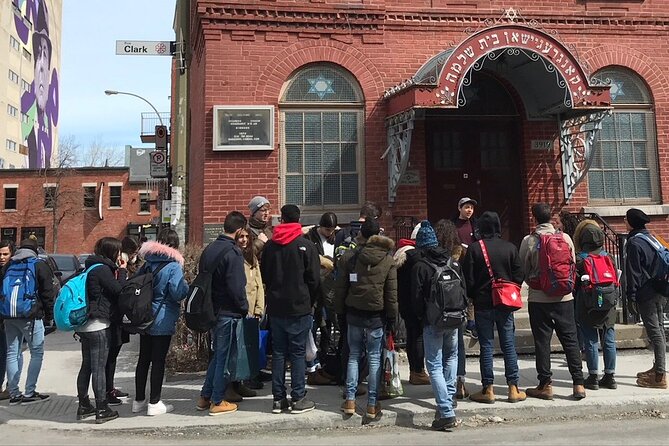
The route starts and ends at different places around the Plateau and Mile End. The listed ending point is outside 3919 Rue Clark, at the intersection of Clark and Bagg. Arrange your onward plans with that in mind, especially if you are meeting someone elsewhere or have a timed reservation.
There is no hotel pickup or drop-off. Plan your own way to the starting point and allow extra time to check the address. Given the conflicting references to 3961 and 4129 Saint-Laurent Boulevard, this is not a detail to leave until the last minute.
Free cancellation is available if you cancel at least 24 hours before the start time. Changes or cancellations made within 24 hours are not accepted for a refund, and the cut-off uses Montreal local time.
Who should book this Montreal walk?
Book it if you want Jewish Montreal explained through the streets where people lived and worked. It suits couples, solo visitors, families, and anyone who enjoys a city walk with a clear historical purpose.
It is particularly useful early in a Montreal visit. Afterward, the Plateau and Mile End will have more meaning, and you may notice connections that would otherwise pass unnoticed.
You may want to skip it if you dislike walking, want to see a large number of preserved buildings, or are mainly interested in postwar Jewish Montreal. The route asks you to imagine some of what is no longer visible.
For me, that is not a flaw so much as the central condition of the tour. You are learning to read a changing neighborhood, with a guide filling in the human story behind present-day streets.
FAQ
How long does the Making Their Mark tour last?
The walking tour lasts approximately two hours.
Where does the tour begin?
The tour description says to meet outside 3961 Boulevard Saint-Laurent at the intersection with Napoleon. The meeting-point information lists 4129 Boulevard Saint-Laurent, so check your ticket and confirm the current starting location with the provider.
Where does the tour end?
The listed ending point is outside 3919 Rue Clark, at the intersection of Clark and Bagg.
Does the tour visit the Museum of Jewish Montreal building?
The tour begins and ends at different locations around the Plateau and Mile End, not at the museum building. The museum exhibitions are located at 5220 Saint-Laurent Boulevard and have separate public opening hours.
Is the tour offered in English?
Yes. The experience is offered in English.
How many people can join the tour?
The tour has a maximum group size of 20 people.
Is the tour suitable for families?
Yes. It is described as family-friendly, and families with teenagers have taken part. You should still be prepared for a moderate amount of walking.
Can I cancel for a refund?
You can cancel up to 24 hours before the experience begins for a full refund. Cancellations or changes made less than 24 hours before the start time are not accepted for a refund.
Should you book Making Their Mark?
Book this tour if you want Montreal’s Jewish past explained by a person who can connect vanished buildings, surviving streets, immigrant work, Yiddish culture, and community life. The guides are the main attraction, and the best departures turn an ordinary-looking neighborhood into a place full of human stories.
Just confirm the meeting address, wear comfortable shoes, and expect a thoughtful walk rather than a museum tour. At $24.03, it is a worthwhile choice for a clear, personal introduction to Jewish Montreal.
More history and heritage in Montreal
- Montreal History Guided Sightseeing Cruise
★ 3.5 · 363 reviews - Rabbis, Writers and Radicals: Montreal Jewish History Walking Tour
★ 4.5 · 52 reviews - In the Shadow of the Mountain: Montreal Jewish History Walking Tour
★ 4.5 · 33 reviews - Private Montreal City Tour by Car, History & Hidden Gems
★ 5.0 · 22 reviews
Just added in Montreal
- Winter Express: Old Montreal Highlights Walking Tour★ 5.0 · 119 reviews
- Under the Surface of Montreal’s Chinatown: Guided Food Walking Tour★ 5.0 · 23 reviews
- Montréal Downtown and Underground City Private Walking Tour★ 5.0 · 47 reviews
- In the Shadow of the Mountain: Montreal Jewish History Walking Tour★ 4.5 · 33 reviews
- Montreal Premium Driving Tour with River Cruise and Notre Dame★ 4.5 · 164 reviews
- Full Day Family Bike Rental★ 5.0 · 17 reviews
- Toronto, Niagara Falls & Thousand Islands VIP 2–Day Trip★ 5.0 · 20 reviews
- The Ultimate Montreal Boat Tour – Fall Colors Apéro Edition★ 4.5 · 31 reviews
Historical Tours, compared.



Evening Gourmet Tour 5 Course Dinner – History and Food in Old Quebec City
Read our review →
Browse the lists this tour appears in