
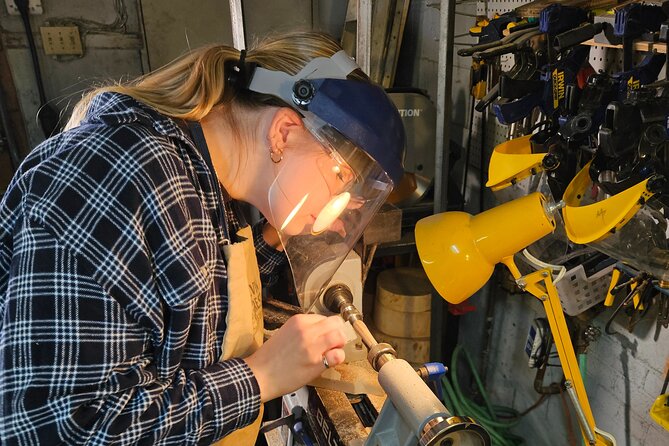
Reviewed · TOURS IN MONTREAL
Pen Making With The Woodworker Himself
The best part of this Montreal workshop is that you do not simply watch a craftsperson work. You learn the process, choose your own wood, and operate the lathe under guidance until a plain block becomes a finished pen. Jonathan’s relaxed teaching style helps keep the session friendly rather than intimidating.
I like the hands-on format and the choice of local and exotic woods. I also like that the finished pen is both a souvenir and a useful object, not something that sits in a drawer. The main consideration is the price: at $161.10 per person, this is a special-interest workshop, not a cheap craft activity.
Key points
- You operate the lathe yourself, with instruction throughout the pen-making process.
- Jonathan leads the workshop, creating a relaxed setting with plenty of guidance and humor.
- Your pen is made from wood you choose, including local and exotic options.
- The three-hour session covers the full process, from safety and shaping to polishing and assembly.
- The group is limited to nine people, which should allow for a more personal experience.
- The finished pen goes home with you, giving you a practical Montreal keepsake.
Turning a Plain Block Into a Personal Souvenir
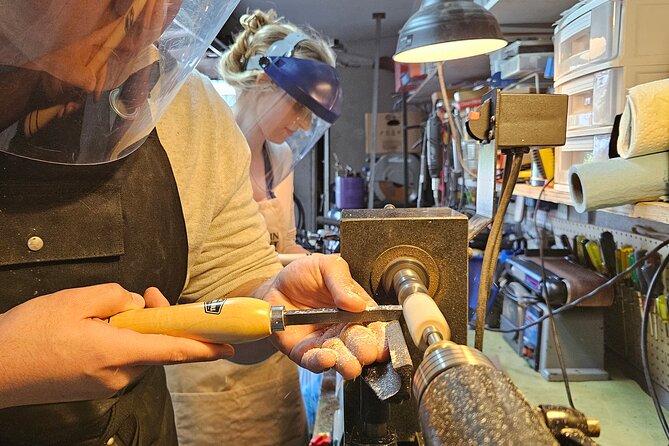
This workshop gives you a rare chance to make a souvenir instead of simply buying one. You begin with a piece of wood and finish with a working pen shaped, polished, and assembled by you.
That difference matters. A standard souvenir can remind you of Montreal for a few days, but a pen you made yourself carries the memory of the activity each time you use it. You also get to make choices along the way, especially when selecting the wood and shaping the pen.
The session lasts about three hours. That is long enough to cover the craft properly without turning the workshop into a full-day commitment. You should still expect to concentrate, listen carefully, and spend real time on sanding and finishing. Wood turning is not just a quick spin on a machine.
Other trips people book in Montreal:
- Montreal: Guided Bus Tour
★ 4.4 · 3,064 reviews - Montreal: Hop-On Hop-Off Double-Decker Bus Tour
★ 4.1 · 2,760 reviews - From Montreal: Quebec City and Montmorency Falls Day Trip
★ 4.5 · 2,669 reviews
What Happens at 4710 Rue Saint-Ambroise
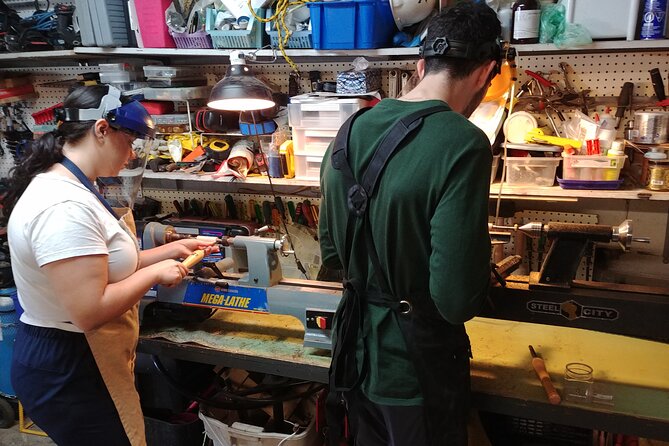
The workshop begins at 4710 Rue Saint-Ambroise in Montreal. The activity ends at the same place, so you do not need to arrange transportation between separate sites.
The location is near public transportation, which helps if you are exploring Montreal without a car. Your booking confirmation arrives at the time of booking, and scheduling may be flexible if the listed times do not fit your plans. You can contact the organizer to ask about another date or time, though an alternative is not guaranteed.
The meeting point is important because this is a focused studio-style activity rather than a city tour. You will not be moving between Montreal sights or combining the workshop with sightseeing. Plan it as a dedicated block in your day.
Rue Saint-Ambroise is in an area where you can build in extra time before or after the activity, but the supplied details do not promise nearby attractions, food, or a particular neighborhood tour. I would keep your plans around the workshop simple and arrive ready to work.
A Short Introduction to the Lathe
Your first stage is an introduction to the lathe and its parts. You learn what the machine does and how the different components fit into the work.
That opening is useful even if you have never handled woodworking tools. A lathe can look complicated at first, and the early explanation gives you a basic map before you begin. You are not expected to arrive with technical training.
The introduction also provides context for the craft. Wood turning has a long working tradition, and the lathe is the central tool that makes the rounded shape possible. The point is not to turn you into a professional woodworker in one afternoon. It is to help you understand the tool well enough to use it with care.
I appreciate that the workshop begins with the equipment rather than rushing straight to the finished product. The more clearly you understand the lathe, the more confident you should feel when it is your turn to work.
Safety Comes Before the Sawdust
A full safety briefing follows the introduction. This is one of the most important parts of the session, even if it is not the most exciting.
You learn how to approach the lathe and what to watch for while the wood is turning. The briefing is meant to prepare you for active participation, not leave you standing behind the instructor for the whole afternoon.
Pay attention here. The machine is part of the appeal, but it also requires respect. You will be given guidance before operating it, and the workshop is designed for people who want to learn the basic process in a secure setting.
The activity is open to most people, and service animals are allowed. The supplied information does not give specific details about wheelchair access, standing requirements, or adaptations for particular mobility needs. If those details matter to you, contact the organizer before booking.
Same base, a different sort of day:
- Montreal Mile End Authentic Food Tour with 7 Delicacies Tastings
★ 5.0 · 2,598 reviews - Quebec City and Montmorency Falls Day Trip from Montreal
★ 4.0 · 2,437 reviews - The Original Old Montréal Walking Tour by Guidatour
★ 4.5 · 2,217 reviews - Old Montreal Small-Group Walking Tour | Max 10 | by MTL Detours
★ 5.0 · 2,088 reviews
Choosing Between Local and Exotic Woods
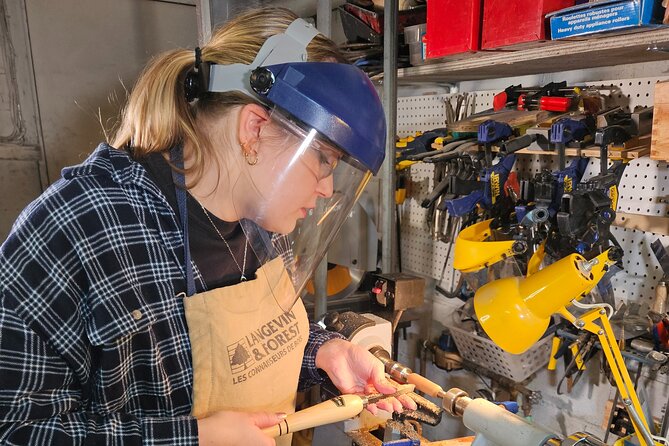
One of the most personal choices comes before the turning begins: selecting the wood for your pen.
You can choose from a range of beautiful local and exotic woods. The exact selection may vary, so you should not book expecting a particular species or color. Still, having options lets you create something that feels more personal than a standard kit.
Think about what you want from the finished pen. A bold grain may give the pen a more decorative look, while a simpler piece may feel understated and traditional. The workshop description does not specify the available colors, patterns, or pen hardware, so your choice will depend on what is on hand during your session.
This is also where the activity gains its creative side. You are not only learning a mechanical process. You are making decisions about the object’s final appearance. If you enjoy hands-on crafts, that choice should be one of the most satisfying parts of the afternoon.
Watching the Full Pen-Making Demonstration
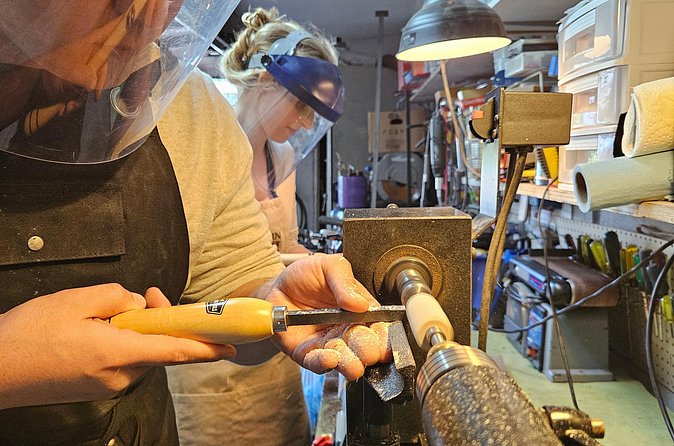
Before you take over, you watch a detailed demonstration from start to finish. The demonstration covers the full path from raw wood to assembled pen.
You see how the wood is turned and shaped, then how the profile is refined. Sanding follows, along with polishing and assembly. Seeing every stage first gives you a clear picture of the final goal.
That order is helpful because many crafts look simple only after someone has finished them. A rounded pen may seem straightforward until you consider how much depends on an even shape, smooth surface, and careful finishing. The demonstration lets you see the sequence before you attempt it.
I would pay close attention to the sanding and polishing steps. The turning may be the most visually dramatic part, but the finish is what makes the pen feel complete. A rushed surface can spoil an otherwise good shape.
Your Turn at the Lathe
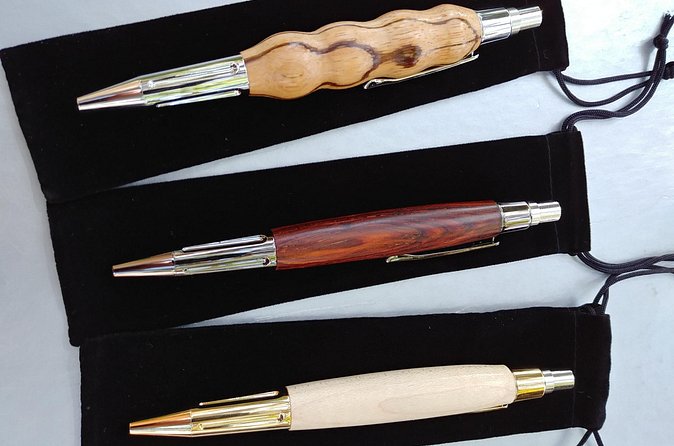
The central part of the activity is your own time at the lathe. With guidance, you operate the machine and work the wood into the shape of a pen.
This is where the workshop differs from a typical demonstration. You are not just taking notes or watching a professional make something quickly. You get to make choices, adjust your work, and see the material respond.
You should expect instruction as you go. The activity is presented as suitable for beginners, and the safety briefing and demonstration prepare you for the hands-on stage. At the same time, you should not expect the instructor to do every difficult part for you. The value comes from taking part.
Jonathan is the named instructor associated with the experience. The available feedback describes him as a wonderful teacher who kept the mood relaxed, fun, and full of laughs while guiding participants toward a one-of-a-kind souvenir. That combination matters. A workshop can be technically sound but tense, especially for a beginner. A calm instructor makes it easier to ask questions and keep working when your first attempt needs correction.
The group size is capped at nine people. That is not a private lesson, but it is small enough to offer a more personal setting than a large class. You may still need to wait briefly while others work, yet the group limit should help keep instruction manageable.
Shaping, Sanding, and Polishing the Pen
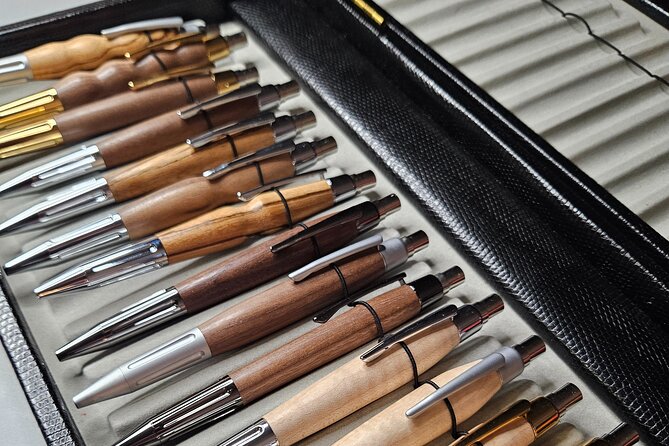
The pen-making process includes several distinct stages, and each one has a different feel.
Turning removes wood and establishes the basic shape. Profiling refines that shape, giving the pen its final lines and proportions. These stages require attention because uneven pressure can change the result.
Sanding is slower and more patient. It smooths the surface and prepares the wood for polishing. This is the part where you may need to resist the urge to hurry. The final appearance depends heavily on how carefully you prepare the surface.
Polishing brings out the character of the wood. The grain you selected earlier becomes more visible, and the pen begins to look like a finished object rather than a workshop project.
The exact technique and equipment are not described in detail, so I would avoid expecting a particular finish or professional-grade result. Your pen will be shaped under instruction, but it is still your work. Small irregularities may be part of its character.
Assembly and Taking the Pen Home
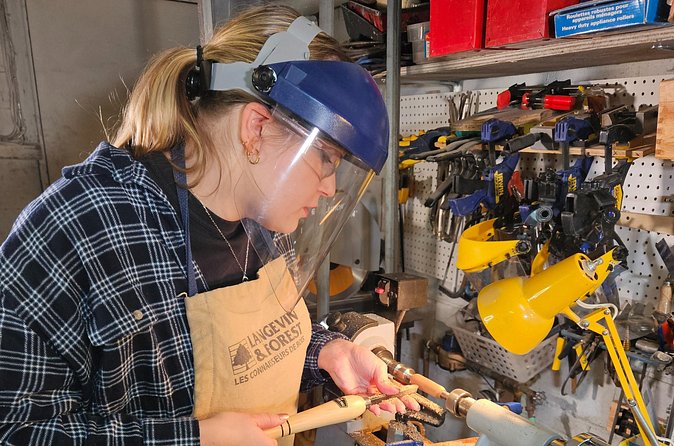
After turning, shaping, sanding, and polishing, you assemble the pen. This final stage gives the project its practical purpose.
Assembly can be easy to overlook, but it is what changes the shaped wood into a working writing instrument. You get to see how the parts come together and leave with an object you can use or display.
The finished pen makes this activity especially appealing for visitors who want a tangible reminder of Montreal. It is small, easy to carry, and more personal than a mass-produced item. You can also explain how it was made, which adds a story to the souvenir.
The workshop does not list gift packaging, shipping, or replacement parts. If you are making the pen as a present, ask about those details before the session.
Is $161.10 a Fair Price?
At $161.10 per person, this is not a bargain activity. You are paying for about three hours of instruction, access to a woodworking setup, materials, guidance at the lathe, and a finished pen to take home.
The value depends on what you want from a Montreal experience. If you only need a small souvenir, you can spend far less in a shop. If you want to learn a new craft and make the item yourself, the price is easier to justify.
I see this as a good fit for someone who values the process as much as the result. The fee covers more than the pen. It also buys a structured lesson, supervised machine use, and time with an instructor who guides you through each stage.
The price may feel high for families, especially if several people want to participate. It may make more sense for a couple, a small group of friends, or a single visitor who enjoys craft workshops and wants one memorable project.
The experience is booked an average of 61 days ahead. That suggests you should plan early, especially if your Montreal dates are fixed. The maximum group size of nine may help preserve the quality of instruction, but popular dates can still fill before your trip.
Who Will Enjoy This Workshop Most?
I would recommend this activity to adults and older children who enjoy making things with their hands. It also suits visitors who prefer a creative activity to another sightseeing stop.
It can work well for:
- Couples looking for a shared project
- Small groups who want a practical souvenir
- Solo visitors who enjoy meeting an instructor through a structured activity
- Beginners curious about wood turning
- People who like useful objects more than decorative souvenirs
The workshop may be less appealing if you want a fast, passive activity or a broad introduction to Montreal. It is not a city highlights tour, and it does not include multiple stops or cultural performances.
You should also consider your comfort with concentrating around equipment. The activity is designed to be accessible to most people, but it still involves following instructions and taking safety seriously.
Booking, Timing, and Cancellation
The activity is offered in English and includes a mobile ticket. That makes it simple to keep the confirmation on your phone while moving around Montreal.
Free cancellation is available if you cancel at least 24 hours before the local start time. Cancellations made less than 24 hours in advance are not refunded, and late changes are not accepted. Keep that deadline in mind if your itinerary may shift.
The organizer also invites you to ask about alternate times. This is useful if the standard schedule does not match your plans, but contact the organizer before assuming a different slot is available.
Should You Book Pen Making With the Woodworker Himself?
Book it if you want to spend three hours making something from start to finish, and if a handmade souvenir means more to you than a quick purchase. The choice of wood, the time at the lathe, and Jonathan’s relaxed teaching style give the activity a personal feel.
Skip it if $161.10 feels too steep for a single pen, or if you would rather use your Montreal time for museums, food, or city sightseeing. This is a focused workshop, not a general tourist attraction.
For the right person, the finished pen is only half the value. The better souvenir is knowing how a rough piece of wood became something you made yourself.
FAQ
How long does the pen-making workshop last?
The activity lasts approximately three hours.
Where does the experience begin?
It begins at 4710 Rue Saint-Ambroise, Montréal, QC H4C 2C7, Canada.
Where does the activity end?
The workshop ends back at the meeting point.
What language is the experience offered in?
The experience is offered in English.
How many people can join the workshop?
The activity has a maximum of nine participants.
Can I choose the wood for my pen?
Yes. You can choose from a selection of local and exotic woods.
Can I cancel for a full refund?
Yes, if you cancel at least 24 hours before the experience start time. Cancellations made less than 24 hours before the start time are not refunded.
Just added in Montreal
- Winter Express: Old Montreal Highlights Walking Tour★ 5.0 · 119 reviews
- Under the Surface of Montreal’s Chinatown: Guided Food Walking Tour★ 5.0 · 23 reviews
- Montréal Downtown and Underground City Private Walking Tour★ 5.0 · 47 reviews
- In the Shadow of the Mountain: Montreal Jewish History Walking Tour★ 4.5 · 33 reviews
- Montreal Premium Driving Tour with River Cruise and Notre Dame★ 4.5 · 164 reviews
- Full Day Family Bike Rental★ 5.0 · 17 reviews
- Day at Mont-Tremblant National Park★ 4.0 · 5 reviews
- Toronto, Niagara Falls & Thousand Islands VIP 2–Day Trip★ 5.0 · 20 reviews
Tours in Montreal, compared.




Montreal Mile End Authentic Food Tour with 7 Delicacies Tastings
Read our review →
The Original Old Montréal Walking Tour by Guidatour
Read our review →
Old Montreal Small-Group Walking Tour | Max 10 | by MTL Detours
Read our review →
Montreal City Sightseeing Tour with Live Commentary
Read our review →
Browse the lists this tour appears in