
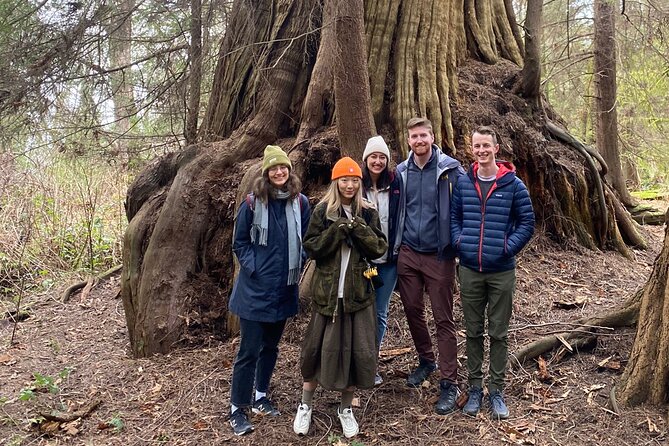
Reviewed · WALKING TOURS
Ancient Trees of Vancouver Walking Tour
The most startling thing about this tour is the age of the trees. In the middle of Vancouver, you can walk past western red cedars that may be 1,000 years old and Douglas firs that have watched centuries pass. Colin Spratt, a big-tree specialist and member of the BC Big Tree Committee, gives these giants a voice through science, local history, and vivid stories.
I like the small group limit of 10, which makes it easier to hear, ask questions, and pause beside a tree without feeling rushed. I also like the use of old maps, photographs, and 120-year-old postcards. They help you see Stanley Park as a changing place, not just a pretty patch of forest.
The main consideration is the price, $56.33 per person, for a three-hour walking tour that does not include transport to Ferguson Point. It is good value if you care about trees, history, or conservation, but it may feel too specialized if you only want a quick stroll through the park.
Key points to know before you book
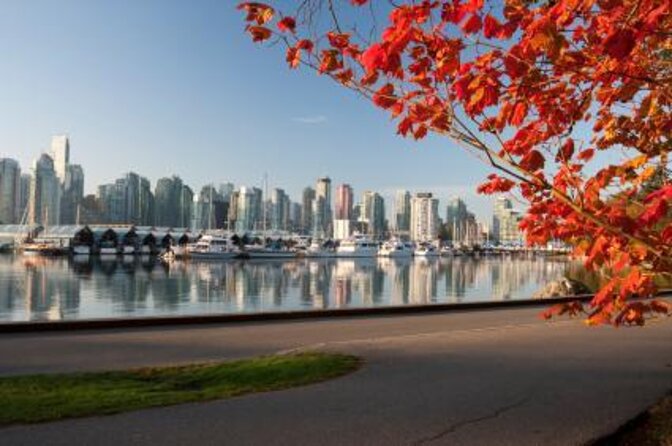
- Ancient trees in an urban park: See old-growth western red cedars, Douglas firs, and notable maple trees within Stanley Park.
- Colin Spratt leads the walk: His work with large and old trees shapes the tour’s focus on ecology, history, and conservation.
- Historic visual material: Old maps, archival photographs, and 120-year-old postcards add context as you walk.
- Small groups make a difference: A maximum of 10 people keeps the experience personal and easier to follow.
- A three-hour forest outing: Morning and afternoon departures give you some flexibility when planning your day.
- Free cancellation with notice: You can cancel up to 24 hours before the start time for a full refund.
Why Stanley Park’s old trees are the real attraction
Stanley Park is often treated as Vancouver’s big outdoor playground, but this walk takes you beyond the usual seawall views and open lawns. You follow park trails into areas where enormous trees reveal the much older story of the peninsula.
The forest is the reason to book this tour. You are not simply looking at tall trees and taking photographs. Colin explains how old-growth forests work, how trees age, and why a tree can remain alive even when much of its interior is hollow or decaying.
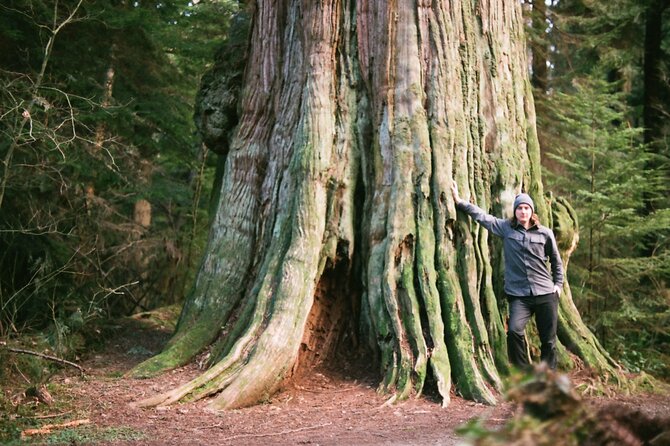
You may see western red cedars with broad, weathered trunks and unusual crowns shaped like candelabras. Some old cedars are hollow, yet they continue to shelter life. A fallen trunk can become a nurse log, feeding seedlings and fungi as it breaks down. The forest floor becomes a record of one generation helping the next.
The tour also includes towering Douglas firs, including trees described as roughly 600 to 800 years old, along with cedars estimated at 1,000 years or more. One maple is presented as the largest known maple tree in Canada. These numbers are impressive, but Colin’s explanations give them meaning. You learn how such ages are estimated and why the survival of even one ancient tree matters.
Other walking tours in Vancouver:
- Gastown Historic Walking Food Tour
★ 5.0 · 1,863 reviews - Vancouver Lost Souls of Gastown Walking Tour
★ 5.0 · 1,273 reviews - A Wok Around Chinatown: Culinary and Cultural Walking Tour Led by a Chef
★ 5.0 · 610 reviews
Meeting Colin Spratt at Ferguson Point
The walk begins at Ferguson Point, at 7501 Stanley Park Drive. You meet there and return to the same point at the end, so you do not need to arrange a separate pick-up or drop-off.
Colin Spratt is central to the experience. He is described as an expert big-tree seeker and a member of the BC Big Tree Committee. His subject is narrow in the best possible way: he has spent serious time learning how large, old, and unusual trees are identified and protected.
I like guides who can connect facts to a place, and Colin’s approach does that. He links the trees to Vancouver’s development, local conservation efforts, forest ecology, and the people who lived here long before Stanley Park became a city park.
His style also seems well suited to questions. Families with children from ages 7 to 11 have found that he can keep younger minds involved, while adults can follow the more detailed discussion of tree biology, history, and forest management. That mix matters because a three-hour walk can feel long if the guide only recites names and measurements.
Walking among cedars that can outlive cities
The route uses park trails and is described as an easy walk. Still, you should plan for three hours on your feet. This is not a quick photo stop, and the pace includes time to examine trees, discuss details, and look at historical material.
One of the most memorable ideas is the cedar’s role as what Coast Salish people viewed as a tree of life. The tree supplied materials for longhouses, canoes, clothing, rope, and other daily needs. Cedar bark and wood were not just raw materials. They were part of daily life and cultural practice.
The walk also explores how Indigenous people assessed a tree before carving a canoe, including the use of antlers to test the wood. Details like this help you understand the practical intelligence behind traditional forest use. They also remind you that the forest was not an empty wilderness waiting for a modern park to arrive.
Colin connects the trees to the original Coast Salish inhabitants who called this area home for thousands of years. That context is important. Stanley Park is not only a scenic urban park, and its story does not begin with Vancouver’s municipal history.
Old maps and postcards make the past visible
Many nature walks explain what you are seeing now. This one also shows how the setting changed over time. Colin uses old maps, photographs, and postcards from archives, including postcards dating back about 120 years.
These visual aids are a smart touch. A map can show how the park and city developed. A postcard can reveal which trees or viewpoints caught public attention in an earlier era. A photograph can help you compare a familiar place with its former appearance.
I find this especially useful if you have already seen Stanley Park on your own. Instead of repeating the standard park route, the tour gives you a new way to read the surroundings. You begin to notice how logging, conservation, urban growth, and public use affected the remaining old-growth forest.
The historical material also keeps the tour from becoming a narrow botany lesson. You get Vancouver history, forest science, Indigenous connections, and conservation in one walk. The balance is one of the strongest reasons to choose this experience.
Other guided walks in Vancouver:
- Vancouver: Gastown Historical Walking Food Tour
★ 4.8 · 539 reviews - The Forbidden Downtown and Gastown Walking Tour
★ 5.0 · 476 reviews - Gratuity-Based Vancouver City Highlights 3 Hour Walking Tour
★ 4.5 · 320 reviews - Quebec City Walking Tour
★ 5.0 · 4,716 reviews
What you learn about forest life and decay
The tour does not present ancient trees as frozen monuments. Colin explains that decay is part of a living forest.
A fallen trunk can support seedlings and other species as it slowly breaks down. This nurse-log process shows how old trees continue to help the forest after they fall. The idea that much of a tree can be dead while still protecting and feeding new life is one of the more striking lessons from the walk.
You may also learn why some massive cedars are hollow and how hollows can serve as shelter for animals, including bears. The point is not simply that an old tree looks dramatic. Its age, decay, cavities, roots, bark, and fallen limbs all create habitat.
The oldest cedars can have distinctive crown shapes, with high branches arranged like candelabras. These forms are clues to age and long-term growth. Colin’s attention to such details changes the way you look at trees after the tour. A trunk is no longer just a trunk. You start noticing scars, hollows, branching patterns, and the signs of renewal around it.
The conservation message is practical, not abstract
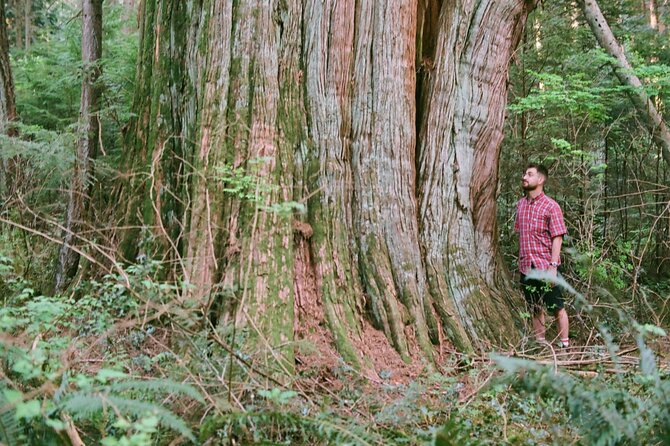
Ancient trees grow slowly. Once lost, they cannot be replaced on a human timetable. This walk explains the ecological importance of old-growth forests and the threats they face today, while also showing their ability to recover and support new life.
That mix of fragility and resilience gives the tour weight. You are not asked to admire the trees without context. You learn why protecting old forest matters and how one ancient tree can support many other organisms.
The conservation message may be the most lasting part of the experience. Several hours after the walk, you may find yourself looking at ordinary street trees differently. That is a fair measure of a good nature tour: it changes what you notice after you leave.
The subject is serious, but the tone is not presented as a lecture. Colin’s humor, personal stories, and enthusiasm help keep the walk engaging. His passion is clear, yet the experience still leaves room for curiosity rather than turning into a sales pitch for one cause.
Is three hours too long?
For most people who enjoy forests, the three-hour length is a strength. It gives Colin time to explain the trees properly and connect them to the history of Stanley Park and Vancouver. The walk is long enough to feel like a real outing rather than a brief introduction.
If you are planning a busy day of museums, shopping, and city sights, the time commitment deserves thought. You need to reach Ferguson Point, take part in the walk, and return to the meeting point. There is no included pick-up or drop-off.
The morning and afternoon options help. You can fit the tour around other plans instead of giving up a full day. I would choose the time when you are least rushed, since the value comes from listening and looking carefully, not from ticking off a quick attraction.
The trails are described as easy, and most people can participate. Service animals are allowed. Even so, wear comfortable walking shoes and dress for changing outdoor conditions. Those are sensible precautions for any three-hour park walk, though the supplied information does not specify a required equipment list.
Who gets the most from this tour?
This is a strong choice for several kinds of visitors:
- Tree and nature lovers: You will get much more than a general park stroll.
- History-minded visitors: The walk connects ancient trees with Vancouver’s past, Coast Salish culture, logging, and conservation.
- Families with curious children: Colin’s patient approach and willingness to answer questions can help younger walkers stay engaged.
- Repeat visitors to Vancouver: The tour reveals less obvious parts of Stanley Park and gives familiar scenery new meaning.
- People who prefer small groups: With no more than 10 participants, the walk should feel more personal than a large guided outing.
It may not suit you if your priority is speed, sightseeing from a vehicle, or a highly active hike. It is also not the right choice if you want a tour focused mainly on Vancouver’s skyline, seawall, or major built attractions. The subject is firmly the forest and the stories held within it.
Is the $56.33 price fair?
At $56.33 per person, this is not a free park walk. You are paying for Colin’s specialized experience, a small group, a three-hour guided outing, and access to a way of seeing Stanley Park that is difficult to reproduce on your own.
The price makes more sense if you value interpretation. You could walk through the park without a guide, but you would likely miss the details about tree age, nurse logs, hollow cedars, ancient crowns, Coast Salish uses of cedar, and the historical changes shown in the maps and postcards.
Admission to Stanley Park itself is free, and transport to the meeting point is not included. That keeps the logistics simple but means you must get yourself to Ferguson Point. Group discounts are available, which may improve the value for families or friends booking together.
I would consider the tour good value for someone who wants a focused, expert-led experience. If you only want to see a few large trees, you can explore the park independently at no cost. If you want to understand what those trees mean and why they survived, the fee is easier to justify.
Booking, timing, and cancellation details
Confirmation is provided when you book. The experience is offered in English and has morning and afternoon departures.
You can cancel up to 24 hours before the start time for a full refund. Cancellations or changes made less than 24 hours before the start time are not accepted for a refund, and the cut-off uses local time.
The tour is often reserved well ahead, with an average booking time of about 46 days in advance. If your Vancouver dates are fixed, it is sensible to reserve early, especially if you want a particular morning or afternoon departure and the small group is important to you.
Should you book the Ancient Trees of Vancouver walk?
I would book it if you want an experience that combines nature, history, Indigenous context, and conservation in a single morning or afternoon. Colin Spratt’s specialty gives the walk a clear focus, and the old maps, photographs, and postcards add depth that a standard park stroll lacks.
I would skip it only if you have little interest in trees or cannot spare three hours for a guided walk. For everyone else, this is a thoughtful way to see Stanley Park. You will leave with more than pictures of giant cedars. You will understand how an old forest lives, dies, renews itself, and remains part of Vancouver’s identity.
FAQ
Where does the Ancient Trees of Vancouver tour begin?
The tour begins at Ferguson Point, 7501 Stanley Park Drive, Vancouver, British Columbia.
Where does the tour end?
The walk ends back at the Ferguson Point meeting point.
How long does the tour last?
The tour lasts approximately three hours.
How much does the tour cost?
The listed price is $56.33 per person. Group discounts are available.
How many people can join the tour?
The maximum group size is 10 participants.
Is the tour offered in English?
Yes. The tour is offered in English.
Can I cancel for a full refund?
Yes. You can cancel at least 24 hours before the experience start time for a full refund. Changes or cancellations made less than 24 hours before the start time are not accepted for a refund.
Just added in Vancouver
- Vancouver Bike or Ebike Rental – Self Guided Map provided★ 5.0 · 149 reviews
- Private Transfer from Vancouver Airport (YVR)★ 4.5 · 89 reviews
- Vancouver to Victoria Scenic Seaplane Transfer: One Way★ 4.5 · 184 reviews
- Private Arrival Transfer from Vancouver Airport (YVR)★ 3.5 · 81 reviews
- Vancouver to Victoria – Coach Bus Transfer★ 4.5 · 175 reviews
- Vancouver Airport to-or-from Whistler by Express (One-Way)★ 4.5 · 181 reviews
- Vancouver Sightseeing Boat Cruise with Live Tour Guide★ 5.0 · 222 reviews
- Vancouver: Waterfront Sightseeing Tour – City and Harbour★ 4.9 · 227 reviews
Walking Tours, compared.
Old Quebec City: Grand Walking Tour with Private Option
Read our review →
The Original Old Montréal Walking Tour by Guidatour
Read our review →
Old Montreal Small-Group Walking Tour | Max 10 | by MTL Detours
Read our review →
Old Quebec Classique Walking Tour with Funicular
Read our review →

Quebec: Crimes of New France Animated Walking Tour
Read our review →Browse the lists this tour appears in