
Reviewed · TOURS IN MONTREAL
Discover Montreal’s Underground City – Reso
Montreal’s RESO is less a single underground attraction than a second city below the streets. The useful trick is learning how its passages connect. This two-hour walk takes you through that maze, from public art and the Berlin Wall to shopping areas, Metro links, and the main train station. Misha guides the route, explains what you are seeing, and gives you practical help for using the system later.
I like the small groups of no more than 10 people, since you can ask questions without shouting across a crowd. I also like the mix of odd sights, local history, and useful navigation. The drawback is simple: this is a walking tour with stairs, escalators, and some Metro movement, so it is not a gentle sit-down outing.
Key points
- A working city below the city: Learn how Montreal’s RESO connects malls, shops, offices, public art, Metro stations, and Central Station.
- Small-group guiding: Groups are capped at 10, giving you more time to ask Misha questions and stay together.
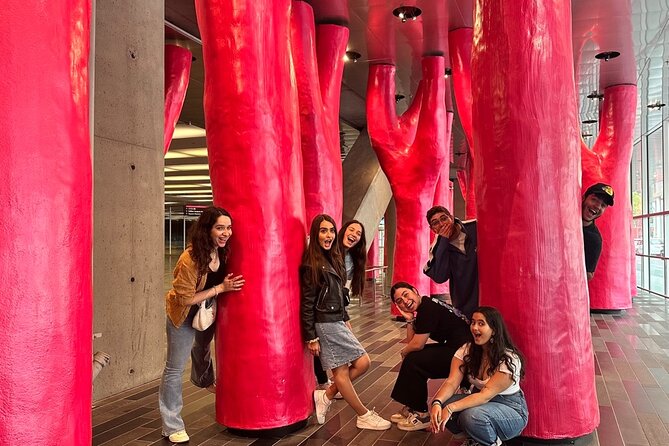
- Unexpected sights: The route includes the Berlin Wall, Amphitrite, Lipstick Forest, an indoor skating rink, and Marche Saint Laurent.
- Practical Metro advice: You get a quick working lesson in navigating Montreal’s underground passages and subway system.
- Good all-weather value: The tour costs $30.04 and lasts about two hours, making it a useful first-day orientation.
- A route with some effort: Expect lots of walking, plus stairs, escalators, and possible subway travel.
Montreal’s RESO is a city under your feet
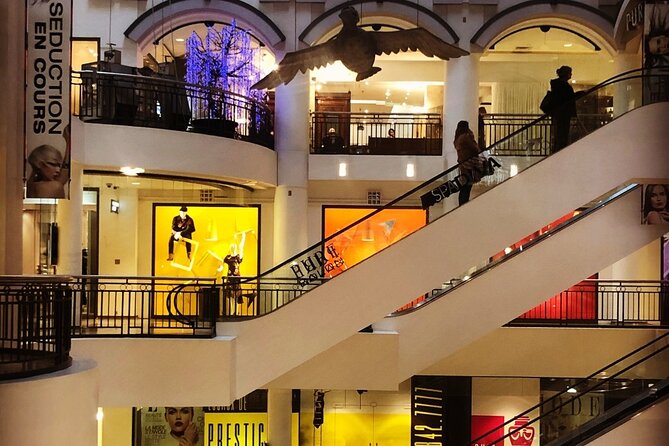
Montreal’s Underground City is often pictured as one enormous shopping center. That picture is too simple. The RESO is a linked network of passages, commercial spaces, Metro connections, train access, public art, and indoor attractions spread through central Montreal.
That mix is what makes the place interesting, and what can make it confusing. One passage may feel like a mall corridor, the next like a transit tunnel, and another like the entrance to an office or cultural space. Without guidance, it is easy to lose your sense of direction.
This tour gives you a working map in your head. You are not only shown what is underground. You are shown how the pieces relate to the city above, which is much more useful if you plan to return on your own.
The experience lasts about two hours and costs $30.04 per person. I see that as fair value if you are visiting Montreal in winter, dealing with poor weather, or staying downtown and expect to use the RESO more than once. It is also useful on a first visit because it gives you a quick orientation to the Metro and central shopping districts.
Other trips people book in Montreal:
- Montreal: Guided Bus Tour
★ 4.4 · 3,064 reviews - Montreal: Hop-On Hop-Off Double-Decker Bus Tour
★ 4.1 · 2,760 reviews - From Montreal: Quebec City and Montmorency Falls Day Trip
★ 4.5 · 2,669 reviews
Starting outside Cathcart near Time Out Market
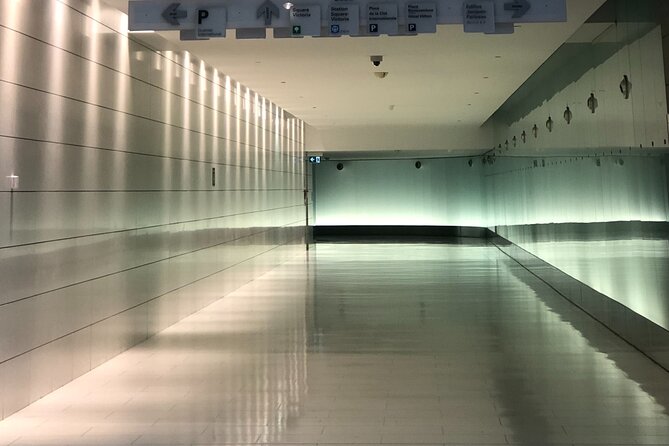
The meeting point is 175 Boulevard René-Lévesque Ouest, in central downtown Montreal. The instructions place the start outside The Cathcart, with Time Out Market nearby, so you have a recognizable food and meeting area close at hand.
That location matters. The Cathcart and Time Out Market sit in a part of downtown where several indoor routes meet, making it a practical place to begin a tour about Montreal’s connected interior spaces. You should still arrive with enough time to locate the exact meeting spot, since a large complex can have several entrances.
The end point is listed as The Ring1048, near the Cathcart area in central downtown. The supplied directions also describe Time Out Market as right beside the end area. Since the route involves several indoor connections, do not assume the group will finish at the same door where it began.
You receive a mobile ticket, and confirmation is provided when you book. The tour is near public transportation, which fits the subject nicely. The guide may use the Metro as part of the route, and several people found the tour helpful for understanding the system after the walk.
Berlin Wall and Amphitrite: art with a Montreal setting
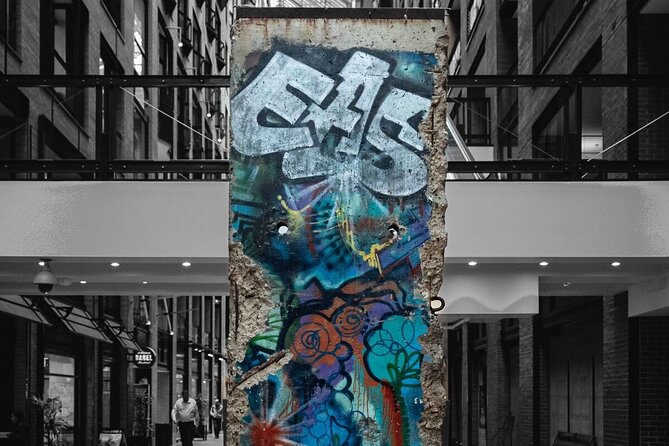
The route includes a section of the Berlin Wall and the statue of Amphitrite, wife of Poseidon. These are the sort of details that make the RESO more than a way to escape cold weather.
The Berlin Wall fragment connects Montreal to a major piece of twentieth-century history. Underground, it appears in a setting you might not expect, surrounded by the daily movement of downtown rather than displayed in a traditional museum room. That contrast gives the stop its force.
Amphitrite brings a different mood. A mythological statue in the middle of a modern commercial and transit network is a good example of the RESO’s unusual character. You can be looking at public art one minute and finding a mall or Metro connection the next.
Misha’s role is important here. A guide can point out these pieces quickly, but a good guide also tells you why they are there and helps you remember where you saw them. The tour’s strongest pattern is this combination of orientation and small discoveries.
Marche Saint Laurent and the Lipstick Forest
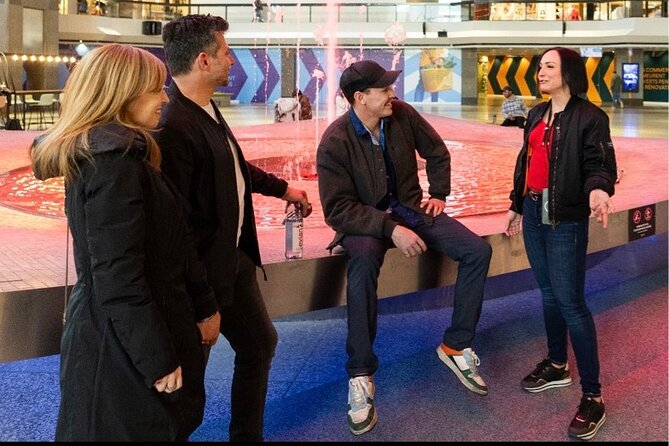
Marche Saint Laurent is another stop on the route. The name suggests a market setting, but the more surprising feature here is Lipstick Forest, an installation made up of lipstick-shaped forms.
This is a good pause in the tour because it shows how much the underground route varies. You are not simply following a corridor from one station to another. The walk includes places made for shopping, public gathering, decoration, and passing through.
The name Lipstick Forest is memorable, which helps you keep the route in your mind later. Montreal’s underground spaces can blur together, particularly when you are trying to follow signs in a hurry. A distinctive installation gives you a visual marker.
Do not expect every stop to be a major attraction on its own. The value comes from the sequence. The art, retail areas, transit passages, and indoor spaces explain how the RESO works as a whole.
Same base, a different sort of day:
- Montreal Mile End Authentic Food Tour with 7 Delicacies Tastings
★ 5.0 · 2,598 reviews - Quebec City and Montmorency Falls Day Trip from Montreal
★ 4.0 · 2,437 reviews - The Original Old Montréal Walking Tour by Guidatour
★ 4.5 · 2,217 reviews - Old Montreal Small-Group Walking Tour | Max 10 | by MTL Detours
★ 5.0 · 2,088 reviews
An indoor skating rink and the cruise-ship feeling

The itinerary includes an indoor skating rink, one of the tour’s more unexpected sights. It helps explain why people compare parts of the Underground City to a cruise ship.
The comparison makes sense as a description of the atmosphere, not the architecture. You move through a self-contained world where shops, food, entertainment, recreation, and transport are close together. You can spend much of a day inside without needing to return outdoors for every errand.
That convenience is especially useful in Montreal’s colder months. The tour does not promise that every part of the RESO feels elegant or scenic. Some stretches are functional, and some are more commercial than cultural. But the indoor rink shows how the network supports ordinary city life, not just sightseeing.
For you, this stop may also be a reminder to keep your eyes open. The best parts of the RESO are not always marked like formal attractions. They may be a rink, artwork, a connecting hall, or an unexpected view into a busy indoor space.
Montreal’s main train station and the logic of the network
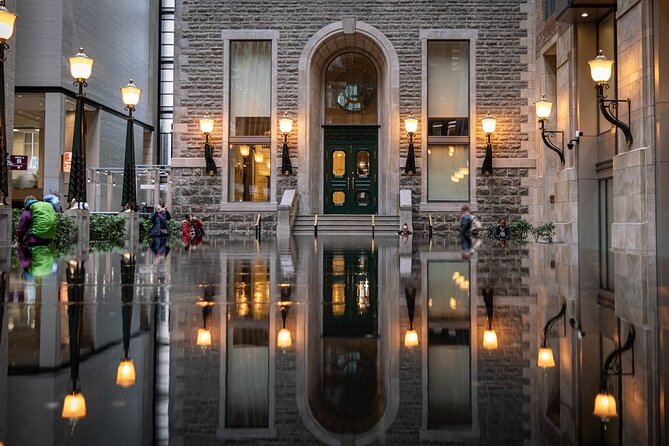
Montreal’s main train station is included in the route. This gives the tour a useful transport angle and helps you understand that the RESO is tied to major arrival and departure points.
A train station is a practical anchor. If you arrive by rail, stay downtown, or need to connect between different parts of the city, knowing how the station fits into the underground system can save time and frustration.
The tour also includes passage through the RESO itself and a landmark stop. The supplied details do not identify the landmark by name, so you should treat that part as an additional point of interest rather than expect a particular famous monument.
What you can count on is a route built around connections. Misha explains how the passages link to key sights, shopping areas, and the Metro. That makes the tour especially helpful if you prefer to understand a city by moving through it instead of standing in one place listening to a long lecture.
Why the Metro lesson may be the tour’s best feature
Several people found the tour useful because it improved their confidence with Montreal’s Metro. That is a major benefit, since the RESO and the Metro are related but not identical. It is possible to understand one poorly if you do not see how the two fit together.
You will walk through the central network, encounter Metro connections, and get help with the basic logic of moving around. The tour is not presented as a full transit class, but it gives you a practical start.
I would take this tour early in a Montreal visit, ideally near the beginning of your stay. The payoff grows each time you later use an underground passage, locate a shopping area, or connect with the Metro without going outside.
One particularly useful feature is the small map mentioned by visitors on the tour. A physical map can be easier to consult than a phone when you are standing in a busy passage and trying to match signs with your position.
The route can also help you plan meals and later stops. Misha has shared local suggestions, including a brunch recommendation that became a highlight for one person’s Montreal visit. That kind of advice is useful, but remember that restaurant suggestions can change, so treat them as a starting point rather than a guarantee.
Misha’s guiding style and group size

Misha is the guide named throughout the tour information. Her role appears to cover both the city’s history and the practical details of moving through the RESO.
The strongest praise centers on her warmth, clear explanations, local perspective, and ability to answer questions. She has also guided groups in both English and French, which may be helpful for visitors who are comfortable hearing both languages.
The limit of 10 people is one of the tour’s biggest advantages. You can stay close to the guide, ask about a confusing connection, and hear explanations without being part of a large crowd. The group size also makes it easier to notice whether everyone is keeping up.
This is not a formal museum tour. The tone is more like a walking orientation with stories, public art, cultural information, and local tips. If you want a tightly scripted historical lecture, the format may feel loose. If you want to learn how the city works while seeing unusual places, it should suit you well.
Walking effort, timing, and who should book
The activity is about two hours, and the duration is well suited to the subject. A shorter tour might leave you with only a vague idea of the network. A much longer one could become tiring, since the passages can feel repetitive after a while.
You should expect lots of walking, with a mix of stairs, escalators, and subway travel. The stated fitness requirement is moderate physical fitness. That does not mean you need to be athletic, but you should be comfortable moving through a large indoor route for two hours.
I would recommend it to:
- First-time visitors staying downtown
- Anyone visiting in winter or during poor weather
- People who want to use the Metro with more confidence
- Visitors who enjoy public art and unusual city spaces
- Families who prefer an active, educational outing
- Solo visitors who like meeting a small group while exploring
I would be more cautious if you have difficulty walking, stairs are a problem, or you want a slow tour with frequent sitting breaks. The supplied information does not give detailed accessibility arrangements, so ask the operator before booking if you need specific assistance.
Is $30.04 good value?
At $30.04 per person, the tour is inexpensive compared with many guided city activities. The value does not come from one major admission included in the price. It comes from the guide’s route planning, explanations, local advice, and the time saved from trying to make sense of the RESO alone.
You are paying for orientation as much as sightseeing. If you only want to see one artwork or pass through a mall, you can do that without a tour. If you want to understand how the full system fits together, the fee is easier to justify.
The price is also reasonable for a two-hour small-group experience capped at 10 people. You get a more personal format than a large walking group, along with practical information you can use for the rest of your visit.
Free cancellation is available if you cancel at least 24 hours before the start time. Cancellations made less than 24 hours ahead are not refunded, and late changes are not accepted.
Should you book the RESO tour?
Book it if you want to make Montreal’s Underground City useful rather than merely curious. The route gives you art, history, shopping connections, an indoor rink, the main train station, and Metro guidance in one compact walk.
I would especially book this near the start of a winter visit or a downtown stay. You will finish with a better sense of how to get around, and you may return to the passages on your own with far less guesswork.
Skip it if you dislike walking indoors, prefer outdoor architecture, or have no interest in transport systems and commercial spaces. For most visitors who want a practical introduction to a strange and surprisingly large part of Montreal, the small group, Misha’s local guidance, and the $30.04 price make this a sensible choice.
FAQ
How long does the Discover Montreal’s Underground City tour last?
The tour lasts approximately two hours.
How much does the tour cost?
The listed price is $30.04 per person.
Where does the tour start?
It starts at 175 Boulevard René-Lévesque Ouest, Montreal, Quebec H2X 3Y2, Canada.
Where does the tour end?
The listed end point is The Ring1048 in Montreal, near the Cathcart area in central downtown. Time Out Market is beside the end location.
Is the tour available with a mobile ticket?
Yes. The experience includes a mobile ticket, and booking confirmation is provided at the time of booking.
How many people can join the tour?
The tour has a maximum of 10 people.
What level of fitness is needed?
A moderate level of physical fitness is recommended. The route includes lots of walking, stairs, escalators, and subway travel.
Does the tour include public transportation?
The tour is near public transportation and includes guidance related to Montreal’s Metro system. The route may also involve subway travel.
Can I cancel for a full refund?
Yes, if you cancel at least 24 hours before the experience start time. Cancellations made less than 24 hours in advance are not refunded.
Just added in Montreal
- Winter Express: Old Montreal Highlights Walking Tour★ 5.0 · 119 reviews
- Under the Surface of Montreal’s Chinatown: Guided Food Walking Tour★ 5.0 · 23 reviews
- Montréal Downtown and Underground City Private Walking Tour★ 5.0 · 47 reviews
- In the Shadow of the Mountain: Montreal Jewish History Walking Tour★ 4.5 · 33 reviews
- Montreal Premium Driving Tour with River Cruise and Notre Dame★ 4.5 · 164 reviews
- Full Day Family Bike Rental★ 5.0 · 17 reviews
- The Ultimate Montreal Boat Tour – Fall Colors Apéro Edition★ 4.5 · 31 reviews
- Day at Mont-Tremblant National Park★ 4.0 · 5 reviews
Tours in Montreal, compared.


Montreal Mile End Authentic Food Tour with 7 Delicacies Tastings
Read our review →
The Original Old Montréal Walking Tour by Guidatour
Read our review →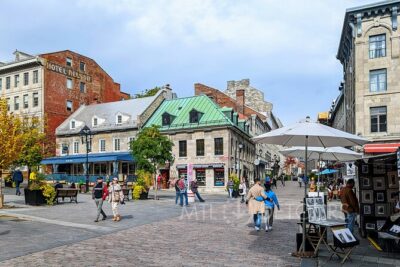
Old Montreal Small-Group Walking Tour | Max 10 | by MTL Detours
Read our review →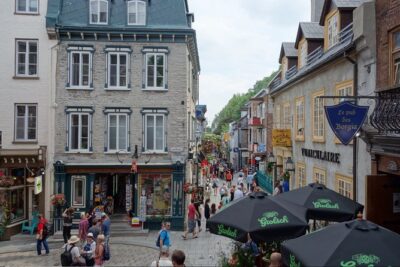
Montreal City Sightseeing Tour with Live Commentary
Read our review →
Browse the lists this tour appears in