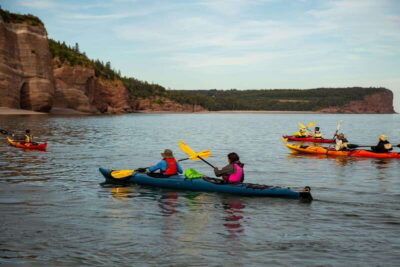
Reviewed · TOURS IN NEW BRUNSWICK
Hopewell Cape: Hopewell Rocks Admission
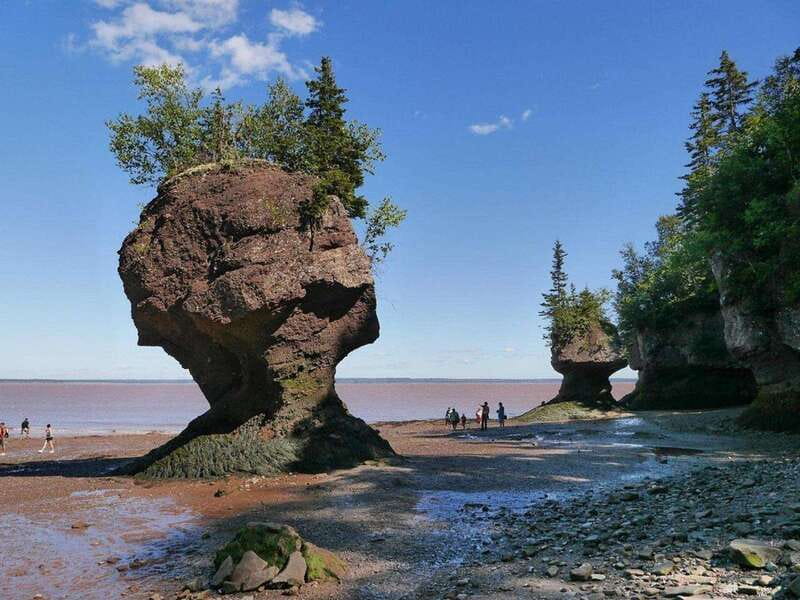
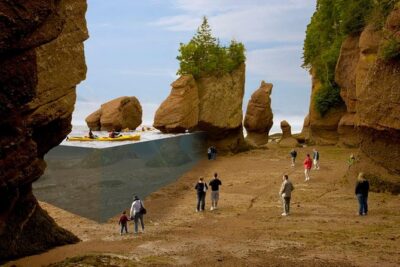
The Bay of Fundy does something remarkable here: it can hide the ocean floor beneath high water, then reveal it six hours later. At Hopewell Rocks, you get to see both sides of that change, with more than 20 giant sea stacks rising along roughly two kilometers of shore. The tide is the main event, not just background scenery.
I like the playful rock shapes, from Elephant and Bear to Dinosaur, ET, and Mother-in-Law. I also like the freedom to explore at your own pace, using forest trails, lookout points, and three different routes to the ocean floor. The main drawback is timing: you need the tide schedule, and the shoreline can be hard to manage if stairs, uneven ground, or wet footing are a problem.
Key points to know before you go
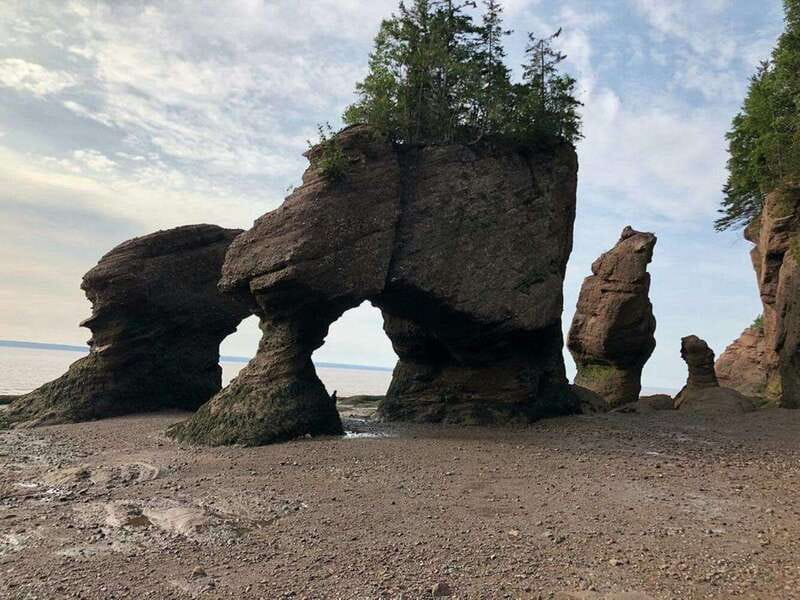
- Watch the ocean floor appear: Low tide reveals the shore that high tide covers completely.
- Look for named sea stacks: Elephant, Bear, Dinosaur, ET, and Mother-in-Law are the most memorable formations.
- Use three ocean-floor access points: Choose the 99-step Main Deck, the ramp near North Beach, or the gentler Demoiselle trail.
- Plan for two days: Admission passes are valid for two consecutive days, giving you a chance to see different tide stages.
- Allow time for more than the rocks: The Interpretive Centre, forest paths, lookouts, and meal stop make this more than a quick photo visit.
- Wear sturdy footwear: The shore is a natural surface, and the ocean floor is not suitable for wheelchairs.
Why Hopewell Rocks is about the tide, not just the rocks
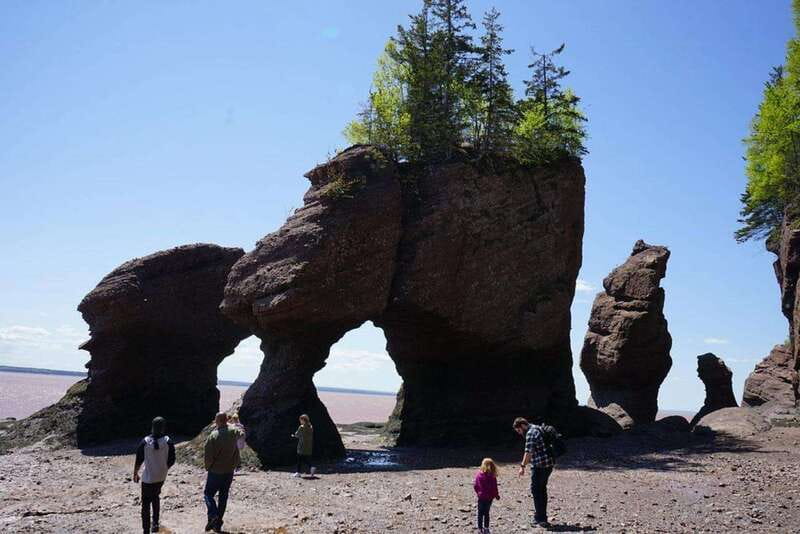
The famous flowerpot rocks are easy to admire, but the real reason to come is the changing water. The Bay of Fundy has the highest tides in the world, and those tides have slowly worn away the soft rock around harder cores. What remains is a line of tall, free-standing stacks along the coast.
At high tide, the bases of the rocks sit underwater. At low tide, you can walk along the exposed ocean floor and see the formations from below. That change gives the visit a useful rhythm: first look at the shore as a coastal scene, then return later to see the same place transformed.
I would not rush this into a short stop between other sights. The rocks deserve a tide-aware visit, and the pass being valid for two consecutive days helps. You can come once for a high-tide view, then return when the water has moved out. The supplied admission information also lists a 365-day booking validity, so check the dates and availability shown when you reserve.
The park is self-guided. That suits you if you like stopping for photographs, reading at your own pace, and deciding how far to walk. English-speaking interpretive staff are available around the site when you want help understanding the formations or the tide.
Other trips people book in Canada:
- Vancouver Half-Day Whale Watching Adventure with Free Photos
★ 5.0 · 5,000 reviews - Quebec City Walking Tour
★ 5.0 · 4,716 reviews - Niagara Falls: Premium Tour, Boat & Journey Behind the Falls
★ 4.8 · 4,207 reviews
Entering at the Interpretive Centre
Your visit begins at the ticket office, where you exchange your voucher for entry. The Interpretive Centre is a useful first stop rather than a place to skip on the way to the shore. Its multimedia exhibit helps explain how the Bay of Fundy tides work and why these unusual rock pillars formed.
This background matters because the rocks are easier to appreciate once you understand the process. You are not simply looking at oddly shaped cliffs. You are seeing the result of thousands of years of water and weather working around different types of rock.
The centre also gives you a chance to check the tide information before heading down. That is important for safety and for planning. You should know when low tide arrives and when the water will begin returning before you walk onto the ocean floor.
A warm meal is available during your visit, which is useful if you plan to stay for more than one tide stage. The information provided does not specify the menu or dining hours, so I would treat this as a convenient meal option rather than plan the entire day around it.
Following the trails through forest and to the lookouts
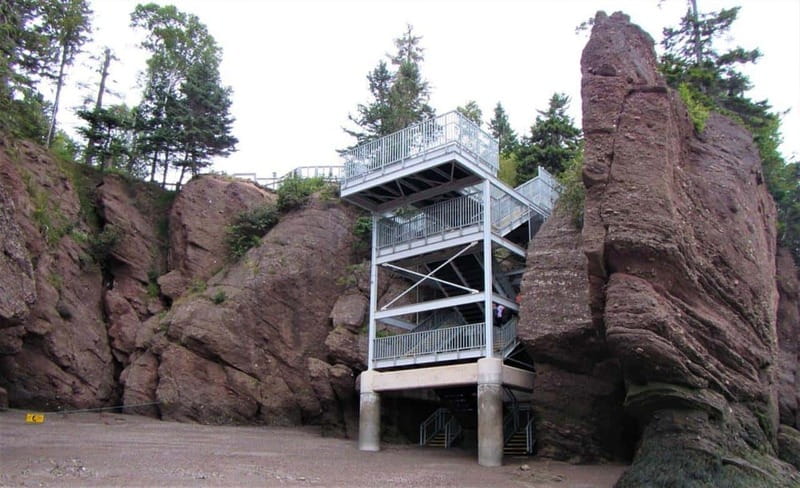
The trail system forms the backbone of the park. From the main building, you can reach lookouts, quieter views, ocean-floor access points, and natural forest areas on maintained paths.
These trails give you more than a single viewpoint. You can see the rocks from above before heading down, then compare that view with the close-up shapes along the shore. A short walk may suit you if you are focused on the main formations, while a longer stroll gives you more room to enjoy the coastal setting and views toward Shepody Mountain, Mary’s Point, and Grindstone Island.
The trails are described as wheelchair-friendly, but that does not make the full experience wheelchair accessible. The ocean floor itself is not suitable for wheelchairs, so you may need to enjoy the coastal views from the trails and platforms instead.
If you prefer to save your energy for the shore, a shuttle runs from the Interpretive Centre to the top of the stairway leading to the ocean floor for a nominal fee. The shuttle is a practical choice if walking the full route is not appealing, though the supplied information does not give its exact price or schedule.
Choosing your route to the ocean floor
Hopewell Rocks offers three main access points. Each one gives you a different balance of effort, scenery, and convenience.
Same base, a different sort of day:
- Banff: Banff Gondola Admission Ticket
★ 4.7 · 3,698 reviews - Toronto: Niagara Falls Day Tour with Optional Boat Cruise
★ 4.6 · 3,178 reviews - Best of Niagara Falls Canada Premium Tour: Behind Falls and Boat
★ 5.0 · 3,139 reviews - Montreal: Guided Bus Tour
★ 4.4 · 3,064 reviews
Main Deck and its 99 stairs
The Main Deck is the most direct route. A large metal staircase leads from a viewing platform down to the shore. You descend 99 stairs, then climb 101 steps back up after exploring the ocean floor.
This route is best if you want a clear, direct path and do not mind stairs. The platform gives you a strong view before you go down, and the stair count gives the visit a touch of comic drama. Your legs will know exactly how the tide got its turn.
The main concern is that stairs can be tiring, especially if you plan to walk along the shore afterward. Take your time on the return climb, and wear shoes with a firm grip.
North Beach and the ramp
A little farther toward North Beach, you can reach the shore by ramp. Benches are placed along the incline, giving you places to pause.
The ramp is described as suitable for wheelchairs, but the ocean floor itself remains difficult to navigate on wheels. That distinction is important. The route improves access to sea level, but it does not turn the rocky shoreline into a smooth, wheelchair-friendly path.
For you, this may be the best option if stairs are uncomfortable but you can manage natural ground once you reach the shore. If you need fully accessible terrain, plan to enjoy the viewing areas and trails rather than count on exploring the ocean floor.
Demoiselle and the gentler southern trail
The Demoiselle route begins behind the Interpretive Centre and gently descends toward sea level. It also gives you a broad view of the cliffside, Shepody Mountain, Mary’s Point, and Grindstone Island.
I like this option for the journey as much as the destination. It is less about getting down as quickly as possible and more about taking in the wider setting. The supplied details do not give an exact distance or walking time, so allow enough time to explore without forcing the pace.
The three routes mean you can choose based on your energy, mobility, and interest in scenery. You do not have to use the same access point in both directions.
Meeting Elephant, Bear, Dinosaur, and the other flowerpots
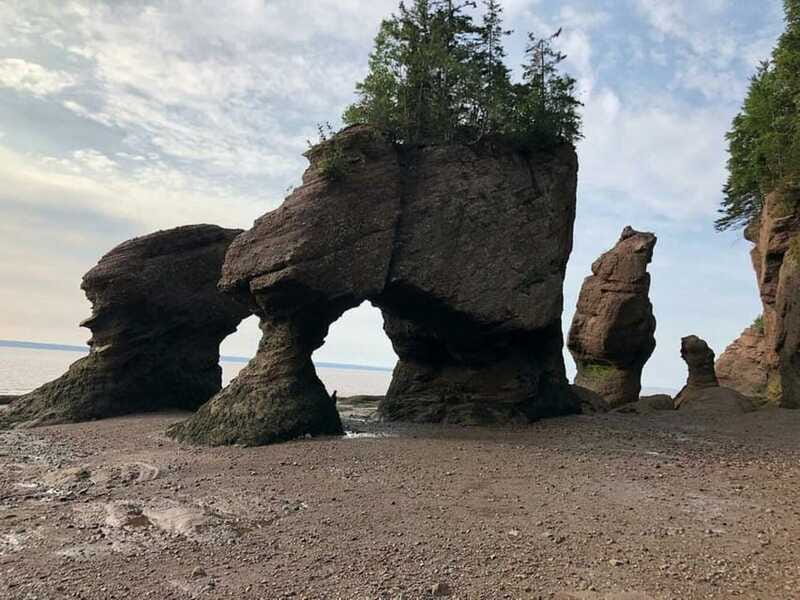
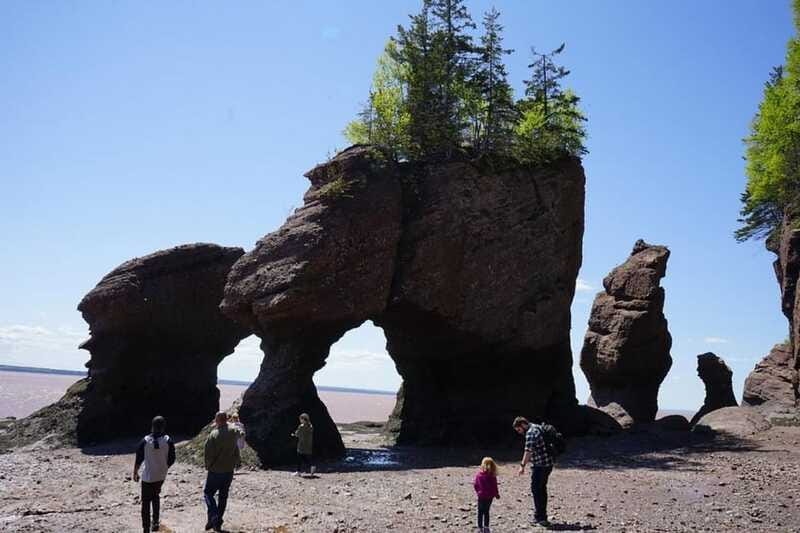
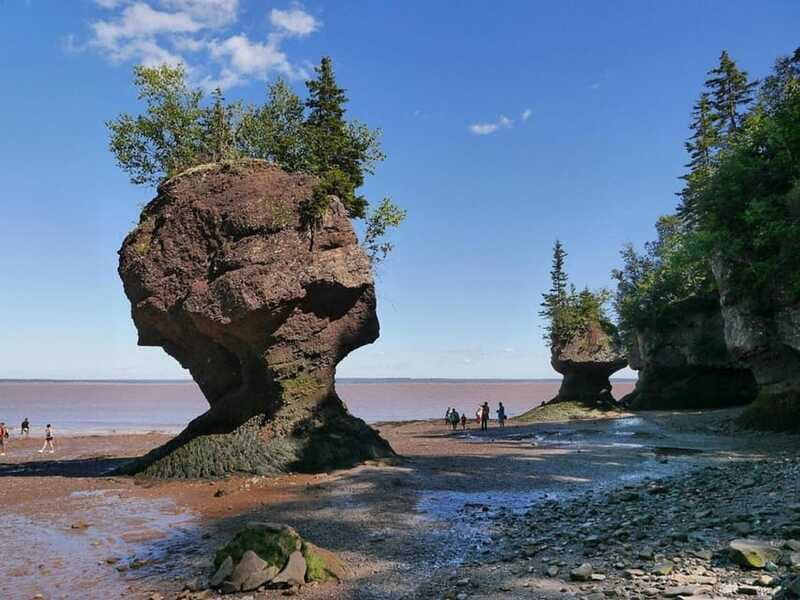
The sea stacks are also called flowerpots because many have narrow bases and wider tops, like trees or plants growing from the shore. Their shapes vary in size and outline, and the names help you notice details that might otherwise blend together.
Elephant, Bear, and Dinosaur are the easiest names to remember. ET and Mother-in-Law add a little local humor to the walk. The fun is not in finding a single correct shape. It is in looking again and spotting new characters as your angle changes.
At low tide, the formations feel especially large because you can approach their bases. You see the textures and contours that are hidden when water fills the shore. At high tide, the same rocks take on a more isolated look, rising from the water like offshore towers.
Photography depends heavily on the tide and the weather, neither of which is guaranteed to suit your plans. The strongest reason to return for a second tide stage is not only getting a different picture. It is seeing how completely the same place changes.
How to plan around high and low tide
Check the tide schedule before you arrive. This is both a safety step and the key to getting the most from the admission price.
The ocean floor should only be explored when the conditions make it safe. You need enough time to walk out, look around, and return before the water comes back in. The exact safe window depends on the tide schedule, so do not treat the six-hour change as a simple appointment with unlimited time.
If you have two consecutive days available, use them. One visit can focus on high tide and the upper lookouts. The other can be timed for low tide and shoreline access. That approach takes pressure off a single visit and gives you a better chance to see the park in two very different forms.
The experience is not a guided tour with a fixed departure time. It is a self-guided visit shaped by natural timing. That gives you freedom, but it also puts responsibility on you to check the schedule and respect the conditions.
What the $14 admission is worth
At $14 per person, this is a reasonably priced admission for a major Bay of Fundy sight. The value comes from the chance to use the trails, lookouts, interpretive centre, and ocean-floor access rather than simply viewing the rocks from a roadside stop.
The two-consecutive-day validity improves the value if your schedule allows a return. You can split your visit between high and low tide, which is the best way to see why Hopewell Rocks is more than a line of unusual stone pillars.
You are also paying for a maintained park setting, marked access points, interpretive information, and a place where you can spend several hours. The price is less attractive if you only have time for a quick photograph from one lookout, but the park is designed for a slower visit.
Recent booking feedback gives the experience a 4.8 rating from 28 reviews. Two recent Canadian ratings in August and September 2025 describe it as amazing and very impressive. That matches the basic appeal of the site, though the high rating should not hide the need for tide planning and sturdy footwear.
Who will enjoy Hopewell Rocks most
I would recommend this experience to anyone interested in natural forces, unusual coastal formations, and flexible self-guided sightseeing. It works especially well for families and mixed-age groups because you can choose between short walks, lookouts, the centre, and a more demanding shoreline visit.
It is also a good fit if you dislike rigid tour schedules. You can set your own pace, stop for a meal, ask interpretive staff questions, and choose the access route that suits you.
The main limitation is mobility on the ocean floor. Even though much of the park is wheelchair-friendly and the North Beach ramp is suitable for wheelchairs, the shoreline itself is not. Anyone who needs smooth, dependable ground should plan to enjoy the upper viewpoints and trails.
You should also think about footwear. Sandals or smooth-soled shoes are a poor match for a natural shore. Sturdy shoes will make the stairs, ramp, and uneven ocean floor more comfortable.
Cancellation and practical booking details
You can cancel up to 24 hours before the activity for a full refund. A reserve-now, pay-later option is also available, which is helpful if your plans depend on weather, tide times, or a changing road schedule.
Your voucher is exchanged at the ticket office. English is the language listed for the host or greeter, and the visit is primarily self-guided rather than led by a named guide.
The admission is listed at $14 per person. Check the current availability and starting information when you reserve, especially because the supplied details mention both a 365-day validity period and admission passes valid for two consecutive days. Those terms refer to different parts of the booking information, so confirm the exact dates attached to your reservation.
Should you book Hopewell Rocks?
Yes, if you can give the site enough time to work around the tide. The best reason to book is the chance to see the ocean floor appear beneath the flowerpot rocks, then compare it with the high-tide view. The price is fair, the trails add useful flexibility, and the two-day admission can turn one rushed stop into a proper coastal visit.
Think twice if you cannot manage stairs, ramps, or uneven shore ground and your main goal is to walk among the rocks. The upper paths and lookouts remain worthwhile, but the central ocean-floor experience has real access limits.
For most people, I would plan around low tide, arrive early enough to visit the Interpretive Centre, walk at least one lookout trail, and leave room for a warm meal. If your schedule permits a second visit, use it for high tide. That is when Hopewell Rocks shows its full trick: the sea does not merely surround the rocks, it changes the entire view.
FAQ
Where is Hopewell Rocks located?
Hopewell Rocks is in Hopewell Cape along the Bay of Fundy in Atlantic Canada.
How much does admission cost?
Admission is listed at $14 per person.
How long is the admission valid?
The admission pass is valid for two consecutive days. The booking information also lists a 365-day validity period, so check the exact dates and availability connected to your reservation.
Can I see both high tide and low tide?
Yes. The site gives you the chance to see both tide stages, but you must check the tide schedule and plan your timing carefully.
How many sea stacks are at Hopewell Rocks?
More than 20 free-standing sea stacks line roughly two kilometers of shoreline.
What are the sea stacks called?
Several formations have playful names, including Elephant, Bear, Dinosaur, ET, and Mother-in-Law.
How can I reach the ocean floor?
You can use the Main Deck staircase, the ramp near North Beach, or the gentler Demoiselle trail behind the Interpretive Centre.
Is the park wheelchair accessible?
The park trails are wheelchair-friendly, and the North Beach ramp is suitable for wheelchairs. The ocean floor itself is not suitable for wheelchair use.
Should I check the tide schedule before visiting?
Yes. You should check it before walking onto the ocean floor so you know when access is safe and when the water will return.
Just added in Canada
- Tadoussac: Guided Sea Kayaking Adventure★ 4.6 · 61 reviews
- Beer and Wine Tour in Niagara-on-the-Lake★ 5.0 · 22 reviews
- Niagara Falls Canada Walking Tour With Boat Cruise★ 5.0 · 195 reviews
- Half-Day Niagara Micro Brewery Tour★ 5.0 · 26 reviews
- Wine, Beer, Cider, Spirit – Something for Everyone Tour★ 5.0 · 59 reviews
- World Famous Boat Cruise with Historical Walking Tour and more★ 5.0 · 202 reviews
- Niagara Falls Boat Cruise with Historical Walking Tour★ 4.9 · 83 reviews
- Walking Tour of Niagara Falls Canada and Hornblower Boat★ 4.8 · 202 reviews
Tours in New Brunswick, compared.

Admission 1 person – Visit of the Acadian Historic Village
Read our review →