
Reviewed · HISTORICAL TOURS
Walking Tour Through Quebec City’s History
Quebec City’s story makes the most sense when you walk it from the upper town down to the river. This tour links grand viewpoints, church interiors, old stone buildings, narrow lanes, and the birthplace of the city in one compact outing. A guide in period costume turns dates and battles into a human story, with guides such as Keven, Mark, Annabelle, Guy, Louise, Chantal, Gary, and Ives bringing different personalities to the route.
I like the way the tour gives you a quick sense of place before you spend the rest of your visit exploring alone. I also like the small-group limit of 20, which makes it easier to ask questions and follow the guide through busy parts of Old Quebec. The main drawback is physical: the route heads downhill through steep streets and stairs, and some people found the descent tiring.
I’d book this early in your Quebec City stay. It helps you understand the upper and lower sections of Old Quebec, points out places you might otherwise walk past, and leaves you at Place Royale with time to continue at your own pace.
Key points to know before you book
- The route connects upper and lower Old Quebec: You begin near Dufferin Terrace and finish at Place Royale, passing through Petit-Champlain and the Breakneck Steps.
- A costumed guide tells the story: The presentation may be dramatic and playful, but it carries substantial detail about Quebec’s rulers, residents, religion, and daily life.
- The tour lasts about two hours: That is enough time for a broad introduction, but it may feel long for children or anyone who prefers a short orientation walk.
- Expect hills, stairs, and cobblestones: Good walking shoes are essential, and the descent can be tiring for older people or anyone with limited fitness.
- You see major sights without a packed sightseeing schedule: Dufferin Terrace, the Basilica of Notre-Dame de Québec, Place Royale, Petit-Champlain, and the Breakneck Steps form the backbone of the walk.
- The price is modest for a guided introduction: At $24.03 per person, the tour offers a useful history lesson and city orientation for less than many longer guided outings.
Why this walk works as your first Quebec City activity
Old Quebec is easy to admire and surprisingly easy to misunderstand. You can photograph the Château Frontenac, wander along Petit-Champlain, and admire the old walls without grasping how the upper town, lower town, river, church, and trading district fit together.
This tour gives you that structure. You start at 12 Rue Sainte-Anne, close to the historic center and the upper part of Old Quebec. From there, the route works downward toward the riverfront and Place Royale. That direction matters. You can feel the change in elevation, see how the city was built around the slope, and understand why the lower district became so important to Quebec’s early trade and settlement.
I especially like using this kind of tour at the start of a stay. After two hours, you’ll know where you are, which streets deserve a second look, and how to return from the upper town to the waterfront. The guide also adds the human details that a map cannot provide.
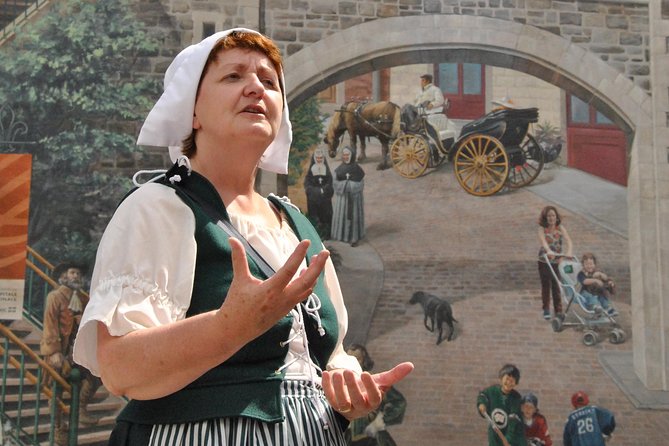
The presentation is not a dry lecture. Guides take on period characters and may speak as if they belong to another century. Gary, for example, used the persona of a historical figure and referred to his own life and death in character. Another guide delivered the material with such dramatic energy that it occasionally felt theatrical. That style will delight you if you like history with a little performance. If you prefer a quiet, academic explanation, it may feel like too much.
Other walking tours in Quebec City:
- Quebec City Walking Tour
★ 5.0 · 4,716 reviews - Old Quebec City: Grand Walking Tour with Private Option
★ 4.8 · 2,609 reviews - Old Quebec Classique Walking Tour with Funicular
★ 5.0 · 1,317 reviews
Dufferin Terrace gives you the big picture
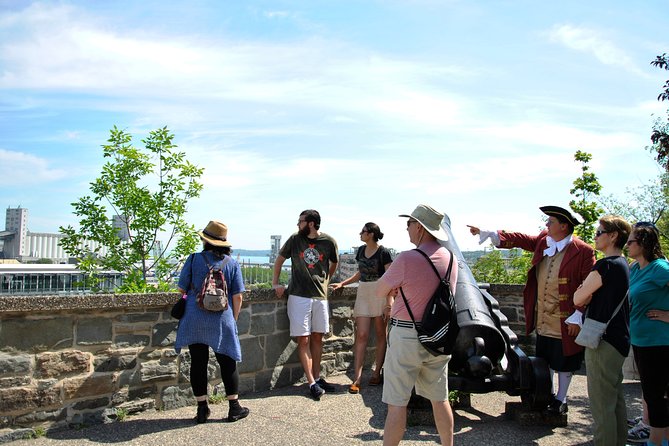
The first major stop is Terrasse Dufferin, the long wooden promenade beside the Château Frontenac. You have about 10 minutes here, enough to take in the St. Lawrence River and the broad view around the city.
This is a smart opening stop because it gives you orientation before the walking gets more detailed. The terrace shows why Quebec City feels so different from most North American cities. You are looking out from a historic fortified center, high above the river, with the lower district spread below.
The terrace is also useful beyond this tour. It is a pleasant place in any season, and you may want to return at a slower pace after learning what you are looking at. The short stop means you should not expect a long photography break or a detailed visit to the Château Frontenac. The focus is the view and the story attached to it.
From here, the route begins to reveal the relationship between the upper town and the lower streets. Pay attention to the slope. The descent is not a minor detail. It shapes the entire second half of the experience.
Notre-Dame de Québec adds the spiritual story
The tour also includes the Basilica of Notre-Dame de Québec, a church that has occupied the same location since 1647. It is a Canada National Historic Site because of its architectural value and its place in the story of Quebec.
Inside, you can see elaborate decoration, artwork, archival pieces, and the burial places of four governors of New France and bishops of the Diocese of Quebec. The funerary chapel connected with François de Laval adds another layer to the visit. You may also see the Holy Door.
This stop keeps the tour from becoming only a walk through pretty streets. Religion shaped early Quebec in direct ways, from government and education to burial traditions and public art. The basilica gives the guide a setting for explaining that influence.
The exact amount of time inside is not specified, so I would treat the church as one part of a wider walking route rather than a full guided church visit. If you want to study the artwork or archives closely, plan to return on your own if opening conditions allow. The tour’s main aim is to connect the basilica with the wider story of the city.
Place Royale is where Quebec City began
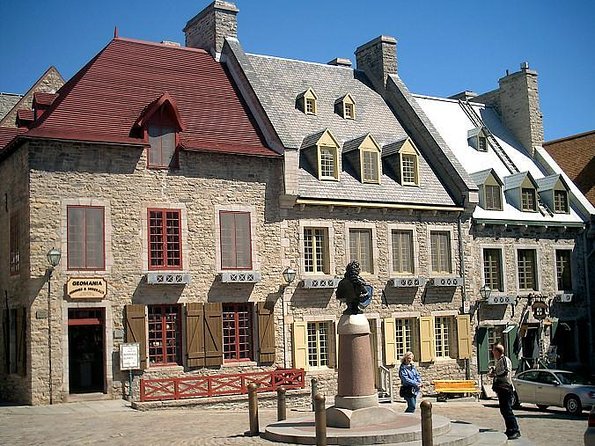
The route continues to Place Royale, the site where Samuel de Champlain founded Quebec City in 1608. This square is one of the most important stops because it brings the city’s beginning into focus.
The architecture here reflects both French and British influence. The square also includes the oldest stone church in North America, giving you a compact view of the cultures and powers that shaped Quebec over four centuries.
Place Royale can feel almost too picturesque at first glance. The guide helps you look past the attractive façades and understand why this location mattered. Its position near the river made it practical for settlement, commerce, and contact with the wider world.
The tour finishes here, which is useful. You are not rushed back to the starting point, and you can continue exploring the birthplace of Quebec City after the guide leaves. I’d use the extra time to revisit details that caught your attention, browse nearby streets, or simply sit with the setting before moving on.
Other guided walks in Quebec City:
- Quebec: Crimes of New France Animated Walking Tour
★ 4.6 · 926 reviews - Quebec City: Old Quebec Classic Walking Tour with Funicular
★ 4.9 · 695 reviews - Uncover Old Quebec: Fun Walking Tour of the City with Local Guide
★ 5.0 · 667 reviews - Private Tour: Quebec City Walking Tour
★ 5.0 · 596 reviews
Petit-Champlain feels like a storybook street

The Petit-Champlain district receives the longest scheduled portion of the tour, about 45 minutes. That tells you something about its role. This is not just a quick photo stop. The guide uses the lanes, buildings, and views to explain how Quebec developed below the upper town.
Petit-Champlain is one of the most atmospheric parts of the walk. Narrow streets, old façades, and the close-packed setting create the feeling of stepping into another era. The district is also where the tour’s historical story becomes physical. Instead of hearing only about early settlement, you are walking through the kind of streets that make that past easier to picture.
The guide may take you through back streets and lanes rather than sticking only to the obvious route. That is one of the better reasons to join instead of simply walking around with a map. You still get the famous sights, but you also receive help noticing corners and connections you might skip alone.
There is a tradeoff. Petit-Champlain can be busy, and street noise may make hearing difficult. One person also found that garbage collection and street cleaning interrupted the guide. Stay close, listen carefully, and do not assume every word will carry clearly in an active city street.
The Breakneck Steps test your knees
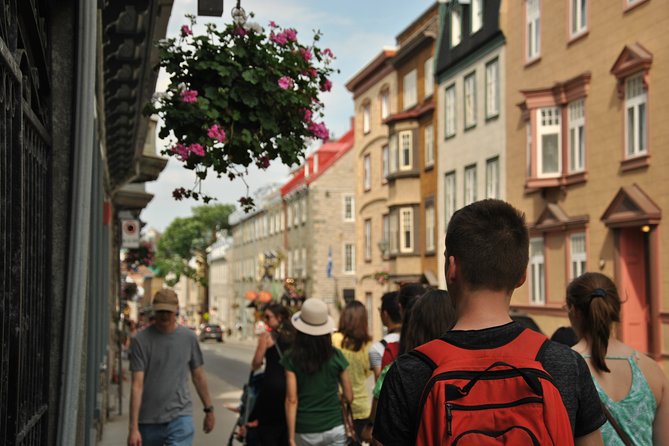
The Breakneck Steps, or L’Escalier Casse-Cou, are the oldest outdoor staircase in Quebec City. The stop lasts only about five minutes, but it is memorable because it combines a physical challenge with a classic view down toward rue du Petit-Champlain.
This is where you should take the warnings about fitness seriously. The route includes steep streets, stairs, cobblestones, and a sustained downhill walk. Several people praised the route but specifically advised wearing good walking shoes. Another person said the tour required hiking skills, while older members of a group found the descents exhausting.
You do not need to be an athlete, but you should be comfortable walking for two hours on uneven ground. If stairs or steep downhill walking are difficult for you, this may not be the right introduction to Old Quebec. The physical effort is part of the city’s design, not an optional side trip.
At the top or along the steps, you’ll get one of the best views of Petit-Champlain. It is a quick stop, so have your camera ready and avoid expecting a long pause.
Costumed storytelling is the heart of the experience
The price is $24.03 per person, which I consider good value for a two-hour guided walk in one of Canada’s most visited historic districts. You are paying for a local guide, a professional presentation, and a route that links major landmarks without requiring you to plan the connections yourself.
The cost is especially reasonable if you use the tour as an orientation. A guide can explain the city’s basic structure in one outing, saving you from piecing together the story from plaques and guidebooks. The benefit is not simply the number of sights. It is the connection between them.
The period costume and character work make the tour different from a standard city walk. Guides have included Keven, Mark, Annabelle, Guy, Louise, Chantal, Gary, and Ives, and each appears to bring a personal style. Some are funny and highly theatrical. Others focus more on a careful account of the city’s rulers and changing government.
That variety is part of the charm, but it also means the tone may differ from one departure to another. You should expect history presented as a performance, not a formal classroom talk. The style works best if you enjoy questions, stories, and a guide who may occasionally play a role quite fully.
Group size, timing, and practical comfort
The maximum group size is 20 people. That is small enough to feel more personal than a large coach excursion, though street noise and narrow lanes can still make it hard to hear. Stay near the guide, especially around Petit-Champlain and the stairways.
The tour is offered in English and comes with a mobile ticket. The meeting point is 12 Rue Sainte-Anne, Quebec City, and the end point is Place Royale, Quebec City. Since the tour does not return to the starting point, plan the rest of your day around the lower town.
Public transportation is nearby, and service animals are allowed. The stated fitness requirement is moderate, but I would interpret that conservatively because of the hills and steps. Wear shoes with a firm sole, avoid carrying more than you need, and allow extra time if you want to stop for photographs.
The experience requires good weather. If poor weather causes cancellation, you are offered another date or a full refund. You can cancel for a full refund up to 24 hours before the start time, but changes or cancellations inside that window are not accepted.
Who will enjoy this Quebec City walk most
I’d recommend it to first-time visitors who want a strong introduction to Old Quebec before exploring alone. It also suits couples, families with older children, and anyone who prefers a story-led tour to a list of disconnected landmarks.
The tour works particularly well for people who enjoy political, religious, and social history. You hear about the founding of Quebec, French and British influence, church life, historic leaders, and the way the city developed from the upper town toward the river.
Families should think about the two-hour length. One person felt it was best suited to children aged 12 and older because there is a lot of listening. Younger children may enjoy the costume and character work, but the hills and sustained historical explanation could test their patience.
I would be more cautious about booking it for anyone with limited mobility, weak balance, or trouble with downhill stairs. The route is scenic because it follows the city’s natural slope, but that same slope is the central physical challenge.
Should you book Walking Tour Through Quebec City’s History?
Book it if you want to understand Old Quebec rather than simply photograph it. The route covers the city’s essential historic zones, the guide adds a memorable human voice, and the $24.03 price is fair for two hours of instruction and orientation.
Book it for your first day if possible. You’ll finish at Place Royale, already familiar with the path between the upper and lower town, and can return later to the basilica, Petit-Champlain, or Dufferin Terrace at your own pace.
Skip it if steep hills, long walks, and stairs would make the outing uncomfortable. Also think twice if you dislike theatrical guides. For everyone else, this is a lively, useful way to meet Quebec City through its streets, buildings, viewpoints, and people.
FAQ
How long does the walking tour last?
The tour lasts approximately two hours.
Where does the tour begin?
It begins at 12 Rue Sainte-Anne, Québec, QC G1R 3X3, Canada.
Where does the tour end?
The tour ends at Place Royale in Quebec City, near the city’s birthplace.
Is the tour offered in English?
Yes. The experience is offered in English.
How large is the group?
The tour has a maximum of 20 travelers.
Does the route include steep hills and stairs?
Yes. You should expect hills, cobblestones, and stairs, including the Breakneck Steps. A moderate level of physical fitness is recommended.
Can I cancel for a refund?
Yes. You can cancel at least 24 hours before the start time for a full refund. If poor weather causes the tour to be canceled, you’ll be offered another date or a full refund.
More history and heritage in Quebec City
- Evening Gourmet Tour 5 Course Dinner – History and Food in Old Quebec City
★ 5.0 · 496 reviews - Quebec City: Old Quebec Historical Walking Tour
★ 4.8 · 409 reviews - Combo Historical and Food Tour of Old Quebec
★ 5.0 · 360 reviews - Historical Lower Town & Neighborhoods Bike Tour
★ 5.0 · 70 reviews
Just added in Quebec City
- Quebec City: Jacques-Cartier National Park Snowshoeing Tour★ 4.7 · 127 reviews
- Quebec City: Winter Walking Tour in Old Quebec★ 4.9 · 30 reviews
- Snowshoeing Tour in Jacques-Cartier National Park★ 5.0 · 55 reviews
- Quebec City: Electric Bike Tour★ 4.5 · 124 reviews
- Historical Lower Town & Neighborhoods Bike Tour★ 5.0 · 70 reviews
- Quebec City: Ile d’Orléans Guided E-Bike Tour with Tastings★ 4.9 · 147 reviews
- Quebec City: Guided Snowmobile Tour★ 4.9 · 214 reviews
- Quebec: La Citadelle de Québec Ticket and Guided Tour★ 4.7 · 227 reviews
Historical Tours, compared.



Evening Gourmet Tour 5 Course Dinner – History and Food in Old Quebec City
Read our review →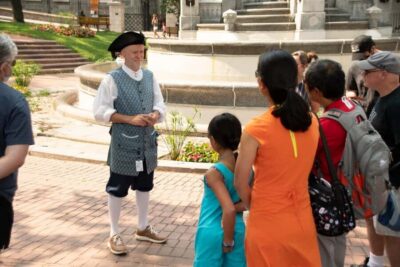



Browse the lists this tour appears in