Reviewed · TOURS IN NEW BRUNSWICK
Hopewell Rocks Admission
At Hopewell Rocks, the sea leaves the stage twice a day. At low tide, you can walk across the Bay of Fundy seabed beneath tall, flowerpot-shaped rock pillars. Hours later, the same ground is underwater. That dramatic change, driven by the world’s highest tides, is the whole reason to come.
I like the two consecutive days of admission, which gives you a real chance to see both low and high tide instead of rushing through one visit. I also like the mix of walking trails, lookouts, an interpretive center, and a daily guided walk. The main catch is distance: reaching the ocean floor involves a walk and steps, and the shuttle costs an additional $2 each way per person unless you have a disability.
Key points to know before you go
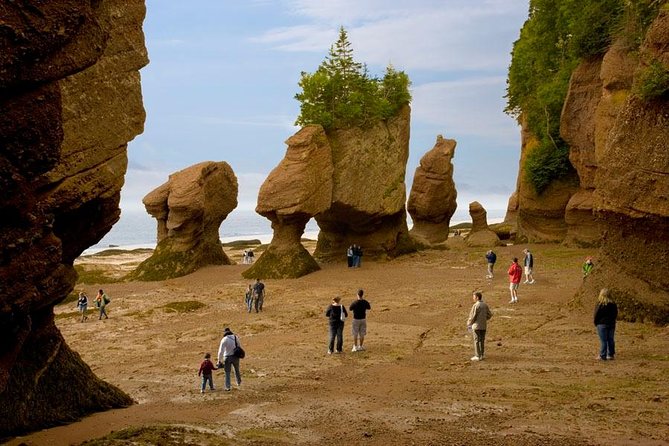
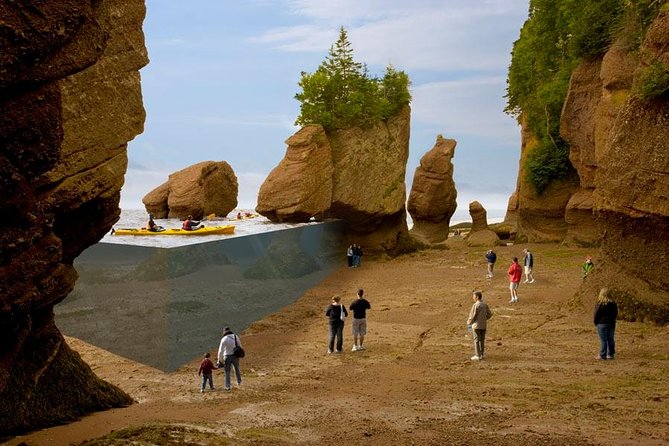
- The tide changes the entire visit: Walk among the rocks at low tide, then return at high tide to see them surrounded by water.
- Your ticket lasts two days: Use the extra flexibility to match your visit with the tide table and opening hours.
- The ocean floor is reached on foot: The walk from the welcome center can take about 15 minutes, followed by steps or a ramp to the shore.
- The park suits families: There is a playground, clean facilities, food on site, and paths that make a full day practical.
- The shuttle is useful, not essential: It costs $2 per person each way and is complimentary for people with disabilities.
- Bring sensible footwear: The seabed can be rocky and muddy, and you may get your feet wet.
Why Hopewell Rocks changes by the hour
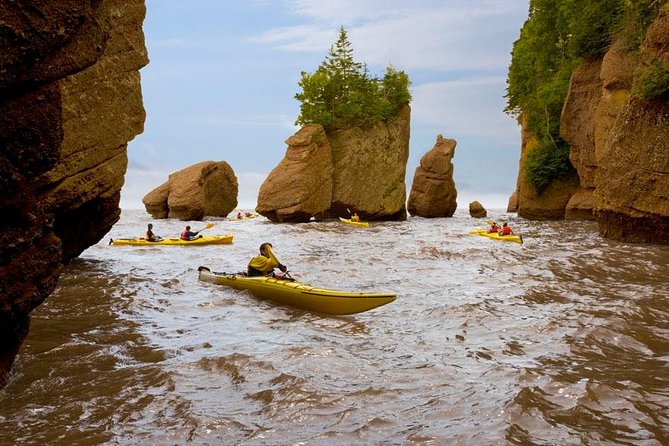
The strange beauty here is not just the rocks. It is the clock.
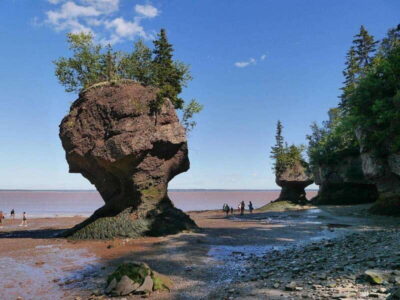
At low tide, the Bay of Fundy pulls back and exposes the ocean floor. You can walk among the towering formations, look up at the trees growing from their tops, and study the mud and stones left behind by the water. The rocks have been shaped by weather and powerful tides over decades, producing the famous flowerpot forms.
At high tide, the view is completely different. The paths and lookouts remain above the water, but the ground where you walked is covered. The pillars become islands or shoreline formations surrounded by the bay. You do not need a long explanation to understand the force of the tide. Seeing your own route disappear makes the idea plain.
I recommend planning around the tide instead of treating the tide table as a minor detail. A low-tide visit gives you the close-up experience. A high-tide visit gives you the scale and drama. The two views belong together.
Other trips people book in Canada:
- Vancouver Half-Day Whale Watching Adventure with Free Photos
★ 5.0 · 5,000 reviews - Quebec City Walking Tour
★ 5.0 · 4,716 reviews - Niagara Falls: Premium Tour, Boat & Journey Behind the Falls
★ 4.8 · 4,207 reviews
From the welcome center to the ocean floor
Start at the entrance and allow more time than the basic visit estimate suggests. The walk from the welcome center to the steps leading down to the shore can take roughly 15 minutes, depending on your pace. The route passes through scenic paths and toward lookouts, so it is part of the attraction, not simply a transfer.
You can walk down to the rocks or pay for the on-site shuttle. The shuttle costs $2 per person each way and is complimentary for people with disabilities. It can make a major difference for anyone with limited stamina, but many people will find the walk manageable if they take it slowly.
Once you reach the seabed, the footing becomes more demanding. The surface may be rocky, muddy, or wet, so wear shoes with a secure grip. If you plan to step into shallow water, water shoes are a sensible choice. Sandals or smooth-soled shoes will make the experience less comfortable.
There are washrooms along the route toward the rocks, which is useful if you are visiting with children or planning to stay for several hours. The park also has a playground, restaurant, gift shop, and cafe, making it easier to turn a tide visit into a relaxed half-day or full-day outing.
Walking beneath the flowerpot rocks
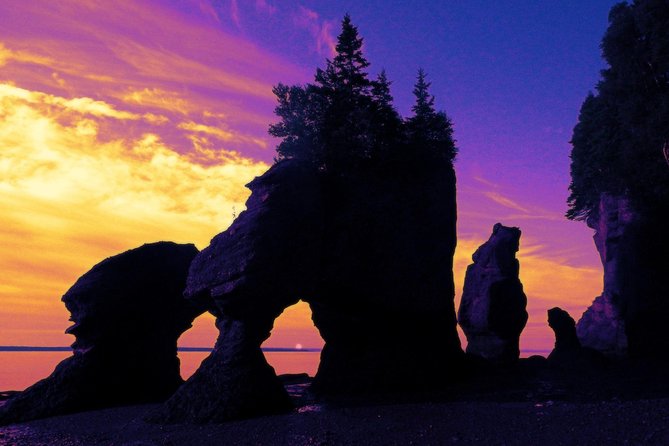
The low-tide portion is the park’s signature experience. You walk on ground that is normally part of the bay, with rock pillars rising around you. The formations are the result of erosion, but the setting feels more unusual than a typical coastal walk because the waterline changes so dramatically.
Look closely at the base of the rocks. The mud, stones, and wet surfaces show where the tide has recently been. Above you, the trees and vegetation on the rock tops make the formations look like giant planted pots. The scale is hard to judge in photographs, so walking beneath them gives you a much better sense of their height.
You can explore at your own pace rather than follow a fixed group route. That flexibility matters because some people will want time for photographs, while others will prefer to keep moving along the seabed. The famous formations are the main draw, but the wider exposed shore offers more to see than a single photo stop.
Keep an eye on the tide schedule and stay aware of the time. The water may appear to move slowly, but you should not treat the seabed as an open-ended walking area. Plan your return before the tide has risen too far, and follow local instructions.
The walking tour and interpretive center
Admission includes a walking tour at specific times each day. The tour adds useful context about the geology and ecosystem, especially if you want to understand how the rocks formed instead of simply photographing them.
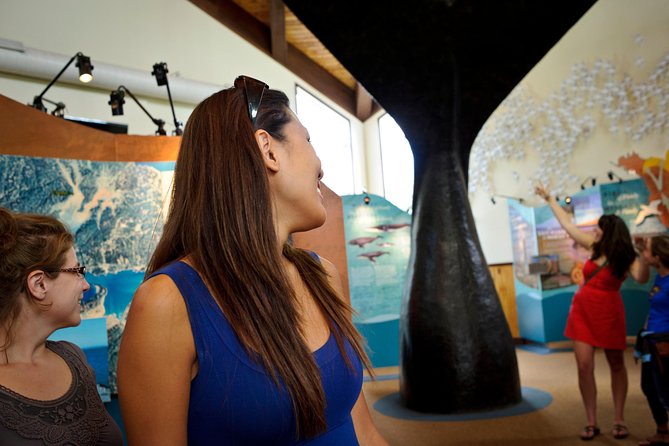
The park also has a multimedia exhibit and an interpretive center. These are worthwhile if the weather is poor, if you have time before the tide reaches its lowest point, or if you want a clearer explanation of the Bay of Fundy system. The displays help connect the visible rocks with the forces that shaped them.
A guided walk can be especially helpful for children. The setting is visually impressive, but the natural details are easy to overlook when everyone is focused on reaching the shore. A guide can point out features of the rocks, the seabed, and the local ecosystem that you might otherwise miss.
Tour times are specific, so check the schedule when you arrive. The supplied information does not name individual guides, but the daily walk is included with admission rather than sold as a separate add-on.
Same base, a different sort of day:
- Banff: Banff Gondola Admission Ticket
★ 4.7 · 3,698 reviews - Toronto: Niagara Falls Day Tour with Optional Boat Cruise
★ 4.6 · 3,178 reviews - Best of Niagara Falls Canada Premium Tour: Behind Falls and Boat
★ 5.0 · 3,139 reviews - Montreal: Guided Bus Tour
★ 4.4 · 3,064 reviews
Seeing high tide after low tide
The best use of the ticket is to visit twice, or to make one long visit that covers both tide stages. Admission is valid for two consecutive days, so you have valuable flexibility if the tide times do not fit neatly into one day.
A practical plan is to arrive before low tide, walk to the ocean floor, and spend about an hour exploring. Then use the trails, lookouts, exhibit, cafe, or restaurant while waiting for the water to return. Later, watch the formations from above as the tide rises.
One particularly effective schedule is an early opening visit followed by a return in the afternoon. A visit timed around a low tide at 9:20 a.m., for example, can allow a walk on the seabed first and a second look at high tide later in the day. Exact tide times change, so check the current schedule before setting your route.
The park’s opening hours also change by season:
- May 20 to June 23, 9 a.m. to 5 p.m.
- June 24 to August 19, 8 a.m. to 8 p.m.
- August 20 to September 16, 9 a.m. to 7 p.m.
- September 17 to October 10, 9 a.m. to 5 p.m.
These hours matter. A high tide may occur outside the time you first expect, and the shorter shoulder-season hours can limit your chance to see both stages. The two-day admission helps, but only if the park is open when you need it.
How long should you stay?
The stated visit length is about 90 minutes to two hours, and that is enough for a straightforward visit focused on the main rocks. I would allow more time if you want to walk the trails, join the guided tour, eat on site, or see both high and low tide.
Several hours is a more realistic target for a comfortable visit. A full day makes sense if you want to watch the entire change from exposed seabed to rising water. One extended visit can also work well, as the park has food, washrooms, scenic paths, and places to pause.
You do not need to fill every minute. The tide itself supplies the rhythm. Walk when the seabed is exposed, take a break as the water returns, and use the lookouts for the later view.
Value of the admission ticket
No ticket price is provided here, so I cannot judge the exact cost in dollars. I can judge the structure of the admission. A pass valid for two consecutive days offers better value than a single timed entry because it lets you choose the tide conditions that suit your schedule.
The included walking tour and multimedia displays add more than a simple access fee. You are paying for entry to a maintained park with trails, lookouts, facilities, and interpretive material, not just permission to stand beside the rocks.
Plan for extra costs. The shuttle is $2 per person each way, alcoholic drinks and lunch are not included, and a DVD is available for purchase. Food can be bought on site, with casual family dining and views. If you are traveling with someone who tires easily, the shuttle may be money well spent.
Families, older visitors, and mobility concerns
This is a good family outing because the main attraction is easy to understand and visually strong. Children can walk on the ocean floor, see the water return, use the playground, and take breaks for food. The changing tide gives the visit a natural story without requiring a long attention span.
Older adults can enjoy the park, but you should take the walking distance and steps seriously. The route from the welcome center is not right beside the rocks, and the seabed itself may be uneven. Use the shuttle if distance is a concern, and allow extra time.
The park makes an effort to serve people with different needs, but this is not a flat, effortless stroll. The shuttle is complimentary for people with disabilities, while other riders pay $2 each way. A moderate level of physical fitness is recommended.
The site operates in all weather. Bring layers and rain protection rather than counting on perfect skies. Wind, damp ground, and changing conditions can make the walk feel harder than the distance suggests.
Getting there and adding nearby sights
Hopewell Rocks is in New Brunswick along the Bay of Fundy. A car is the practical choice for reaching the site. Public transportation is limited, and there is no bus service directly from Saint John according to the available information, so you should plan on renting a car if you are not driving.
The park works well as part of a larger New Brunswick road trip. Nearby possibilities include Fundy National Park, Cape Enrage, Mary’s Point Bird Sanctuary, covered bridges, artisan shops, museums, quiet beaches, lighthouses, waterfalls, biking routes, and hiking trails.
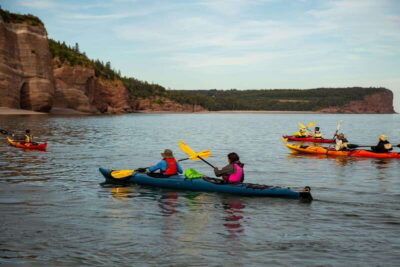
You can also add a kayaking outing around the rock formations through Baymount Outdoor Adventures. That is a separate activity, but it offers another way to understand the tide and the shape of the coast. Keep the admission visit and kayaking plans separate when building your schedule, since tide timing affects both.
What I would do on the day
I would first check the low- and high-tide times, then choose the day with the best match for the park’s opening hours. I would arrive early enough to walk down before low tide, wear sturdy shoes, and carry a spare pair if I expected wet conditions.
After exploring the seabed, I would take the walking tour or visit the interpretive center. Then I would have lunch or a drink on site and use the trails and lookouts while waiting for high tide.
If the timing allowed, I would stay until the water covered the places I had walked earlier. If not, I would use the second consecutive day included with admission. That second look is the best reason to avoid treating Hopewell Rocks as a quick roadside stop.
Should you book Hopewell Rocks Admission?
You should book if you want a natural experience that changes in front of you, especially if you can arrange visits at both low and high tide. The combination of ocean-floor walking, huge rock pillars, trails, and clear interpretive material makes this one of the most distinctive stops in coastal New Brunswick.
I would hesitate only if you have very limited time, cannot manage a moderate amount of walking, or cannot fit the tide schedule into the park’s opening hours. The shuttle helps with distance, but it does not remove every uneven surface or step.
For families, couples, photographers, geology fans, and anyone building a Bay of Fundy road trip, the admission is a sensible choice. Check the tides first, use the two-day validity, and give yourself enough time to watch the bay transform.
FAQ
How long does a visit to Hopewell Rocks take?
The estimated visit lasts about 1 hour 30 minutes to 2 hours. You should allow several hours if you want to walk the trails, join the included walking tour, eat on site, or see both low and high tide.
Is admission valid for more than one day?
Yes. The entrance pass is valid for two consecutive days, which makes it easier to plan around the tide schedule and return for a second view.
Can I walk on the ocean floor?
Yes. At low tide, you can walk on the exposed ocean floor among the rock formations. The ground may be rocky or muddy, so sturdy walking shoes are recommended.
Is a shuttle available?
Yes. An on-site shuttle costs $2 per person each way. Shuttle service is complimentary for people with disabilities.
Is a guided tour included?
Yes. A walking tour is included at specific times each day. The park also offers a multimedia exhibit, scenic trails, and informative lookouts.
What happens if the weather is bad?
The experience operates in all weather conditions, so you should dress appropriately. Wear suitable footwear and bring clothing that can handle changing conditions.
Just added in Canada
- Tadoussac: Guided Sea Kayaking Adventure★ 4.6 · 61 reviews
- Afternoon Wine, Beer and Charcuterie Tour in Niagara-on-the-Lake★ 5.0 · 172 reviews
- Beer and Wine Tour in Niagara-on-the-Lake★ 5.0 · 22 reviews
- Niagara Falls Canada Walking Tour With Boat Cruise★ 5.0 · 195 reviews
- Half-Day Niagara Micro Brewery Tour★ 5.0 · 26 reviews
- Wine, Beer, Cider, Spirit – Something for Everyone Tour★ 5.0 · 59 reviews
- World Famous Boat Cruise with Historical Walking Tour and more★ 5.0 · 202 reviews
- Niagara Falls Boat Cruise with Historical Walking Tour★ 4.9 · 83 reviews
Tours in New Brunswick, compared.

Admission 1 person – Visit of the Acadian Historic Village
Read our review →