
Reviewed · OLD MONTREAL & OLD QUEBEC TOURS
Montreal: Private Customizable Walking Tour of Old Montreal
Montreal’s story begins in a small 1642 settlement called Fort Ville-Marie, and this private walk lets you follow that story through the narrow streets of Old Montreal. You’ll see the city’s grandest squares, churches, courthouses, and former financial district while your guide explains how the old town grew into a modern Canadian city.
I like the private format, which gives you room to ask questions and shape the walk around your interests. I also like the chance to focus on the outside architecture, rather than spending the short two-hour visit waiting in lines or rushing through several indoor sites. The main drawback is that the tour does not include entry to Notre-Dame Basilica or other buildings, and the route is not suitable for wheelchair users or people with mobility impairments.
Key Points to Know
- A private group of up to 15 people: The price covers the group, so it can be good value for families and larger parties.
- A flexible two-hour route: You can adjust the departure time, route, and subject matter to suit your plans.
- Montreal from 1642 to today: The guide connects the city’s first settlement with its later religious, civic, commercial, and port districts.
- Major Old Montreal landmarks: Expect Place d’Armes, Notre-Dame Basilica’s exterior, City Hall, Bonsecours Market, St-Jacques Street, and the Old Port.
- Guides in three languages: Tours are available in French, English, or Spanish.
- Outdoor walking in all weather: Wear comfortable shoes and come prepared for rain or shine.
Starting With Montreal’s First Streets
The best reason to book this tour is its sense of place. Old Montreal is not just a collection of attractive stone buildings. It is the site where the city began, and the walk follows that long arc from the founding of Fort Ville-Marie in 1642 to the present day.
Your guide leads you through a compact historic district where the streets are narrow and the buildings close together. That makes the area easy to explore on foot, though the old paving and uneven surfaces are worth keeping in mind if anyone in your group has trouble walking.
Because the tour is private, you can ask for the angle that interests you most. You might want a broad introduction to Montreal, a closer look at architecture, stories about religion and government, or a guide to the Old Port. The experience is not locked into one script, which is useful if you have children, older relatives, or a group with mixed interests.
Guides named in the feedback include Carole, Pierre, Stacey, and Thomas. The comments about them point to a shared strength: they explain clearly, respond to questions, and adjust their approach to different ages and abilities. That personal contact matters more here than a long list of stops.
Other walking tours in Montreal:
- The Original Old Montréal Walking Tour by Guidatour
★ 4.5 · 2,217 reviews - Old Montreal Small-Group Walking Tour | Max 10 | by MTL Detours
★ 5.0 · 2,088 reviews - Montréal: The Original Old Montréal Walking Tour
★ 4.8 · 911 reviews
Place d’Armes and Notre-Dame Basilica
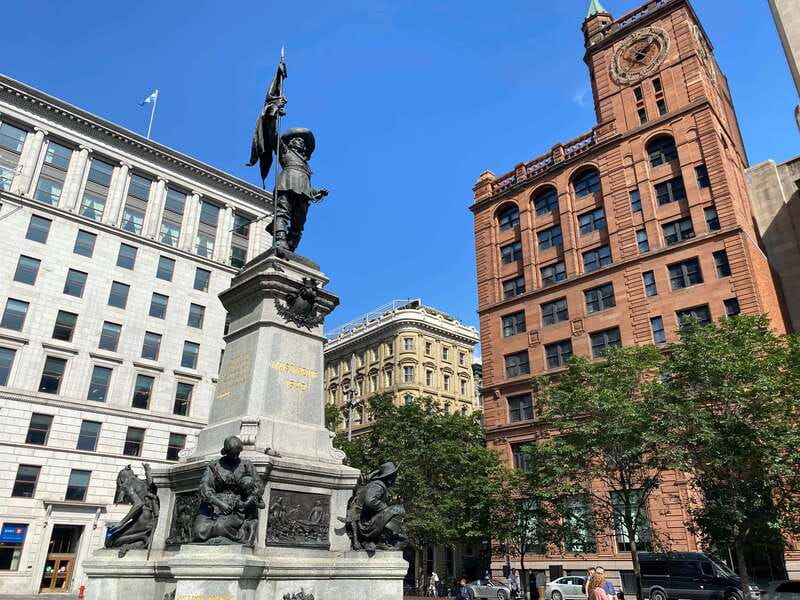
Place d’Armes is one of the natural starting points for understanding Old Montreal. The square brings together several layers of the city, and your guide can use its monuments, surrounding buildings, and public art to explain how Montreal developed as a religious, commercial, and civic center.
The exterior of Notre-Dame Basilica is one of the tour’s main visual moments. Its detailed facade gives you plenty to examine from the square, even though admission to the interior is not included. If seeing the inside is high on your list, plan a separate visit rather than assuming this walk covers it.
This arrangement has one advantage: you can spend time learning what you are looking at without using up the tour on a formal church visit. It also keeps the route moving, which helps a two-hour tour cover more of the old town.
Place d’Armes is particularly useful early in your Montreal visit. I would choose this tour on the first day because it gives you names, landmarks, and a basic timeline. Once you know the difference between the old civic quarter, the commercial streets, and the port, the rest of your stay becomes easier to organize.
From Place Royale to Place Jacques-Cartier
The route may continue to Place Royale and Place Jacques-Cartier, two public spaces that help show how Old Montreal functioned over time. Your guide points out monuments and works of art, but the value is not only visual. These squares provide a way to talk about public life, changing city priorities, and the people who shaped Montreal.
Place Jacques-Cartier is also a natural pause in the walk. It gives your group a chance to slow down, take photographs, and ask questions before moving into the next section. Since the route can be customized, you can ask your guide to spend more time here if you prefer public spaces and city stories over architectural detail.
A private tour works especially well for families at this point. Younger children may not want a long lecture about building dates, while adults may want more context. A guide can shorten explanations, answer direct questions, and keep the group together without strangers waiting for the pace to pick up.
Civic Buildings and the Shape of Power
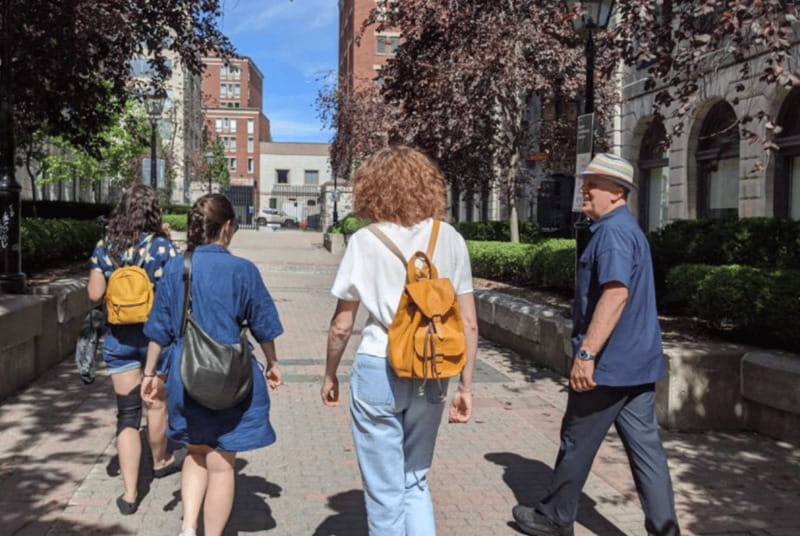
Old Montreal’s civic architecture gives the walk a different mood. You pass City Hall and three courthouses, each helping explain how government and law became part of the district’s identity.
The Château Ramezay is another notable exterior stop. You do not enter as part of the walking tour, but the building adds another layer to the story of the old city. A guide can help connect individual buildings to the larger changes in Montreal, from its early colonial period through its later civic growth.
City Hall is a useful stop for visitors who want more than church facades and old streets. It shifts the focus toward political life and the city’s institutions. The three courthouses do something similar, showing that Old Montreal was not only a residential or trading quarter.
I appreciate this mix because it prevents the tour from becoming a parade of pretty buildings. You get a better idea of how the district worked, who used it, and why it remained important.
Other old-quarter walks in Montreal:
- Old Montreal: Traditional Ghost Walk of the Haunted City
★ 4.7 · 746 reviews - Old Montreal Ghost Walking Tour
★ 4.5 · 726 reviews - Montreal: Top Rated Small Group Old Montreal Walking Tour
★ 4.9 · 611 reviews - Walking tour of Old Montreal – 16/42 Tours
★ 5.0 · 592 reviews
Bonsecours Market and Notre-Dame-de-Bon-Secours Chapel
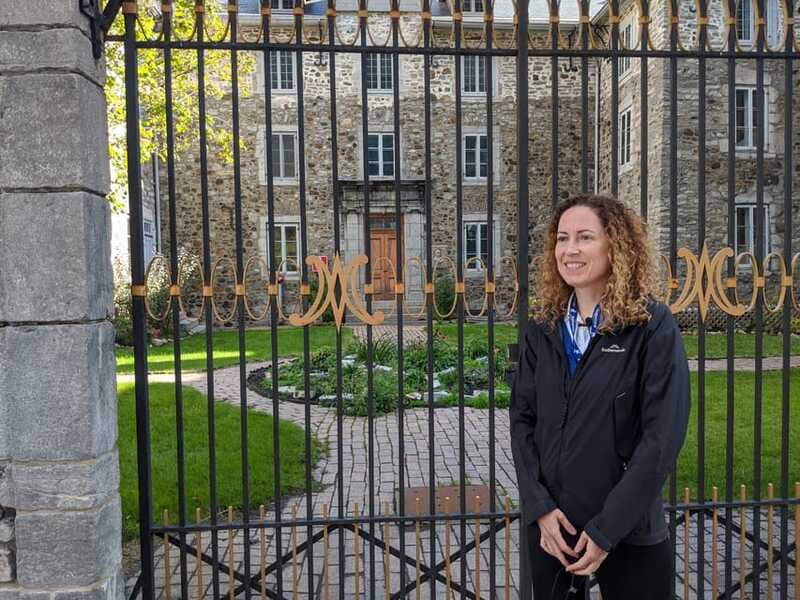
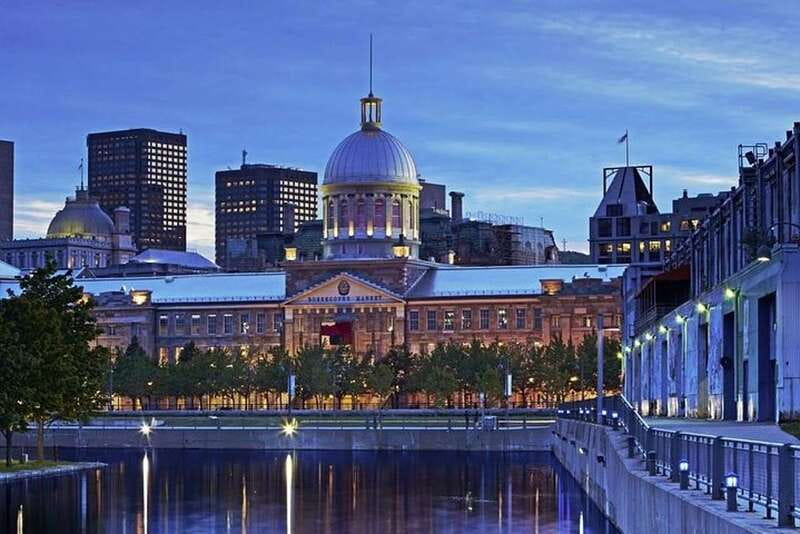
Bonsecours Market is one of the area’s best-known buildings, and the tour includes its exterior architecture. Its size and appearance make it easy to spot, but the guide’s explanation gives it more meaning than a quick photograph would.
The walk also passes Notre-Dame-de-Bon-Secours Chapel. Together, the market and chapel show the close link between commerce, faith, and daily life in the old town. This is one of the places where a local guide adds real value. You can see the buildings on your own, but you are less likely to understand how they fit into Montreal’s growth without some context.
Keep in mind that these are exterior visits. If you want time inside the chapel or market, ask about the best way to add that separately. The private format makes it easy to raise the question, but the two-hour walk cannot cover every interior site.
St-Jacques Street, Once Canada’s Wall Street
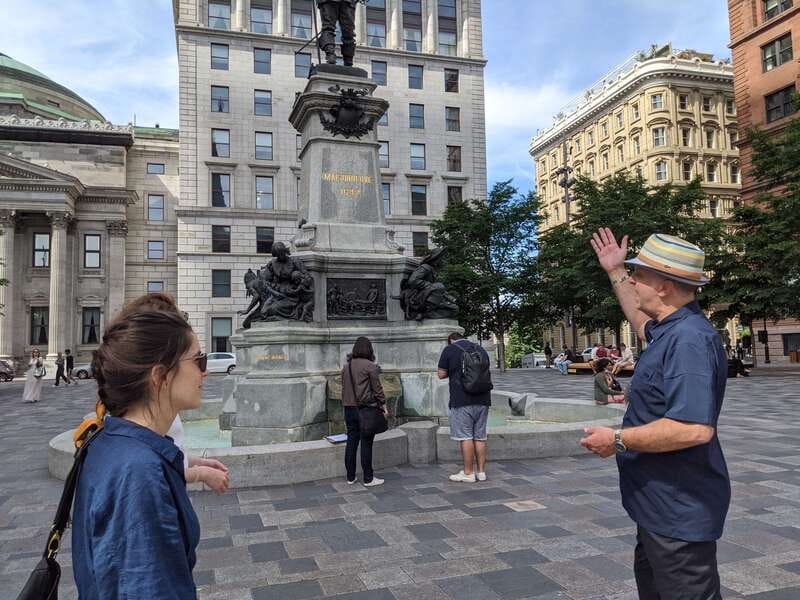
St-Jacques Street gives the tour a strong business angle. It was once known as the Wall Street of Canada, and walking along it helps you picture Old Montreal as a center of finance and commerce, not only as a historic quarter preserved for sightseeing.
This stop may appeal most to adults interested in economic history, architecture, or the city’s role in Canada. It also helps explain why so many impressive commercial buildings were built in this compact part of Montreal.
The street adds variety to the route. After squares, churches, and civic buildings, you get a clearer sense of the money and institutions that helped shape the district. Ask your guide to spend more time here if business history interests you. If your group mainly wants photo stops and famous landmarks, you may prefer to keep this section brief.
Cours Le Royer and the Sulpician Seminary
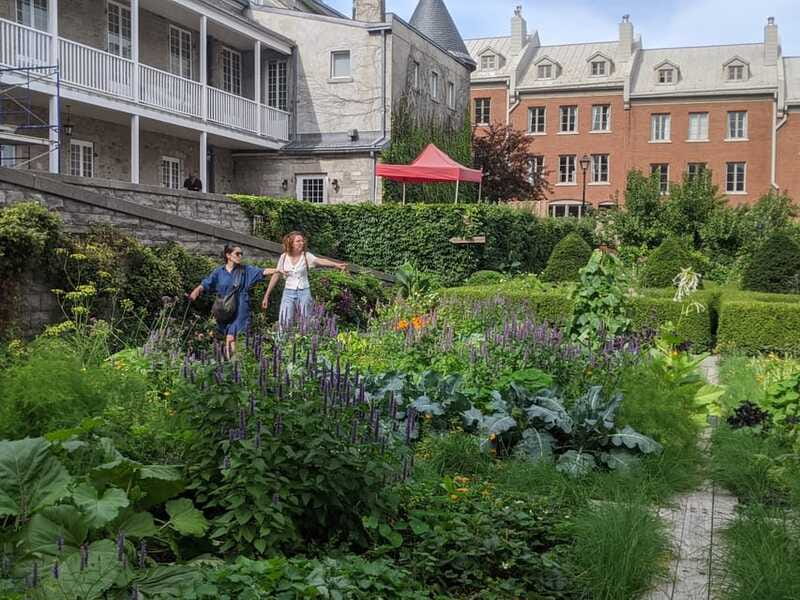
At Cours Le Royer, the tour reaches the foundation site of Hôtel Dieu, Montreal’s first hospital. This is an easy detail to miss when walking through the old town, which is why it is worth having a guide point it out.
The stop gives the story a human side. Montreal’s early growth depended on more than merchants and officials. Hospitals, religious communities, and charitable institutions were also central to the settlement.
The Sulpician Seminary is another important stop. It is described as the oldest building in the historic district, giving you a direct link to Old Montreal’s earliest surviving structures. Its age alone makes it interesting, but the surrounding explanation is what turns it from an old facade into part of the city’s timeline.
If you enjoy small details and lesser-known sites, these stops may be your favorites. They do not have the instant recognition of Notre-Dame Basilica, yet they help explain how an actual community took shape.
Reaching the Old Port
The Old Port provides a fitting final chapter. The tour connects the historic core with the waterfront, where Montreal’s trade and transport helped the city grow beyond its original settlement.
The exact amount of time spent here depends on the route you choose. You can ask for a broader overview of the port or give more attention to the old streets inland. The flexibility is useful because some groups want a quick orientation before exploring on their own, while others want a fuller story of the waterfront.
I would not book this tour expecting a dedicated Old Port attraction visit. Think of the port as part of the city’s historical setting and a useful end point for the walk. You will learn where it fits into Montreal’s story, then can decide which waterfront areas deserve more of your own time.
What Two Hours Really Gets You
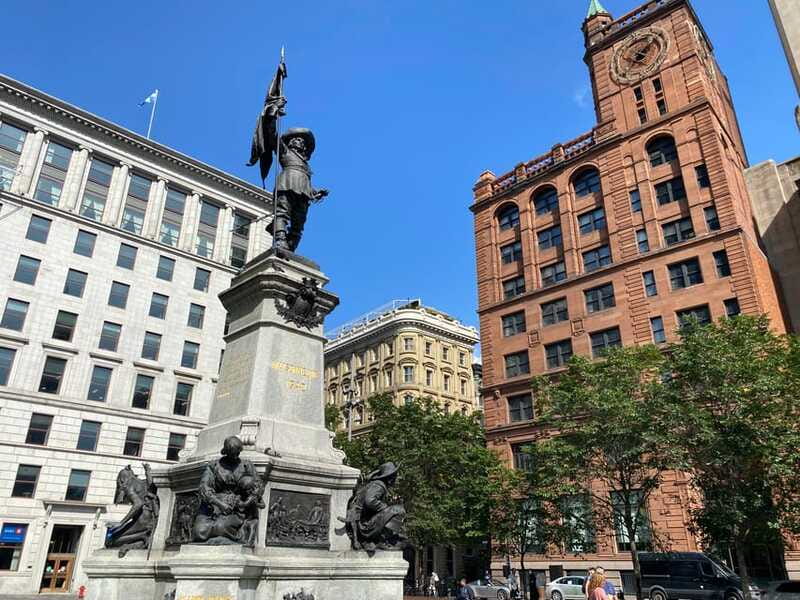
Two hours is enough for a strong introduction, not a complete examination of every building. You can see the main public squares, several important exteriors, sections of St-Jacques Street, Cours Le Royer, the Sulpician Seminary, and the Old Port. You should not expect long interior visits or extended stops at every landmark.
The private setup makes the time more productive. A fixed public group may spend time waiting for slow walkers or listening to questions unrelated to your interests. Here, your guide can move at your pace and adjust the balance between stories, photographs, and questions.
The stated price is $164 for a group of up to 15 people. For two people, that is a substantial cost for a two-hour walk. For a family or group of 10 to 15, the value improves sharply, since the per-person price becomes modest compared with booking several separate guided experiences.
The price also buys privacy and flexibility, not just information. If your group has a tight schedule, specific interests, or several age groups, those benefits may justify the cost. Solo visitors and couples on a small budget may find a regular group walk more economical.
Comfort, Weather, and Who Should Book
Wear comfortable shoes. This is a walking tour through an old district, and the route may include uneven historic surfaces. The experience runs rain or shine, so check the forecast and bring suitable clothing.
The tour is not suitable for wheelchair users or people with mobility impairments. That is an important limitation, especially because the route includes older streets and a fair amount of walking. Contact the provider before booking if your group has specific mobility needs, since the available information does not promise an accessible alternative.
The tour suits first-time visitors who want a clear introduction to Old Montreal. It also works well for families, private groups, and repeat visitors who want to request a particular theme. The guide can speak French, English, or Spanish, which makes it a practical choice for multilingual groups.
The strongest part of the experience is the guide’s role. Carole, Pierre, Stacey, and Thomas are praised for being friendly, clear, responsive, and able to adjust the tour for different ages and abilities. That flexibility is more important than any single landmark because the old town is easy to see but harder to understand.
Should You Book This Old Montreal Walk?
Book it if you want a private introduction to Montreal’s historic center, especially if you are traveling with family or a larger group. The route covers the essential squares and exteriors while adding useful stops such as Hôtel Dieu’s foundation site, the Sulpician Seminary, and St-Jacques Street.
Think twice if you need wheelchair access, want extensive interior visits, or are traveling alone and watching every dollar. For everyone else, the combination of a private guide, customizable route, and broad history makes this a practical way to get your bearings in Old Montreal.
FAQ
How long does the Old Montreal private walking tour last?
The tour lasts two hours.
How much does the tour cost?
The price is $164 per group of up to 15 people.
Can the route and subject matter be customized?
Yes. The departure time, duration, route, and tour content can be customized according to your group’s needs and interests.
Which languages are available?
The tour is available with a French, Spanish, or English-speaking guide.
Does the tour include entry to Notre-Dame Basilica?
The tour includes viewing the exterior architecture of Notre-Dame Basilica. Entry inside the basilica is not listed as part of the experience.
Is the tour suitable for wheelchair users?
No. The tour is not suitable for wheelchair users or people with mobility impairments.
More walking tours elsewhere in Canada
- The Essential 101 Non-Touristy Walking Tour by Spade & Palacio
★ 5.0 · 716 reviews - Montreal: Private Walking Tour with a Local
★ 4.4 · 420 reviews - Old Montreal Private Walking Tour
★ 5.0 · 314 reviews - Montreal: Old Montreal Guided Walking Tour
★ 4.9 · 268 reviews
Just added in Montreal
- Winter Express: Old Montreal Highlights Walking Tour★ 5.0 · 119 reviews
- Under the Surface of Montreal’s Chinatown: Guided Food Walking Tour★ 5.0 · 23 reviews
- Montréal Downtown and Underground City Private Walking Tour★ 5.0 · 47 reviews
- In the Shadow of the Mountain: Montreal Jewish History Walking Tour★ 4.5 · 33 reviews
- Montreal Premium Driving Tour with River Cruise and Notre Dame★ 4.5 · 164 reviews
- Full Day Family Bike Rental★ 5.0 · 17 reviews
- The Ultimate Montreal Boat Tour – Fall Colors Apéro Edition★ 4.5 · 31 reviews
- Day at Mont-Tremblant National Park★ 4.0 · 5 reviews
Old Montreal & Old Quebec Tours, compared.
Old Quebec City: Grand Walking Tour with Private Option
Read our review →
Old Montreal Small-Group Walking Tour | Max 10 | by MTL Detours
Read our review →
Old Quebec Classique Walking Tour with Funicular
Read our review →
Old Quebec City Food Tour with 10+ Autentic Local Tastings
Read our review →

Old Montreal: Traditional Ghost Walk of the Haunted City
Read our review →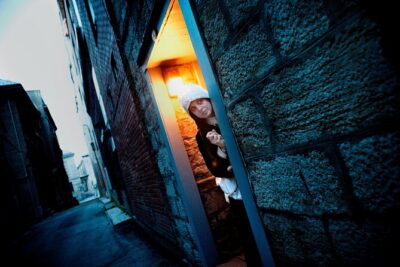
Browse the lists this tour appears in