
Reviewed · OLD MONTREAL & OLD QUEBEC TOURS
Old Town Toronto Highlights 3 Hour Walking Tour | Gratuity-Based
Toronto reveals itself best at street level, where a red-brick warehouse, a dog fountain, a tunnel entrance, and a grand old courthouse can tell you more than a postcard. This three-hour walk links Old Toronto, the Financial District, the PATH, and the Entertainment District into one long city orientation.
I like the mix of major sights and small details, especially the stories behind the Gooderham Building, Old City Hall, and Toronto’s underground PATH system. I also like the practical advice built into the walk, from food and nightlife suggestions to help with the TTC, GO Train, VIA Rail, and buses.
The main caution is the pace and length. The walk can reach about 7 kilometres, and the experience depends heavily on the guide and group. A few sessions have suffered from delays, cancellations, or guides walking too quickly, so this is best for people who can stay on their feet for several hours.
Key points to know before you book
- Berczy Park begins the story: Learn about William Berczy, the playful dog fountain, and the park’s unusual details.
- The PATH adds a Toronto-only twist: Part of the tour moves underground through the city’s connected shopping and office tunnels.
- The walk covers several sides of downtown: You pass historic Old Toronto, bank towers, theatres, public squares, Union Station, and the Entertainment District.
- Guides bring different strengths: Maya is praised for trivia and wit, Joel for engaging the group and taking photos, and Alex for using historic images to explain the city.
- The $5 price is only a booking fee: Guides work for gratuities, and one review cites a suggested tip of $30.
- Plan for distance, weather, and stairs or standing: Comfortable shoes, water, and weather protection matter more here than the low booking price suggests.
Starting with dogs, history, and Toronto’s oldest streets
The meeting point is Berczy Park, at 35 Wellington Street East. This is a smart starting place because it introduces Toronto through a small, attractive public space rather than a large civic monument.
The park’s dog fountain is its visual hook. You’ll hear about the park’s connection to William Berczy and learn the sort of small details that are easy to miss when you pass through alone. Allow about 15 minutes here.
From Berczy Park, the route moves toward the Gooderham Building, Toronto’s famous flatiron structure. Its narrow red-brick form fits neatly into the angle between Front Street and Wellington Street, making it one of the city’s easiest buildings to recognize.
The stop is brief, around 10 minutes, but the story gives the building more weight than a quick photograph does. You’ll hear about the Gooderham family, Front Street, and the building’s cost when it was constructed. If architecture interests you, this is one of the tour’s most useful early stops because it connects a familiar view with the people and money behind it.
Other city tours in Toronto:
- Toronto: Harbor and Islands Sightseeing Cruise
★ 4.7 · 2,566 reviews - Toronto: City Sightseeing Hop-On Hop-Off Bus Tour
★ 4.3 · 2,544 reviews - City Sightseeing Toronto Hop-On Hop-Off Bus Tour
★ 3.5 · 726 reviews
Reading Old Toronto one facade at a time
Old Toronto is not presented as a single museum district. Instead, you walk through streets where office buildings, civic structures, shops, and historic facades sit beside one another.
The guide points out the Old Toronto Post Office and discusses the area’s changing uses. The building may also look familiar from television, as it has been used as a film location. That kind of detail helps you look past the front doors and notice how downtown Toronto is used today.
This section lasts about 15 minutes. I like that it treats the streets as part of the story, not just as a path between famous landmarks. You get a sense of how Toronto’s older buildings still fit into daily city life.
The tour then reaches the Financial District, where the scale changes sharply. Towering office blocks replace the lower historic facades, and the walk becomes a lesson in corporate Toronto. Canada’s five major banks have headquarters in this compact area, and the guide explains design choices such as the window tint used on different towers.
You’ll spend about 10 minutes here. It is a short stop, but the contrast with Old Toronto is the point. Within a few blocks, the city shifts from nineteenth-century brick to reflective glass and steel.
Going underground through the PATH
The PATH is one of the most distinctive parts of this experience. From Commerce Court, you enter Toronto’s underground pedestrian network, which connects much of the downtown core.
The PATH is not one uniform tunnel. Its sections belong to different buildings, and each property owner has shaped the look and feel of its passage. The result is a series of connected spaces rather than one carefully designed corridor.
You’ll spend about 20 minutes underground. The guide points out shops, connections, and lesser-seen corners of this indoor city. The route is particularly useful during heavy snow or poor weather, though it can also be confusing if you try to navigate it alone.
This is one of the tour’s strongest practical features. You are not merely told that Toronto has a tunnel system. You get an introduction to how it works and why downtown office workers use it. Pay attention to the directions, since the PATH can feel like a maze at first.
Old City Hall and the story carved into stone
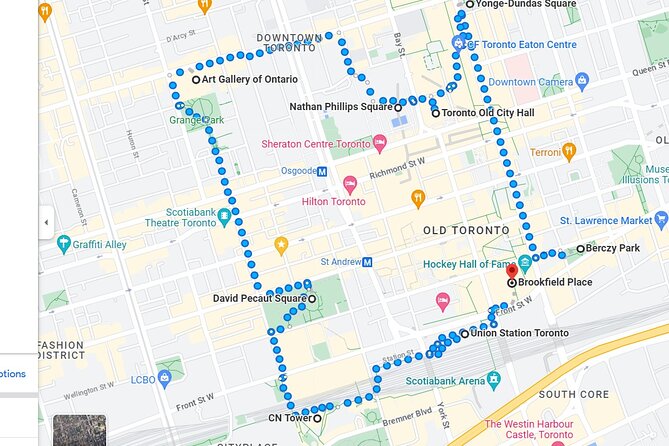
Old City Hall brings the tour back above ground and into grand Renaissance-style architecture. E. J. Lennox designed the building, and the guide explains the architect’s strained relationship with Toronto’s city council.
The building rewards a slow look. Its scale, stonework, and smaller details make it more than a backdrop for a photo. The story of Lennox’s grudge gives the stop a touch of humor and helps you notice details you might otherwise pass without seeing.
The scheduled stop is about 10 minutes. That is enough for an exterior explanation, but not enough for a full architectural study. You do not go inside on this walk, so anyone wanting a detailed look at the interior will need to return separately.
The route also passes the place where Toronto’s public service works today. The changing civic buildings help explain how the city’s government has developed and how old and new Toronto share the same downtown blocks.
Other walking tours in Toronto:
- Show me the City! A Small Group Walking Tour of Toronto
★ 5.0 · 621 reviews - Toronto Distillery District Walking Tour
★ 5.0 · 327 reviews - Toronto: City Highlights Walking Tour | 3-Hour
★ 4.6 · 306 reviews - Toronto: Dark History Nighttime Walking Tour
★ 4.7 · 273 reviews
Campbell House, maple syrup, and a short pause
Campbell House Museum is one of the older buildings in Toronto, dating to 1822. The tour does not go inside, but the guide explains the house’s connection to Court Justice Campbell and recommends returning for the museum or one of its cooking classes.
This stop lasts around 15 minutes and broadens the tour beyond banks and towers. You may hear about maple syrup, the Canada Life weather tower in the distance, and the building’s place in Toronto’s early legal and civic life.
It is also a reminder that not every worthwhile stop is a grand monument. Campbell House is relatively modest compared with Old City Hall or the financial towers, but its age and surviving character make it useful for understanding the city before the modern skyline arrived.
The Entertainment District, theatres, and the CN Tower
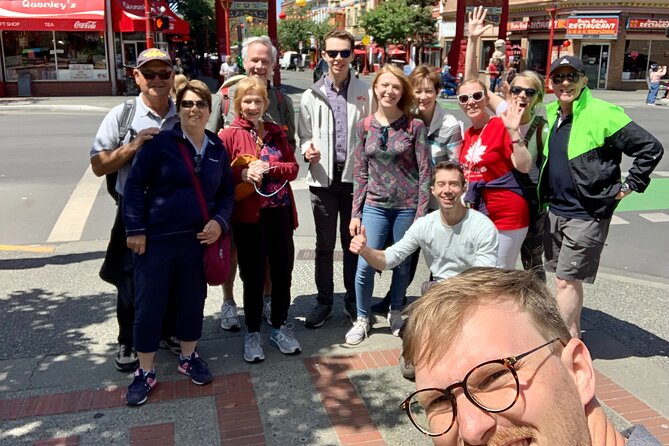
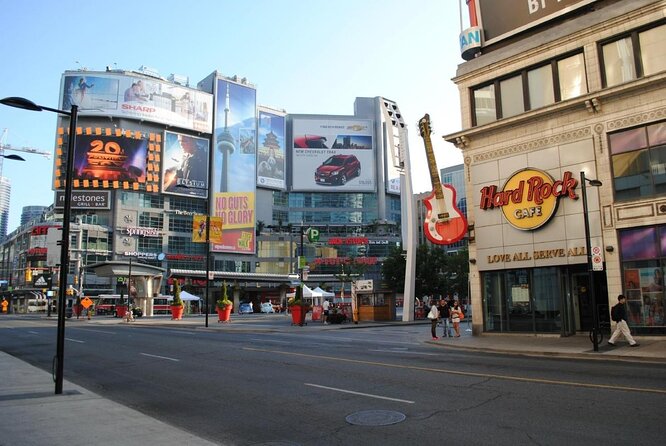
The street scene changes again as you enter Toronto’s Entertainment District. Murals and street art appear, music venues become more common, and the CN Tower rises above the surrounding buildings.
The tour spends about 20 minutes here. The guide discusses nightlife, dancing, drinks, theatre, and the district’s performance venues. The route also passes several major cultural sites, including an intimate concert venue known for its acoustics and home to the Toronto Symphony Orchestra, a Beaux-Arts theatre built about a century ago, and the location associated with the Toronto International Film Festival.
Not every point receives a long formal stop, so your experience here depends on the guide’s timing and the group’s pace. Still, this section is useful if you want to decide what to do after dark. The guide can point you toward the city’s theatre, music, and nightlife areas rather than leaving you with only daytime landmarks.
The CN Tower appears in changing glimpses rather than as one fixed viewing stop. That can make for better street-level photographs, although weather matters. One session included rain and fog before the tower briefly appeared when the clouds cleared.
Terry Fox at David Pecaut Square
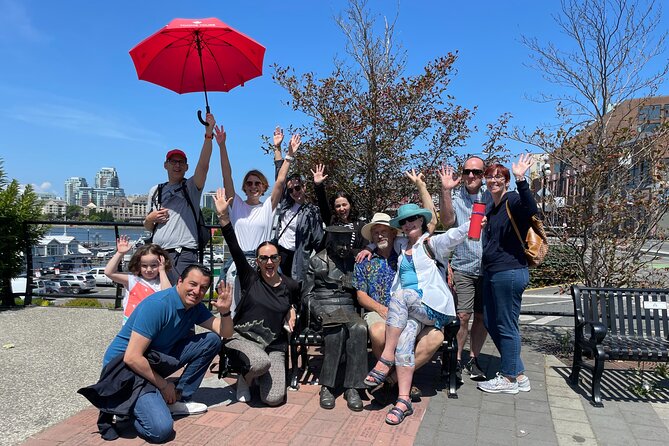
At David Pecaut Square, the tour pauses at the Eternal Flame of Hope for the Disabled and tells the story of Terry Fox.
Fox was a young athlete diagnosed with cancer in his knee. His response to that diagnosis became one of Canada’s most powerful national stories. The stop is less about architecture than about Canadian identity, courage, and public memory.
You’ll spend around 15 minutes here. It is one of the tour’s more reflective moments, and it adds emotional range to a route otherwise filled with buildings, streets, and transport links.
This is also a good place to notice how Toronto uses public squares. The city’s downtown spaces are not only for offices and commuters. They also hold memorials, events, protests, markets, and moments of quiet remembrance.
Nathan Phillips Square and the Toronto sign
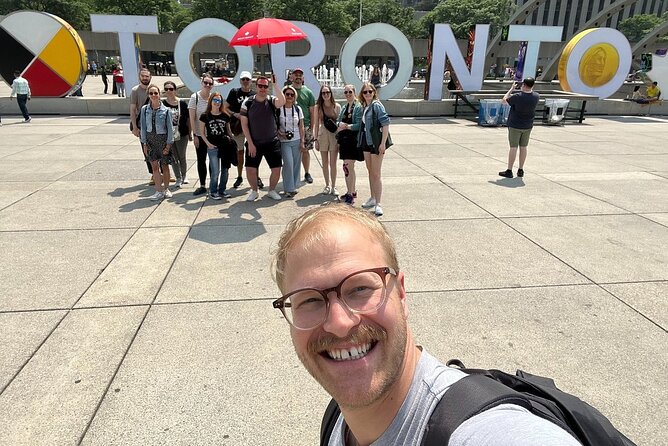
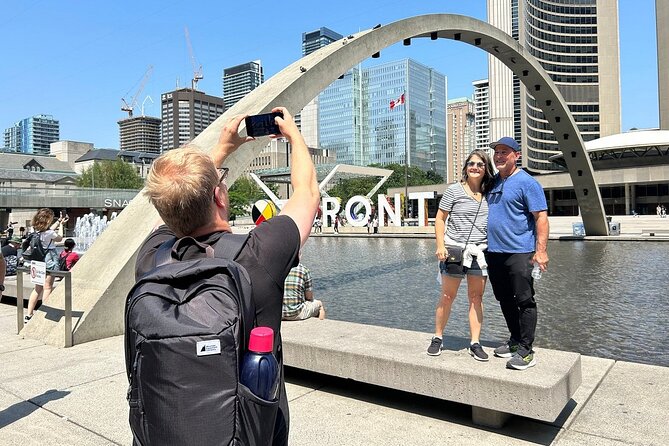
Nathan Phillips Square is one of the major rest points. The Toronto sign makes an easy photo stop, and the square often contains markets or protests, depending on the day.
The scheduled time here is about 20 minutes, including roughly 15 minutes to rest, use a public toilet, or browse a market. That break matters because the first part of the route can feel long if you are not used to city walking.
The Toronto sign is a natural place for a candid photograph. Guides such as Joel have helped solo visitors take pictures, which is a useful perk if you are exploring alone. The square also gives you a chance to ask practical questions before the final section of the tour.
Do not treat this pause as a full meal break. Bring water and, if you tend to get hungry, a snack. One visitor specifically found it useful to buy food and more water here.
Brookfield Place and Toronto’s hockey identity
Brookfield Place is one of the route’s most dramatic interiors. Its high ceilings, white arches, and old banking facade create a strong contrast with the modern towers outside.
This is a photographer-friendly stop, though the tour is focused on explanation rather than a formal photography session. The guide also uses the building to introduce hockey and the Hockey Hall of Fame, one of Canada’s best-known attractions.
You’ll spend about 10 minutes here. That is enough to understand why the space matters, but you may want to return later if you want more time for photographs or a visit to the Hockey Hall of Fame itself.
Union Station and the final transport lesson
The route continues toward Toronto Union, the city’s main transport hub. It is across from the Fairmont Royal York, another building tied to the development of downtown Toronto and the PATH.
This final stop lasts about 15 minutes. The guide can answer questions about using the TTC, GO Train, VIA Rail, and bus services. For someone new to Toronto, that advice may be as useful as the architecture.
The tour information says the activity ends back at the meeting point, while the listed route also includes Union Station near the end. Because the route covers a large part of downtown, confirm the exact finish point with your guide on the day. That is especially important if you have a train, show, or meal reservation immediately afterward.
What the $5 price really means
The advertised $5 per person is a booking fee, not the full cost of the experience. The guides work for gratuities, so you should budget for a tip if the tour provides the time and service you expect.
One review mentions a suggested tip of $30. That is not a fixed admission charge, but it gives you a sense of the contribution the company may expect. I would treat the $5 as a low-risk way to reserve a place, then decide on the gratuity based on the guide, the length of the walk, and how well the tour was delivered.
The value can be excellent if you want a broad introduction to Toronto without paying for entry to attractions. Every listed stop has free admission, and the experience covers more ground than a short sightseeing walk.
The tradeoff is that you are paying with time, distance, and a tip rather than a simple ticket price. If you prefer a short, tightly managed tour, the low fee does not change the fact that you may walk for three hours.
Guides, group size, and the pace of the walk
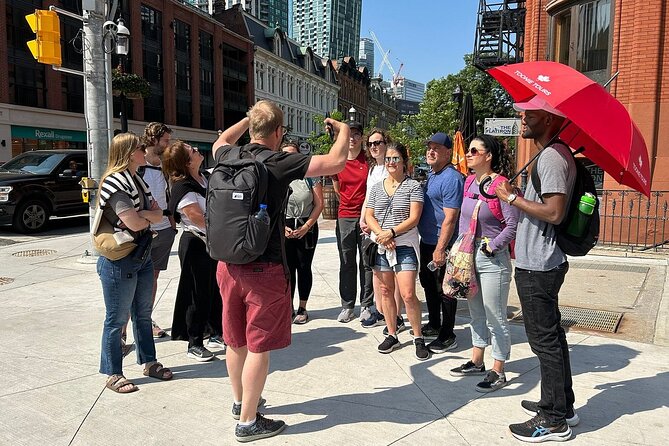
The maximum group size is 30 people. That is large enough for different personalities and nationalities to mix, but it can make street crossings, hearing the guide, and staying together more difficult.
Guide quality is important here. Alex has used a book of photographs to help explain how places looked in the past. Maya is praised for trivia, humor, and keeping a long walk engaging. Joel is described as friendly and helpful with photographs, while Maria has been noted for holding attention on a cold day. Zak, Henry, Dwight, Wei Ting, and other guides have also led sessions.
That variety is part of the charm, but it also means the style may change from one departure to another. Some guides give a constant stream of facts. Others focus more on conversation and group interaction.
The route is usually described as about three hours, though one session lasted two and a half hours. The distance can reach 7 kilometres. A few people have found the walk easy to keep up with, including visitors in their 80s, while others found the length tiring or the pace too fast.
If you have limited mobility, a below-knee amputation, back problems, or trouble standing for long periods, contact the operator before booking and explain what you need. The route includes rest at Nathan Phillips Square, but the supplied information does not promise regular seating or a modified path.
Weather, clothing, and timing advice
Toronto weather can change quickly, and the tour runs outdoors for much of its length. Wear comfortable walking shoes, bring water, and dress for rain, cold, or heat. The PATH offers a useful indoor section, but it does not turn the entire tour into a weatherproof activity.
Multiple starting times make it easier to fit the walk into a morning or afternoon schedule. The tour is offered in English, with Spanish available when selected. Check the language and time carefully when booking.
The tour is often reserved about three weeks in advance, so popular dates may fill. At the same time, the operator requires a minimum number of participants. If that minimum is not met, the tour can be canceled and you should be offered another date, another experience, or a full refund.
Communication problems have caused serious frustration on at least some occasions, including a same-day cancellation and a missed notification. If you have a fixed schedule, check your messages and spam folder on the day of the tour, and avoid placing an important reservation immediately afterward.
You can cancel for a full refund up to 24 hours before the start time. Cancellations or changes within 24 hours are not refundable.
Who should book this Toronto walking tour?
I would choose this experience if you are visiting Toronto for the first time, want to understand the downtown layout, or have just arrived and need ideas for the rest of your stay. The mix of history, architecture, public art, transport advice, hockey, theatre, and local suggestions gives you a useful first look at the city.
It also suits solo visitors. A guide may help with photographs, and the group format makes it easy to meet people from different places.
I would be cautious if you are booking for young children who need constant movement. One family found the opening portion too slow and information-heavy, with too much standing and not enough walking at first. The tour is also a poor choice for anyone who cannot comfortably cover several kilometres.
Should you book the Old Town Toronto Highlights tour?
Book it if you want a broad, inexpensive orientation and are happy to pay a gratuity for the guide’s work. The PATH, Gooderham Building, Old City Hall, Terry Fox story, Entertainment District, and Union Station give you a wider picture of Toronto than a simple Old Town stroll.
Skip it if you need a short, highly predictable outing, have strict accessibility needs, or cannot tolerate the possibility of a schedule change. For most able walkers, though, this is a useful first-day activity. You get enough context to make better choices about museums, restaurants, theatres, hockey, and transport for the rest of your Toronto visit.
FAQ
How long is the Old Town Toronto Highlights walking tour?
The tour lasts approximately three hours, although one session was reported to last about two and a half hours.
How far do you walk?
The distance can be about 7 kilometres. The route includes outdoor streets, public squares, the Financial District, the Entertainment District, and the PATH.
Where does the tour start?
The meeting point is Berczy Park at 35 Wellington Street East, Toronto, Ontario M5E 1C6.
Where does the tour end?
The activity information says it ends back at the meeting point. Since Union Station is listed near the end of the route, confirm the exact finishing point with the guide on the day.
Is the tour offered in Spanish?
Yes. English is offered, and Spanish is available when selected at booking.
What is included in the price?
The booking includes a tour guide, researched history and culture, a direct walking route through Old Toronto, and local recommendations and tips.
Are attraction admission fees included?
The listed stops have no admission fee. Campbell House Museum is viewed from outside, and the tour does not include entry to museums or other attractions.
How much should I tip?
Gratuities are not included. The guides work for tips, and one review reports a suggested tip of $30. The final amount is your decision.
Can I cancel for a refund?
Yes. You can cancel at least 24 hours before the start time for a full refund. Cancellations or changes made within 24 hours are not refundable.
More walking tours elsewhere in Canada
- Toronto: Distillery District Historic Walking Tour
★ 4.8 · 267 reviews - Quebec City Walking Tour
★ 5.0 · 4,716 reviews - The Original Old Montréal Walking Tour by Guidatour
★ 4.5 · 2,217 reviews - Gastown Historic Walking Food Tour
★ 5.0 · 1,863 reviews
More old-quarter tours in Toronto
- Old Quebec City: Grand Walking Tour with Private Option
★ 4.8 · 2,609 reviews - Old Montreal Small-Group Walking Tour | Max 10 | by MTL Detours
★ 5.0 · 2,088 reviews - Old Quebec Classique Walking Tour with Funicular
★ 5.0 · 1,317 reviews - Old Quebec City Food Tour with 10+ Autentic Local Tastings
★ 5.0 · 1,288 reviews
Just added in Toronto
- Toronto Local Beer Tour: 2 Beers at 2 Unique & Historical Pubs★ 5.0 · 154 reviews
- Niagara Falls Scenic Day Tour from Toronto Airport Pickup★ 4.6 · 52 reviews
- Exotic or Supercar Test Drive on Hamilton Mountain★ 4.5 · 212 reviews
- Toronto Premier Dinner Cruise on Odyssey in Toronto Harbour★ 4.0 · 232 reviews
- 30-Minute Distillery District Segway Tour★ 5.0 · 214 reviews
- Niagara Falls Tour from Toronto with Winery & Niagara on The Lake★ 4.5 · 228 reviews
- Museum of Illusions Admission in Toronto★ 3.5 · 214 reviews
- Toronto: Art Gallery of Ontario General Admission Ticket★ 4.6 · 251 reviews
Old Montreal & Old Quebec Tours, compared.
Old Quebec City: Grand Walking Tour with Private Option
Read our review →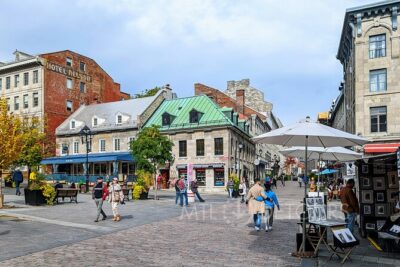
Old Montreal Small-Group Walking Tour | Max 10 | by MTL Detours
Read our review →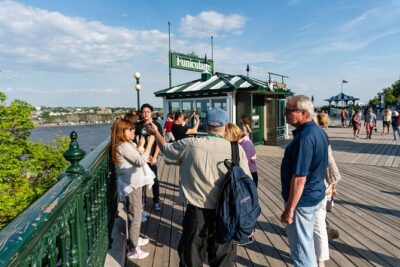
Old Quebec Classique Walking Tour with Funicular
Read our review →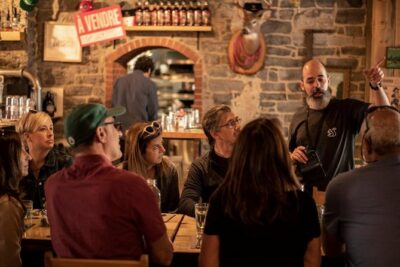
Old Quebec City Food Tour with 10+ Autentic Local Tastings
Read our review →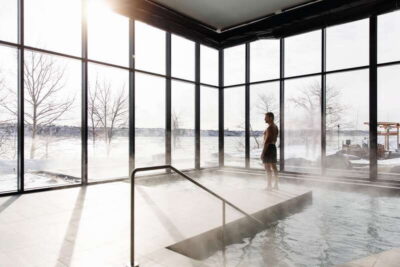
Old Montreal: Traditional Ghost Walk of the Haunted City
Read our review →
Browse the lists this tour appears in