
Reviewed · WALKING TOURS
The Banff Stargazing Tour – 2hr Walking Tour
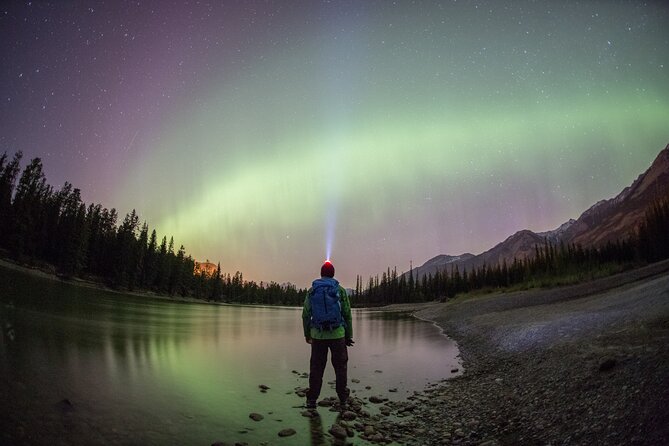
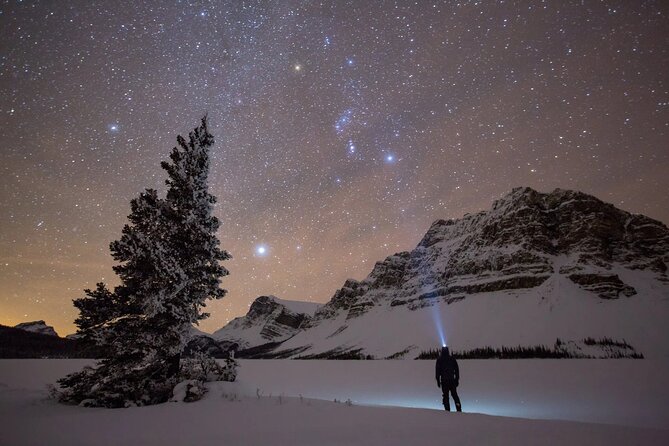
The best part of this Banff stargazing tour is the setting: you leave the daytime crowds behind and walk into the national park as darkness settles over the mountains. Your guide points out constellations, the Milky Way, shooting stars, and possibly the Northern Lights, while headlamps and safety gear keep the outing practical.
I like the small-group feel and the way the guides make the sky approachable, even if you cannot name a single constellation. I also like the honest weather policy: if clouds, rain, snow, or extreme cold threaten the experience, you may receive a refund or choose another date.
The main drawback is simple: clear skies are never guaranteed. A full moon, wildfire smoke, or cloud cover can soften the stars, though the company may offer a refund when conditions are poor. You will also walk about 3.5 miles, so this is not a sit-and-watch activity.
Key points about the Banff night walk
- A mostly flat 3.5-mile route uses paved, boardwalk, and outdoor trails, with some uneven or muddy sections.
- Guides such as Kael, Ewan, Ben, and Isla explain constellations, local history, ecology, wildlife, and night photography.
- The tour runs after sunset, with departure times changing by season.
- Ice cleats, headlamps, and other equipment are provided as needed, but you must bring suitable outdoor footwear and warm clothing.
- Free parking is available at the Cave and Basin National Historic Site, while transportation from your accommodation is not included.
- The sky matters more than the calendar: clouds, smoke, and a bright moon can affect what you see.
Leaving Banff Behind at the Cave and Basin
Your evening begins at the parking lot and welcome building of the Cave and Basin National Historic Site, at 309 Cave Avenue. You should arrive about 10 minutes early. Look for the guide with a clipboard, then let them know you have arrived.
This meeting point works well for drivers because parking is free. It is also near public transportation, but you need to arrange your own way to and from the site. The tour does not collect you from Banff hotels, so check the return journey before setting out, especially if you are visiting without a car.
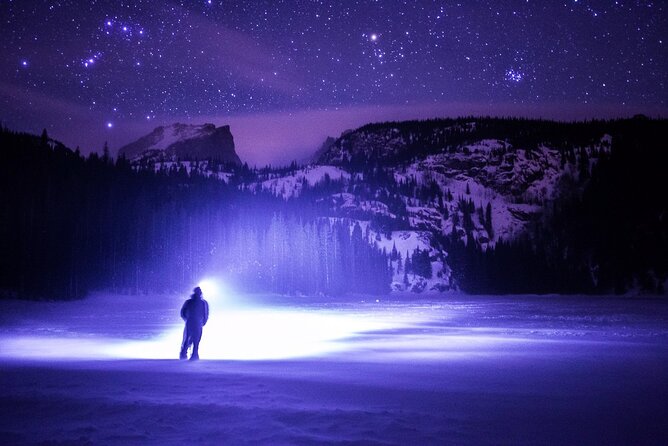
The first few minutes are used for preparation. In colder or slippery conditions, your guide helps you fit ice cleats and explains the equipment. Headlamps and other essential supplies are part of the setup, allowing you to move safely once the last daylight disappears.
I appreciate this brief orientation. Night walking feels different from daytime hiking, and a guide who checks footwear, equipment, and the group before departure gives you a better start. The maximum group size is 20 people, so it is not a private outing, but the format still allows for personal questions and hands-on help.
Other guided walks in Banff:
- Banff: 4-Hour E-Bike and Walking Tour in Johnston Canyon
★ 4.7 · 67 reviews - Banff: Paranormal History Walking Ghost Tour
★ 4.7 · 46 reviews - Banff Town Walking Tour Includes Refreshment and Sweet Treat
★ 5.0 · 29 reviews
A gentle walk after sunset
The route covers about 5 kilometers, or 3.5 miles, and is rated easy. Much of the walk is flat, with sections of pavement and boardwalk. Some areas can be uneven or muddy, and the trails are used by both horses and people, so outdoor shoes are required.
This is a useful distinction. You do not need serious hiking ability, but you should not arrive in smooth city shoes or expect to spend the entire evening standing in one viewing area. You will be walking at a relaxed pace, stopping along the way for sky-watching and explanations.
One visitor described the path as easy but noted that it can be uneven in places. If you have balance concerns, hiking poles or a cane may help, though the activity is not designed for people with mobility problems, back issues, recent surgery, serious medical conditions, or pregnancy. Children under eight are not eligible.
The trail itself adds to the appeal. Banff looks familiar in daylight, but darkness changes the mood. The trees, mountains, and open viewpoints take on a quieter character, and your attention shifts upward. You may hear nighttime wildlife as you walk. One outing included the sound of coyotes howling, though wildlife encounters are never promised.
Constellations, stories, and local knowledge
The guide is the heart of this experience. Kael has helped visitors with camera settings and explained both the night sky and local natural history. Ewan has been praised for mixing humor with clear explanations, while Ben and Isla have also led lively, informative outings.
The guide does more than point at stars. You can expect explanations of constellations, stories and lore connected to them, and information about Banff’s ecology and history. The best guides keep the group moving without rushing the viewing stops, and they leave time for questions and photographs.
This is especially helpful if you are new to stargazing. Looking at a dark sky can be overwhelming at first. Without help, you may see only a mass of stars. A guide gives you reference points and helps turn that mass into recognizable shapes, seasonal constellations, planets, or bright star groups.
The tone also seems to matter. The strongest outings have included funny, personable guides who make the group feel relaxed. That is useful on a night walk, when strangers are sharing dark trails and waiting quietly at viewing points. Good humor keeps the experience social without turning it into a noisy entertainment show.
Why Banff is a strong place for stargazing
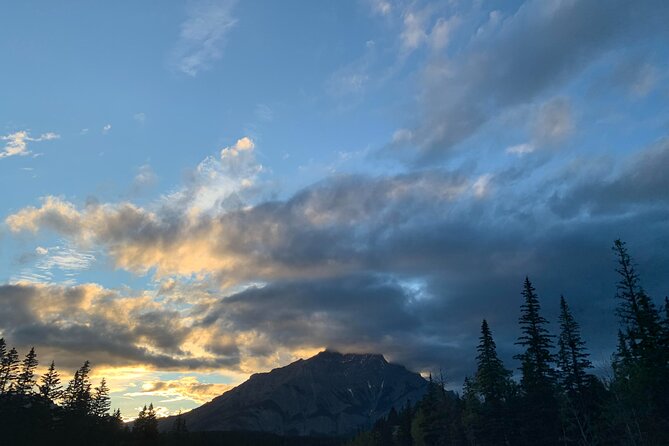
Banff National Park protects its dark skies, which means there is less artificial light competing with the stars than you would find in a city or busy resort area. On a clear night, you may see a broad spread of stars, the Milky Way, shooting stars, or the Northern Lights.
The exact view depends on several things. Cloud cover is the obvious factor, but a bright moon can also wash out fainter stars. Smoke from a wildfire may reduce clarity even when the sky looks mostly open. Some outings have still produced a rewarding view under a full moon or smoky conditions, but you should set your expectations correctly.
A dark-sky walk is not the same as a guaranteed Northern Lights tour. The aurora may appear, but it is an extra possibility rather than the central promise. The core experience is learning the sky and seeing Banff at night.
The company’s weather approach is a real advantage. The tour can run when the sky is partly cloudy, with a stated limit of 50 percent cloud cover or less. If conditions are considered too poor because of cold, rain, snow, or another serious weather event, you may receive a refund or move to another date.
One especially fair practice is the option to reconsider at the start when the moon or clouds may limit visibility. If the sky is unlikely to deliver the experience you wanted, ask about your choices before leaving the meeting point.
Same base, a different sort of day:
- Banff: Banff Gondola Admission Ticket
★ 4.7 · 3,698 reviews - Banff Gondola Ride Admission
★ 4.5 · 2,688 reviews - Columbia Icefield Tour with Glacier Skywalk
★ 4.5 · 1,860 reviews - Lakes Moraine, Louise, Emerald, Johnston Canyon & Yoho Tour
★ 4.8 · 1,023 reviews
Photography help for phones and cameras
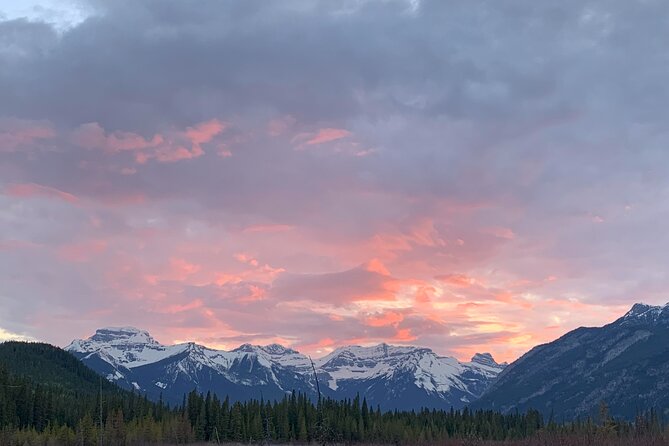
You do not need professional camera equipment to enjoy this walk. Guides have helped people adjust phone settings for nighttime photographs, and there are several good viewpoints where you can stop and try.
Still, your phone may not capture what your eyes see. A camera set to night mode can help, but you should learn where that setting is before arriving. It is also wise to keep your hands warm enough to operate the phone, since removing gloves repeatedly can become uncomfortable.
The guide can offer practical advice, but this is not a dedicated photography workshop. You are joining a walking tour with sky interpretation, so you should be ready to put the phone away for parts of the route. The strongest moments may be the ones you simply watch rather than photograph.
If photography is a major reason for booking, check the moon phase and forecast first. A bright moon may make the mountains visible but reduce the number of faint stars. Smoke can create unusual color and atmosphere, but it may also soften the sky.
How the two hours unfold
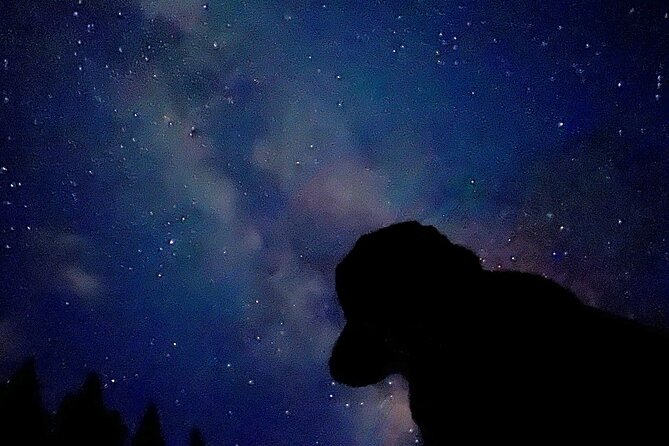
The start time changes throughout the year because the tour follows sunset. You receive the final timing 8 to 24 hours before departure if the schedule changes, so keep an eye on your messages.
After equipment is fitted, the group sets out as darkness begins. The walk includes several stops, where the guide discusses the sky, the park, and the surrounding area. The pace is steady rather than strenuous, but you are outside for the full experience.
As the evening gets darker, the stars should become easier to see. Your guide may identify constellations, explain their stories, and point out features that you would likely miss alone. The route returns to the original meeting point after about two hours.
At the end, the guide helps remove or collect equipment before you leave. The return to the same location is convenient, particularly if you parked there. Plan ahead for facilities, though: the only bathroom on site may close early, so use it before the walk if it is open.
What to wear for a cold Banff night
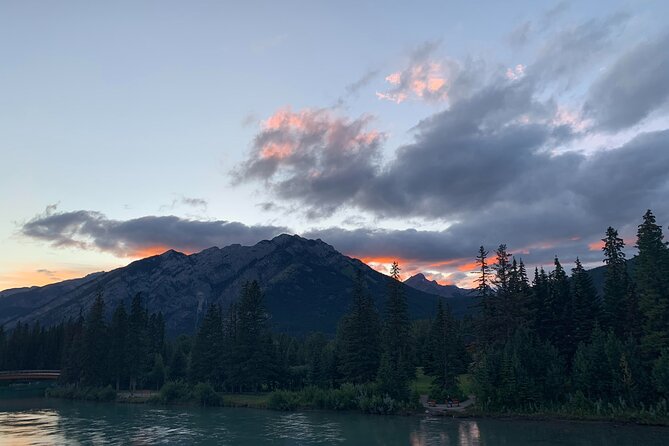
Dress for standing and walking outdoors after sunset, not for the temperature you feel during the afternoon. Warm layers, gloves, a hat, and weather-resistant outer clothing are sensible choices. The exact conditions vary by season, but a clear night can feel very cold once you stop at viewing points.
Wear sturdy outdoor shoes with good grip. The trail is mostly easy, yet mud, uneven pavement, boardwalk sections, and winter conditions can make ordinary sneakers a poor choice. Ice cleats are supplied when needed, but they do not replace proper footwear.
I would also bring a small water bottle and keep personal items limited. You will be walking in the dark, and bulky bags make equipment handling less comfortable. Since the tour is active, think of it as an easy night hike with astronomy rather than a short stroll from a parking lot.
Is the $68.34 price fair?
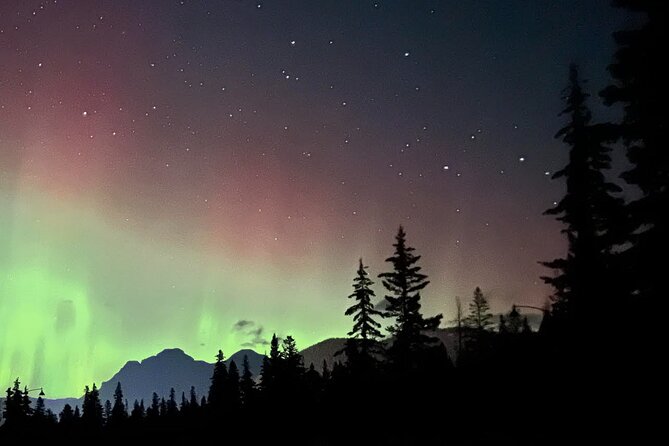
At $68.34 per person, this is not the cheapest way to look at the stars. You could walk outdoors on your own for free, especially if you already know a safe dark-sky location. The price makes more sense if you want a guide, equipment, a planned route, and help understanding what you see.
You are paying for more than a constellation lecture. The fee includes a structured two-hour outing, a certified guide, safety preparation, and access to a night experience that can be difficult to arrange alone in an unfamiliar national park. The small-group format also gives you a better chance to ask questions than a large coach-style excursion.
The value depends heavily on the sky. Under clear conditions, the price feels easier to justify because you may see the Milky Way, shooting stars, or even the Northern Lights. Under clouds or heavy smoke, the guide’s stories and the nighttime walk become more important, but the star count will be lower.
The company’s willingness to offer a refund or reschedule in genuinely poor weather improves the value. You still take a chance on natural conditions, but you are not being asked to pay blindly when the forecast is clearly unhelpful.
Who should book this Banff stargazing tour?
I would recommend it to couples, friends, solo visitors, and families with children eight or older who want a calm evening activity with some walking. It suits people who enjoy learning a little while they explore, rather than simply taking photos from a lookout.
It is also a good choice if you have only a short stay in Banff. An evening walk lets you see the park in a completely different way, and you do not have to plan a route, identify constellations, or bring specialized equipment on your own.
You may want to skip it if you dislike cold weather, cannot comfortably walk 3.5 miles, or need guaranteed clear skies. It is also not ideal if your main goal is a Northern Lights sighting. The aurora is possible, but no night-sky tour can control it.
Book with the moon phase and forecast in mind. A darker moon usually helps with faint stars, while a full moon can brighten the surroundings and make the walk scenic in a different way. If the forecast is questionable, keep your schedule flexible.
Should you book it?
Book this tour if you want a guided, active introduction to Banff’s night sky and are prepared to accept nature’s limits. The strongest reasons are the easy route, personal help from guides such as Kael and Ewan, useful photography advice, and the chance to hear the park after dark.
Skip it if you want a short, guaranteed viewing stop or if walking in cold conditions sounds unpleasant. For most prepared visitors, though, the combination of a quiet national park trail, practical astronomy, and honest weather handling makes the $68.34 worthwhile on a clear night.
FAQ
Where does the Banff Stargazing Tour begin?
It begins at the parking lot and welcome building of the Cave and Basin National Historic Site, at 309 Cave Avenue, Banff, Alberta.
Is parking available at the meeting point?
Yes. Free parking is available at the Cave and Basin meeting location.
Is transportation from my accommodation included?
No. Transportation to and from the meeting location is not provided. You need to arrange your own transport, though the meeting point is near public transportation.
How far do you walk?
The tour covers about 3.5 miles, or 5 kilometers, over roughly two hours. The route is mostly flat and rated easy.
What equipment is provided?
The guide provides headlamps and other essential supplies. Ice cleats are available for setup when conditions require them.
What should I wear?
Wear warm outdoor clothing and suitable outdoor footwear. Trails can be uneven or muddy, and winter conditions may make ice cleats useful.
Can children join the tour?
Children must be at least eight years old. The activity is not designed for children under eight.
What happens if the weather is poor?
If extreme cold, rain, snow, or other poor weather causes cancellation, you may be offered another date or a full refund. You can also cancel for a full refund if you cancel at least 24 hours before the start time.
Just added in Banff
- Rock Climbing Adventure in Banff: Beginner★ 5.0 · 19 reviews
- Moraine Lake, Louise Emerald Lake, and Peyto Lake all in day tour★ 5.0 · 12 reviews
- Discover Lake Louise and Yoho In Winter★ 5.0 · 72 reviews
- Wildlife on the Bow | Big Canoe Tour★ 4.5 · 13 reviews
- Wildlife on the Bow | Big Canoe Tour in Banff National Park★ 5.0 · 77 reviews
- Grassi Lake and Grotto Canyon Hiking Calgary/Canmore/Banff★ 5.0 · 5 reviews
- Banff Sunshine Village Gondola and Sightseeing★ 5.0 · 192 reviews
- Banff Town Walking Tour Includes Refreshment and Sweet Treat★ 5.0 · 29 reviews
Walking Tours, compared.
Old Quebec City: Grand Walking Tour with Private Option
Read our review →
The Original Old Montréal Walking Tour by Guidatour
Read our review →
Old Montreal Small-Group Walking Tour | Max 10 | by MTL Detours
Read our review →
Old Quebec Classique Walking Tour with Funicular
Read our review →
Quebec: Crimes of New France Animated Walking Tour
Read our review →Browse the lists this tour appears in