

Reviewed · WALKING TOURS
The Sights of Banff: a Smartphone Audio Walking Tour
Banff’s best stories are not limited to mountain viewpoints. This GPS audio walking tour leads you through old homes, public gardens, churches, bridges, sculptures, and museum buildings while explaining how the town developed. I like the flexible start time and the fact that you can stop for coffee, photos, or a museum visit without losing your place. The main drawback is the app: finding the correct street and stop may take patience, and some audio sections can feel long or repetitive.
At $8.22 per person, this is an inexpensive way to get your bearings before paying for larger attractions or guided outings. I especially like that the route works offline and that you can keep it for another day, but you should download everything before leaving Wi-Fi and bring a charged phone.
Key points before you set out

- A 5-kilometre return route covers Banff’s central sights, historic buildings, gardens, and Bow River views.
- GPS-triggered audio plays near each point of interest, with a map showing your location and the next stop.
- You control the schedule, so you can start anytime, pause the tour, and continue later.
- The $8.22 price covers the digital tour, but museum admission, your phone, and optional headphones cost extra.
- The route is private by design, with no group to follow and no live guide waiting at a fixed time.
- App navigation deserves attention, since street directions and stop locations have caused confusion for some users.
A self-guided introduction to Banff’s town center
This experience is less about grand scenery and more about reading Banff as a place shaped by people, public institutions, tourism, and the park system. You begin near 12 Banff Avenue and return to the same meeting point after a loop through the center of town.
The route is described as taking about one hour to one hour and 30 minutes, but the audio itself is only part of the timing. You can stop at the Luxton Home Museum, the Whyte Museum, Banff Park Museum, or Buffalo Nations Museum if you choose to pay admission. You can also pause for photos, food, shopping, or a closer look at a building.
I like this format for a first morning or afternoon in Banff. It gives you a basic map in your head without tying you to a departure time. It also works well for private groups who want to walk together instead of joining strangers.
The tour is in English, and the app can be used offline after you download it on Wi-Fi. That matters in a walking tour. You do not want to spend the route searching for a signal or using mobile data to load the next recording.
The number of people selected at booking equals the number of devices that can download the tour. If two people want separate phones, book two devices. Headphones are optional because the audio can play through your phone speaker, though headphones may make it easier to hear on busy streets.
Other guided walks in Banff:
- The Banff Stargazing Tour – 2hr Walking Tour
★ 5.0 · 189 reviews - Banff: 4-Hour E-Bike and Walking Tour in Johnston Canyon
★ 4.7 · 67 reviews - Banff: Paranormal History Walking Ghost Tour
★ 4.7 · 46 reviews
Starting with Buffalo Nations Museum and Cascade Gardens
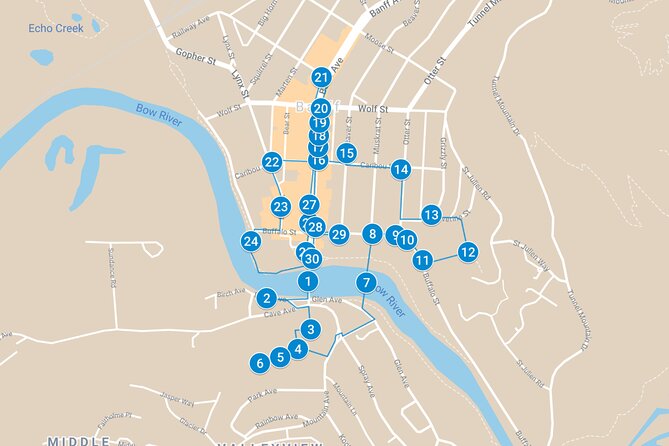
The first point is Buffalo Nations Museum. Admission is not included, so you can treat it as an optional stop rather than a required part of the walk. The audio introduces the wider story of Banff as you begin exploring its older buildings and public spaces.
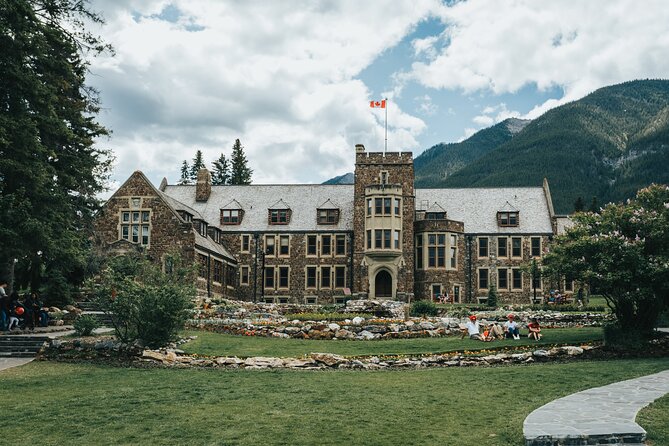
From there, the route reaches the Banff National Park Administration Building. This is a good early example of the town’s official side, and the commentary explains why the building matters rather than simply telling you to admire it. You do not pay admission to view it from the route.
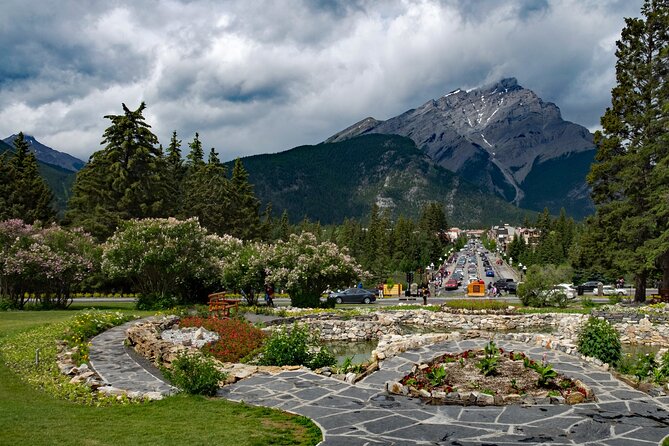
The most substantial early stop is Cascade Gardens, a four-acre park built in the 1930s. Terraced gardens climb the hillside, and the route includes the Cambrian and Devonian pavilions. The stop is listed for about 15 minutes, longer than most of the five-minute points, so this is a natural place to slow down.
The gardens are likely to be one of the easiest parts of the tour to enjoy because the route and the point of interest are clear. A past technical problem is less troublesome here than it can be on the streets. Still, seasonal conditions matter. The tour warns that recommended attractions may be closed or inaccessible for reasons beyond the operator’s control.
Along the Bow River and Banff’s early streets
The Banff Pedestrian Bridge brings you over the Bow River. The commentary introduces the man associated with the title Mr. Banff, adding a personal thread to the town’s development. This is a short stop, but it gives the walk a pleasant change from sidewalks and buildings.
At Buffalo Street and Muskrat Street, look for an elevation marker set into the sidewalk. It resembles a coin and is easy to miss if you are walking quickly. The audio explains what it means, giving you a reason to pay attention to details you might otherwise pass without noticing.
At 514 Buffalo Street, the route points out the Crandell Peck Cabin. Edward Henry Crandell built it in 1907 using mostly local materials. You will not need to enter the building to understand why it matters. The stop shows how early homes differed from the larger public buildings elsewhere on the route.
The next point, at Buffalo and Otter streets, introduces the inukshuk. At 525 Buffalo Street, you pass the Banff Powerstation, which supplied streetlights and homes in 1905. These two stops help connect familiar objects and surviving buildings to practical questions about life in early Banff.
The Ken Madsen Path then provides a quieter stretch while the audio fills in more of Banff’s story. This section is useful because it keeps the walk from becoming a string of unrelated façades. You are moving through town while the narration supplies the broader timeline.
Historic homes and the Luxton family story
At 117 Grizzly Street, the tour points out Tarry-a-while, a historic residence associated with Mary Schaffer Warren. She was known for early exploration, writing, and painting in the Canadian Rockies. The stop adds a personal voice to a route that otherwise often focuses on civic buildings and public spaces.
The route continues through Otter and Caribou streets, where the audio discusses Banff’s climate. That may sound like a small detail, but weather affects how long you will want to walk. A winter visit at minus 19 degrees Celsius has already proved too cold for some people to complete the route on foot, so dress for the season rather than trusting the short distance.
The Luxton Home Museum is one of the more meaningful optional paid stops. The historic home gives you a look at a pioneer family and at Banff across nine decades. The audio can prepare you for the building, but the ticket is not included, and opening or access conditions can change.
Next comes Caribou Corner, where the route explains the Brewster family’s arrival in Banff in 1886 and the business they established. This is a useful transition from private homes to commercial Banff. You then pass the Four Sentries sculpture on Banff Avenue, a familiar public artwork that anchors the main street.
Same base, a different sort of day:
- Banff: Banff Gondola Admission Ticket
★ 4.7 · 3,698 reviews - Banff Gondola Ride Admission
★ 4.5 · 2,688 reviews - Columbia Icefield Tour with Glacier Skywalk
★ 4.5 · 1,860 reviews - Lakes Moraine, Louise, Emerald, Johnston Canyon & Yoho Tour
★ 4.8 · 1,023 reviews
Banff Avenue, public memory, and the Cave and Basin story
The route moves along Banff Avenue to a mural depicting the Cave and Basin site. The mural provides an opening to discuss one of the key places connected with Banff’s creation as a national park destination.
The Banff Visitor Information Centre is another practical point along the way. You can stop there for current information about local activities, conditions, and nearby attractions. The tour itself is flexible, so you may want to pause the audio before going inside and resume afterward.
St. Paul’s Presbyterian Church adds a religious and architectural stop. The church was built in 1930, but the congregation dates to 1887. That gap between the present building and the older institution is exactly the sort of small detail an audio tour can make useful.
At Banff Avenue and Elk Street, the route points out a stone fire monument. You cannot sit at the fire because it is made of stone, but the audio explains the memorial. At Caribou and Bear streets, you pass the old Cascade Lodge, now associated with the Banff Freemasons.
These stops are close together, but the audio can make the walk feel longer if you listen to every word without pausing. I would stop the commentary when you need to cross a street, take a photo, or read a sign. Safety and orientation matter more than hearing every sentence at the exact moment it begins.
Museums, Central Park, and Banff’s commercial past
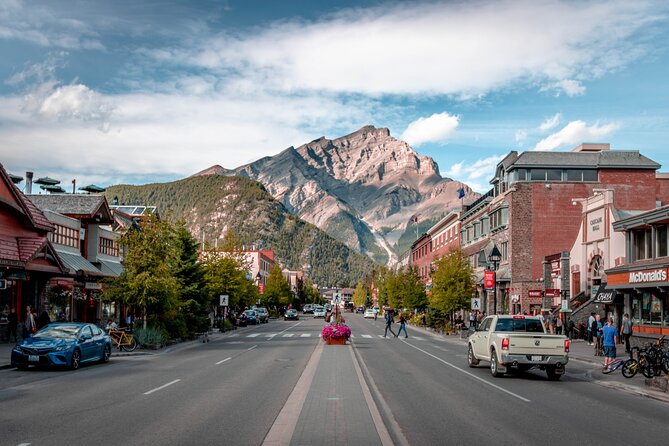
The Whyte Museum of the Canadian Rockies is one of the route’s optional paid attractions. Its purpose is to preserve and make accessible the history and culture of the Rocky Mountains. The audio points it out, but you need a separate admission ticket if you decide to go inside.
Central Park offers another change of pace. The commentary draws attention to a large pile of rocks in the middle of the park. That may sound odd, but it is a reminder that small local features can carry meaning when someone explains why they are there.
The Banff Park Museum is a National Historic Site of Canada, established in 1895. Its original purpose was to house mounted specimens of animals, plants, and minerals associated with the park. Admission is not included. If you plan to visit, allow extra time instead of trying to squeeze it into the stated one-hour minimum.
At Banff Avenue and Buffalo Street, the tour identifies the Dave Whyte Block. It is one of the oldest remaining largely intact commercial buildings in Banff. At 107 Banff Avenue, you see Harmony Lane, a commercial building with river-stone pillars and a rustic National Park style.
This final stretch is particularly useful if you care about architecture and town planning. You are not simply looking at mountain-town storefronts. You are being shown how commercial buildings were designed to fit the national park setting.
The final stops and the route back to 12 Banff Avenue
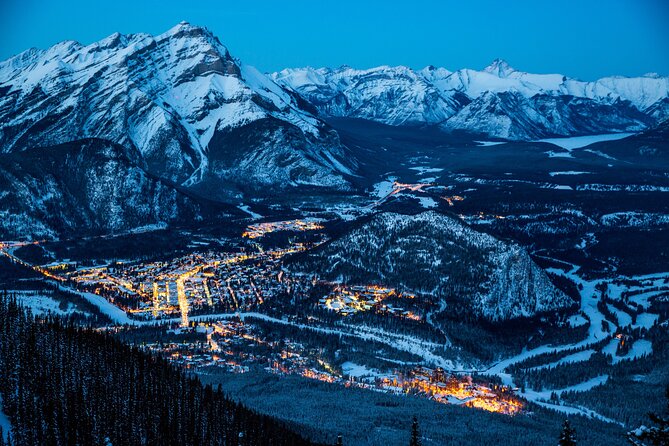
Rundle United, also called Ralph Connor Memorial United Church, brings the tour to another historic religious building. The commentary includes a playful Mr. Rundle impersonation by Don, the voice associated with the tour’s guide material. It is a lighter moment after several formal explanations.
At Beaver and Buffalo streets, you see the Superintendent’s Residence. The audio explains the responsibilities of the park superintendent, who lived there. This is a useful stop because it connects the buildings you have seen with the people responsible for managing the park.
The final named point is the Royal Canadian Legion Colonel Moore Branch 26, along with the cenotaph built in 1920. It gives the route a quiet closing note focused on remembrance and local service.
You also pass other parts of Banff that are not formal stops. Banff Avenue appears repeatedly because you walk up and down this famous street during the route. Nearby sites and buildings may be close enough to visit, but the tour does not promise extra commentary for every one of them.
The route returns to the starting point. Since the tour is yours to keep, you can stop before the end and finish on another day. That flexibility is especially helpful if you want to add one or more museums.
How the app works, and where it can frustrate you

The app uses a live GPS map to show your position and the route ahead. As you approach a point of interest, the commentary should play automatically. There is also a location-based trivia game, so after a recording you can tap your answer to a question.
That combination gives the walk a little more purpose than simply pressing play on a string of recordings. You look for the elevation marker, inukshuk, cabin, mural, and other features while listening for the explanation.
The weak point is navigation. The route has many stops, and a map showing buttons without clear street directions can make it hard to tell if you are standing in the correct place. The app has also had performance problems, including jumping away from the map to a slogan page. A software bug connected to a past app build was reported as fixed, but you should still download the tour early and test it before setting out.
My practical approach would be simple:
- Download the tour on Wi-Fi.
- Charge your phone fully.
- Open the map before leaving the starting point.
- Pause audio at crossings and whenever you need to check your location.
- Bring headphones if you expect street noise or prefer not to use the speaker.
- Keep the route for another day if weather interrupts the walk.
What $8.22 gets you
At $8.22 per person, the tour offers strong value if you want a town introduction rather than a paid attraction. You get the route, GPS map, automatic commentary, trivia, offline access, and flexible timing. There is no live guide, transport, food, or museum admission.
The value improves for a private group. You avoid a fixed schedule and can walk only with your own party. The limitation is that each selected person represents one device, so several people using separate phones will increase the total cost.
The tour is best for independent visitors who enjoy context but do not want a formal group. It also suits families and couples who want to pause often. It is less suitable if you need polished, turn-by-turn navigation or prefer a live person who can answer questions immediately.
Should you book this Banff audio walk?
Book it if you want a low-cost introduction to Banff’s buildings, public spaces, and local stories, and you are comfortable managing an app. The offline function, flexible timing, and ability to stop and restart make it much more forgiving than a scheduled walking tour.
Skip it if your main goal is mountain scenery, if you are visiting in severe cold, or if app navigation frustrates you. For the best experience, use it in moderate weather, download it before you leave Wi-Fi, and treat the paid museums as optional additions rather than required stops.
FAQ
Where does the tour start and finish?
It starts at 12 Banff Avenue in Banff, Alberta, and ends back at the same meeting point.
How long does the walking tour take?
The approximate duration is one hour to one hour and 30 minutes. You can take longer because the tour has no time limit.
How far is the route?
The sightseeing route is approximately 5 kilometres return.
Is this a live guided tour?
No. The guide commentary is delivered through a smartphone app and plays automatically near points of interest.
Can I use the tour without mobile data?
Yes. Download it on Wi-Fi before you begin. The tour is designed to work offline without a signal or mobile data during the walk.
Are museum admission fees included?
No. Admission is not included for Buffalo Nations Museum, the Luxton Home Museum, the Whyte Museum of the Canadian Rockies, or Banff Park Museum.
Do I need headphones?
No. Headphones are optional because the audio can play through your device’s speaker.
Can I cancel for a full refund?
Yes, if you cancel at least 24 hours before the experience start time. Cancellations within 24 hours are not refunded, and changes within that period are not accepted.
Just added in Banff
- Rock Climbing Adventure in Banff: Beginner★ 5.0 · 19 reviews
- Moraine Lake, Louise Emerald Lake, and Peyto Lake all in day tour★ 5.0 · 12 reviews
- Discover Lake Louise and Yoho In Winter★ 5.0 · 72 reviews
- Wildlife on the Bow | Big Canoe Tour★ 4.5 · 13 reviews
- Wildlife on the Bow | Big Canoe Tour in Banff National Park★ 5.0 · 77 reviews
- Grassi Lake and Grotto Canyon Hiking Calgary/Canmore/Banff★ 5.0 · 5 reviews
- Banff Sunshine Village Gondola and Sightseeing★ 5.0 · 192 reviews
- Banff Town Walking Tour Includes Refreshment and Sweet Treat★ 5.0 · 29 reviews
Walking Tours, compared.
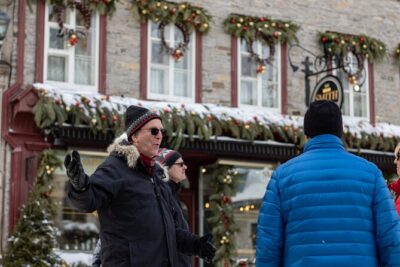
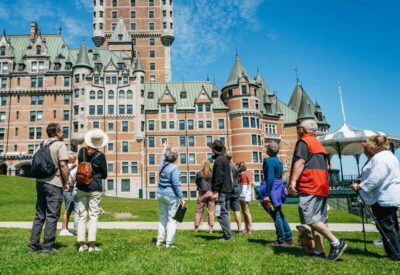
Old Quebec City: Grand Walking Tour with Private Option
Read our review →
The Original Old Montréal Walking Tour by Guidatour
Read our review →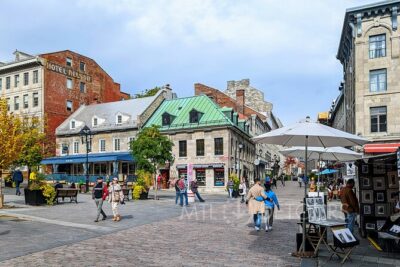
Old Montreal Small-Group Walking Tour | Max 10 | by MTL Detours
Read our review →
Old Quebec Classique Walking Tour with Funicular
Read our review →

Quebec: Crimes of New France Animated Walking Tour
Read our review →Browse the lists this tour appears in